The Robotaxi Accident Question: What the Data Actually Shows
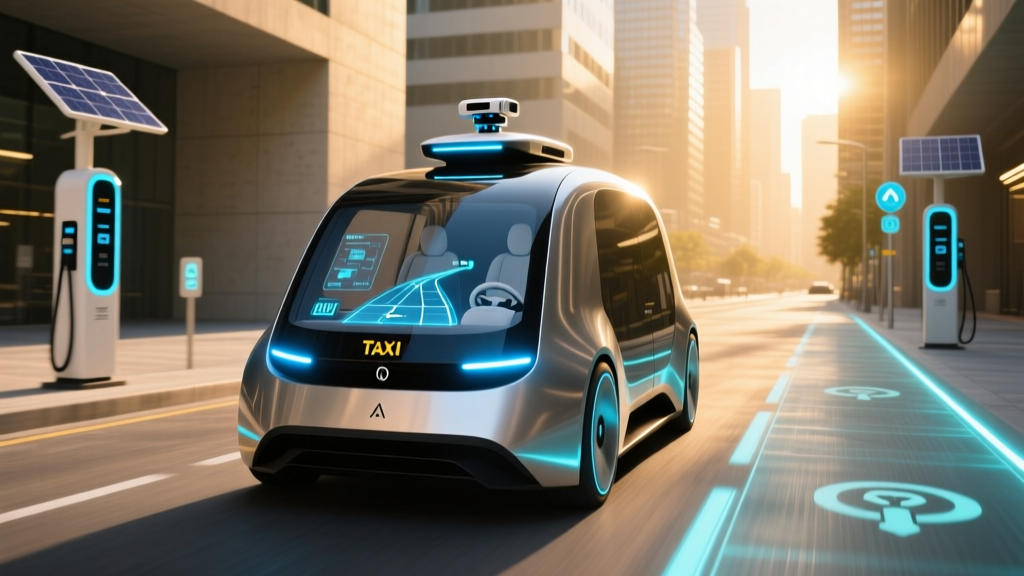
Every robotaxi fender-bender makes national headlines, creating a distorted picture of autonomous vehicle safety. The reality is more nuanced: Level 4 robotaxis from Waymo, Cruise (now relaunched under GM supervision), and Zoox have collectively logged tens of millions of fully driverless miles in dense urban environments — with a collision profile that differs meaningfully from human drivers, but is not zero-risk.
This article examines the hard data behind self-driving car accidents, separates Level 4 driverless robotaxis from Level 2 driver-assist systems like Tesla Autopilot, and explains what the numbers mean for riders considering hailing a car with nobody behind the wheel.
Critical Distinction: Level 2 vs. Level 4
Level 2 (Driver-Assist): Tesla Autopilot, FSD (Supervised), GM Super Cruise, Ford BlueCruise. The human driver is legally responsible and must remain engaged. These are NOT self-driving cars.
Level 4 (Robotaxi): Waymo, Cruise, Zoox. No human driver present in the vehicle within the operational design domain (geofenced areas). The company operating the vehicle bears responsibility. This is what "self-driving" actually means in 2026.
Where Robotaxis Operate Right Now (2026)
Robotaxi availability remains geographically limited. These services operate within tightly defined geofences — typically covering specific urban corridors, airport routes, and suburban commercial zones — and cannot simply drive anywhere.
| Operator | Live Cities | Service Hours | Vehicle Platform |
|---|---|---|---|
| Waymo (Alphabet) | Phoenix metro, San Francisco, Los Angeles, Austin | 24/7 in most markets | Jaguar I-PACE (Gen 6 sensor suite), upcoming Zeekr RT |
| Cruise (GM) | Phoenix, Dallas, Houston (phased relaunch post-2024 suspension) | Limited hours, expanding | Chevrolet Bolt EV (retiring), next-gen Origin (announced) |
| Zoox (Amazon) | Las Vegas (Strip corridor), Foster City CA, San Francisco (limited) | Daytime/early evening | Zoox purpose-built carriage (no steering wheel) |
| Baidu Apollo Go | Wuhan, Beijing, Chongqing (China — reference market) | Extended hours | Various EV platforms with Apollo sensor stack |
Key caveat: Announced expansion cities (e.g., Waymo's planned entries into new metros) are not live until rides are publicly bookable. Always verify via the operator's app before planning travel around robotaxi availability.
How to Ride and What It Costs vs. Uber/Lyft
Booking a robotaxi works identically to a standard rideshare: download the operator's app (Waymo One, Cruise app, or Zoox), enter your pickup and dropoff within the geofenced zone, and wait for the vehicle. No driver is present. You sit in the back (or anywhere in Zoox's carriage-style interior), and the trip begins automatically.
| Service | Base Fare | Per-Mile Rate | Estimated 5-Mi Trip | Surge Pricing? |
|---|---|---|---|---|
| Waymo | ~$5.00 | ~$1.50/mi | $12–$16 | Rare; dynamic pricing in high-demand windows |
| Cruise | ~$4.50 | ~$1.30/mi | $11–$14 | Limited during relaunch phase |
| Zoox | Free/promotional | Subsidized | $0–$8 (promotional) | N/A — still scaling |
| UberX (baseline) | ~$3.50 | ~$1.25/mi | $10–$18 | Yes, frequent in peak hours |
| Lyft (baseline) | ~$3.25 | ~$1.20/mi | $9–$17 | Yes, frequent in peak hours |
Robotaxi fares are generally competitive with UberX and Lyft, and often cheaper during surge periods since autonomous fleets don't face driver-supply constraints. However, availability is limited to geofenced zones — you can't hail a Waymo to a rural address 30 miles outside Phoenix.
Self-Driving Car Accident Data: The Numbers
This is where marketing stops and engineering begins. Here's what we know from publicly reported data, state DMV disengagement reports, and NHTSA incident reporting (which mandates that manufacturers report crashes involving Level 2+ and Level 4 systems):
Waymo Safety Data (through late 2025)
- Total fully driverless miles: 50+ million miles across all markets
- Injury-causing collisions: Waymo's published analysis (peer-reviewed methodology) shows a ~85% reduction in injury-causing crash rate compared to human drivers in the same urban environments
- Police-reported crashes: Waymo vehicles are involved in collisions at roughly ~57% lower rate than human baselines
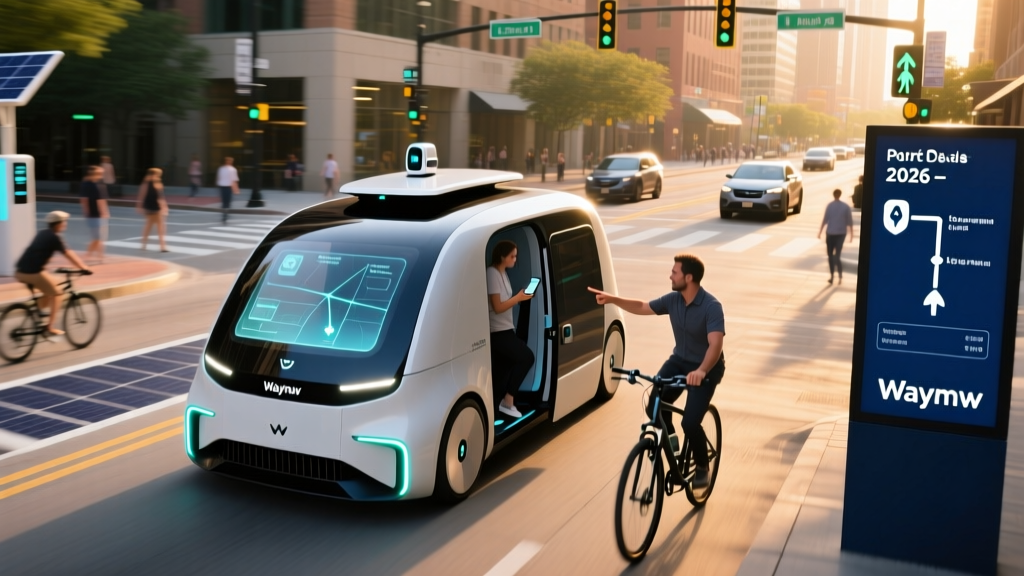
- Contact rate: Most robotaxi "incidents" are low-speed contact events (<5 mph) — typically another vehicle or cyclist striking the stationary or slow-moving robotaxi at intersections
Cruise context: Cruise's October 2023 incident in San Francisco — where a pedestrian was struck by a human-driven vehicle and then dragged under a Cruise robotaxi — led to a statewide permit suspension by the California DMV/CPUC. Cruise has since relaunched with human safety drivers in limited markets before transitioning back to driverless service. This incident illustrates a key robotaxi vulnerability: edge-case post-collision behavior, not routine driving.
Zoox: With fewer public miles logged and a purpose-built vehicle still scaling, Zoox has not published large-scale collision-rate data comparable to Waymo's. Early safety records show no serious injuries in limited commercial operations.
What Causes Robotaxi Accidents?
Analysis of reported incidents reveals a pattern:
- Rear-end and side-impact from human drivers: The most common robotaxi collision type. Robotaxis tend to drive conservatively — stopping fully at yellow lights, yielding excessively at four-way stops — which can surprise aggressive human drivers behind them.
- Low-speed intersection contact: Robotaxis may halt unexpectedly when detecting ambiguous obstacles (a plastic bag, a shadow, a cyclist approaching at an unusual angle), leading to low-speed bumps.
- Construction zone and edge-case confusion: Temporary lane shifts, hand-signaling flaggers, and unmapped road changes remain challenging. Robotaxis will typically pull over and request remote assistance rather than proceed unsafely, but this can create traffic disruptions.
- Emergency vehicle interaction: Robotaxis are programmed to pull over for sirens, but determining which vehicle the emergency responder is approaching (and from which direction) remains a complex perception task.
How Robotaxis "See": The Technology Stack
Understanding robotaxi safety requires understanding how these vehicles perceive the world. The sensor and compute architecture is fundamentally different from a consumer car with Level 2 driver-assist.
| Component | Waymo (Gen 6) | Cruise (Bolt-based) | Zoox (Purpose-built) |
|---|---|---|---|
| LiDAR | Custom-built, roof-mounted + corner units; ~300m range | Roof-mounted + side LiDAR; ~200m range | 4x corner LiDAR pods; 360° coverage |
| Cameras | 29+ cameras (narrow, wide, telephoto) | 16+ cameras | Multiple stereo camera clusters |
| Radar | 6+ imaging radars | Multiple radar units | Integrated radar array |
| Audio sensors | External microphones (siren detection) | External microphones | Acoustic sensor array |
| Compute | Custom Waymo Driver platform; redundant compute | Custom AV compute stack | Custom Zoox brain; dual-redundant |
| HD Mapping | Pre-mapped geofenced areas (centimeter-level) | Pre-mapped operational zones | Pre-mapped corridors |
LiDAR vs. camera-only debate: Waymo, Cruise, and Zoox all use LiDAR as a primary sensor alongside cameras and radar. This contrasts with Tesla's camera-only approach for its Level 2 FSD (Supervised) system. LiDAR provides precise 3D distance measurement independent of lighting conditions — a significant advantage at night, in glare, or when detecting partially occluded pedestrians. The trade-off is cost (a robotaxi sensor suite adds $50,000–$100,000+ to vehicle cost) and complexity.
Geofencing is critical: These vehicles operate only in areas that have been extensively pre-mapped and validated. The HD map includes lane geometry, traffic signal positions, crosswalk locations, and speed limits down to centimeter precision. Drive outside the geofence, and the system will refuse to operate — this is by design, not a limitation to be "solved" by a software update alone.
The Regulatory Landscape: Who Approves Robotaxis?
Robotaxi operations in the US require approval from multiple agencies, and the regulatory patchwork varies significantly by state:
- Federal (NHTSA): Sets vehicle safety standards (FMVSS). NHTSA currently requires a crash-reporting rule for all vehicles with Level 2+ and Level 4 systems. However, NHTSA does not "approve" robotaxi operations — that authority falls to states.
- State DMVs and PUCs: California's DMV issues testing permits and the CPUC issues commercial deployment permits. Arizona takes a permissive approach with minimal state-level oversight, which is why Phoenix was the first major robotaxi market. Texas has a lighter-touch framework that enabled Waymo and Cruise expansion into Austin, Dallas, and Houston.
- Local municipalities: Cities can impose additional restrictions on robotaxi operations, including zone limitations, speed restrictions, and requirements for local emergency response coordination.
The NHTSA automated vehicle safety portal maintains publicly accessible crash reports for Level 2+ and Level 4 systems, though data completeness varies as some manufacturers report with significant lag.
Current Limitations: Where Robotaxis Cannot Operate Safely
Robotaxi No-Go Scenarios (2026)
- Heavy rain, snow, and fog: LiDAR performance degrades significantly in precipitation. Most robotaxi services suspend operations or limit availability during heavy rain. Snow operations remain effectively nonexistent in the US.
- Unmapped or recently modified roads: Construction zones, temporary detours, and newly built roads that aren't in the HD map will cause the robotaxi to stop and request remote guidance or reroute.
- Highway driving at high speed: Most robotaxi deployments are limited to surface streets at speeds under 45–65 mph. Highway merging at 75+ mph is largely outside current operational design domains.
- Rural and suburban low-density areas: Without HD mapping and sufficient operational validation, robotaxis don't serve rural routes. This is an urban and dense-suburban technology today.
- Complex human-interaction scenarios: Hand signals from a crossing guard, a police officer directing traffic, a parking attendant waving you into a garage — these remain extremely difficult perception and interpretation challenges.
- Passenger emergencies: With no driver present, a medical emergency in the back seat requires the rider to use the in-vehicle support button or call 911 directly. The vehicle can be remotely directed to pull over, but cannot provide medical assistance.
Is This Truly Self-Driving or Still Driver-Assist?
For Waymo, Cruise (in driverless mode), and Zoox: yes, these are genuinely driverless Level 4 vehicles within their operational design domains. There is no human behind the wheel, no steering wheel (in Zoox's case), and no expectation that a passenger will intervene. The vehicle handles all driving tasks, and if it encounters a situation it cannot resolve, it pulls over safely and contacts a remote operations center for guidance.
This is fundamentally different from Tesla's FSD (Supervised), which is a Level 2 system that requires the driver to remain attentive, keep hands available, and accept full legal responsibility. Conflating the two categories is the single most common error in autonomous vehicle coverage and consumer understanding.
| SAE Level | Name | Who Drives? | Examples |
|---|---|---|---|
| Level 0 | No Automation | Human does everything | Traditional vehicles |
| Level 1 | Driver Assistance | Human drives; system assists steering OR speed | Adaptive cruise control, lane-keeping assist |
| Level 2 | Partial Automation | Human drives and supervises; system assists steering AND speed simultaneously | Tesla Autopilot/FSD, Super Cruise, BlueCruise |
| Level 3 | Conditional Automation | System drives in specific conditions; human must take over when requested | Mercedes DRIVE PILOT (limited markets, <40 mph traffic jams) |
| Level 4 | High Automation | System drives fully within defined area; no human needed | Waymo, Cruise, Zoox robotaxis |
| Level 5 | Full Automation | System drives everywhere, all conditions | Does not exist commercially |
Decision Framework: Should You Ride in a Robotaxi?
Choose a robotaxi if:
- You're in a live market (Phoenix, SF, LA, Austin, Las Vegas) and your trip falls within the geofenced zone
- You value consistent pricing without surge multipliers
- You prefer a driving experience free of human driver variability (no phone use, no fatigue, no impairment)
- You're comfortable with the technology's current limitations and understand it may stop unexpectedly for edge cases
Stick with Uber/Lyft if:
- Your trip extends outside the robotaxi geofence or into unmapped suburban/rural areas
- Weather conditions are poor (heavy rain, any snow)
- You need flexibility for multi-stop trips, unusual drop-off locations, or complex routing
- You're uncomfortable with the idea of no human driver present for passenger emergencies
Frequently Asked Questions
Are self-driving cars involved in more accidents than human drivers?
Based on published data from Waymo (the operator with the most driverless miles), robotaxis show a significantly lower rate of injury-causing and police-reported crashes compared to human drivers in equivalent urban environments. However, robotaxis operate in favorable conditions (geofenced, mapped, mostly good weather) and drive conservatively — a direct comparison requires context. Most robotaxi incidents involve other human-driven vehicles striking the robotaxi, not the robotaxi initiating contact.
What happens if a robotaxi gets into an accident with me inside?
The vehicle's systems detect the collision, bring the car to a safe stop, and automatically contact emergency services and the remote operations center. In-vehicle screens and speakers guide passengers through next steps. You can also use the in-vehicle support button to speak with a live operator immediately. The operating company (Waymo, Cruise, Zoox) carries liability insurance for passenger injuries.
Can I ride a self-driving car in any city?
No. As of early 2026, fully driverless robotaxi service is available only in Phoenix, San Francisco, Los Angeles, Austin, Dallas, Houston, and Las Vegas (limited corridors). Expansion is gradual and requires regulatory approval in each new market.
Do robotaxis work in the rain?
Light rain is generally handled, but heavy rain degrades LiDAR and camera performance. Most operators reduce service availability or suspend operations during significant precipitation. Snow and fog effectively shut down robotaxi service.
Is Tesla FSD a self-driving car?
No. Tesla Full Self-Driving (Supervised) is an SAE Level 2 driver-assist system. The driver must remain fully attentive, keep hands available, and bears all legal responsibility for the vehicle's operation. It is not comparable to a Level 4 Waymo or Zoox robotaxi, which operates without any human driver present.
How are robotaxi accidents reported?
NHTSA's Standing General Order requires manufacturers and operators to report crashes involving vehicles equipped with Level 2+ or Level 4 automated driving systems. California additionally requires detailed disengagement and collision reports to the state DMV. This data is publicly accessible, though reporting timelines and completeness vary by manufacturer.