Investors hunting for the next big thing in autonomous mobility face a paradox in 2026: the technology works, but the business models remain stubbornly unproven at scale. If you're researching self-driving car stocks, the smartest move is to ignore the hype reels and look at operational data — miles driven, intervention rates, geofence boundaries, and unit economics. That's exactly what we'll do here.
At AutoEdgeView, we've ridden in, tested, and tracked every major robotaxi platform. Below, we break down the companies behind the most prominent autonomous vehicle stocks using the same data-driven framework we apply to EV reviews: concrete numbers, acknowledged limitations, and zero marketing fluff.
The Autonomy Levels That Matter for Investors
Before evaluating any self-driving car stock, you must understand the SAE International automation levels. The distinction between Level 2 and Level 4 isn't academic — it determines whether a company can charge riders without a human in the loop.
| Level | Description | Example (2026) | Revenue Model |
|---|---|---|---|
| Level 2 | Partial automation — driver must supervise at all times | Tesla Autopilot / FSD (Supervised), GM Super Cruise, Ford BlueCruise | Software subscription or one-time purchase; no driverless rides |
| Level 3 | Conditional automation — car drives in limited conditions, human takes over on request | Mercedes DRIVE PILOT (selected highways, <40 mph) | Premium feature on luxury vehicles |
| Level 4 | High automation — fully driverless within a defined operational design domain (geofence) | Waymo, Zoox | Per-ride fares, robotaxi service |
| Level 5 | Full automation everywhere, all conditions — does not exist commercially | None | Theoretical |
The critical takeaway: Only Level 4 companies operate true driverless robotaxis today. Tesla's Full Self-Driving (Supervised) remains Level 2 — the driver is legally and functionally responsible. Any investment thesis that conflates these two categories is fundamentally flawed.
Where Robotaxis Actually Operate Right Now
Geofencing is the single biggest constraint on robotaxi revenue. A company might have brilliant technology, but if it can only operate in a 50-square-mile zone, the total addressable market shrinks dramatically.
| Company | Parent / Ticker | Live Cities | Hours | Geofence Notes |
|---|---|---|---|---|
| Waymo (Alphabet) | GOOGL / GOOG | Phoenix, San Francisco, Los Angeles, Austin | 24/7 in most zones | Phoenix metro is most expansive; SF/LA have freeway and neighborhood restrictions |
| Zoox | AMZN (Amazon subsidiary) | Las Vegas (select corridors), Foster City, CA (testing) | Limited hours | Purpose-built vehicle; Las Vegas Strip corridor |
| Cruise | GM (majority owner) | Phoenix (limited relaunch), Dallas (testing) | Restricted | Operations dramatically scaled back post-2023 SF incident; slow restart |
| Tesla (Robotaxi concept) | TSLA | None — no driverless service operates | N/A | FSD Supervised available in consumer vehicles; announced "Cybercab" not yet in commercial service |
| Motional (Hyundai/Aptiv JV) | HYMTF / private | Las Vegas (limited), testing in other cities | Limited | Partnership with Uber/Lyft for some rides |
Notice the pattern: every operational Level 4 service is geofenced to specific cities and often specific neighborhoods within those cities. Waymo leads by a wide margin in coverage and uptime. Cruise's slow restart after its October 2023 pedestrian-dragging incident in San Francisco has constrained its revenue potential. Tesla has no driverless service at all — a fact that rarely appears in bullish TSLA analyses.
Robotaxi Pricing vs. Uber and Lyft: The Unit Economics Problem
For a robotaxi stock to deliver returns, the company must eventually achieve positive unit economics — the revenue per ride must exceed the cost per ride (vehicle depreciation, sensor maintenance, remote assistance, insurance, electricity, and cleaning).
| Service | Base Fare | Per-Mile Rate | Estimated 5-Mile Fare | Notes |
|---|---|---|---|---|
| Waymo (standard) | ~$3.50 | ~$1.10/mi | ~$9.00 | Promotional pricing in some markets; often undercuts UberX |
| UberX | ~$2.80 | ~$1.35/mi | ~$9.55 | Varies heavily by city and time |
| Lyft | ~$2.50 | ~$1.25/mi | ~$8.75 | Comparable to UberX |
| Waymo (shared/pooled) | ~$2.00 | ~$0.90/mi | ~$6.50 | Limited availability |
The investor reality: Waymo frequently prices rides at or below UberX to build market share. But each Waymo vehicle carries roughly $150,000–$200,000 in sensor and compute hardware (though costs are declining with each generation), requires remote fleet operators, and can't yet handle every route. Removing the human driver saves the largest single cost in rideshare (the driver's cut, typically 70-80% of the fare), but the capital expenditure and operational overhead of the autonomous stack partially offset that savings.
Profitability at scale requires: (1) sensor costs falling below $50K per vehicle, (2) remote-assist ratios of 1 operator per 20+ vehicles, and (3) utilization rates above 60%. Waymo is closest to these targets but hasn't confirmed sustained profitability in any individual market.
Safety Data: What the Numbers Actually Show
Safety is both the biggest selling point and the biggest risk for any self-driving car stock. A single high-profile incident can shut down operations across an entire state — as Cruise learned when California's DMV suspended its permit in late 2023.
Robotaxi Safety by the Numbers
- Waymo: Over 30 million fully driverless miles completed by early 2026, according to company disclosures. Waymo's published safety data shows a 85% reduction in injury-causing crash rates compared to human benchmarks in comparable urban environments.
- Cruise: Accumulated millions of driverless miles before its October 2023 incident in San Francisco, where a robotaxi struck and then dragged a pedestrian who had been thrown into its path by a human-driven vehicle. The incident led to statewide permit suspension and a near-total operational shutdown.
- Human benchmark: U.S. drivers experience roughly 1.35 fatalities per 100 million vehicle miles traveled, per NHTSA FARS data. Injury-causing crashes occur at roughly 50-80 per 100 million miles.
- Tesla FSD (Supervised): As a Level 2 system, the driver remains responsible. Tesla's quarterly safety reports show ~1 crash per 4-5 million miles with FSD engaged, but this data is self-reported, not independently verified, and includes all engagement modes.
Key nuance: Robotaxis operate primarily in low-speed urban environments (25-45 mph) with extensive mapping and sensor coverage. Comparing their safety record to all human driving (which includes rural highways, bad weather, and impaired drivers) requires careful normalization. Waymo's data is the most robust, but even it has limitations — the company selects its operating domains carefully, which introduces selection bias.
Technology Stacks: Lidar vs. Camera-Only and Why It Matters
The sensor philosophy a company chooses determines its cost structure, its operational limits, and ultimately its investability.
Lidar + Camera + Radar (Waymo, Zoox, Cruise, Motional)
These companies use a multi-sensor fusion approach. Waymo's 6th-generation "Driver" system includes lidar units with 200+ meter range, high-resolution cameras, and imaging radar. This redundancy allows operation in moderate rain, fog, and nighttime conditions — but the hardware cost per vehicle remains high (estimated $150K-$200K, declining).
Camera-Only (Tesla)
Tesla removed radar and ultrasonic sensors from its vehicles, relying entirely on cameras and neural networks ("Tesla Vision"). This dramatically lowers hardware cost but creates known limitations in heavy rain, direct sun glare, and low-visibility conditions. For consumer Level 2 use, this is a defensible choice. For driverless Level 4 operation, no camera-only system has been approved by any U.S. regulator as of 2026.
Geofencing and HD Mapping
All current Level 4 services rely on centimeter-precision HD maps of their operating areas. When roads change (construction, new lane configurations), the map must be updated before the robotaxi can operate there. This creates a scaling bottleneck: expanding to a new city requires months of mapping and validation.
The Regulatory Landscape: Who Decides What's Legal
Robotaxi operations in the U.S. are governed by a patchwork of state and local regulations — there is no comprehensive federal framework for driverless vehicles.
- California DMV: Issues permits for testing and deployment. The DMV's authority to suspend permits (as it did with Cruise) makes California both the most important and most volatile market.
- Arizona: The most permissive state for robotaxi operations. Waymo's Phoenix service operates with relatively light regulatory oversight, which is why it was the first market for fully driverless rides.
- Texas: Austin has become a key expansion market. State law permits autonomous vehicles but local regulations vary.
- Nevada: Allows autonomous testing and limited deployment; Zoox operates in Las Vegas under state authorization.
- NHTSA (federal): Oversees vehicle safety standards and investigates crashes involving automated systems, but has not established a comprehensive approval framework for Level 4 operations. NHTSA's Standing General Order requires manufacturers to report crashes involving Level 2+ systems.
For investors, regulatory risk is asymmetric: a single serious incident can trigger statewide bans, while regulatory approvals move slowly and city by city. Companies operating in multiple states (Waymo) have a diversification advantage over single-market operators.
Current Limitations Every Investor Should Understand
What Robotaxis Still Cannot Do in 2026
- Heavy weather: Most Level 4 services reduce operations or pull vehicles during heavy rain, snow, or ice. Phoenix and LA were chosen as early markets partly because of mild weather.
- Highway driving at scale: While Waymo has expanded to some freeway segments, most robotaxi rides are surface-street, low-speed urban trips. High-speed highway autonomy in mixed traffic remains a harder problem.
- Construction zones: Unmapped road changes force robotaxis to either reroute or request remote human assistance, adding latency and cost.
- Complex pickups: Apartment complexes, parking garages, private driveways, and crowded event venues remain difficult. Riders often must walk to a designated curbside spot.
- Edge cases: Unusual road users (horse-drawn carriages, oversized loads, protest marches), ambiguous hand signals from traffic controllers, and poorly marked roads can force the vehicle to stop and wait for remote guidance.
- Vehicle range and downtime: Robotaxi EVs typically need to return for charging every 150-200 miles of operation, reducing utilization. Charging time, cleaning, and sensor calibration add non-revenue hours.
Evaluating the Major Self-Driving Car Stocks
Alphabet / Waymo (GOOGL)
Why it matters: Waymo is the clear operational leader in Level 4 robotaxis, with the most miles driven, the most cities served, and the most robust safety data. Alphabet funds Waymo through its broader advertising revenue, so robotaxi success isn't required for the stock to perform — but Waymo represents significant optionality value.
Key risk: Waymo has not announced a path to profitability. Capital requirements for fleet expansion are enormous, and Alphabet has shown willingness to cut "Other Bets" funding.
Tesla (TSLA)
Why it matters: Tesla has the largest real-world driving dataset from its consumer fleet running FSD (Supervised), and the lowest per-vehicle hardware cost. If Tesla achieves Level 4 capability, its manufacturing scale and data advantage could be transformative.
Key risk: Tesla has no operational Level 4 service. Promised robotaxi timelines have repeatedly slipped. FSD remains Level 2 with the driver legally responsible. The stock's valuation prices in autonomous revenue that does not yet exist.
General Motors / Cruise (GM)
Why it matters: GM owns a majority stake in Cruise and has invested over $10 billion. Cruise's Origin vehicle was purpose-built for robotaxi use. A successful restart could recover significant value.
Key risk: The 2023 San Francisco incident destroyed public trust and triggered regulatory action. Cruise's slow, limited restart in Phoenix and Dallas has not restored its pre-incident trajectory. The Origin vehicle's production was paused, and GM has signaled reduced spending on autonomous operations.
Amazon / Zoox (AMZN)
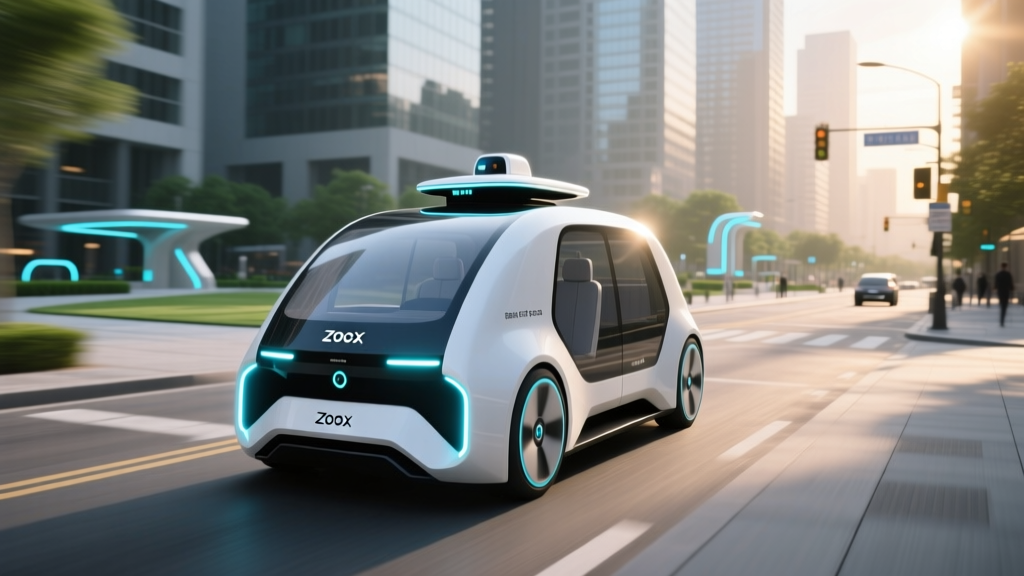
Why it matters: Zoox's purpose-built bidirectional vehicle is designed from the ground up for robotaxi service, with no steering wheel or pedals. Amazon provides deep-pocketed backing and logistics expertise.
Key risk: Zoox's operational footprint is tiny compared to Waymo. The company has been in testing and limited deployment for years without a clear path to multi-city scale.
Mobileye (MBLY)
Why it matters: Mobileye supplies ADAS chips and systems to dozens of automakers and is developing its own robotaxi stack. Its diversified revenue base (OEM ADAS supply) provides stability while its autonomy division develops.
Key risk: Mobileye's robotaxi ambitions are earlier-stage than Waymo's, and its camera-first approach faces the same limitations as Tesla's in achieving Level 4 without lidar redundancy.
Decision Framework: Which Self-Driving Car Stock Fits Your Thesis?
Choose GOOGL (Alphabet) if: You want exposure to the operational leader in Level 4 robotaxis with a diversified parent company that doesn't depend on autonomous revenue to survive.
Choose TSLA if: You believe Tesla's data advantage and manufacturing scale will eventually produce a Level 4 system, and you're comfortable with a valuation that prices in autonomous revenue years ahead of delivery.
Choose GM if: You see Cruise as a deeply discounted call option on robotaxi recovery, with GM's core ICE/EV business providing a floor.
Choose AMZN if: You want Zoox exposure bundled with Amazon's dominant e-commerce and cloud businesses, accepting that robotaxi contribution to AMZN revenue is negligible near-term.
Choose MBLY if: You want a pure-play ADAS/autonomy supplier with existing OEM revenue and a long-term robotaxi pathway.
Frequently Asked Questions
Where can I ride in a robotaxi right now?
Waymo operates fully driverless rides in Phoenix, San Francisco, Los Angeles, and Austin. Zoox has limited service on the Las Vegas Strip. Cruise operates in a restricted capacity in Phoenix and Dallas. No robotaxi service is available outside these specific geofenced zones.
How much does a robotaxi ride cost compared to Uber or Lyft?
Waymo's fares are generally comparable to or slightly below UberX for equivalent trips — roughly $8-$12 for a typical 5-mile urban ride. Promotional pricing can make Waymo cheaper, but surge-equivalent pricing during peak demand applies. The long-term question is whether robotaxi companies can raise prices once they've built market share.
How safe are robotaxis — is there real data?
Waymo reports an 85% reduction in injury-causing crash rates compared to human benchmarks across over 30 million driverless miles. However, robotaxis operate in carefully selected, mapped, and generally low-speed urban environments. The Cruise incident in October 2023 — where a robotaxi dragged a pedestrian — demonstrates that serious incidents can and do occur. Independent, standardized safety reporting across all operators does not yet exist.
Is Tesla's FSD actually self-driving?
No. Tesla Full Self-Driving (Supervised) is a Level 2 driver-assistance system under SAE definitions. The driver must remain attentive, keep hands available, and is legally responsible for the vehicle at all times. Tesla has not received regulatory approval for driverless operation in any jurisdiction. The "Supervised" label in the product name reflects this legal and functional reality.
What are the biggest limitations of current robotaxis?
Geofencing (limited to specific cities and neighborhoods), weather restrictions (reduced operations in rain/snow), inability to handle complex pickup locations (parking garages, private driveways), construction zone navigation challenges, and high per-vehicle hardware costs that make profitability difficult at current ride volumes.
When will robotaxis be available nationwide?
No company has announced a credible timeline for nationwide Level 4 coverage. Each new city requires months of HD mapping, regulatory approval, and fleet deployment. Waymo, the leader, has expanded to four cities over roughly seven years of commercial operations. A 20+ city footprint by 2030 is plausible for the industry; nationwide coverage comparable to Uber/Lyft is not on any announced roadmap.
Should I invest in self-driving car stocks for the short term?
Robotaxi revenue remains a tiny fraction of any parent company's earnings. These are long-horizon investments tied to technology maturation, regulatory evolution, and public acceptance. Short-term catalysts include city expansion announcements, safety milestone reports, and partnership deals — but each carries equal risk of regulatory setbacks or operational incidents.