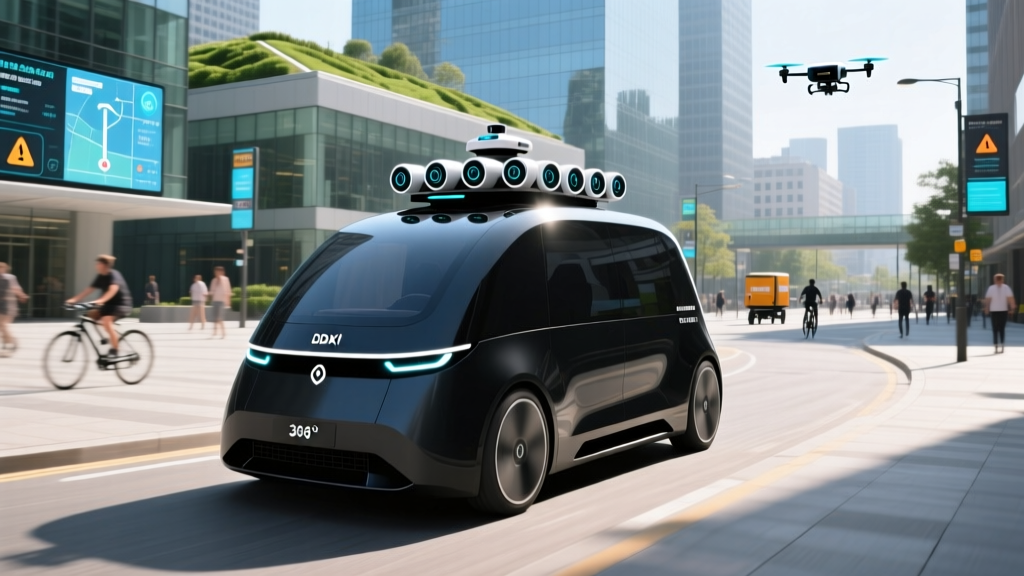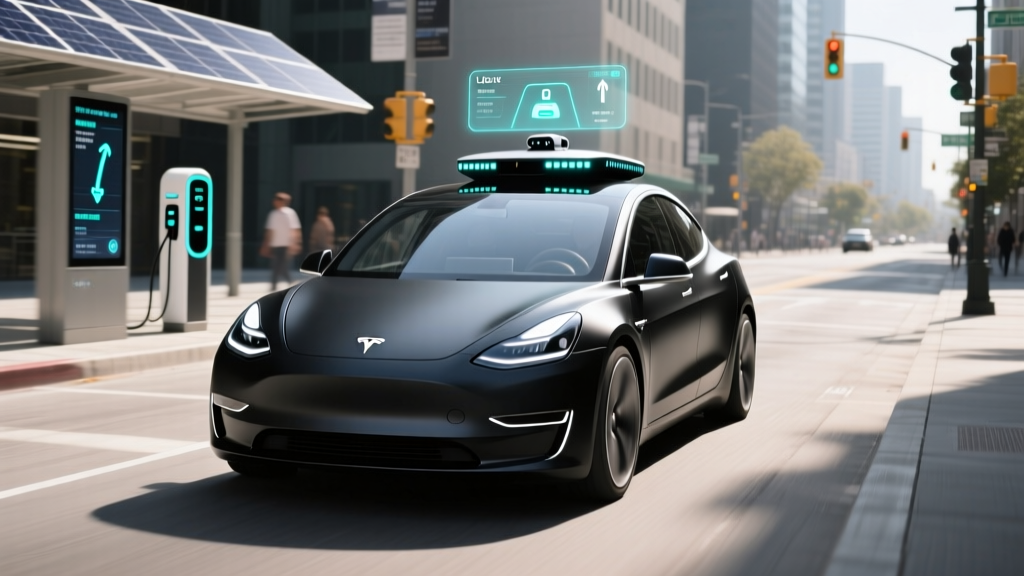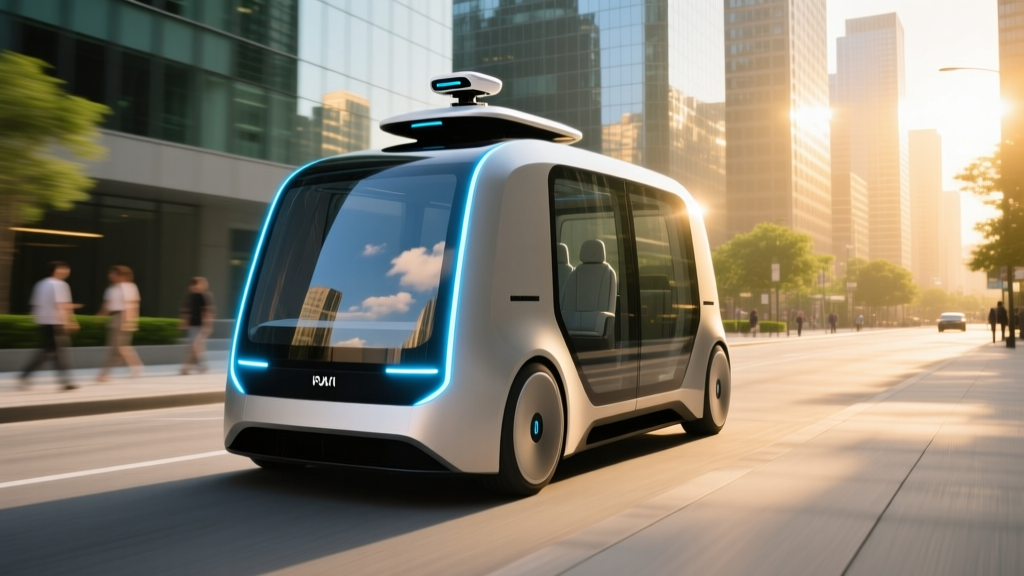
If you've searched "how much is self driving car" recently, you're likely asking one of two questions: how much does it cost to ride in a driverless robotaxi, or how much does it cost to buy a self-driving vehicle outright? In 2026, the honest answer diverges sharply. You cannot buy a Level 4 or Level 5 autonomous car as a private consumer — no automaker sells one. What you can do is hail a driverless robotaxi in a growing (but still limited) set of U.S. cities, at prices that increasingly compete with Uber and Lyft.
This guide breaks down exactly what robotaxi rides cost, where they operate, how safe they are, and what the technology can and cannot do — with real numbers, not marketing promises.
What "Self-Driving" Actually Means: SAE Levels Explained
Before discussing cost, we need to eliminate the biggest source of confusion in this space: the difference between a car that assists a driver and a car that drives itself. The SAE International J3016 standard defines six levels of driving automation, and the distinction between Level 2 and Level 4 is everything.
| Level | Name | Who Drives? | Current Examples | Can You Buy It? |
|---|---|---|---|---|
| Level 0 | No Automation | Human does everything | Basic cruise control | Yes |
| Level 1 | Driver Assistance | Human + one system (steering OR speed) | Adaptive cruise, lane-keep | Yes |
| Level 2 | Partial Automation | Human supervises; system handles steering AND speed | Tesla Autopilot/FSD Supervised, GM Super Cruise, Ford BlueCruise | Yes |
| Level 3 | Conditional Automation | System drives in specific conditions; human must take over when asked | Mercedes Drive Pilot (limited markets) | Limited |
| Level 4 | High Automation | System drives fully within its operational domain; no human needed | Waymo, Zoox | No (fleet-only) |
| Level 5 | Full Automation | System drives everywhere, all conditions | None exist | No |
Where Can You Actually Use a Robotaxi Right Now?
As of early 2026, fully driverless robotaxi services (no human behind the wheel) operate in a handful of U.S. metro areas. Availability is tightly controlled by geofencing — the vehicle will only operate within pre-mapped, approved zones.
| Operator | Cities (Driverless) | Service Hours | How to Access | Vehicle |
|---|---|---|---|---|
| Waymo (Alphabet) | Phoenix metro, San Francisco, Los Angeles, Austin | 24/7 in most zones | Waymo One app | Jaguar I-PACE, Zeekr RT |
| Zoox (Amazon) | Las Vegas (Strip corridor), Foster City, CA | Limited hours | Zoox app (invite/waitlist) | Zoox purpose-built vehicle |
| Cruise (GM) | Phoenix (limited relaunch) | Daytime hours | Cruise app | Chevrolet Bolt EV / Origin (announced) |
Waymo remains the clear leader in operational scale. Its Phoenix service has been fully driverless since 2020 and now covers a service area exceeding 200 square miles. San Francisco and Los Angeles operate 24/7. Austin launched commercially in late 2025. Zoox's purpose-built vehicle — a carriage-style pod with no steering wheel — entered limited paid service in Las Vegas in 2025. Cruise, following its October 2023 safety incident in San Francisco and subsequent nationwide pause, relaunched in Phoenix with a safety driver before moving to limited driverless operations.
Where you cannot use one: New York City, Chicago, Miami, Seattle, and most U.S. cities remain without any robotaxi service. If you don't live in or aren't visiting the metros listed above, robotaxi rides are not yet an option.
How Much Does a Robotaxi Ride Cost vs. Uber and Lyft?
Robotaxi pricing is dynamic — it varies by distance, time of day, and demand — but in most markets, Waymo prices its rides to be competitive with UberX and Lyft's standard tier. Here's what typical fares look like based on aggregated rider reports and published pricing in late 2025 and early 2026:
| Route Type | Waymo (Robotaxi) | UberX | Lyft Standard | Notes |
|---|---|---|---|---|
| Short (3-5 mi, city) | $8 – $14 | $9 – $16 | $8 – $15 | Roughly comparable; Waymo sometimes cheaper |
| Medium (8-12 mi) | $16 – $28 | $18 – $32 | $17 – $30 | Waymo often 5-10% below rideshare |
| Airport run (15-25 mi) | $30 – $55 | $35 – $65 | $33 – $60 | Surge pricing on Uber/Lyft can widen the gap |
| Surge/peak demand | Less aggressive surge | 2-3x multiplier common | 2-3x multiplier common | Waymo's fixed fleet limits supply but also surge spikes |
The real cost advantage shows up during surge periods. Because Waymo's fleet size is fixed and managed centrally, it doesn't apply the same aggressive surge multipliers that Uber and Lyft do during peak demand. A ride that jumps to $45 on UberX during a Friday evening rush might remain $28 on Waymo — if a vehicle is available. The tradeoff is that wait times can stretch to 10-15 minutes during peak hours because Waymo's fleet in most cities numbers in the hundreds, not thousands.
Waymo has also offered promotional pricing in new markets — introductory credits, discounted first rides, and referral bonuses — to build ridership. These promotions reduce effective cost but are not permanent.
How Safe Are Robotaxis? The Real Data
Safety is the most consequential question in autonomous driving, and it demands data — not anecdotes from either side. Here's what we know from reported figures and regulatory filings.
- Waymo: Over 10 million fully driverless miles completed. Waymo's published analysis claims a 76% reduction in injury-causing crash involvement compared to human benchmarks in its operating cities, based on NHTSA crash data comparisons.
- Cruise: Over 5 million driverless miles before its October 2023 pause. The San Francisco incident — in which a Cruise vehicle dragged a pedestrian who had been thrown into its path by a human-driven car — led to its California permit suspension by the DMV.
- Human benchmark: U.S. fatality rate is approximately 1.35 deaths per 100 million vehicle miles traveled (NHTSA, 2022 data).
Waymo's safety record is the most robust dataset available for Level 4 operations. The company reports that its vehicles are involved in fewer police-reported crashes per million miles than human drivers in the same cities. However, important context is needed:
- Robotaxis operate in geofenced urban areas at moderate speeds (typically under 45 mph), which are statistically less lethal than highway driving.
- Robotaxis are conservatively programmed — they brake hard and yield frequently, which reduces severe crashes but can increase low-speed rear-end incidents from following human drivers.
- The Cruise incident demonstrated that edge cases — unpredictable events involving multiple actors — remain the hardest challenge for autonomous systems.
For the most comprehensive and current safety data, the NHTSA Automated Vehicles safety page and state-level reports from the California DMV Autonomous Vehicle Program are the authoritative sources. California requires operators to report disengagements and collisions, making it the most transparent regulatory jurisdiction.
Under the Hood: Robotaxi Technology Stack
Understanding what a robotaxi "sees" helps explain both its capabilities and its limitations. The sensor suites vary by operator, but the core architecture follows a common pattern.
- LiDAR: Multiple roof-mounted and side-mounted units providing 360° 3D point-cloud mapping to ~500 meters. LiDAR works in darkness and is unaffected by glare.
- Cameras: 20+ high-resolution cameras covering all directions for object classification, traffic-light state detection, and sign reading.
- Radar: Short- and long-range radar units for velocity detection of moving objects, especially in rain or fog where cameras and LiDAR degrade.
- HD Maps: Centimeter-accurate pre-built maps of every road in the service area, updated regularly. The vehicle localizes itself within this map in real time.
- Compute: Custom onboard AI processors running perception, prediction, and planning models simultaneously — processing millions of data points per second.
The camera-only vs. LiDAR debate is a defining split in the industry. Tesla relies exclusively on cameras and neural networks for its FSD (Supervised) system — a Level 2 approach. Every operational Level 4 robotaxi service (Waymo, Zoox, Cruise) uses LiDAR as a primary sensor, arguing that redundant sensing modalities are essential when no human is available to intervene. This is not a minor technical disagreement; it reflects fundamentally different philosophies about what's required for driverless operation.
Geofencing is equally critical to the technology stack. A Waymo vehicle in San Francisco has been trained on and mapped for San Francisco's specific streets, intersections, construction patterns, and traffic behaviors. Drop that same vehicle in Boston, and it cannot operate until the area is mapped, tested, and approved. This is why expansion is slow and city-by-city.
Regulatory Landscape: Who Approves Robotaxi Operations?
Robotaxi deployment in the U.S. is governed by a patchwork of state and local regulations — there is no single federal framework for commercial autonomous vehicle operations.
- California: The California DMV issues testing and deployment permits. The California Public Utilities Commission (CPUC) regulates commercial passenger service. Following the Cruise incident, the DMV suspended Cruise's permit, demonstrating that state regulators can and will halt operations.
- Arizona: The most permissive regulatory environment. Waymo has operated commercially in Phoenix since 2020 with minimal state-level friction. Arizona does not require a special permit for driverless testing or deployment.
- Texas: Austin allows autonomous vehicle operations under existing state law. Waymo launched commercial service there in 2025.
- Nevada: Zoox operates under Nevada's autonomous vehicle testing framework, which was among the first in the nation.
- Federal (NHTSA): The National Highway Traffic Safety Administration sets vehicle safety standards but has not yet issued a comprehensive regulatory framework for Level 4 commercial deployment. NHTSA's role is currently investigative and standard-setting rather than permissive.
For consumers, this means robotaxi availability is entirely dependent on your state and city government's willingness to approve operations. There is no national rollout timeline.
Current Limitations: What Robotaxis Cannot Do
The gap between a robotaxi's capabilities and a human driver's full flexibility remains significant. These limitations are not minor — they define the boundaries of where and when the service works.
- Weather: Heavy rain, snow, fog, and ice degrade sensor performance. Waymo reduces operations or pauses service during severe weather in all markets. Snow-belt cities are not viable for current robotaxi tech.
- Geofence boundaries: You cannot request a ride outside the mapped service area. If your destination falls outside the zone, the app won't let you book it.
- Construction zones: Unexpected road closures, lane shifts, and temporary traffic patterns remain challenging. Vehicles may stop and wait for remote-assistance guidance, adding minutes to your trip.
- Complex pickup/drop-off: Gated communities, parking garages, driveways, and private roads are typically not accessible. Pickup and drop-off occur on public streets only.
- No highway expansion (yet): Most current services operate on surface streets. Interstate highway driving at 70+ mph is limited or excluded in most operational areas.
- Fleet availability: With hundreds (not thousands) of vehicles per city, wait times during peak demand can reach 10-15+ minutes, and the app may show no availability.
- Passenger assistance: There is no driver to help with luggage, child seats, mobility devices, or route preferences. If something goes wrong, you interact with remote support.
Can You Buy a Self-Driving Car? The Ownership Question
If "how much is self driving car" means purchase price, the answer in 2026 is: you cannot buy a Level 4 autonomous vehicle. None are sold to consumers. The technology, regulatory approvals, insurance frameworks, and mapping infrastructure required for driverless operation exist only in fleet contexts.
What you can buy is a Level 2 vehicle with advanced driver-assistance:
- Tesla FSD (Supervised): $8,000 one-time purchase or $99/month subscription. Requires constant driver attention. Not autonomous.
- GM Super Cruise: Available on select Cadillac, Chevrolet, and GMC models (~$2,500-$3,000 option). Hands-free on ~750,000 miles of pre-mapped highways, but eyes-on monitoring required.
- Ford BlueCruise: Available on select Ford and Lincoln models (~$2,100 for 3-year access). Hands-free on ~130,000 miles of divided highways, driver monitoring required.
- Mercedes Drive Pilot (Level 3): Available on the S-Class and EQS in limited markets (Germany, Nevada, California). Allows eyes-off driving under 40 mph in traffic jams on approved highways. This is the highest consumer-available automation level, but its operational envelope is extremely narrow.
None of these systems let you nap, read, or exit the driver's seat. They assist; they do not replace you.
Frequently Asked Questions
Is Waymo really self-driving, or is there a remote human controlling it?
Waymo vehicles drive themselves autonomously using onboard AI and sensors. There is no remote human "driving" the car via joystick. However, Waymo employs remote fleet assistance — if a vehicle encounters an unfamiliar situation (like an unusual construction zone), it can request guidance from a remote operator who provides high-level direction (e.g., "proceed around the cone"), not continuous steering input.
How much does a Waymo ride cost compared to a taxi?
Waymo rides are typically 5-15% cheaper than UberX/Lyft for equivalent routes, and significantly cheaper than traditional metered taxis in most cities. A 5-mile urban ride generally costs $8-$14 on Waymo, compared to $15-$25+ for a traditional cab.
Can a robotaxi take me to the airport?
In Phoenix (Sky Harbor), Los Angeles (LAX, with restrictions), and Austin (AUS), yes — Waymo serves airport routes. Availability depends on whether the airport has approved robotaxi pickup/drop-off zones. San Francisco (SFO) service was in testing as of late 2025.
What happens if the robotaxi gets into an accident?
The operating company (Waymo, Cruise, Zoox) carries liability insurance for its fleet. In the event of a collision, the vehicle's sensor data provides a detailed record of what occurred. Passengers are not held liable for the vehicle's driving decisions, though standard passenger conduct rules apply.
Will robotaxis come to my city soon?
Expansion is slow and deliberate. Waymo has announced plans to add more cities but has not published specific timelines for most markets. Each new city requires months of mapping, testing, regulatory approval, and fleet deployment. Expect gradual growth through 2026-2028, not a rapid national rollout.
Is Tesla's FSD the same as a robotaxi?
No. Tesla FSD (Supervised) is a Level 2 driver-assistance system that requires the human driver to remain fully attentive and legally responsible at all times. Tesla has discussed launching a robotaxi service, but as of early 2026, no Tesla vehicle operates as a driverless commercial service. The IIHS and NHTSA continue to classify FSD as a driver-assist feature, not an autonomous driving system.