If you have searched for self-driving car prices expecting a sticker price you can drive off a dealer lot, the short answer is that true self-driving cars are not yet for sale to consumers. What you can buy today is a Level 2 driver-assist vehicle — Tesla FSD (Supervised), GM Super Cruise, Ford BlueCruise — that still requires your hands on or near the wheel and your eyes on the road. The vehicles that actually drive themselves with no human behind the wheel are SAE Level 4 robotaxis operated by Waymo, Zoox, and (in limited recovery form) Cruise. You ride in them; you do not own them.
This guide breaks down what it actually costs to use a robotaxi in 2026, where the services are live, what the safety record looks like with real numbers, and why the "self-driving car" you can buy for your driveway is a different product entirely from the one hailing you on a city street.
Level 2 vs. Level 4: What "Self-Driving" Actually Means
The single most consequential distinction in this space is the SAE automation level. Marketing blurs it; regulation does not.
| SAE Level | Who Drives | Examples (2026) | Available to Buy? |
|---|---|---|---|
| Level 2 (Partial) | Human — eyes on, hands on/near wheel | Tesla Autopilot, FSD (Supervised), GM Super Cruise, Ford BlueCruise, Tesla Autosteer | Yes, consumer vehicles |
| Level 3 (Conditional) | System in narrow ODD; human must take over on request | Mercedes DRIVE PILOT (limited markets, low-speed highway) | Limited, specific models |
| Level 4 (High, geofenced) | System within defined area; no human driver needed | Waymo One, Zoox (SF/Las Vegas pilot), Cruise (limited relaunch) | No — fleet/robotaxi only |
| Level 5 (Full, anywhere) | System everywhere, all conditions | None in production | Does not exist |
When this article discusses robotaxi pricing, it is Level 4. When it discusses a vehicle you can purchase, it is Level 2 or — rarely — Level 3. Conflating the two is the most common error in EV and autonomy coverage, and it leads buyers to believe a $78,000 Tesla with FSD is a car that will drive them home from the bar. It will not, legally or technically, in 2026.
Where Can You Actually Use a Robotaxi Right Now?
Level 4 robotaxi service is geofenced to specific operational design domains (ODDs) — mapped urban corridors approved by state and local regulators. Expansion has been cautious since Cruise's late-2023 incident in San Francisco and subsequent fleet grounding.
| Operator | Live 24/7 Service Cities (2026) | Limited/Pilot Zones | Access |
|---|---|---|---|
| Waymo One | Phoenix metro, San Francisco, Los Angeles | Austin (expanding), portions of Bay Area suburbs | Open app, no waitlist in core cities |
| Zoox | Las Vegas Strip corridor, Foster City (CA) pilot | San Francisco (limited, safety driver present in some runs) | Invite-based; expanding public access |
| Cruise | None — full commercial service still suspended | Phoenix, Dallas, Houston (phased re-entry with human safety operators) | Not available to public as driverless |
| Baidu Apollo Go (China) | Wuhan, Beijing Yizhuang, Chongqing, Shenzhen | Shanghai Jiading | Open app within China |
If you live outside these zones, you cannot summon a driverless ride in 2026 — regardless of what an automaker's press release may imply about "nationwide rollout plans."
Self-Driving Car Prices: What a Robotaxi Ride Actually Costs
Robotaxi fares are set per operator and are generally structured as base + per-mile + per-minute, with dynamic pricing during peak demand — essentially the same model as Uber and Lyft, but without a human driver's take. Operators have used introductory pricing to build ridership, and in mature markets like Phoenix, Waymo's pricing has converged close to UberX.
| Service | Typical 5-Mile Ride (2026) | Per-Mile Rate | Surge Behavior |
|---|---|---|---|
| Waymo One (Phoenix) | $11–$16 | ~$1.25–$1.60 | Yes, peak hours |
| Waymo One (SF/LA) | $13–$22 | ~$1.50–$1.90 | Yes, higher urban premiums |
| UberX (US avg.) | $12–$18 | ~$1.30–$1.75 | Yes |
| Lyft Standard (US avg.) | $11–$17 | ~$1.25–$1.70 | Yes |
| Baidu Apollo Go (Wuhan) | ~$2–$5 USD equiv. | Heavily subsidized | Minimal |
The honest framing: in the U.S., robotaxi rides are roughly price-parity with rideshare in 2026 — not dramatically cheaper. The promised undercutting of Uber on price depends on fleet utilization, insurance costs, and remote-assistance staffing, none of which have scaled to the point of consistent consumer discounts outside promotional windows. In China, Baidu's Apollo Go has leaned into aggressive subsidies to build market share, which is not a sustainable long-term price signal.
How Safe Are Robotaxis? The Real Numbers
Safety is the most politicized and least cleanly measured dimension of autonomy. Operators report disengagement and collision data to state DMVs and NHTSA, but definitions vary, and "miles per incident" comparisons to human drivers are methodologically contested. Here is what is documented.
- Waymo (through 2025 reporting): Over 50 million fully driverless miles logged across Phoenix, SF, and LA. NHTSA-reported crash rate per million miles was lower than human benchmarks in the same geofenced areas, though incidents involved low-speed contacts (parked vehicles, stationary objects) more often than high-severity collisions. (NHTSA AV safety data)
- Cruise (pre-suspension, 2023): Approximately 4–5 million driverless miles before the October 2023 San Francisco incident in which a pedestrian, already struck by a human-driven vehicle, was run over by a Cruise AV that pulled to the curb. This single event triggered the California DMV permit suspension and a nationwide operational retreat. (CA DMV AV program)
- Zoox: Smaller public mileage totals; no publicly reported at-fault serious injury incident as of early 2026, but fleet scale is an order of magnitude below Waymo's.
- Human driver baseline: ~1.35 fatalities per 100 million vehicle miles traveled (NHTSA, recent annual data). Robotaxi fleets have not accumulated enough driverless miles to produce statistically comparable fatality rates; claims of "X times safer than humans" should be read as directional, not definitive.
The responsible interpretation: in their geofenced, fair-weather ODDs, Level 4 robotaxis have demonstrated crash rates at or below human averages for the same urban environments. They have not demonstrated — and cannot yet demonstrate — equivalent safety across the full spectrum of driving conditions that human drivers encounter.
Under the Hood: The Robotaxi Tech Stack
Level 4 robotaxis do not share a sensor philosophy. Two dominant approaches are in production in 2026.
Waymo: Lidar-forward, multi-sensor fusion
Waymo's 6th-generation "Driver" suite uses a roof-mounted lidar array (custom, ~360° coverage, >200m range), multiple high-resolution cameras, imaging radar, and external audio receivers (to detect sirens, horns). Mapping is HD-precurveyed; the vehicle localizes within centimeters. Compute is vehicle-mounted. This is the most sensor-dense production robotaxi stack and the most expensive per vehicle — estimated hardware cost north of $100,000 per unit, though Waymo does not publish exact BOM figures.
Tesla FSD (Supervised): Camera-only, no lidar
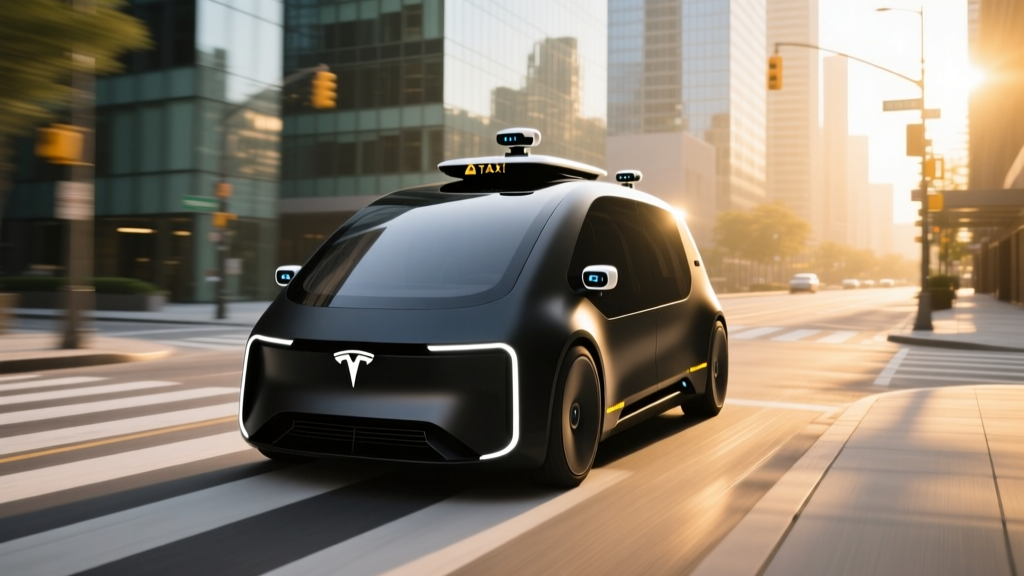
Tesla's approach uses 8+ cameras, no lidar, no radar on current hardware, and relies on neural-network vision processing. Critically, FSD (Supervised) remains SAE Level 2 — the driver is legally and operationally responsible at all times. Tesla has announced robotaxi ambitions ("Cybercab"), but as of 2026 no Tesla vehicle is operating as a licensed Level 4 driverless service for paying passengers in any U.S. jurisdiction. (Tesla Autopilot/FSD)
Zoox: Purpose-built bidirectional vehicle
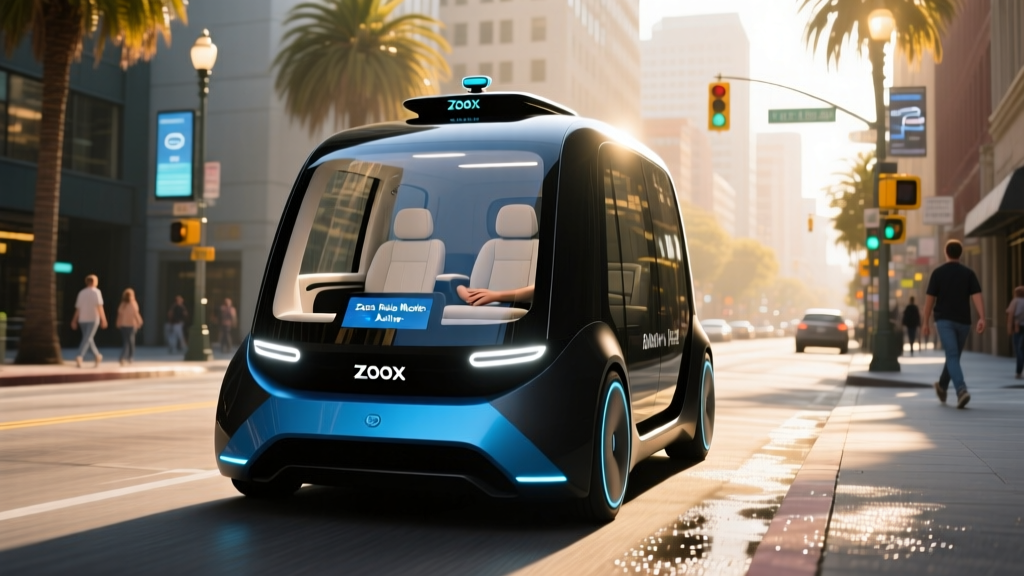
Zoox's custom vehicle has no steering wheel, no designated "front," and can travel in either direction. Sensor suite is lidar + camera + radar, symmetrical on all four corners. Currently deployed in limited geofenced zones.
Who Approves Robotaxi Operations? The Regulatory Map
There is no single federal "robotaxi license." Regulation in 2026 is a patchwork:
- Federal (NHTSA): Sets vehicle safety standards (FMVSS). Has granted limited exemptions for vehicles without steering wheels/pedals (e.g., Zoox, Cruise Origin). Investigates incidents via Standing General Order requiring crash reporting for Level 2+ systems.
- State DMVs and PUCs: California's DMV issues testing permits; the California Public Utilities Commission (CPUC) issues commercial deployment permits for paid rides. Arizona has taken a permissive approach with minimal state-level permitting, which is why Phoenix was Waymo's first commercial market. Texas, Nevada, and others have enacted AV-enabling legislation with varying operational requirements.
- Municipal: Cities control curb access, geofencing boundaries, and often negotiate operational terms (fleet caps, hours, equity requirements for underserved neighborhoods).
For a consumer, the practical implication is that robotaxi availability is a function of local politics as much as technology. A city council vote can matter more than a software update.
Current Limitations: Where Robotaxis Cannot Go or Do
- Geofence boundaries: A Waymo in Phoenix will not drive you to Sedona. Service ends at the mapped ODD edge, sometimes mid-suburb.
- Weather: Heavy rain, fog, and snow degrade lidar and camera performance. Most U.S. robotaxi fleets reduce service or suspend operations during significant precipitation events. This is why Phoenix, LA, and Austin — not Seattle or Chicago — were early markets.
- Construction zones and unmapped changes: Prolonged lane closures or new road configurations can force the vehicle to pull over and request remote human assistance, adding minutes to a trip.
- Airport and highway access: Some airport pickup zones and limited-access highways are excluded from the ODD, depending on city. Waymo has begun limited highway-capable routes in select markets, but this is not universal.
- Accessibility: Wheelchair-accessible robotaxi vehicles remain rare in current fleets. Zoox's purpose-built design is more accessible by architecture, but fleet scale is small.
- No intercity travel: You cannot take a robotaxi from San Francisco to Los Angeles. Long-haul autonomy remains unreleased for commercial passenger service.
The Ownership Question: Can You Buy a Self-Driving Car?
In 2026, the answer is still no — not at Level 4. You can buy:
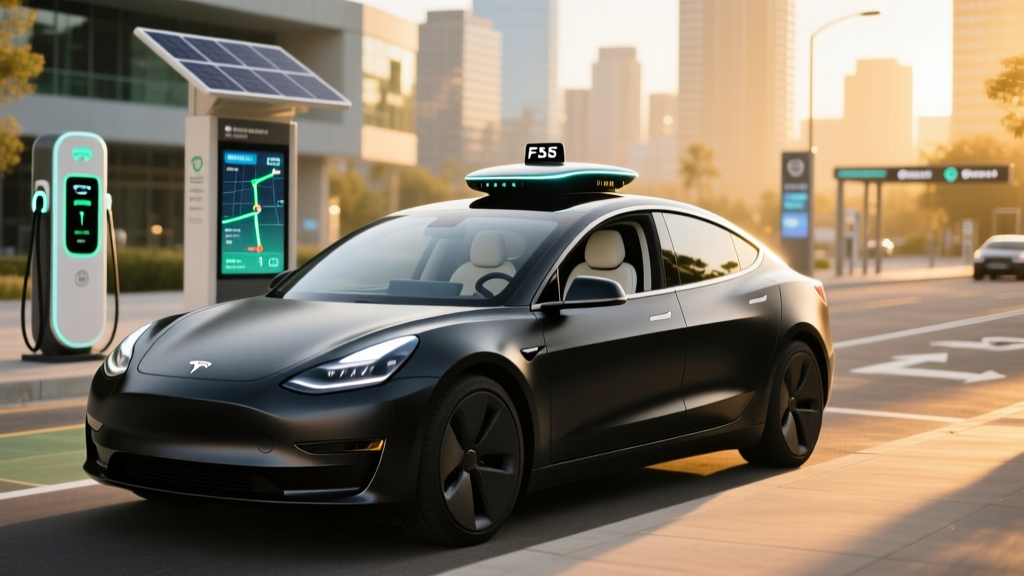
- Level 2 vehicles: Tesla Model Y/3 with FSD (Supervised) — MSRP from ~$39,990 (Model 3 RWD) plus $8,000 FSD option or $99/month subscription. Requires driver attention at all times.
- Level 2+ hands-off, eyes-on: Ford BlueCruise (hands-free on ~130,000 miles of pre-mapped divided highways, driver monitored via cabin camera). Available on Mustang Mach-E, F-150 Lightning, others.
- Level 3, limited: Mercedes DRIVE PILOT on the S-Class and EQS — approved in Nevada and California for speeds up to 40 mph in heavy highway traffic, daytime, clear weather. MSRP on equipped vehicles exceeds $120,000. The driver may look away but must be ready to resume within ~10 seconds when prompted.
None of these will drive you home if you are impaired, asleep, or in the back seat. That capability — Level 4 personal ownership — is not on any confirmed production timeline for consumer sale.
Frequently Asked Questions
How much does a self-driving car cost to buy in 2026?
You cannot buy a Level 4 self-driving car. The closest consumer products are Level 2 vehicles with advanced driver-assist: Tesla FSD (Supervised) adds $8,000 or $99/month to a Model 3/Y; GM Super Cruise is available on select Cadillac, Chevrolet, and GMC models (typically a $2,200–$2,500 package or subscription). Mercedes Level 3 DRIVE PILOT is bundled on six-figure S-Class/EQS vehicles in limited states.
Is Waymo cheaper than Uber?
In most U.S. markets in 2026, Waymo One is priced within $1–$4 of an equivalent UberX ride for the same distance. Promotional pricing can make Waymo cheaper on specific routes or times; surge pricing can make it more expensive during peak demand. There is no consistent, structural fare discount versus rideshare yet.
Has a Waymo ever been in a serious accident?
Waymo has reported low-severity contacts (typically low-speed, with stationary objects or other vehicles at fault) across tens of millions of driverless miles. As of early 2026, Waymo has not had a publicly attributed at-fault fatality in driverless operation. Full context requires reading NHTSA's Standing General Order crash data, which captures all reported incidents, not only headline events.
Can a Tesla drive itself without me paying attention?
No. Tesla's Autopilot and FSD (Supervised) are SAE Level 2 systems. The driver must remain attentive, with hands on or near the wheel and eyes on the road, at all times. Tesla's cabin monitoring will issue warnings and can disengage the system if inattention is detected. Operating FSD while distracted or impaired is illegal and dangerous.
When will robotaxis be available nationwide?
There is no confirmed timeline. As of 2026, only Phoenix, San Francisco, Los Angeles, and Las Vegas have meaningful Level 4 commercial service. Expansion requires mapping, regulatory approval, fleet deployment, and demonstrated safety in each new ODD. A truly nationwide Level 4 network — including rural roads, snow-belt cities, and complex highway interchanges — is a multi-decade infrastructure and policy project, not a product launch.
Are robotaxis safe in the rain?
Most U.S. Level 4 fleets reduce operations or suspend service during heavy rain. Light rain is generally handled, but lidar and camera performance degrade with precipitation, and the geofenced urban environments where robotaxis operate tend to be selected in part for favorable weather. This is a meaningful limitation versus human drivers, who operate in all conditions.
The Bottom Line on Self-Driving Car Prices
If you are shopping for a vehicle today, budget for a Level 2 driver-assist system — $0 to $8,000 depending on brand and trim — and understand you are still the driver. If you are in Phoenix, San Francisco, Los Angeles, or Las Vegas and want a ride with no human at the wheel, expect to pay roughly what UberX charges, within a mapped zone, in fair weather. The "self-driving car" you can buy and the self-driving car that drives you are, in 2026, two different products with two different price structures, two different regulatory regimes, and two very different safety profiles. Treat any source that blends them as either confused or selling something.