The Promise vs. Reality of Level 5 Autonomy
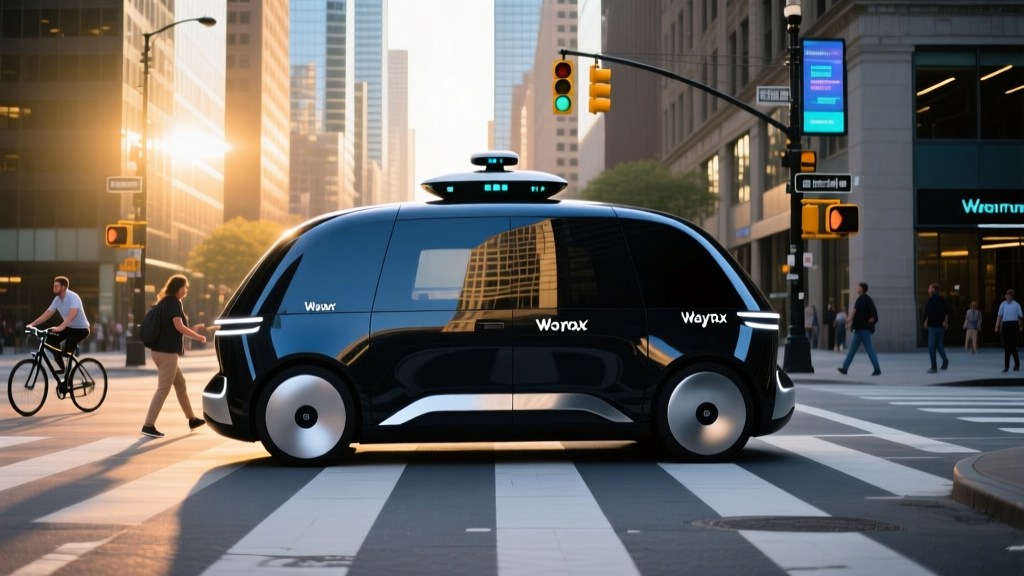
Search for "self driving car level 5" and you'll find a tangle of marketing hype, misunderstood SAE definitions, and speculative timelines. Here's the unvarnished truth as of 2026: no Level 5 vehicle exists anywhere on public roads. Not from Tesla, not from Waymo, not from Zoox, not from any automaker or startup. What does exist is a growing network of Level 4 robotaxis operating in tightly defined geofenced zones — impressive engineering achievements that are nonetheless worlds away from the anywhere-anytime-anything vision that Level 5 demands.
Understanding why requires a clear-eyed look at what these SAE levels actually mean, where robotaxis operate today, what the safety data shows, and what technical and regulatory walls still stand between us and full autonomy. This guide cuts through the noise with concrete numbers, real operational data, and honest assessments.
SAE Autonomy Levels: What Each Level Actually Means
The SAE International J3016 standard defines six levels of driving automation. The distinction between Level 2, Level 4, and Level 5 is not incremental — it represents fundamental shifts in who is responsible for driving and under what conditions.
| Level | Name | Who Drives? | Current Examples |
|---|---|---|---|
| 0 | No Automation | Human does everything | Traditional vehicles |
| 1 | Driver Assistance | Human drives; system assists steering OR speed | Adaptive cruise control, lane-keeping assist |
| 2 | Partial Automation | Human drives; system assists steering AND speed | Tesla Autopilot, GM Super Cruise, Ford BlueCruise |
| 3 | Conditional Automation | System drives in specific conditions; human must take over when requested | Mercedes DRIVE PILOT (limited markets/conditions) |
| 4 | High Automation | System drives fully within defined ODD (geofence, weather, speed); no human needed in that zone | Waymo One, Zoox (pilot areas) |
| 5 | Full Automation | System drives everywhere, in all conditions, with no human fallback — any road, any weather, any scenario | Does not exist |
The critical leap from Level 4 to Level 5 is the removal of the Operational Design Domain (ODD). A Level 4 system operates without a human driver, but only within its defined boundaries — a mapped urban zone, fair weather, speeds under 45 mph, for example. A Level 5 system must handle a blizzard on an unmapped mountain road, a flooded rural lane, a construction zone with hand-signaling flaggers, and a gravel driveway in rural Alaska — all without asking for human help. That capability does not exist in 2026, and no credible developer has published a timeline for achieving it.
Where Robotaxis Actually Operate in 2026
Level 4 robotaxi services have expanded significantly, but they remain geographically constrained. Here is where you can currently hail a fully driverless ride:
| Service | Operator | Cities | Hours | Geofence Notes |
|---|---|---|---|---|
| Waymo One | Waymo (Alphabet) | Phoenix (East Valley + expanding), San Francisco, Los Angeles, Austin | 24/7 in most zones | Defined service areas within metros; airport service available in PHX and SFO |
| Zoox | Zoox (Amazon) | Las Vegas (Strip corridor), Foster City, CA (limited pilot) | Limited hours; expanding | Purpose-built vehicle; restricted to mapped corridors |
| Cruise | GM/Cruise | Paused operations in most cities post-2023 incident; limited supervised testing in Phoenix, Dallas | Supervised testing only | Gradual relaunch with safety drivers before returning to driverless |
| Baidu Apollo Go | Baidu | Wuhan, Beijing, Shanghai, Shenzhen, Chongqing (China) | Extended hours; some 24/7 zones | Largest global robotaxi fleet by ride volume; China-only |
Notice the pattern: every operational Level 4 service is confined to specific metropolitan areas, within mapped corridors, and subject to operational limits. Waymo's Phoenix service area covers roughly 225 square miles — substantial, but a fraction of the metro area and nothing like "drive anywhere." These are not self driving car level 5 systems; they are highly capable but geographically bounded Level 4 operations.
How to Use a Robotaxi and What It Costs
If you're in an active service area, hailing a robotaxi is straightforward:
- Download the app (Waymo One, for example, is available on iOS and Android).
- Enter your destination — the app confirms whether both pickup and dropoff fall within the geofenced service area.
- Wait for the vehicle — typically 3-8 minutes in dense service zones like central San Francisco.
- Verify and board — the app shows the vehicle's license plate and exact location; you unlock via the app or a PIN on the door handle.
- Ride — no driver is present (in full Level 4 zones). An in-app support button connects you to a remote agent if needed.
| Scenario | Waymo One | UberX | Lyft Standard |
|---|---|---|---|
| 5-mile urban trip | $12–$18 | $14–$22 | $13–$20 |
| 10-mile suburban trip | $22–$32 | $24–$38 | $22–$35 |
| Airport run (15 mi) | $35–$48 | $38–$55 | $35–$50 |
| Surge pricing? | No surge pricing (currently) | Yes, can 2-3x | Yes, can 1.5-2.5x |
Waymo has deliberately priced competitively with UberX and Lyft to build ridership, and notably does not currently apply surge pricing — a meaningful advantage during peak demand. However, availability is constrained by fleet size and geofence boundaries, so wait times can stretch during busy periods when rideshare drivers flood the zone.
Robotaxi Safety: What the Data Actually Shows
Safety is the most debated aspect of autonomous vehicles, and it demands data rather than anecdotes. Here's what we know from NHTSA reporting and operator disclosures:
- 30+ million fully driverless miles completed across Phoenix, San Francisco, and Los Angeles.
- Fatalities: 0 fatalities involving a Waymo driverless vehicle as of publication.
- Injury rate: Waymo's published analysis claims a ~85% reduction in injury-causing crash involvement compared to human baseline drivers in comparable urban environments (per million miles).
- Contact rate: Waymo reports property-damage-only contact incidents at roughly 40% lower rate than human drivers in the same geographies.
- Disengagement data: Not directly comparable to older California DMV disengagement reports (which Waymo stopped publishing in traditional form), but internal metrics suggest human-vehicle remote assistance interventions occur roughly every 8,000–12,000 miles for edge-case resolution (not safety-critical takeover).
For context, the US human-driver fatality rate is approximately 1.35 deaths per 100 million vehicle miles (NHTSA 2024 data). Robotaxi fleets have not yet accumulated enough miles to achieve statistical parity on fatality rates alone — zero fatalities across ~30 million miles is encouraging but not yet statistically conclusive against a baseline that requires hundreds of millions of miles for confidence intervals to narrow.
The Cruise incident in October 2023 — where a pedestrian was struck by a human-driven vehicle and then run over by a Cruise robotaxi in San Francisco — underscored that Level 4 systems can fail in complex, multi-agent scenarios. That single incident led to Cruise suspending driverless operations nationwide and restructuring its approach. It also demonstrated that NHTSA and state regulators (particularly the California DMV and CPUC) will move aggressively when safety concerns arise.
The Technology Stack: How Robotaxis See the World
Level 4 robotaxis rely on layered sensor suites and high-definition maps. The technology choices differ significantly between operators:
Waymo (6th-generation "Driver" system)
- LiDAR: Multiple custom LiDAR units providing 360° 3D point clouds; effective range ~300m in clear conditions.
- Cameras: 29+ cameras covering all angles, optimized for traffic-light recognition, sign reading, and object classification.
- Radar: 6 radar units for velocity detection and all-weather object tracking.
- HD Maps: Centimeter-accurate pre-mapped routes; the system knows lane geometry, curb heights, and signal positions before arriving.
- Compute: Custom-designed autonomous driving computer with redundant processing paths.
Zoox (purpose-built vehicle)
- Sensor symmetry: Identical sensor pods on all four corners — no "front" or "back," enabling bidirectional driving.
- LiDAR + cameras + radar: Full redundant sensor suite with overlapping fields of view.
- Vehicle design: No steering wheel or pedals; carriage-style seating for 4 passengers facing each other.
Tesla FSD (Level 2 — for contrast)
- Camera-only: 8 surround cameras; no LiDAR, no radar (removed in recent hardware revisions).
- Neural-net-based: Vision-only perception relying on end-to-end neural networks.
- No HD maps: Relies on real-time perception rather than pre-mapped routes.
- Driver required: This is a Level 2 system — the human must supervise at all times.
The sensor-fusion approach (LiDAR + cameras + radar + HD maps) used by Waymo and Zoox provides redundancy that camera-only systems lack. LiDAR works in total darkness. Radar penetrates fog and light rain. HD maps give the system prior knowledge of the environment. The trade-off is cost (each Waymo vehicle's sensor suite reportedly costs $100,000+) and geographic constraint (you must map the area before operating).
Current Limitations: What Robotaxis Cannot Do
Understanding the limitations of Level 4 systems is essential for anyone evaluating autonomous transport — and it's precisely why a self driving car level 5 remains beyond current reach:
- Weather: Heavy rain, snow, fog, and ice degrade sensor performance. Waymo reduces or suspends service during severe weather events. A Level 5 system must handle a whiteout blizzard on I-70 in Colorado — current systems cannot.
- Geofence boundaries: Drive to the edge of Waymo's Phoenix service area and the car will refuse to go further. Rural roads, unmapped neighborhoods, and private driveways are inaccessible.
- Construction zones: While improving, complex construction zones with temporary lane shifts, hand-signaling flaggers, and non-standard signage remain challenging. Some zones trigger remote-assistance interventions.
- Edge cases: Unusual scenarios — a person in a costume, an overturned truck spilling cargo, a police officer directing traffic with non-standard gestures — can cause the system to stop and request remote guidance.
- Pickup/dropoff precision: The vehicle may stop 50-100 feet from your exact pin, particularly in areas with bus stops, fire hydrants, or loading zones that restrict stopping.
- Highway speeds: Most current Level 4 operations cap at 45-65 mph. Waymo has expanded to highway segments in Phoenix, but high-speed autonomous operation remains more constrained than urban driving.
- No intercity travel: You cannot take a robotaxi from San Francisco to Los Angeles. The geofence does not connect metros.
The Regulatory Landscape: Who Decides Where Robotaxis Can Drive
Autonomous vehicle regulation in the US is a patchwork of federal and state authority:
- Federal (NHTSA): Sets vehicle safety standards (FMVSS). Currently, NHTSA has granted limited exemptions for vehicles without steering wheels or pedals (Zoox's purpose-built vehicle, for example). NHTSA also investigates safety incidents and can order recalls or operational pauses.
- State DMVs: Issue permits for testing and deployment. The California DMV maintains the most detailed public reporting on autonomous vehicle testing and deployment permits.
- State Public Utility Commissions: In California, the CPUC regulates commercial robotaxi services as passenger carriers, approving fare-charging operations.
- Local governments: Cities can impose additional restrictions on operating hours, zones, and fleet sizes. San Francisco's Board of Supervisors has debated caps on robotaxi fleet sizes and operating zones.
No federal framework for Level 5 certification exists — because no Level 5 system exists to certify. If and when a developer claims Level 5 capability, the regulatory process for validating that claim across all US driving environments would be unprecedented in scope.
Frequently Asked Questions
Where can I use a robotaxi service right now?
Fully driverless Level 4 robotaxis are available to the public through Waymo One in Phoenix (East Valley), San Francisco, Los Angeles, and Austin. Zoox operates a limited service in Las Vegas. In China, Baidu Apollo Go operates in Wuhan, Beijing, and several other major cities. Outside these specific geofenced areas, no driverless ride-hailing service is available.
How much does a robotaxi cost compared to Uber or Lyft?
Waymo One pricing is generally competitive with UberX and Lyft Standard — typically $12-$18 for a 5-mile urban trip and $35-$48 for a 15-mile airport run. Waymo does not currently use surge pricing, which can make it cheaper than rideshare during peak demand. However, availability is limited by fleet size and geofence boundaries.
How safe are robotaxis based on real data?
Waymo reports 30+ million driverless miles with zero fatalities and injury-crash involvement rates approximately 85% lower than human drivers in comparable environments. However, total fleet miles are still far below the hundreds of billions of miles needed for fatality-rate statistical equivalence with human drivers. The 2023 Cruise incident in San Francisco demonstrated that serious incidents can and do occur, prompting regulatory action.
What are the current limitations of robotaxi services?
Level 4 robotaxis cannot operate outside their geofenced service areas, in severe weather (heavy snow, dense fog, ice), at high speeds on all highway types, or in complex unmapped environments like rural roads or construction zones with non-standard traffic control. They also cannot handle intercity trips. These constraints are precisely why these systems are Level 4, not Level 5.
Is Tesla FSD a self-driving car? Is it Level 5?
No. Tesla Full Self-Driving (Supervised) is a Level 2 driver-assistance system. The driver must remain fully engaged, hands on or near the wheel, eyes on the road, and is legally responsible for all vehicle actions. Tesla itself states this in its owner documentation. FSD is not a robotaxi, does not operate without a driver, and is not Level 4 or Level 5 regardless of its marketing name.
When will a true Level 5 self-driving car be available?
No credible developer has published a timeline for Level 5 autonomy, and most industry experts consider it decades away at minimum — if achievable at all with current approaches. The gap between Level 4 (driverless within a geofenced zone in fair weather) and Level 5 (any road, any weather, any condition, no human fallback) involves solving edge cases that represent the hardest problems in artificial intelligence and robotics. Be deeply skeptical of any company or analyst that promises Level 5 within a specific near-term timeframe.
Are robotaxis electric vehicles?
Yes. Waymo's current fleet is built on the Jaguar I-PACE (a BEV with a 90 kWh NMC battery, EPA-estimated 234-mile range). Zoox's purpose-built vehicle is fully electric with a ~100 kWh battery pack. Baidu Apollo Go uses various electric platforms. The operational economics of robotaxis — high daily mileage (150-250+ miles per vehicle per day) — strongly favor electric powertrains due to lower per-mile energy costs and reduced maintenance compared to internal combustion.