The Real Cost of Riding in a Self-Driving Car
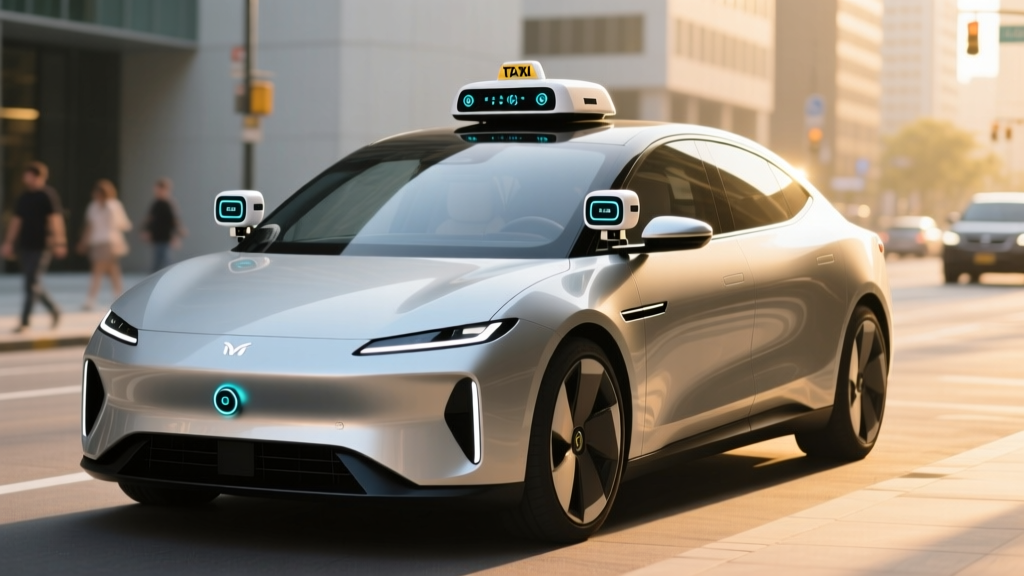
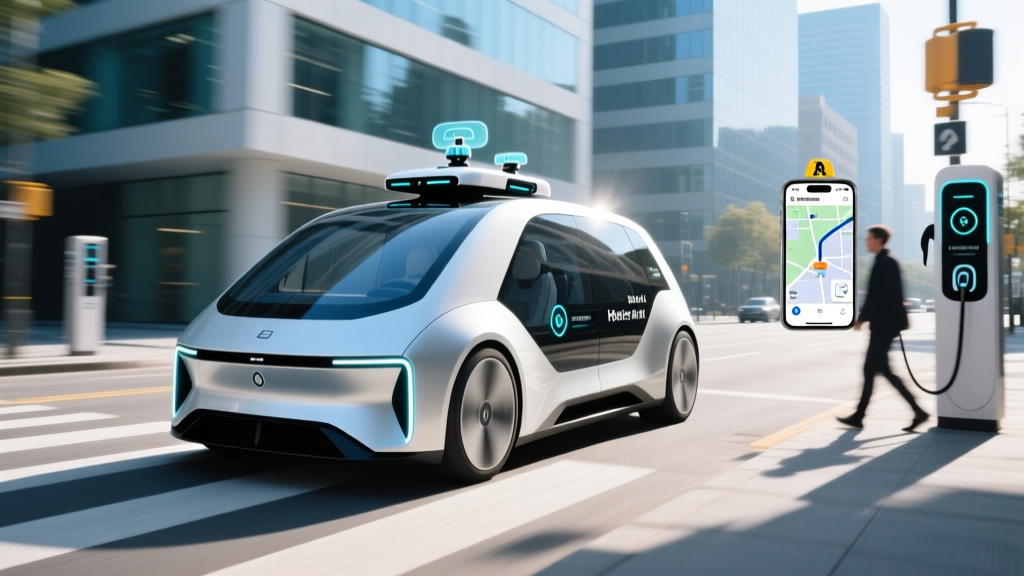
If you've searched "how much would a self-driving car cost" recently, you're likely encountering two very different answers — and the distinction matters. The first answer involves buying a vehicle marketed as "self-driving" (which, in 2026, doesn't truly exist for consumers at any price). The second involves riding in a Level 4 robotaxi operated by companies like Waymo, Zoox, or Cruise successors in select cities. This guide focuses on the latter: what it actually costs to hail a driverless ride today, how that compares to Uber and Lyft, and what you're getting for the money.
Let's be precise about terminology first, because the auto industry's marketing has muddied these waters considerably.
SAE Automation Levels: What "Self-Driving" Actually Means
| Level | Name | Who Drives? | Consumer Examples (2026) | Robotaxi Examples |
|---|---|---|---|---|
| Level 0 | No Automation | Human | Most older vehicles | — |
| Level 1 | Driver Assistance | Human (one axis assisted) | Adaptive cruise OR lane-keep | — |
| Level 2 | Partial Automation | Human (must supervise) | Tesla Autopilot/FSD Supervised, GM Super Cruise, Ford BlueCruise | — |
| Level 3 | Conditional Automation | System (in limited conditions) | Mercedes Drive Pilot (selected models, <40 mph, specific highways) | — |
| Level 4 | High Automation | System (in geofenced area) | Not available for purchase | Waymo One, Zoox |
| Level 5 | Full Automation | System (everywhere) | Does not exist | Does not exist |
Key takeaway: When people ask how much a self-driving car costs, the only true driverless experience available to the public in 2026 is a Level 4 robotaxi ride. Consumer vehicles with Level 2 systems still require your full attention and hands-on (or eyes-on) supervision. You are the driver.
Where Can I Use a Robotaxi Service Right Now?
Level 4 robotaxi availability remains limited to specific geofenced zones in a handful of U.S. cities. Here's the current operational landscape as of early 2026:
| Operator | Live Cities | Service Hours | Access Model |
|---|---|---|---|
| Waymo One | Phoenix (metro-wide), San Francisco, Los Angeles, Austin (limited) | 24/7 in most zones | Open to public via Waymo app |
| Zoox | Las Vegas (Strip corridor), Foster City, CA (limited) | Limited hours | Invite-only / early rider programs |
| Cruise | Operations suspended; phased re-entry in select markets under supervised testing | Limited | Not publicly available for paid rides |
Waymo One remains the most accessible robotaxi service in the U.S. If you're in Phoenix, San Francisco, or Los Angeles, you can download the app, request a ride, and be picked up by a vehicle with no human behind the wheel. Austin has seen limited Waymo deployment, primarily through partner integrations (Uber's app offers Waymo rides in select Austin zones).
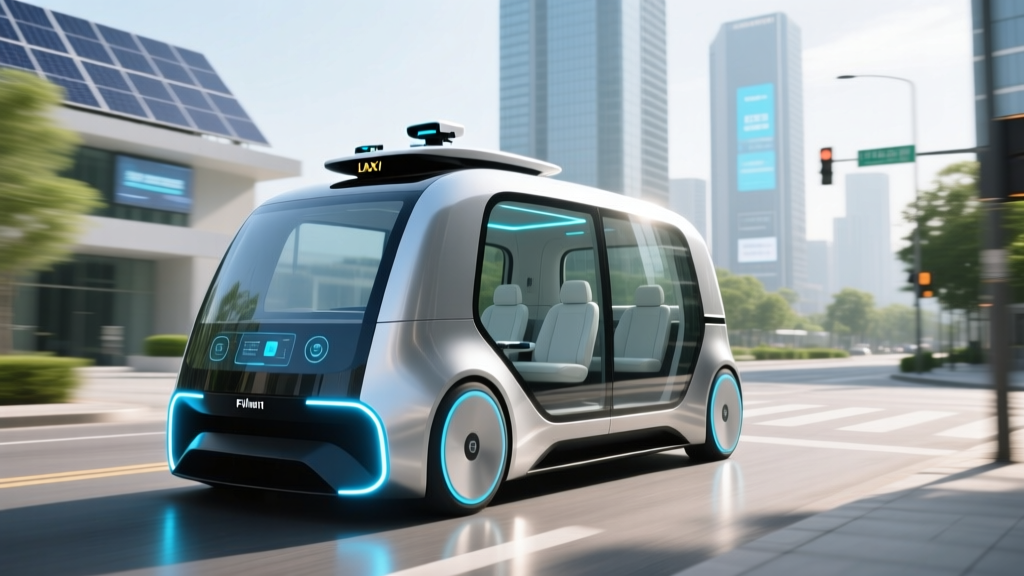
Zoox, Amazon's autonomous vehicle subsidiary, operates its purpose-built bidirectional shuttle in Las Vegas and parts of the Bay Area, but access remains restricted to approved riders in early-access programs. Full public commercialization is expected later in 2026 or 2027.
How Much Does a Robotaxi Cost vs. Uber and Lyft?
This is the core of the "how much would a self-driving car cost" question for riders. Robotaxi pricing in 2026 is competitive with — and sometimes cheaper than — traditional rideshare, though it varies by city, time of day, and trip distance.
| Scenario | Waymo One (Est.) | UberX (Est.) | Lyft Standard (Est.) |
|---|---|---|---|
| Short trip (3 mi, non-peak) | $8–$12 | $9–$14 | $9–$13 |
| Medium trip (8 mi, non-peak) | $14–$22 | $16–$25 | $15–$24 |
| Airport run (15 mi, off-peak) | $25–$38 | $28–$45 | $27–$42 |
| Surge pricing (Friday 6 PM) | No surge multiplier; wait times increase | 1.5x–3x surge | 1.3x–2.5x surge |
| Tip expected? | No (optional in-app) | Yes (15–20% typical) | Yes (15–20% typical) |
What this means in practice: On a typical 5-mile trip across San Francisco, Waymo One often undercuts UberX by $2–$5, particularly because Waymo does not apply surge multipliers. Instead of price surging, Waymo extends estimated wait times when demand is high. You also eliminate the tip variable — while the app offers a tipping option, there's no social pressure to tip a vehicle with no driver.
However, robotaxi pricing isn't universally cheaper. For longer trips that exit the geofenced zone, you'll need traditional rideshare. And in markets where Waymo has limited fleet density, wait times of 10–15 minutes can make Uber's 3-minute ETA more practical even at a higher price.
Choose a Robotaxi If:
- You're within the geofenced zone and not in a rush
- You want a consistent, surge-free price
- You prefer not to interact with a driver
- The trip is under 15 miles within the service area
Choose Uber/Lyft If:
- You need to travel outside the robotaxi geofence
- You're on a tight schedule and need the fastest pickup
- You need specific vehicle types (XL, wheelchair-accessible, car seat)
- You're in a city without robotaxi service
How Safe Are Robotaxis? The Real Data
Safety is the most consequential question in autonomous vehicles, and it demands data — not marketing claims. Here's what we know from reported figures and regulatory filings through 2025–2026:
Waymo Safety Record (Through Late 2025)
- Total driverless miles driven: Over 30 million fully autonomous (no human in the driver's seat) miles across all markets
- Contactless at-fault crashes: Waymo's internal data and NHTSA reports show at-fault collision rates approximately 57% lower than human benchmark rates for comparable urban driving environments
- Severity profile: The vast majority of reported incidents involve low-speed contact (<5 mph), often when the Waymo vehicle is stationary and struck by another road user
- Fatalities: Zero passenger or pedestrian fatalities attributed to Waymo's driverless operations as of early 2026
Sources: Waymo safety reports, NHTSA Standing General Order crash data, IIHS analysis.
For context, the National Highway Traffic Safety Administration (NHTSA) requires all operators of vehicles with automated driving systems to report crashes under a Standing General Order. This data is public and provides the most reliable window into robotaxi safety performance.
It's worth noting that Cruise's October 2023 incident in San Francisco — where a pedestrian was dragged by a Cruise vehicle after being struck by a human-driven car — led to a suspension of Cruise's California DMV permit and a nationwide operational pause. This event underscored that robotaxi safety isn't theoretical; edge cases involving multi-actor scenarios remain challenging. Cruise has since restructured its operations and resumed limited supervised testing under stricter regulatory oversight.
The Technology Stack: How Robotaxis Actually See the Road
Understanding what you're paying for requires understanding how these vehicles perceive their environment. The two dominant approaches in 2026 diverge sharply:
Sensor Fusion (Waymo, Zoox, Most Operators)
- LiDAR: Multiple roof- and body-mounted LiDAR units (typically 5–6) generating a real-time 360° 3D point cloud with centimeter-level resolution to ~200 meters
- Cameras: 8–12 high-resolution cameras for color information, traffic-light state recognition, sign reading, and redundancy
- Radar: 4–6 radar units for velocity detection of moving objects, particularly in rain or fog where LiDAR degrades
- HD Maps: Pre-scanned centimeter-accurate maps of the geofenced service area, updated regularly, providing lane geometry, curb heights, and traffic-control device locations
- Compute: Custom AI processors (Waymo uses 5th-generation hardware) processing terabytes of sensor data per hour
Camera-Only / Vision-Dominant (Tesla Approach)
- Cameras: 8 surround cameras providing 360° visual coverage
- No LiDAR, no radar (Tesla removed radar and ultrasonic sensors from production vehicles)
- Neural network inference: End-to-end deep learning models interpreting visual data to estimate depth, velocity, and scene semantics
- Important caveat: Tesla's Full Self-Driving (Supervised) remains a Level 2 system. The driver must remain engaged. Tesla does not operate a commercial robotaxi service as of early 2026, though the company has announced plans for a "Cybercab" robotaxi — currently in pre-production testing with no confirmed public launch date.
Waymo's sensor-fusion approach costs significantly more per vehicle — industry estimates place a Waymo 5th-generation sensor suite at $50,000–$100,000+ in hardware alone — but provides the redundancy that regulators and safety researchers consider essential for driverless operation. This per-vehicle cost is absorbed by the operator and reflected in ride pricing; you'll never see it as a line item on your receipt.
Regulatory Landscape: Who Approves Robotaxi Operations?
Robotaxi deployment in the U.S. is governed by a patchwork of state and local regulations. There is no single federal framework for commercial autonomous vehicle operations.
- California DMV: Issues autonomous vehicle testing and deployment permits. Operators must submit safety data, maintain insurance, and receive approval before offering paid rides. The DMV can suspend permits (as it did with Cruise in October 2023).
- California Public Utilities Commission (CPUC): Regulates commercial passenger service, including fare-setting authority and operational requirements for robotaxi services.
- Arizona: Among the most permissive regulatory environments. Waymo has operated commercially in Phoenix since 2020 with relatively light-touch state oversight.
- Texas: Allows autonomous vehicle testing and limited deployment under state transportation authority oversight. Austin has seen Waymo expansion.
- Nevada: Permits autonomous vehicle testing and limited commercial operations; Zoox operates in Las Vegas under state authorization.
- Federal (NHTSA): Sets vehicle safety standards and collects crash data through Standing General Orders, but does not directly approve or prohibit robotaxi operations. Congress has not passed comprehensive AV legislation as of 2026.
This regulatory fragmentation means expansion is city-by-city, state-by-state — a major reason robotaxi service isn't available in most of the country.
Current Limitations: What Robotaxis Cannot Do
Before hailing a driverless ride, understand the operational boundaries. These limitations are not minor footnotes — they define where and when the service works:
- Geofencing: Robotaxis operate only within pre-mapped zones. Request a ride to a destination outside the geofence, and the app won't let you book it. In San Francisco, Waymo covers most of the city but excludes certain highway segments and far-flung neighborhoods.
- Weather restrictions: Heavy rain, fog, snow, and ice degrade LiDAR and camera performance. Waymo reduces service area or pauses operations during severe weather events. Phoenix's dry climate is a key reason it was the first robotaxi market.
- Construction zones: Temporary lane closures, shifted lanes, and unmapped detours challenge the HD-map-dependent navigation systems. Robotaxis may refuse routes through active construction or take conservative, sometimes inconvenient, alternate paths.
- Pickup/dropoff precision: Unlike a human driver who can pull up to a specific storefront or apartment entrance, robotaxis navigate to GPS coordinates that may place you across a busy street from your actual destination. Some Waymo zones have designated pickup spots.
- No highway driving (mostly): Most robotaxi geofences exclude high-speed limited-access highways. A trip from downtown LA to LAX may route on surface streets, adding time.
- Passenger assistance: No driver means no help with luggage, wheelchair loading, car seats, or disoriented passengers. The service assumes able-bodied, self-sufficient riders.
- Limited vehicle types: Current robotaxi fleets are primarily compact/midsize sedans or small shuttles. No SUV, minivan, or luxury options are widely available.
What About Buying a Self-Driving Car?
If your search for "how much would a self-driving car cost" was about purchasing a vehicle that drives itself, the honest answer is: you can't — not yet, and not at any price point.
Here's what is available for purchase:
| System | SAE Level | Vehicle | Cost | What It Actually Does |
|---|---|---|---|---|
| Tesla FSD (Supervised) | Level 2 | All Tesla models | $8,000 one-time or $99/mo | Advanced driver assist; you must supervise at all times |
| GM Super Cruise | Level 2 | Cadillac, Chevy, GMC models | $2,200–$2,500 + $25/mo after trial | Hands-free on mapped highways; eyes-on required |
| Ford BlueCruise | Level 2 | Ford/Lincoln models | $2,100 + $75/yr after trial | Hands-free on approved highway segments; eyes-on required |
| Mercedes Drive Pilot | Level 3 | EQS, S-Class (select markets) | ~$2,500 option | Conditional automation under 40 mph on specific highways (NV, CA); driver can look away but must be ready to resume |
Mercedes-Benz Drive Pilot is the only Level 3 system available to U.S. consumers, and it's restricted to specific highway corridors in Nevada and California at speeds under 40 mph. When conditions are met, Mercedes accepts liability for the driving task — a significant distinction from Level 2 systems where liability always rests with you. But this is a narrow use case, not a "self-driving car" in the way most people imagine.
Tesla has announced a dedicated robotaxi vehicle (the "Cybercab") with a target production timeline, but as of early 2026, it remains in pre-production testing. No consumer can purchase a Tesla that operates without a driver. Any claims to the contrary conflate Level 2 driver-assist with Level 4 autonomy.
Frequently Asked Questions
Is Waymo One really driverless, or is there a safety operator?
Waymo One rides in Phoenix, San Francisco, and Los Angeles are fully driverless — no human in the driver's seat. Remote support staff can monitor vehicles and provide guidance, but they do not steer or brake in real time. This is true Level 4 operation within the geofenced service area.
Can I use a robotaxi to get to the airport?
It depends on the airport and the geofence. Phoenix Sky Harbor is within Waymo's service area. San Francisco International (SFO) access has been gradually expanding. Los Angeles International (LAX) access remains limited. Always check the app for your specific origin-destination pair.
Will robotaxi prices go up or down over time?
Industry analysts expect per-ride costs to decrease as fleet density increases and sensor hardware costs decline. Waymo's 5th-generation hardware is significantly cheaper than its 4th-gen, and future generations will continue this trend. However, current pricing may already reflect subsidies to build ridership — long-term fares will need to cover vehicle depreciation, sensor maintenance, remote operations, insurance, and charging infrastructure.
What happens if a robotaxi gets into an accident?
The operating company (Waymo, Zoox, etc.) carries liability insurance and assumes responsibility for incidents caused by the autonomous driving system. Vehicles are equipped with internal and external cameras that record incidents. NHTSA's Standing General Order requires crash reporting. As a passenger, you are not liable for the vehicle's driving decisions.
Are robotaxis electric vehicles?
Yes. Waymo's current fleet is based on the Jaguar I-PACE (a battery-electric SUV with a 90 kWh battery and ~234 miles of EPA range). Waymo has also partnered with Hyundai for future fleet vehicles. Zoox's purpose-built shuttle is fully electric. The operational economics of robotaxis depend heavily on low per-mile energy costs that EVs provide — typically $0.04–$0.06 per mile for electricity vs. $0.12–$0.18 for gasoline in comparable vehicles.
When will robotaxis be available in my city?
Expansion is gradual and regulatory-dependent. Waymo has signaled plans to reach 10+ U.S. cities, but timelines depend on state approval, mapping requirements, and fleet scaling. Cities with favorable regulatory environments, mild weather, and grid-like street layouts (think Sun Belt metros) are likely next. If you're outside the current service cities, expect a wait of at least 2–4 years for potential availability.