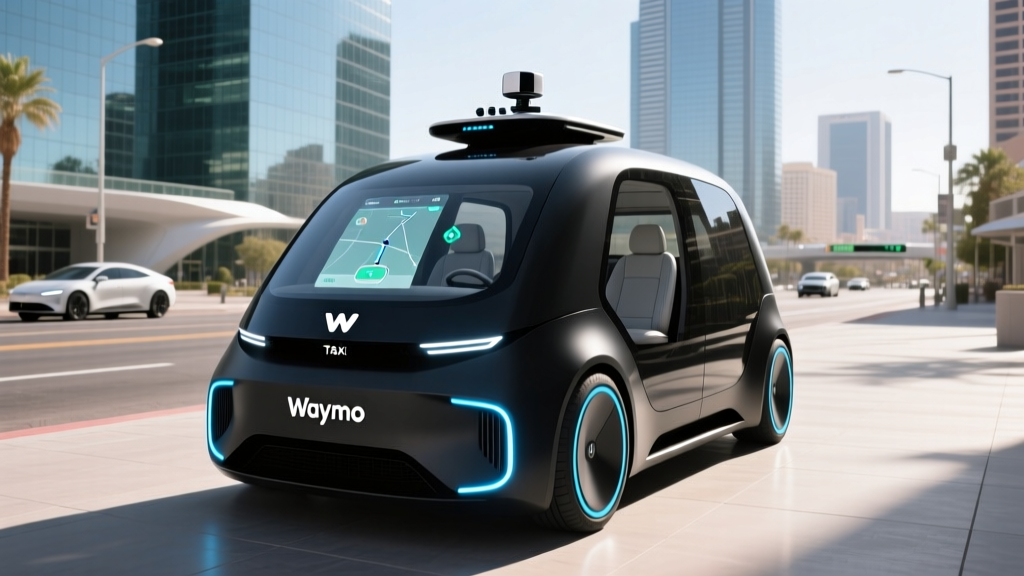
If you've searched for a "Scottsdale self-driving Uber," you're likely referring to Waymo's driverless ride-hail service operating across the Phoenix metropolitan area — including Scottsdale. Waymo is currently the only Level 4 robotaxi service available to the general public in Arizona, accessed through its own app or via the Uber app in select markets. Tesla's Full Self-Driving (Supervised) is not a robotaxi — it remains a Level 2 driver-assist system that requires an attentive human driver behind the wheel at all times.
This guide breaks down exactly where you can ride, what it costs, the real safety data, the technology powering these vehicles, and the limitations you should know before hailing your first driverless ride in Scottsdale.
Is This Truly Self-Driving or Just Driver-Assist?
The distinction between consumer driver-assist and a true robotaxi is the most important one in autonomous vehicles. Waymo operates at SAE Level 4 — meaning the vehicle handles all driving tasks within its defined operational design domain (ODD) with no human driver present. There is nobody in the front seat. The car drives itself.
By contrast, Tesla's FSD (Supervised), GM's Super Cruise, and Ford's BlueCruise are all SAE Level 2 systems. The vehicle can steer, accelerate, and brake, but a licensed driver must remain engaged, monitor the road, and take over at any moment. Calling Level 2 "self-driving" is inaccurate and potentially dangerous.
| Level | Description | Example |
|---|---|---|
| Level 2 | Driver-assist — human must supervise | Tesla FSD (Supervised), BlueCruise, Super Cruise |
| Level 3 | Conditional automation — human must take over when asked | Mercedes Drive Pilot (limited markets) |
| Level 4 | High automation — no driver needed in defined area | Waymo One (Phoenix, SF, LA) |
| Level 5 | Full automation — any road, any condition | Does not exist commercially |
Where Can I Use Waymo's Robotaxi in Scottsdale?
Waymo operates its Waymo One service across the Phoenix metro area, which encompasses a service territory of roughly 200+ square miles. Scottsdale is included, though coverage is not universal — the service is geofenced, meaning the car will only navigate to and from locations within its approved operational zone.
| City/Area | Availability | Notes |
|---|---|---|
| Scottsdale (Old Town, South) | Active | Core coverage area |
| Scottsdale (North/Kierland) | Partial | Geofence boundary — check app |
| Phoenix (Downtown, Midtown) | Active | High availability |
| Tempe | Active | ASU corridor well covered |
| Mesa | Partial | Western Mesa covered |
| Chandler / Gilbert | Limited | Expanding, check app for live zones |
| Phoenix Sky Harbor (PHX) | Active | Airport rides available |
Waymo also operates in San Francisco, Los Angeles, and has been expanding into additional cities. As of early 2026, Phoenix remains its largest and longest-running commercial market. According to Waymo's official site, the Phoenix fleet completes tens of thousands of paid trips per week across the metro.
How to Hail a Self-Driving Ride and What It Costs
Booking a Waymo in Scottsdale works similarly to a standard rideshare:
- Download the Waymo One app (iOS/Android) or use the Uber app in markets where Waymo is integrated.
- Enter your pickup and drop-off — the app will confirm both are within the geofenced service area.
- Wait for your vehicle — a Jaguar I-PACE (the current Waymo fleet vehicle) will arrive with no one in the driver's seat.
- Unlock via the app — tap "Start Ride" when you're seated and buckled.
- The car handles everything — routing, lane changes, traffic signals, pedestrians, and parking.
| Scenario | Waymo One | UberX | Lyft Standard |
|---|---|---|---|
| Short trip (~3 mi, Old Town Scottsdale) | $8–$12 | $9–$14 | $8–$13 |
| Medium trip (~8 mi, Scottsdale to PHX Airport) | $18–$26 | $20–$30 | $18–$28 |
| Longer trip (~15 mi, Scottsdale to Downtown Phoenix) | $28–$38 | $25–$40 | $24–$38 |
| Surge/Peak pricing | Minimal surge (fleet-managed) | 1.5x–3x common | 1.5x–3x common |
Prices are estimates based on typical 2026 fares. Actual cost varies by time, distance, and demand. Waymo pricing tends to be more stable because it doesn't rely on independent driver supply.
A notable advantage: Waymo's pricing is generally more predictable than Uber or Lyft during peak hours. Because the fleet is centrally managed and drivers don't go offline, the extreme surge multipliers common with human-driven rideshare are less frequent. However, wait times can be longer during high-demand periods if fleet capacity is saturated.
How Safe Are Robotaxis? The Real Data
This is the question every first-time rider asks. Waymo has published safety data and has been scrutinized by NHTSA and independent researchers. Here's what the numbers show:
- 30+ million fully autonomous (driverless) miles driven on public roads as of 2025 reporting
- Fewer injury-causing collisions per million miles compared to human benchmarks in comparable urban environments, per Waymo's published safety studies
- Contact rate: Waymo's police-contacted incident rate is lower per million miles than human driver baselines in Phoenix and San Francisco
- NHTSA Standing General Order: All Level 4 operators must report crashes — Waymo has complied with all incident reporting requirements
- No fatalities attributed to Waymo's autonomous driving system in driverless commercial operations as of early 2026
Sources: NHTSA AV safety reporting, Waymo safety publications. Real-world data is still accumulating; robotaxis have not been tested at the scale of billions of human-driven miles.
The data is encouraging but comes with important context. Waymo's vehicles operate primarily in well-mapped urban and suburban environments with favorable weather. They have not been tested in the full range of conditions human drivers encounter — blizzards, unmapped construction zones, or rural roads with no lane markings. Comparing robotaxi safety to human benchmarks requires careful methodology, as the driving environments differ significantly.
It's also worth noting that IIHS and other safety organizations continue to study autonomous vehicle interactions with pedestrians and cyclists. The research is ongoing, and the safety case for robotaxis is strongest in controlled, well-mapped urban environments — exactly where Waymo operates.
The Technology Stack: Lidar, Cameras, and Geofencing
Waymo's approach to autonomy is sensor-rich and fundamentally different from Tesla's camera-only philosophy. The current Waymo fleet uses the Jaguar I-PACE electric SUV, equipped with Waymo's 6th-generation autonomous driving hardware.
| Sensor Type | Count | Function |
|---|---|---|
| Lidar | 5+ units | 360° 3D point cloud, object detection to ~500m |
| Cameras | 29+ cameras | Visual perception, traffic light/sign reading, lane detection |
| Radar | 6+ units | Velocity detection, adverse weather penetration |
| Audio sensors | External mics | Emergency vehicle siren detection |
| HD Maps + GPS | Centimeter-level | Pre-mapped routes, precise localization |
The reliance on lidar (light detection and ranging) is a key differentiator. Lidar creates a real-time 3D map of the vehicle's surroundings regardless of lighting conditions — critical for night driving and complex urban intersections. This sensor redundancy (lidar + cameras + radar) provides overlapping perception layers that a camera-only system cannot replicate in low-visibility conditions.
Geofencing is equally important. Waymo pre-maps every road in its service area at centimeter-level resolution. The vehicle knows the exact position of every lane, crosswalk, speed limit, and traffic signal before it ever drives the route. This is why the service can't simply expand to any road — each new street must be mapped, validated, and approved before the geofence is extended.
Regulatory Landscape: Who Approves Robotaxi Operations?
Arizona has been one of the most permissive states for autonomous vehicle testing and commercial deployment. Key regulatory facts:
- Arizona does not require a special permit for fully autonomous vehicles to operate on public roads, per Executive Order 2018-04 and subsequent legislation. This contrasts sharply with California, where the California Public Utilities Commission (CPUC) and DMV both issue permits and can suspend operations.
- NHTSA at the federal level oversees vehicle safety standards and requires crash reporting through the Standing General Order for all Level 2+ and Level 4 systems.
- No federal legislation specifically governing robotaxi commercial operations exists as of 2026 — regulation is primarily state-level.
- Waymo must maintain commercial insurance and comply with local traffic laws identically to any fleet operator.
Arizona's relatively hands-off regulatory posture is a primary reason Waymo chose Phoenix as its first commercial market. In California, regulatory friction has been higher — San Francisco operations have faced public pushback, CPUC hearings, and temporary suspensions following incidents.
Current Limitations: What Robotaxis Cannot Do
- Geofence boundaries: You cannot hail a ride to or from any address outside the mapped service zone. The app will simply not allow the booking.
- Heavy rain and dust storms: Phoenix monsoon season (July–September) can trigger service slowdowns or temporary suspensions. Lidar and camera performance degrades in heavy precipitation.
- No highway driving to other cities: You cannot take a Waymo from Scottsdale to Tucson or Flagstaff. The service is urban/suburban only within the geofence.
- Unmapped construction zones: If a road has been significantly reconfigured since the last map update, the vehicle may pull over and request remote assistance.
- Wait times during peak demand: Fleet size is finite. During events, holidays, or rush hours, you may wait 10–20+ minutes or be unable to get a ride at all.
- No car seats: Waymo vehicles do not provide child safety seats, and passengers are responsible for ensuring children are properly restrained per Arizona law.
- Limited cargo: The I-PACE has a usable cargo area, but large items (bicycles, furniture) are impractical.
These limitations aren't temporary bugs — they're structural constraints of Level 4 autonomy as it exists today. The geofence will expand over time, but Level 5 (drive anywhere, any conditions) remains years away and is not on any published timeline.
The Jaguar I-PACE: The EV Behind the Robotaxi
Waymo's current fleet vehicle is the Jaguar I-PACE, a battery-electric SUV. Here are the relevant specs:
| Spec | Value |
|---|---|
| Battery (usable) | 84.7 kWh (NMC lithium-ion) |
| EPA Range | 246 miles (stock); reduced in Waymo config due to sensor power draw and added weight) |
| Powertrain | Dual-motor AWD, 394 hp, 512 lb-ft torque |
| 0–60 mph | 4.5 seconds (stock) |
| DC Fast Charge (peak) | 100 kW (CCS) — 10–80% in ~45 min |
| Fleet Charging | Depot-based; vehicles return for charging between shifts |
Waymo has announced a partnership with Zeekr (Geely's premium EV brand) for a next-generation custom robotaxi vehicle with a purpose-built interior (no steering wheel, no pedals). That vehicle is expected to enter fleet service in coming years but is not yet in commercial operation in Scottsdale.
Scottsdale Self-Driving Uber: FAQ
Can I request a Waymo through the Uber app in Scottsdale?
Yes — Waymo has partnered with Uber to offer driverless rides through the Uber app in select markets, including Phoenix. When you request a ride, the app may match you with a Waymo vehicle if your pickup and drop-off are within the Waymo geofence and a vehicle is available. You'll see a clear indicator that your ride will be driverless before confirming.
Is there a human watching or controlling the car remotely?
No human is in the vehicle. Waymo does employ remote fleet support agents who can assist if the vehicle encounters an unusual situation (e.g., an unmapped construction zone). However, these agents do not "joystick" the car in real time — they provide high-level guidance (e.g., confirming it's safe to proceed around an obstacle), and the vehicle's autonomous system executes the driving.
What happens if the car gets confused or encounters an emergency?
The vehicle is programmed to pull over safely and contact remote support. In the event of a collision or medical emergency, passengers can use an in-vehicle help button to speak with a live agent. Waymo vehicles also automatically report collisions to emergency services and NHTSA as required.
Can I take a Waymo from Scottsdale to Phoenix Sky Harbor Airport?
Yes. Phoenix Sky Harbor Airport (PHX) is within the Waymo One service area. Airport pickups and drop-offs are supported, and the fare is typically in the $18–$30 range from South Scottsdale, depending on exact origin and time of day.
How does Waymo compare to Cruise or Zoox in Arizona?
As of early 2026, Cruise (GM's robotaxi division) has scaled back operations significantly following its 2023 San Francisco incident and permit suspension. Cruise has not resumed commercial service in Phoenix at scale. Zoox (Amazon's autonomous vehicle company) operates test vehicles in Phoenix but does not yet offer a public ride-hail service. Waymo is the only Level 4 robotaxi open to the general public in Scottsdale.
Is the ride smooth, or does the car drive overly cautiously?
Most riders report that Waymo's driving is competent but conservative. The car obeys speed limits precisely, makes unprotected left turns when safe (but will wait longer than a human might), and handles four-way stops correctly. It won't impress you with aggressive lane changes — it's designed for safety, not speed.
Bottom Line: Should You Try It?
If you're visiting or living in Scottsdale and searching for a self-driving Uber experience, Waymo One is the real, available, Level 4 option — not a demo, not a trial, but a commercial service you can use today. Pricing is competitive with UberX and Lyft, the safety data is encouraging (though still accumulating at scale), and the experience of riding in a car with an empty driver's seat is genuinely novel.
The constraints are real: you're limited to the geofenced area, monsoon weather can disrupt service, and you can't take it across the state. But for point-to-point rides within Scottsdale, Tempe, and central Phoenix, it works — and it works without a human behind the wheel.