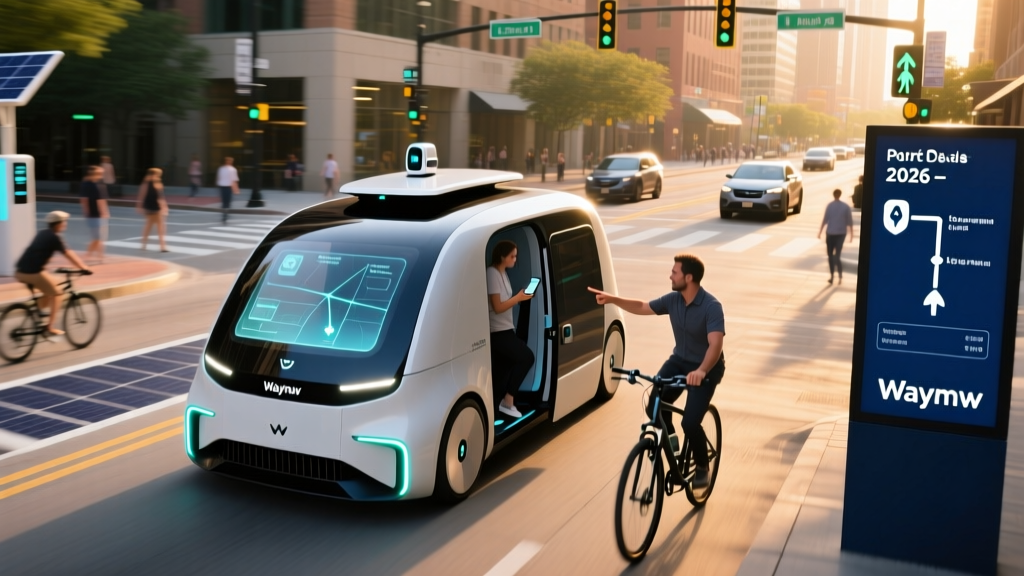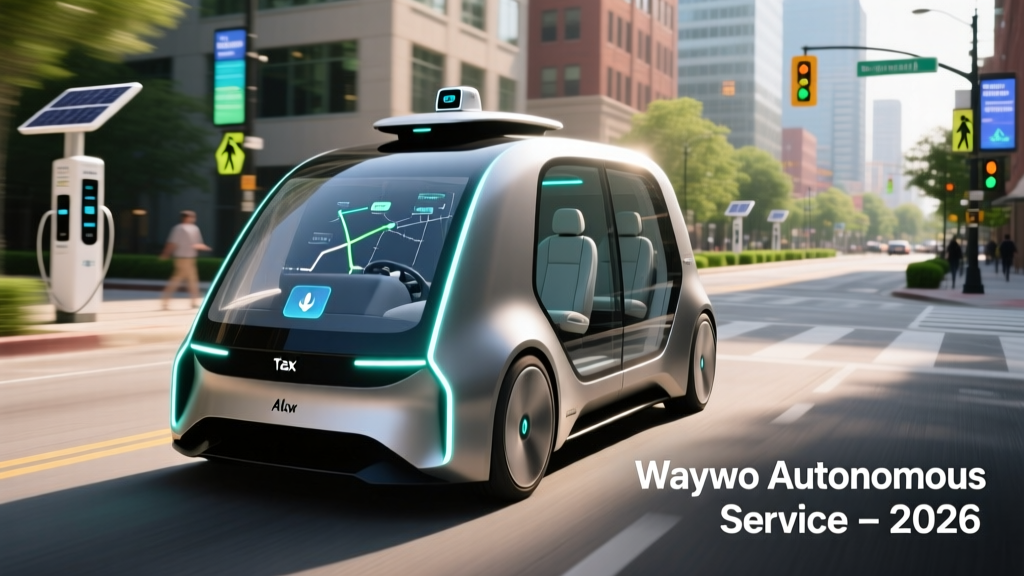
San Francisco remains the most active robotaxi testing ground in the United States. If you have seen a Jaguar I-PACE with a roof-mounted sensor array gliding down Market Street without a driver, you have witnessed a Level 4 autonomous vehicle in commercial operation. But the landscape of San Francisco self-driving cars has shifted considerably since the early pilot days — and understanding what is actually available, how safe it is, and where the boundaries lie matters before you summon one.
This guide covers the current state of driverless ride-hailing in San Francisco as of early 2026: which services operate, where they go, what they cost, and what the safety data actually shows.
Level 4 Autonomy: What "Self-Driving" Actually Means Here
Before discussing specific services, it is critical to separate consumer driver-assist systems from true robotaxis. Tesla's FSD (Supervised), GM's Super Cruise, and Ford's BlueCruise are all SAE Level 2 systems — the driver must remain attentive and is legally responsible for the vehicle at all times. Robotaxis operating in San Francisco are SAE Level 4: they handle all driving tasks within a defined operational design domain (ODD) with no human behind the wheel.
| Level | Name | Who Drives | Example |
|---|---|---|---|
| 0–1 | No Automation / Assist | Human | Cruise control, AEB |
| 2 | Partial Automation | Human (must supervise) | Tesla FSD Supervised, BlueCruise |
| 3 | Conditional Automation | System (human on standby) | Mercedes Drive Pilot (limited, not in US robotaxi use) |
| 4 | High Automation | System (within ODD) | Waymo One, Zoox |
| 5 | Full Automation | System (all conditions) | Does not yet exist commercially |
San Francisco robotaxis operate at Level 4 — driverless within a geofenced service area. They cannot handle every road or weather condition a human could.
Where Can You Use Robotaxis in San Francisco Right Now?
As of early 2026, the primary commercial robotaxi service operating in San Francisco is Waymo One, Alphabet's autonomous ride-hailing platform. Waymo uses a fleet of all-electric Jaguar I-PACE vehicles retrofitted with their 5th-generation Waymo Driver sensor suite, and has begun integrating the purpose-built Zeekr RT (a Geely-manufactured robotaxi with no steering wheel) into limited operations.
Cruise, GM's robotaxi division, suspended all driverless operations nationwide in late 2023 after a serious pedestrian incident and subsequent disclosure failures. As of 2026, Cruise has been conducting supervised testing with safety drivers in select cities but has not resumed commercial driverless service in San Francisco. Any timeline for a full return remains unconfirmed.
Zoox (Amazon's subsidiary) operates its purpose-built bidirectional carriage in limited areas but primarily focuses on Las Vegas and Foster City, with San Francisco presence limited to testing — not open commercial rides.
| Service | Status | Coverage Area | Hours | Vehicle |
|---|---|---|---|---|
| Waymo One | ✅ Commercial (open to public) | Most of SF proper, expanding to peninsula corridors | 24/7 | Jaguar I-PACE, Zeekr RT (limited) |
| Cruise | ⚠️ Suspended (supervised testing only) | N/A for driverless | N/A | Chevrolet Bolt EV / Origin (announced) |
| Zoox | 🔶 Testing (not open commercial) | Limited SF zones | Limited | Zoox Carriage (purpose-built) |
Waymo One coverage specifics: The service area encompasses most of San Francisco proper — from the Embarcadero to the Sunset District, including downtown, SoMa, Mission, Castro, Richmond, and Marina neighborhoods. Waymo has progressively expanded its geofence southward toward San Bruno and the SFO airport corridor, though airport pickups may require specific terminal access agreements that vary by date. Always check the Waymo app for your exact pickup and dropoff eligibility.
How to Ride and What It Costs vs. Uber or Lyft
Using Waymo One is straightforward: download the Waymo One app (available on iOS and Android), create an account, enter your pickup and destination within the service area, and request a ride. There is no waitlist as of 2026 — the service is open to the general public in San Francisco.
Pricing is structured similarly to rideshare, with a base fare, per-mile rate, and per-minute rate. Waymo positions its pricing to be competitive with UberX and Lyft standard rides, though surge-equivalent pricing can apply during high-demand periods.
| Route (approx.) | Waymo One | UberX | Lyft |
|---|---|---|---|
| Downtown → Mission (3 mi) | $11–$15 | $10–$16 | $9–$15 |
| SoMa → Sunset (7 mi) | $18–$25 | $17–$26 | $16–$24 |
| Marina → SFO (15 mi) | $38–$50 | $35–$55 | $33–$52 |
Estimates based on typical non-surge conditions, early 2026. Actual fares vary by time of day, demand, and route. Waymo does not charge tips.
Key differences from human-driven rideshare: Waymo vehicles arrive without a driver, the app provides a real-time map of the vehicle's route, and there is a screen inside the vehicle that allows you to control climate, adjust music, and pull over if needed. You can also share your live trip status with contacts.
Safety Data: What the Numbers Show
Safety is the most scrutinized aspect of robotaxi operations, and rightly so. Waymo has accumulated over 30 million driverless miles across its operating cities (San Francisco, Phoenix, Los Angeles, and Austin) as of late 2025, with San Francisco representing a significant portion of that total given its operational complexity.
- Total driverless miles: 30+ million (across all cities, through late 2025)
- At-fault injury crash rate: Approximately 85% lower than human benchmark in comparable urban environments, per NHTSA-referenced Waymo safety reports
- Contact rate (any collision): Lower than human drivers in urban settings, with most contacts being low-speed, minimal-damage events
- Remote assistance interventions: Waymo does not publish a per-mile intervention rate publicly, but the vehicles can pause and request remote guidance for edge cases (construction zones, unusual obstacles)
- Notable incidents in SF: A small number of low-speed contacts with parked vehicles, cones, and chain-link fencing have been documented. No driverless-at-fault fatalities have been reported in Waymo's San Francisco operations
Source: Waymo safety transparency reports, NHTSA AV safety data. Compare with IIHS human-driver benchmarks at iihs.org.
For context, human drivers in San Francisco experience roughly 5.3 reported collisions per million miles driven (per California OTS data). Waymo's published data suggests its at-fault injury crash rate is significantly lower, though direct comparison requires careful methodology — robotaxis operate in geofenced areas, at moderated speeds, and in conditions selected for their operational design domain.
The Cruise suspension in late 2023 serves as a cautionary data point: a Cruise vehicle struck and dragged a pedestrian who had been thrown into its path by another human-driven vehicle. The subsequent investigation by the California DMV found that Cruise failed to fully disclose details of the incident, leading to a permit suspension. This underscores that regulatory compliance and transparency are as critical as the driving technology itself.
The Technology Stack: How These Vehicles See the Road
Waymo's 5th-generation "Waymo Driver" sensor suite uses a multi-modal approach — combining lidar, cameras, and radar for redundancy. This contrasts with Tesla's camera-only "Tesla Vision" approach used in its Level 2 FSD system.
- Lidar: Multiple roof-mounted and body-integrated lidar units providing 360° 3D point-cloud mapping, effective to ~200+ meters. Lidar is the primary sensor for precise distance measurement and object detection in all lighting conditions.
- Cameras: High-resolution camera array covering 360° for traffic light state, sign recognition, lane markings, and object classification (pedestrian vs. cyclist vs. vehicle).
- Radar: Long-range and short-range radar units for velocity measurement of moving objects, functioning in rain and fog where lidar performance can degrade.
- Audio detection: External microphones detect emergency vehicle sirens, triggering appropriate pull-over behavior.
- HD mapping: Pre-built centimeter-accurate maps of the service area, continuously updated. The vehicle localizes itself within this map in real time.
Geofencing: The vehicle will not operate outside its pre-mapped and approved operational design domain. If you request a destination outside the geofence, the app will not allow the booking.
The Jaguar I-PACE used by Waymo has an 84 kWh usable battery (NMC chemistry) providing an EPA-estimated 234 miles of range in stock form, though the added sensor payload and computing draw reduce real-world range to approximately 150–180 miles before the vehicle must return for charging. Waymo manages fleet charging at dedicated depots using Level 2 AC and DC fast charging, keeping vehicles cycling through shifts around the clock.
Regulatory Landscape: Who Approves These Operations?
Robotaxi operations in San Francisco sit at the intersection of state and local regulation:
- California DMV: Issues Autonomous Vehicle Testing Permits and Deployment Permits. Companies must demonstrate safety case documentation, maintain insurance, and report all collisions and disengagements. The DMV can suspend permits — as it did with Cruise in October 2023.
- California Public Utilities Commission (CPUC): Regulates commercial passenger service. Waymo received a TCP (Transportation Charter-Party Carrier) permit authorizing paid driverless rides.
- San Francisco Municipal Transportation Agency (SFMTA): Manages curb access, pickup/dropoff zones, and coordinates with operators on traffic flow. SFMTA has expressed concerns about robotaxi vehicles blocking transit lanes and has worked with Waymo on designated stop locations.
- NHTSA (federal): Sets vehicle safety standards and investigates safety defects. NHTSA has opened standing investigations into autonomous driving systems but does not directly approve or disapprove local robotaxi operations — that authority rests with states.
California requires all robotaxi operators to submit annual disengagement reports (documenting how often a safety driver or remote operator had to intervene during testing) and collision reports within 10 days of any incident. These are public records available through the California DMV AV program page.
Current Limitations: What Robotaxis Cannot Do
Despite years of operational data, Level 4 robotaxis in San Francisco face concrete limitations that riders should understand before booking:
- Geofence boundaries: You cannot book a ride to destinations outside the approved service area. Suburban trips to Marin County, the East Bay, or far South Bay are not available.
- Heavy fog and rain: While lidar and radar function in poor visibility, extreme conditions can cause the system to pull over safely and end the trip, or decline to dispatch. San Francisco's summer fog (especially in the Sunset and Richmond districts) can occasionally trigger conservative behavior.
- Construction zones: Unmapped lane closures, temporary barriers, and flaggers present edge cases. The vehicle may slow significantly, route around the zone, or request remote guidance — adding time to your trip.
- Unusual road users: Pedestrians behaving unpredictably, oversized loads, parade routes, and protest marches can cause the vehicle to stop and wait rather than navigate through.
- No highway driving (limited): Waymo's San Francisco operations primarily cover surface streets. Highway on-ramps and freeway segments are included only where mapped and approved, and speeds are capped within the ODD.
- Accessibility: Current Waymo vehicles (Jaguar I-PACE) require riders to enter a standard SUV. Wheelchair-accessible vehicles are not yet part of the active fleet, though Waymo has announced plans to address this.
- No child seats: Waymo's current policy requires all passengers to be adults or children who can use the vehicle's standard seatbelts without a booster or car seat. Families with infants or toddlers cannot use the service.
These limitations are not theoretical — they affect real trips. If you are planning a ride from the Castro to a hilltop address on a foggy evening with active road construction nearby, expect the possibility of a rerouted or extended trip. The vehicle prioritizes safety over speed, which is the correct engineering choice but can frustrate time-sensitive riders.
Frequently Asked Questions
Is this truly self-driving or is there a remote human controlling the car?
Waymo vehicles drive themselves — there is no remote human "joystick" controlling steering or braking in real time. However, when the vehicle encounters a scenario it cannot confidently resolve (an unusual obstacle, an ambiguous construction zone), it can pause and request guidance from a remote operations team. This team provides high-level strategic advice (e.g., "the lane to the left is clear, proceed") rather than directly piloting the vehicle. The vehicle's onboard system still executes all driving decisions.
How much does a Waymo ride cost compared to Uber or Lyft in San Francisco?
Waymo One pricing is broadly competitive with UberX and Lyft standard rides for equivalent routes — typically within $1–$3 of a comparable rideshare fare for a 3–7 mile trip in San Francisco. Waymo does not implement traditional surge pricing, though demand-based adjustments can occur. There is no tipping. For a downtown-to-Mission trip (~3 miles), expect $11–$15; for a longer cross-city trip (~7 miles), expect $18–$25.
How safe are robotaxis compared to human drivers — is there real data?
Waymo has published data indicating its at-fault injury crash rate is approximately 85% lower than human benchmarks in comparable urban environments, based on over 30 million driverless miles. However, this comparison requires nuance: robotaxis operate in geofenced, mapped areas at moderated speeds and avoid the most extreme conditions. No driverless-at-fault fatalities have been reported in Waymo's San Francisco operations. The Cruise incident of late 2023 demonstrates that even with strong driving performance, transparency and post-incident behavior are critical safety factors.
Can I use a robotaxi to get to SFO airport from downtown San Francisco?
Waymo has been expanding its service area toward the airport corridor, and SFO trips may be available depending on current geofence boundaries and terminal access agreements. Check the Waymo One app directly — enter SFO as your destination to confirm availability. OAK (Oakland) and SJC (San Jose) are outside the current service area.
What happens if the robotaxi gets confused or breaks down during my ride?
The vehicle will pull over safely and end the trip if it cannot resolve a situation. You can also manually request a pullover using the in-vehicle screen. Waymo's remote support team monitors the fleet and can assist with rerouting or dispatching a replacement vehicle. In the rare event of a mechanical issue, the vehicle will stop at the nearest safe location and Waymo support will coordinate next steps.
Are Tesla FSD or GM Super Cruise the same as these robotaxis?
No. Tesla FSD (Supervised), GM Super Cruise, and Ford BlueCruise are all SAE Level 2 driver-assist systems. A human driver must remain attentive, keep hands on or near the wheel, and is legally responsible for the vehicle. These systems cannot operate without a driver present. Waymo's robotaxis are SAE Level 4 — no driver is in the vehicle, and the system is fully responsible for driving within its approved operational domain.
This article reflects the state of San Francisco robotaxi operations as of early 2026. Service areas, pricing, and regulatory status are subject to change. Always confirm current availability through the operator's official app and consult the California DMV AV program for the latest permit information.