Is Waymo Actually Operating in San Diego?
If you've searched for San Diego Waymo service, you're not alone — Southern California demand for driverless rides has surged as Waymo's commercial footprint expands beyond its initial launch cities. As of early 2026, Waymo One (the company's commercial robotaxi service) operates fully driverless rides in Phoenix, San Francisco, Los Angeles, and Austin, with San Diego remaining in a testing and limited early-access phase rather than full public availability.
This distinction matters. Waymo has been mapping and testing autonomous vehicles on San Diego streets — particularly in areas like Pacific Beach, downtown, and the UTC corridor — but a general-public Waymo One rollout comparable to LA or SF has not been formally launched. What follows is a detailed breakdown of where the service stands, the technology behind it, real safety data from Waymo's live markets, and what San Diego riders can realistically expect.
Waymo's robotaxis operate at SAE Level 4 (High Automation). This means the vehicle handles all driving tasks within a defined operational design domain (geofenced area, certain weather conditions) without any human driver or remote operator controlling the vehicle in real time. This is fundamentally different from Level 2 driver-assist systems like Tesla Autopilot or GM Super Cruise, which require a licensed driver to remain engaged and ready to take over at all times. In a Waymo One vehicle, there is no one in the driver's seat.
Where Can I Use Waymo Right Now?
Waymo One's commercial, fully driverless service is live in four US metro areas as of 2026. Here's the current operational map:
| City | Status | Service Area (Approx.) | Hours |
|---|---|---|---|
| Phoenix, AZ | Fully driverless — open to public | ~225 sq mi (Chandler, Tempe, Mesa, Scottsdale, downtown Phoenix) | 24/7 |
| San Francisco, CA | Fully driverless — open to public | ~60+ sq mi (most of SF proper, SFO airport service added) | 24/7 |
| Los Angeles, CA | Fully driverless — open to public | ~80+ sq mi (Hollywood, Santa Monica, downtown LA, Westside) | 24/7 |
| Austin, TX | Fully driverless — open to public | ~45+ sq mi (downtown, South Austin, East Austin) | 24/7 |
| San Diego, CA | Testing / early access — not general public | Limited test zones (mapping and validation ongoing) | N/A |
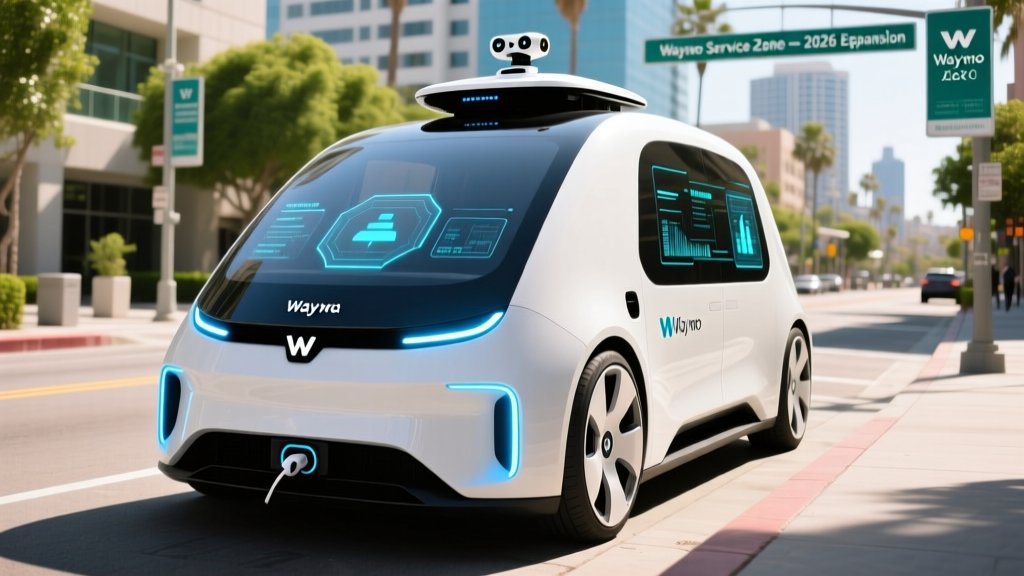
San Diego context: Waymo has confirmed testing activity in San Diego, and the company has publicly listed San Diego among its planned expansion markets. However, no firm date for a full Waymo One commercial launch in San Diego has been announced. Residents may occasionally spot Waymo's 6th-generation Jaguar I-PACE vehicles (and increasingly, the Zeekr RT custom robotaxi) on local roads collecting mapping data and validating driving behavior — but you cannot currently hail a driverless ride through the Waymo One app in San Diego as a general-public user.
Waymo's Technology Stack: Lidar, Cameras, and the 6th-Gen System
Understanding why Waymo operates the way it does — and why it differs so fundamentally from Tesla's camera-only FSD approach — requires a look at the sensor suite.
Waymo 6th-Generation Driver System
- Lidar: Multiple proprietary lidar units providing high-resolution 360° 3D point clouds, effective at 500+ meters. Lidar is the core sensor for object detection and distance measurement independent of lighting conditions.
- Cameras: High-resolution external cameras (improved dynamic range in 6th-gen) for lane marking, traffic signal state, signage, and color information that lidar alone cannot provide.
- Radar: Imaging radar units for velocity detection of moving objects, particularly useful in rain or fog where lidar and cameras degrade.
- Audio detection: External microphones to detect emergency vehicle sirens and trigger appropriate pull-over behavior.
- Compute: Custom-designed Waymo silicon (the "Waymo Driver" compute platform) processing sensor fusion in real time.
- HD Maps: Pre-built centimeter-accurate maps of every street in the operational domain, updated continuously. The vehicle localizes against these maps in real time.
Key trade-off vs. camera-only (Tesla): Waymo's lidar-first approach provides redundancy across lighting and weather conditions but at significantly higher per-vehicle hardware cost. Tesla's vision-only FSD (Level 2) relies entirely on neural network interpretation of camera feeds — lower cost, but without the depth-sensing redundancy of lidar.
The 6th-generation system, which began deploying across Waymo's fleet in late 2024 and is standard on vehicles operating in 2026, reduced sensor count while improving range and resolution. It was also designed to be cheaper to manufacture and repair — a critical factor as Waymo scales from hundreds to thousands of vehicles.
How Much Does Waymo Cost vs. Uber and Lyft?
In markets where Waymo One is live, pricing is designed to be competitive with standard UberX and Lyft rides — not premium services like Uber Black. Here's what riders in Waymo's active cities typically see:
| Ride Type | Base Fare | Per Mile | Per Minute | ~5-Mile Trip Est. |
|---|---|---|---|---|
| Waymo One | $3.00–$4.50 | $1.15–$1.50 | $0.25–$0.40 | $12–$18 |
| UberX | $2.50–$4.00 | $1.00–$1.60 | $0.20–$0.45 | $10–$17 |
| Lyft (Standard) | $2.50–$3.50 | $1.05–$1.50 | $0.22–$0.40 | $10–$16 |
Key pricing notes:
- Waymo does not use surge pricing in the same way Uber/Lyft do. During peak demand, wait times may increase, but per-mile rates remain relatively stable.
- Tips are not expected (there's no driver), though the app allows optional feedback.
- Waymo has periodically offered promotional pricing in new markets to build ridership — expect this in San Diego if/when the service launches publicly.
- For airport runs (e.g., SFO, LAX), Waymo pricing has been competitive with rideshare, often 10–15% cheaper than UberX for the same route.
How to use Waymo One (in live markets): Download the Waymo One app (iOS/Android), create an account, enter pickup and dropoff locations, confirm the fare estimate, and the nearest vehicle drives to your location. You unlock the car via the app — no one is inside. The vehicle navigates autonomously to your destination, and you exit and close the door. The ride is billed to your linked payment method.
Waymo Safety Record: What the Data Actually Shows
Safety is the most scrutinized aspect of robotaxi operations, and Waymo has published more concrete data than any other Level 4 operator. Here's what we know from NHTSA reports, Waymo's own published safety data, and third-party analyses:
Waymo Safety Data (Through 2025)
- Total autonomous miles driven: Over 50 million fully driverless miles across all markets (cumulative through end of 2025).
- Injury-causing crash rate: Waymo's driverless vehicles showed an approximately 85% reduction in injury-causing crash rate compared to human-driven baselines in comparable urban environments, according to a study by the Insurance Institute for Highway Safety (IIHS) and Waymo's own published data.
- Police-reported crash rate: Approximately 70% lower than human benchmarks for the same road types and conditions.
- Contact incidents: The vast majority of Waymo-involved incidents have been low-speed contact events (often the Waymo vehicle being rear-ended at a stop or struck by a human driver running a red light), not at-fault collisions caused by the autonomous system.
- NHTSA Standing General Order: Waymo reports all Level 4 incidents under NHTSA's mandatory reporting requirement. Data is publicly queryable.
Context for San Diego: These safety figures come from Waymo's live commercial markets (Phoenix, SF, LA, Austin). Until San Diego moves from testing to commercial operation, there won't be San Diego-specific safety data. However, the same vehicle platform and software stack would be deployed, and Waymo's validation process requires extensive testing miles in a new city before public launch.
Important caveats: Waymo's geofenced operation avoids many high-risk scenarios (unmapped roads, extreme weather, unpaved surfaces). The safety comparison is most valid for urban/suburban driving within the operational design domain — not rural highways or severe-weather conditions where Waymo does not operate.
Regulatory Landscape: Who Approves Robotaxi Operations?
Robotaxi deployment in the US involves overlapping federal, state, and local authority:
- Federal (NHTSA): Sets vehicle safety standards (FMVSS). NHTSA has granted Waymo specific exemptions for vehicles without steering wheels or pedals (relevant to the upcoming Zeekr RT custom robotaxi). NHTSA also collects incident data via Standing General Order and can open defect investigations.
- State — California (DMV + CPUC): California requires a DMV Autonomous Vehicle Testing Permit (with a driver, then driverless) and a separate CPUC (California Public Utilities Commission) permit for commercial passenger service. Waymo holds both for its California operations. For San Diego, Waymo would need to extend its existing CPUC deployment permit or receive approval for the San Diego service area.
- State — Arizona: Takes a lighter-touch approach. Waymo has operated commercially in Phoenix since 2020 under a state executive order framework with fewer permitting hurdles than California.
- State — Texas: Austin operations fall under Texas's autonomous vehicle law (Transportation Code Ch. 545), which allows deployment without a special state permit as long as the vehicle complies with all applicable federal standards and carries proper insurance.
- Local (city/county): Cities can influence operations through parking rules, lane restrictions, and coordination on construction zones. San Diego's local government would likely negotiate operational terms before a commercial launch.
For San Diego specifically, the path to a commercial Waymo One launch would involve extending Waymo's existing California DMV driverless testing permit to cover San Diego geographies, then receiving CPUC authorization for commercial (paid) passenger service in the San Diego service area. This process has been routine for Waymo's prior California expansions (SF → LA) but timelines depend on regulatory review and local stakeholder engagement.
Current Limitations: What Waymo Cannot Do
Level 4 autonomy is powerful within its domain, but the boundaries are firm. Here are the constraints that apply to every Waymo vehicle on the road today — and would apply to a future San Diego deployment:
Waymo Operational Limitations (2026)
- Geofencing: Waymo vehicles operate only within pre-mapped, approved zones. If your destination is outside the geofence, the app will not allow you to book the ride. The vehicle cannot simply drive into unmapped territory.
- Weather constraints: Heavy rain, dense fog, and snow degrade lidar and camera performance. Waymo vehicles will pull over safely and end the ride (or refuse to start one) if conditions exceed system limits. San Diego's generally mild climate is actually an advantage here.
- Construction zones: While Waymo handles many construction scenarios, major road reconfigurations with missing lane markings or temporary barriers can trigger cautious behavior — slow speeds, remote assistance requests, or route avoidance.
- No highway (currently limited): Waymo has been testing freeway driving, but most commercial rides today are on surface streets. Highway-capable service is expanding but not universal across all markets.
- Pickup/dropoff precision: The vehicle pulls to a safe, legal stop near your requested location — not necessarily the exact front door. You may need to walk a short distance, especially in areas with restricted stopping zones.
- No in-ride route changes: Unlike Uber/Lyft where you can ask the driver to make a quick stop, Waymo's current interface doesn't support mid-ride destination changes or intermediate stops.
- Accessibility: Waymo's current Jaguar I-PACE fleet requires passengers to enter/exit a standard vehicle. Wheelchair-accessible vehicles are in development but not yet widely deployed.
- Pets, children, and cargo: Unaccompanied minors are not permitted. Pets in carriers are generally allowed. Large cargo that could obstruct sensors or damage the interior is restricted.
These limitations are not unique to Waymo — they apply to all current Level 4 robotaxi services (including Zoox and Cruise, the latter of which has been gradually resuming operations after its 2024 suspension). The technology is genuinely driverless within its domain, but that domain has clear, non-negotiable boundaries.
What a San Diego Waymo Launch Would Look Like
Based on Waymo's expansion playbook from SF to LA to Austin, a San Diego commercial launch would likely follow this pattern:
- Mapping and validation (current phase): Waymo vehicles with safety drivers (or driverless with remote monitoring) accumulate miles on San Diego streets, building HD maps and validating system performance against local traffic patterns, road geometry, and edge cases.
- Limited early access: Waymo invites a small group of San Diego residents (often via a waitlist or partner programs) to take driverless rides in a restricted zone — likely starting with high-density, well-mapped areas like downtown San Diego, the Gaslamp Quarter, Mission Valley, or UTC.
- Commercial launch (Waymo One): The app opens to the general public within the approved geofence. Initial service area is modest (perhaps 20–40 square miles) and expands over months as more streets are validated.
- Fleet scaling: Initial fleet of 50–200 vehicles, growing based on demand and reliability metrics.
San Diego's relatively grid-like street layout in many areas, mild weather year-round, and high population density in the urban core make it a strong candidate for robotaxi operations. The primary challenges would be the I-5 and I-805 freeway corridors (if highway service is included) and the hillier, narrower streets in neighborhoods like La Jolla and Point Loma.
Frequently Asked Questions
Can I hail a Waymo in San Diego right now?
No. As of early 2026, Waymo One is not available for general-public rides in San Diego. Waymo vehicles are testing on San Diego roads, but commercial service has not launched. The nearest live Waymo One market is Los Angeles, approximately 120 miles north.
Is Waymo truly self-driving, or is there a remote human controlling it?
Waymo operates at SAE Level 4 — the vehicle drives itself entirely without a human in the driver's seat and without real-time remote control. Waymo does employ "fleet response" specialists who can provide high-level guidance in ambiguous situations (e.g., confirming it's safe to proceed around an unusual obstacle), but these specialists do not steer, brake, or accelerate the vehicle. The car makes all driving decisions autonomously.
How much would a Waymo ride cost in San Diego?
Based on pricing in Waymo's current markets, expect rates comparable to UberX — roughly $1.15–$1.50 per mile plus $0.25–$0.40 per minute, with a base fare of $3–$4.50. A 5-mile trip across downtown San Diego would likely cost $12–$18. Promotional pricing is common during new-market launches.
What vehicle does Waymo use?
Waymo's primary fleet vehicle in 2026 is the Jaguar I-PACE (a battery-electric SUV with a 90 kWh battery pack and approximately 234 miles of EPA range) equipped with the 6th-generation Waymo Driver sensor suite. Waymo is also beginning to deploy the Zeekr RT, a custom-built robotaxi designed without a steering wheel, developed in partnership with Geely's Zeekr brand.
Has a Waymo vehicle ever been in a serious crash?
Waymo vehicles have been involved in incidents, as documented through NHTSA's Standing General Order reporting. However, the data shows that the vast majority of these are minor, low-speed events — most commonly other drivers rear-ending a stopped Waymo vehicle or striking it at an intersection. Waymo's published data and independent analyses indicate a significantly lower rate of injury-causing crashes compared to human drivers in equivalent urban conditions.
Will Waymo come to other San Diego suburbs like Carlsbad or Chula Vista?
Initial commercial service would almost certainly focus on the urban core (downtown, Mission Valley, UTC, Pacific Beach area). Suburban expansion to areas like Carlsbad, Chula Vista, or Oceanside would require additional mapping, validation, and regulatory approval — typically a process that takes many months to years after the initial city launch.
How is Waymo different from Tesla's Full Self-Driving?
They are fundamentally different categories. Tesla FSD (Supervised) is a SAE Level 2 driver-assist system that requires a licensed, attentive human driver behind the wheel at all times. Waymo One is a SAE Level 4 driverless service with no human driver in the vehicle. Tesla FSD can be used on any road nationwide; Waymo operates only within specific geofenced areas. The comparison is closer to "advanced cruise control" (Tesla FSD) versus "driverless taxi" (Waymo).