If you've read headlines about "self-driving cars" and then watched a Tesla driver get pulled over for napping behind the wheel, you've already encountered the core confusion in autonomous vehicles: the gap between marketing language and engineering reality. The Society of Automotive Engineers (SAE International) created a six-level framework — J3016 — to cut through that noise. Understanding what are the levels of autonomous driving isn't academic; it determines whether you're legally responsible in a crash, whether a car can actually operate without you, and where these services are even legal.
This guide walks through every SAE level with real-world examples, then examines where true driverless robotaxis (Level 4) operate today, what they cost, how safe they are, and what still holds the technology back.
The SAE Autonomy Framework: Levels 0 Through 5
The SAE J3016 standard defines six levels of driving automation based on who is doing the driving and monitoring the environment — not on how impressive the features sound in a commercial. The critical dividing line falls between Level 2 and Level 3: below it, the human driver is always responsible. At Level 3 and above, the system assumes driving responsibility under defined conditions.
| Level | Name | Who Drives | Who Monitors | Real-World Example (2026) |
|---|---|---|---|---|
| 0 | No Automation | Human | Human | Any car without ADAS |
| 1 | Driver Assistance | Human + system (one axis) | Human | Adaptive cruise OR lane-keep alone |
| 2 | Partial Automation | Human + system (both axes) | Human | Tesla Autopilot, GM Super Cruise, Ford BlueCruise |
| 3 | Conditional Automation | System (when engaged) | System; human as fallback | Mercedes DRIVE PILOT (limited markets, ≤40 mph traffic jams) |
| 4 | High Automation | System | System | Waymo One, Zoox, Baidu Apollo Go |
| 5 | Full Automation | System | System | Does not exist commercially (2026) |
Level 2 vs. Level 4: The Line That Matters Most
The single biggest source of consumer confusion — and, frankly, the most dangerous one — is conflating Level 2 driver-assist systems with Level 4 driverless robotaxis. They share zero legal or engineering equivalence.
Tesla Autopilot and FSD (Supervised) are Level 2 systems. They steer, accelerate, and brake, but the driver must remain attentive, hands available, and legally responsible at every moment. Tesla's own owner's manual states this explicitly, and the NHTSA has opened multiple investigations into crashes where drivers over-trusted these systems.
GM Super Cruise and Ford BlueCruise are also Level 2, though both use driver-monitoring cameras that track eye gaze — a meaningful safety improvement over steering-wheel-torque detection, but still Level 2. You are driving.
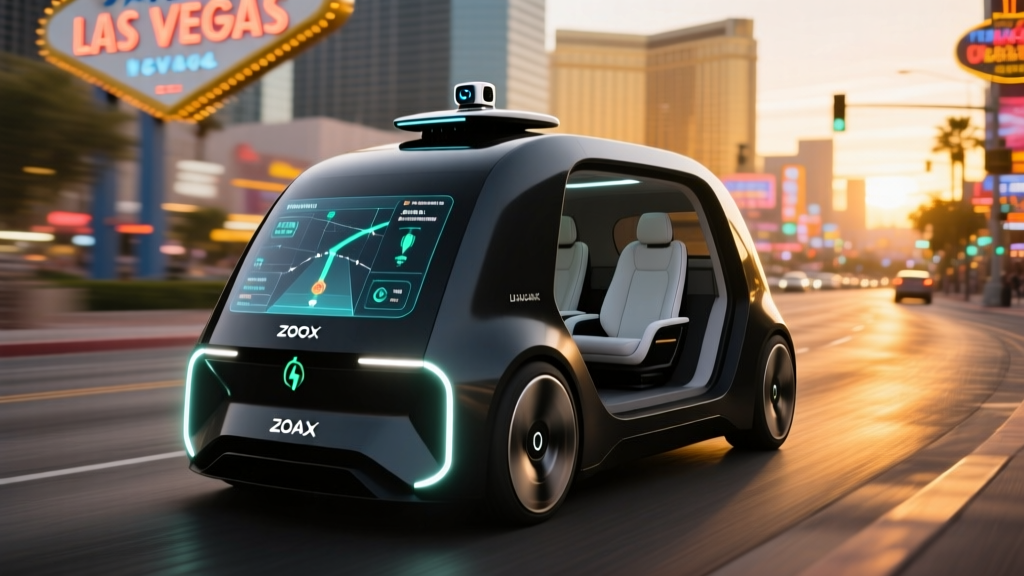
Waymo One, Zoox, and Baidu Apollo Go operate at Level 4 within their geofenced service areas. There is no driver, no steering wheel in the Zoox vehicle, and no expectation that a passenger will intervene. The system handles the entire dynamic driving task or safely pulls over if it encounters conditions beyond its capability.
Level 3: The Awkward Middle Ground
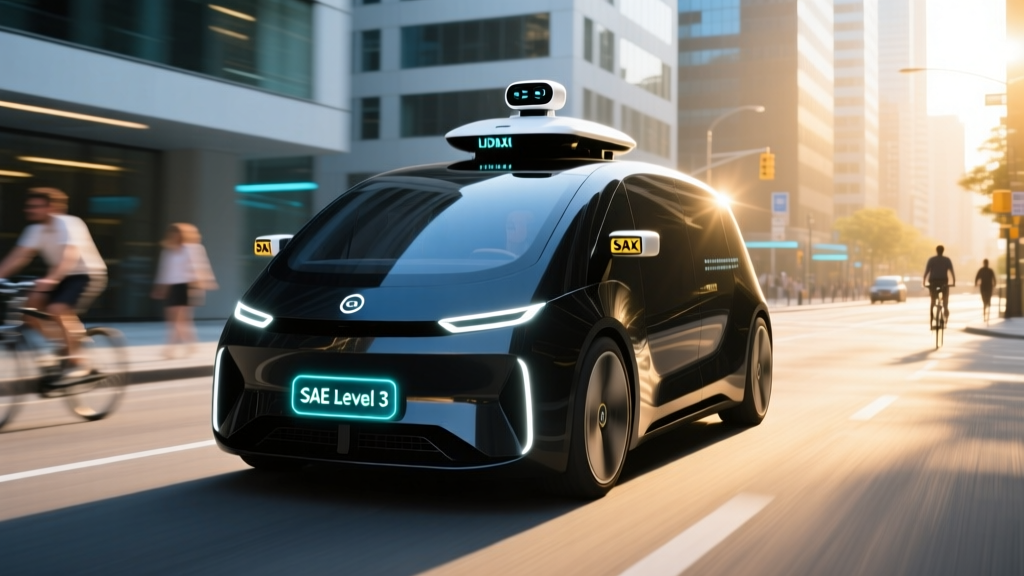
Level 3 is where the system drives and monitors, but only under tightly restricted conditions — and the human must be ready to take over within seconds when prompted. Mercedes-Benz DRIVE PILOT, certified in Germany and approved in Nevada and California, is the only production Level 3 system available in the U.S. as of 2026. It activates only on suitable highways, in traffic jams, at speeds ≤40 mph, in daylight, in clear weather, with high-definition map coverage. Outside those parameters, the car will not engage the system.
The engineering rationale for Level 3's narrow operational design domain (ODD) is straightforward: the manufacturer accepts liability when the system is engaged, so the conditions must be ones the system can provably handle. This makes Level 3 more a legal and liability milestone than a convenience one. Most drivers find the conditions too restrictive for daily use.
Where Robotaxis Actually Operate Today
Level 4 robotaxi services are live and carrying paying passengers — but only in specific geofenced areas. The notion of a robotaxi you can hail anywhere in any U.S. city is not reality in 2026.
| Service | Operator | Cities (Paid, Driverless) | Hours | Vehicle |
|---|---|---|---|---|
| Waymo One | Waymo (Alphabet) | Phoenix metro, San Francisco, Los Angeles, Austin | 24/7 (most markets) | Jaguar I-PACE, Zeekr RT (expanding) |
| Zoox | Zoox (Amazon) | Las Vegas (limited corridor), Foster City, CA (testing) | Limited hours | Zoox purpose-built (no steering wheel) |
| Apollo Go | Baidu | Wuhan, Beijing, Shanghai, Chongqing (China) | ~24/7 in Wuhan | RT6 (6th-gen, lidar-heavy) |
| Cruise | Cruise (GM) | Suspended since late 2023; gradual restart with safety drivers in select cities | N/A (not driverless) | Chevrolet Bolt EV / Origin (delayed) |
Waymo One is the clear U.S. leader by volume and coverage. In Phoenix, the service area covers roughly 200+ square miles across Chandler, Tempe, Mesa, Gilbert, and parts of Scottsdale and downtown Phoenix. San Francisco operations cover most of the city, though airport routes remain restricted. Los Angeles launched across a wide zone from downtown through the Westside. Austin operations began in 2025 and continue expanding.
If you're asking "where can I use a robotaxi right now?" — the honest answer is that unless you live in or are visiting one of these specific cities and are within their geofenced zones, you cannot. Expansion continues, but each new city requires regulatory approval, HD mapping, and extensive validation driving.
How to Hail a Robotaxi and What It Costs
Using Waymo One is nearly identical to using Uber or Lyft: download the app, set pickup and drop-off within the service area, confirm the ride, and a vehicle arrives. The difference is that no one is in the driver's seat. The app shows the vehicle's approach on a map, and you unlock it via the app when it arrives.
| Route Example | Waymo One | UberX | Lyft Standard |
|---|---|---|---|
| 3-mile urban trip (SF) | $12–$18 | $11–$17 | $10–$16 |
| 8-mile airport-adjacent (Phoenix) | $22–$32 | $20–$30 | $18–$28 |
| 15-mile cross-city (LA) | $38–$55 | $35–$52 | $32–$48 |
Robotaxi pricing is currently at rough parity with UberX and Lyft — sometimes slightly higher during off-peak hours, sometimes lower during surge pricing on human-driven rideshares. Waymo does not currently surge-price the way Uber and Lyft do, which can make it the cheaper option during high-demand periods. Neither Uber nor Lyft offer driverless rides in the U.S. as of 2026, though both have partnerships with Waymo to integrate robotaxi rides into their apps in select markets.
Safety Data: What the Numbers Actually Show
Safety is where hype most often outpaces evidence. Let's look at what's documented.
- Over 50 million fully driverless miles completed across all markets
- Waymo's published research (peer-reviewed, 2023–2024) showed a 85% reduction in injury-causing crash rates compared to human benchmarks in comparable operating areas
- Police-reported crash rate: approximately 5.7 per million miles vs. human baseline of ~15 per million miles for comparable urban driving
- Zero passenger fatalities in driverless operations
These numbers are meaningful but require context. Robotaxis operate in geofenced, well-mapped urban areas at moderate speeds — conditions where crash severity tends to be lower. They don't yet operate on high-speed rural interstates or in heavy snow. Comparing their safety record to the national average (which includes rural highway fatalities) would be misleading; comparing them to urban human drivers in similar conditions is the appropriate benchmark, and on that measure the data is encouraging.
Cruise's October 2023 incident in San Francisco — where a pedestrian was struck by a human-driven vehicle, thrown into the path of a Cruise robotaxi, and then dragged to the roadside — is the most significant safety event in the U.S. robotaxi industry. The California DMV suspended Cruise's deployment permit, citing concerns about the vehicle's post-collision behavior and the company's transparency with regulators. Cruise subsequently paused all driverless operations nationwide and has been slowly returning to testing with safety drivers. This incident illustrates that even with strong overall statistics, edge cases involving multi-party collisions and unusual pedestrian trajectories remain engineering challenges.
The NHTSA Standing General Order requires all ADS-equipped vehicle operators to report crashes. This data is publicly accessible and provides a more complete picture than any single company's marketing materials. As of 2026, the aggregated data shows that Level 4 robotaxis are involved in fewer police-reported crashes per million miles than human drivers in comparable urban environments, but the sample size — while growing — is still a fraction of total U.S. vehicle miles traveled.
The Technology Stack: How Robotaxis See the World
Level 4 robotaxis use fundamentally different sensor architectures than consumer Level 2 vehicles. Understanding the stack explains both their capabilities and their limitations.
Core Sensor Suite (Typical Level 4 Robotaxi)
- LiDAR (Light Detection and Ranging): 360° high-resolution point cloud, typically roof-mounted. Provides precise distance measurement to objects regardless of lighting. Waymo's 6th-gen "Driver" uses custom LiDAR with ~300m range. Cost per unit has dropped from $75,000+ (2016) to roughly $5,000–$10,000 (2026).
- Camera array: 10–20+ cameras providing overlapping fields of view for object classification, traffic light/signal reading, lane detection, and redundancy. Works in tandem with LiDAR.
- Radar: Short- and long-range units for velocity detection (especially useful for other moving vehicles) and performance in rain/fog where LiDAR degrades.
- IMU + GPS + HD Maps: Inertial measurement units, centimeter-accurate GPS (RTK), and pre-built high-definition maps that include lane geometry, curb heights, traffic signal positions, and speed limits. The vehicle localizes itself within this map to within ~10 cm.
- Compute: Custom AI inference hardware, often hundreds of TOPS (trillions of operations per second), processing sensor fusion in real time.
This is the critical contrast with camera-only approaches like Tesla's FSD. Tesla removed radar and ultrasonic sensors from its vehicles and relies entirely on vision processed through neural networks. Tesla argues this mirrors human driving (humans use only eyes + brains). The counterargument — backed by every other Level 4 operator — is that LiDAR provides a physics-based distance measurement that cameras must infer, and that redundancy across sensor modalities is essential for safety-critical systems. No Level 4 robotaxi service operates camera-only as of 2026.
Geofencing is the other defining technology. Level 4 systems operate within a pre-mapped Operational Design Domain. If the vehicle approaches the boundary of its geofence, it will not proceed. This is both a safety feature and a current limitation — it's why you can't take a Waymo from Phoenix to Tucson.
Current Limitations: What Robotaxis Cannot Do
Being honest about limitations is essential for anyone considering using these services or investing in the sector.
Known Limitations of Level 4 Robotaxis (2026)
- Weather: Heavy rain, snow, fog, and ice degrade LiDAR and camera performance. Most services suspend operations or refuse rides in severe weather. Waymo operates in light rain but has pulled back during monsoon conditions in Phoenix.
- Geofencing: Service areas are fixed. You cannot request rides outside the mapped zone, even if it's just one mile beyond the boundary.
- Construction zones: Temporary lane shifts, missing lane markings, and flaggers directing traffic remain challenging. The vehicle may stop and request remote assistance or reroute.
- Unusual road configurations: Unmarked intersections, private roads, parking garages, and drive-throughs are typically not supported.
- Highway speeds: Most current Level 4 deployments are optimized for urban surface streets (25–45 mph). High-speed freeway merging and lane changes at 70+ mph are more limited, though Waymo has freeway-capable routes in some markets.
- Pickup/drop-off precision: The vehicle pulls to a designated spot but cannot navigate a long driveway, a gated community, or a crowded curb with double-parked vehicles as fluidly as a human driver.
- Passenger assistance: No driver means no help with luggage, wheelchair loading, child seats, or disoriented passengers. Accessibility remains an active area of development.
- Edge-case freezes: Rarely, the vehicle may stop in the travel lane when encountering an unresolvable scenario (e.g., an unusual obstacle, conflicting signals). This has caused traffic congestion incidents documented in San Francisco.
Regulatory Landscape: Who Decides Where Robotaxis Can Operate
Autonomous vehicle regulation in the U.S. is fragmented across federal, state, and local authorities — which is why robotaxi availability varies so dramatically by city.
Federal (NHTSA): The National Highway Traffic Safety Administration sets vehicle safety standards (FMVSS) and investigates crashes. However, NHTSA does not currently "approve" ADS software the way the FAA approves autopilot systems. The Standing General Order requires crash reporting, and NHTSA has opened investigations into both Tesla Autopilot and Waymo operations, but there is no comprehensive federal regulatory framework for ADS deployment as of 2026.
State level: This is where most operational authority lies. California (through the DMV and CPUC), Arizona (which has taken a permissive approach), Texas, and Nevada have established frameworks allowing driverless commercial operations. Other states either prohibit driverless vehicles or have no clear framework. The National Conference of State Legislatures tracks state-level AV laws, which vary enormously.
Local/municipal: Cities like San Francisco have exerted significant control through local agencies. After community concerns about robotaxi behavior (blocking emergency vehicles, idling in travel lanes), San Francisco's Board of Supervisors passed resolutions seeking to limit expansion — illustrating the tension between state approval and local acceptance.
The practical result: a company can have state approval but face local resistance, or have technology ready but lack the regulatory framework to deploy. This patchwork is one of the primary reasons Level 4 robotaxis are available in a handful of cities rather than nationwide.
Frequently Asked Questions
Is Tesla FSD self-driving?
No. Tesla Full Self-Driving (Supervised) is an SAE Level 2 driver-assist system. The driver must remain attentive, keep hands available, and is legally responsible for the vehicle at all times. The "Supervised" qualifier in Tesla's current branding reflects this reality, though earlier marketing caused significant public confusion. NHTSA has investigated multiple crashes involving Autopilot/FSD and inattentive drivers.
Can I buy a Level 4 car for personal use?
Not in 2026. Level 4 systems are currently deployed only in commercial fleet services (robotaxis, shuttles, trucking). No automaker sells a Level 4 vehicle to individual consumers. The closest consumer-available system is Mercedes-Benz DRIVE PILOT at Level 3, available on the S-Class and EQS in limited markets under very specific conditions.
How much does a Waymo ride cost compared to Uber?
Pricing is roughly comparable. A 3-mile urban ride typically costs $12–$18 on Waymo One versus $11–$17 on UberX. Waymo's advantage is the absence of surge pricing during high-demand periods. Neither service includes tips (Waymo has no driver to tip). Waymo also offers promotional pricing for new users in most markets.
What happens if a robotaxi gets into an accident?
The operating company (Waymo, Zoox, etc.) assumes liability for accidents during driverless operations, unlike Level 2 where the human driver is responsible. Passengers are not held liable. The vehicle's sensor data provides a detailed record of the event, which is reported to NHTSA under the Standing General Order. Insurance is carried by the fleet operator.
When will Level 5 (full autonomy anywhere) arrive?
No credible timeline exists for Level 5 autonomy. The SAE itself has noted that Level 5 — a system that can drive anywhere a human can, in any condition, without geographic restriction — may be decades away or may prove practically unachievable with current approaches. Industry leaders including Waymo's CEO have publicly stated that Level 5 is not a near-term goal. Be deeply skeptical of any company or analyst projecting Level 5 within a specific timeframe.
Are robotaxis safe in rain?
Light rain is generally handled by current systems. Heavy rain, snow, and fog degrade LiDAR and camera performance, and most services will suspend operations or refuse rides under those conditions. This is a known limitation, not a solved problem. If you're in Phoenix during monsoon season or in any city during a snowstorm, expect the robotaxi option to be unavailable.
The Bottom Line
Understanding what are the levels of autonomous driving comes down to one question: who is responsible when something goes wrong? At Level 2, it's always you. At Level 4 within the geofence, it's the operator. Level 5 doesn't exist. Level 3 exists in a narrow, expensive form. Everything else is marketing.
For buyers and riders in 2026: if a car has a steering wheel and you're expected to sit in the driver's seat, you are driving — regardless of what the badge says. If you want to experience true autonomous driving, download the Waymo One app and book a ride in Phoenix, San Francisco, Los Angeles, or Austin. The technology works. It just doesn't work everywhere, in every condition, for every trip — and acknowledging that is what separates informed adoption from dangerous over-trust.