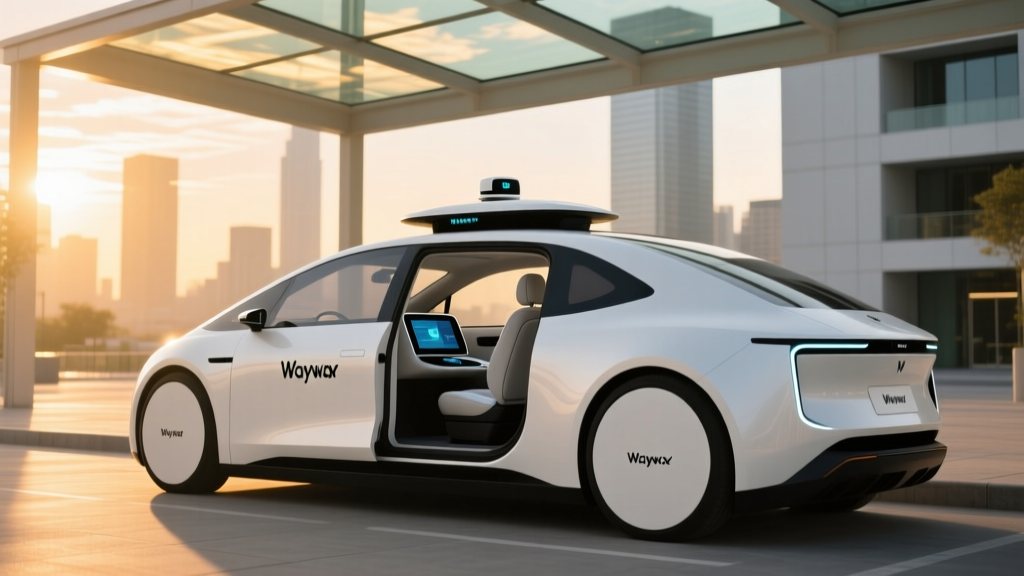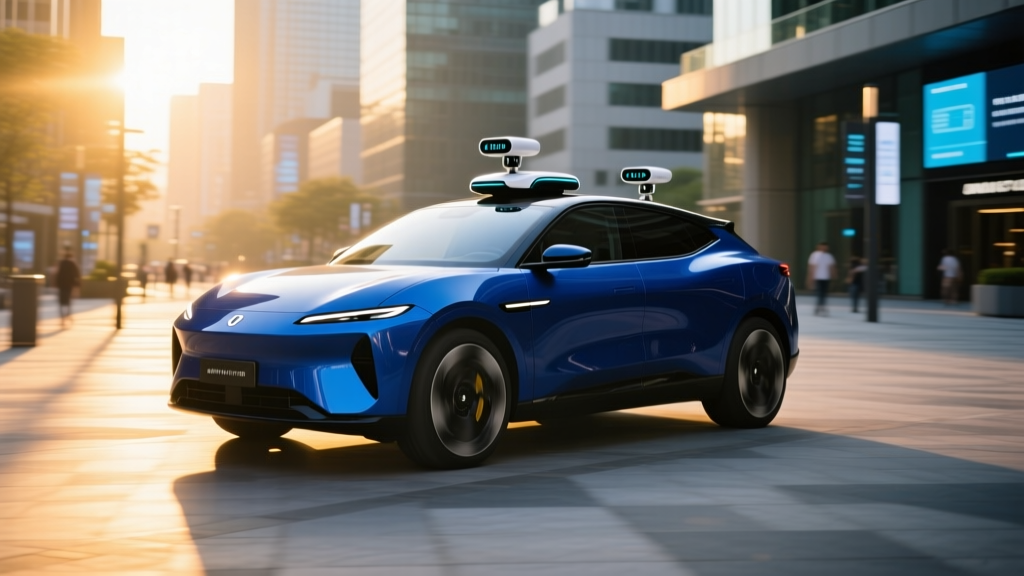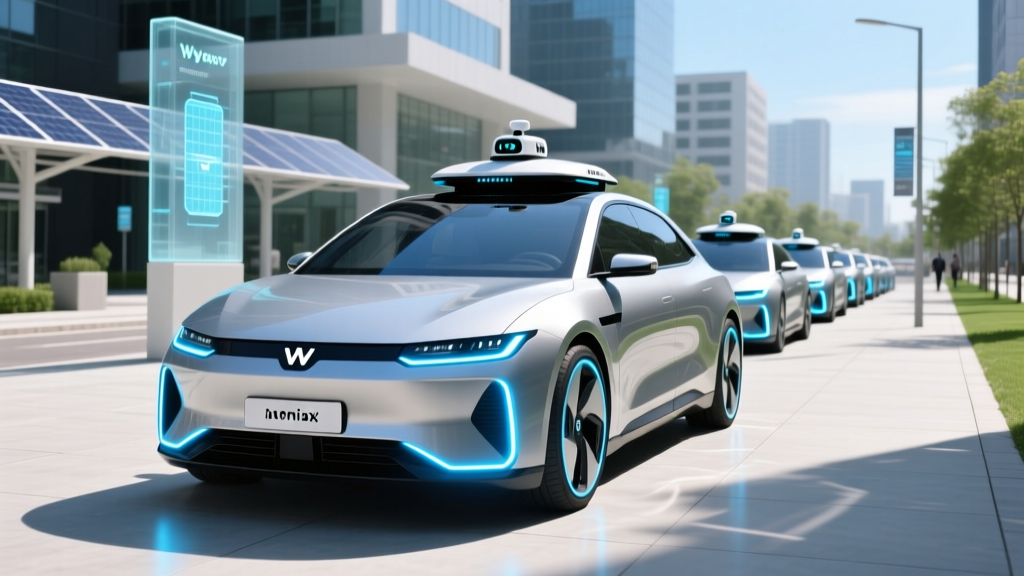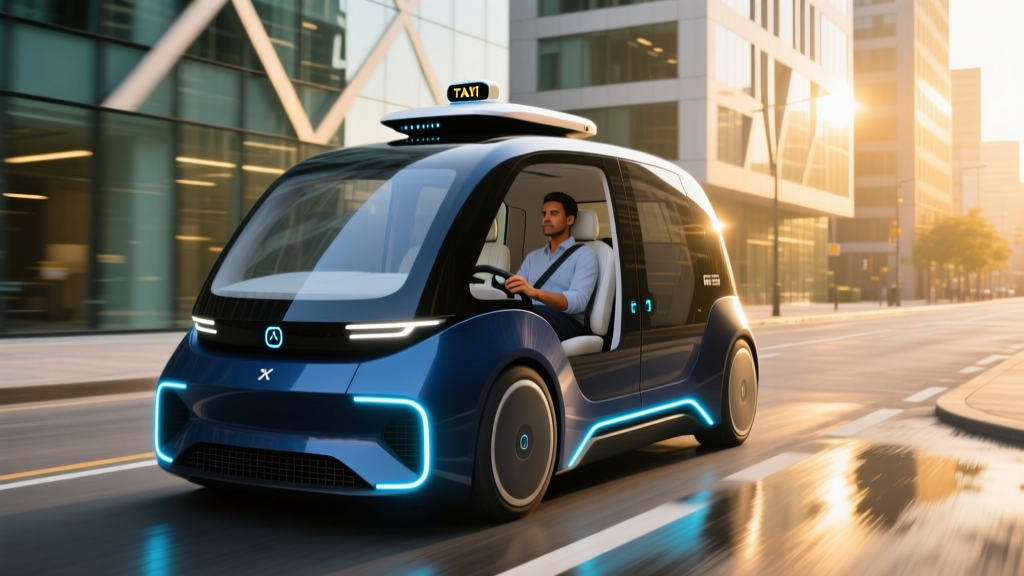
Every time an automaker announces "self-driving" features, the marketing blurs a critical line: the difference between a car that helps you drive and a car that drives itself. That distinction lives in the SAE International automation scale — a six-tier framework (Level 0 through Level 5) that defines exactly how much driving responsibility shifts from human to machine. For EV buyers and robotaxi riders in 2026, understanding what each level autonomous driving designation actually means is the single most important piece of context you can have before stepping into a driverless vehicle or trusting a driver-assist system on the highway.
This guide maps every SAE level to the real products and services available today, separates the Waymo-class robotaxis you can hail from the Tesla FSD Supervised system you must oversee, and gives you the safety data, pricing, and geographic availability you need to make sense of it all.
The SAE Automation Scale: What Each Level Autonomous Driving Tier Means
The SAE J3016 standard defines six levels of driving automation. The critical dividing line falls between Level 2 and Level 3: below it, the human driver is responsible; at Level 3 and above, the system assumes driving responsibility under defined conditions.
| Level | Name | Who Drives | Who Monitors | Current Examples |
|---|---|---|---|---|
| 0 | No Automation | Human | Human | Any conventional car |
| 1 | Driver Assistance | Human + system (one axis) | Human | Adaptive cruise OR lane-keeping |
| 2 | Partial Automation | Human + system (both axes) | Human | Tesla Autopilot/FSD Supervised, GM Super Cruise, Ford BlueCruise |
| 3 | Conditional Automation | System (in ODD) | System; human on standby | Mercedes Drive Pilot (limited markets) |
| 4 | High Automation | System (in geofence) | System | Waymo One, Zoox (limited pilots) |
| 5 | Full Automation | System (all conditions) | System | None commercially available |
Where Can I Use a Robotaxi Service Right Now?
Level 4 robotaxi availability remains geographically concentrated. As of early 2026, here's where you can hail a driverless ride with no human at the controls:
| Service | Operator | Live Cities | Operating Hours | Vehicle Platform |
|---|---|---|---|---|
| Waymo One | Waymo (Alphabet) | Phoenix metro, San Francisco, Los Angeles, Austin | 24/7 in most markets | Jaguar I-PACE (custom sensor suite), next-gen Geely RT6 |
| Cruise | GM / Cruise LLC | Phoenix (relaunched); limited SF pilot | Daytime/evening hours | Chevrolet Bolt EV (retired), Cruise Origin (announced) |
| Zoox | Zoox (Amazon) | Las Vegas (employee/public pilot), Foster City, CA (testing) | Limited pilot hours | Zoox purpose-built bidirectional vehicle |
| Motional (Hyundai/Aptiv) | Motional | Las Vegas (Uber/Lyft integration pilot) | Limited hours | Hyundai IONIQ 5 robotaxi variant |
Key reality check: Announced expansions to new cities are not live service. Waymo has stated intentions to serve over a dozen metro areas, but only the cities listed above have operational, bookable rides as of this writing. Always check the operator's app for live service boundaries before planning a trip.
How to Use a Robotaxi and What It Costs vs. Uber/Lyft
Hailing a Waymo One ride works almost identically to Uber or Lyft: download the Waymo One app, enter your pickup and drop-off, and the app dispatches a driverless vehicle to your location. The car pulls up, you verify your ride via a PIN on the exterior or in-app unlock, and the trip begins with no human intervention.
| Scenario | Waymo One | UberX | Lyft Standard |
|---|---|---|---|
| 5-mile urban trip (off-peak) | $12–$18 | $14–$22 | $13–$20 |
| 10-mile airport run | $25–$38 | $28–$45 | $26–$42 |
| Surge pricing behavior | Moderate; less volatile | High volatility | High volatility |
| Tipping | Not applicable (no driver) | Expected ($3–$5+) | Expected ($3–$5+) |
Waymo pricing is generally competitive with UberX and Lyft Standard for equivalent routes. The absence of a driver tip can make Waymo slightly cheaper on shorter trips. However, Waymo's geofenced service area limits availability — you may find no cars available outside the mapped zone, whereas Uber/Lyft coverage extends across entire metro areas. Promotional credits are frequently available for first-time Waymo riders.
Robotaxi Safety Record: What the Data Actually Shows
Safety is the single most scrutinized dimension of Level 4 autonomy. Unlike Level 2 systems — where NHTSA's Standing General Order requires crash reporting for all equipped vehicles — Level 4 operators report disengagement data to state regulators (notably the California DMV) and publish periodic safety reports.
• Cumulative autonomous miles driven: Over 40 million fully driverless miles (as of late 2025 reporting).
• Injury-causing crash rate: Waymo's published safety data shows an approximately 85% lower rate of injury-causing crashes per million miles compared to a human driving benchmark, based on police-reported crash data in comparable geographies.
• Contact rate: Waymo reports fewer property-damage-only contacts per million miles than human baselines in Phoenix and San Francisco.
• Context: These figures come from Waymo's own analyses and third-party studies (notably the Swiss Re partnership). Independent regulatory bodies like NHTSA have investigated specific incidents, including interactions with emergency vehicles and school buses.
Cruise's setback: In October 2023, a Cruise robotaxi in San Francisco dragged a pedestrian who had been thrown into its path by a human-driven vehicle. The California DMV suspended Cruise's deployment permit. Cruise paused nationwide operations, restructured leadership, and began a phased return starting in Phoenix in 2024-2025 with human safety operators before re-introducing driverless service. This incident remains the most consequential safety event in the US robotaxi industry and illustrates that edge cases involving multi-vehicle interactions remain a challenge.
Limitations of available data: Robotaxi operators drive primarily in urban environments at moderate speeds. Their safety record cannot be directly compared to human drivers on rural highways or in severe weather — conditions where robotaxis don't currently operate. Always interpret per-million-mile statistics within the operational design domain (ODD) where the data was collected.
Technology Stack: Lidar, Cameras, and the Sensor Debate
The sensor architecture behind Level 4 autonomy differs fundamentally from Level 2 driver-assist, and the industry remains split on the optimal approach.
- Lidar (Light Detection and Ranging): Emits laser pulses to build a precise 3D point cloud of the environment. Used by Waymo (custom 5th-gen roof-mounted unit), Zoox, and Motional. Provides accurate depth perception independent of lighting conditions. Cost: historically $75,000+ per unit; now declining to ~$5,000–$15,000 for automotive-grade units.
- Cameras: Multiple high-resolution cameras (typically 8–12+ per vehicle) provide color, texture, and semantic understanding — reading signs, detecting traffic lights, identifying pedestrian intent. Every operator uses cameras; Tesla relies on cameras exclusively for its Level 2 FSD system.
- Radar: Millimeter-wave radar provides velocity and distance data for moving objects, especially useful in rain or fog where cameras degrade. Most Level 4 stacks include 4–6 radar units.
- HD Mapping + Geofencing: Level 4 operators pre-map their service areas to centimeter precision. The vehicle localizes itself within this map in real-time. This is why Level 4 service cannot simply "expand" to a new street without significant mapping and validation work.
- Compute: Custom AI accelerators process sensor fusion in real-time. Waymo's compute platform handles hundreds of tera-operations per second onboard.
Camera-only vs. multi-sensor: Tesla's FSD (Supervised) uses a camera-only "Tesla Vision" approach — no lidar, no radar. This keeps hardware costs low but places enormous demands on neural network inference for depth estimation. Every operational Level 4 robotaxi service uses lidar as a core sensor, providing redundancy that camera-only systems lack. This is a meaningful distinction: Level 4 operators have concluded that lidar redundancy is necessary for driverless operation, even if it adds cost.
Regulatory Landscape: Who Approves Robotaxi Operations
Autonomous vehicle regulation in the United States operates on a dual-track system:
- Federal (NHTSA): Sets vehicle safety standards (FMVSS) and investigates safety defects. NHTSA does not "approve" autonomous driving systems pre-deployment but has enforcement authority to investigate crashes and order recalls. The NHTSA AV safety portal tracks rulemaking and enforcement actions.
- State (DMV/PUC): Most deployment authority sits at the state level. California's DMV issues testing permits and the CPUC (Public Utilities Commission) authorizes commercial robotaxi fares. Arizona takes a permissive approach with minimal permitting. Texas and Nevada have frameworks enabling deployment.
- Local (city/county): Cities negotiate operating agreements covering pickup zones, parking, emergency response protocols, and accessibility requirements.
This patchwork means a service legal in Phoenix may require entirely separate approvals in San Francisco — explaining the slow, city-by-city expansion pattern of Level 4 services.
Current Limitations of Level 4 Robotaxis
- Weather: Heavy rain, snow, fog, and ice degrade lidar and camera performance. Waymo and others restrict or suspend service during severe weather events. Phoenix's dry climate is no accident — it's one reason the city became the first robotaxi market.
- Geofence boundaries: Service operates only within pre-mapped, approved zones. A trip that crosses the geofence boundary is simply not available. You cannot take a Waymo from San Francisco to Sacramento.
- Construction zones: Rapidly changing road configurations (lane shifts, temporary barriers, flaggers) remain difficult. Vehicles may pull over and request remote assistance, adding delay.
- Complex unprotected turns: Multi-lane unprotected left turns in dense traffic can cause extended hesitation or conservative routing that increases trip time.
- Emergency vehicle interaction: While improving, robotaxis have been documented stopping in travel lanes when confused by emergency vehicle positioning, prompting NHTSA scrutiny.
- Accessibility: Wheelchair-accessible vehicles remain limited in robotaxi fleets. Operators are working on solutions, but current availability for passengers with mobility devices is restricted.
- Payload and stops: No multi-stop trips, no food delivery integration within the ride, and limited ability to handle unusual cargo. The service model is point-A-to-point-B only.
Level 2 Driver-Assist vs. Level 4 Robotaxi: The Buyer's Distinction
If you're shopping for an EV with advanced driver-assist, you are buying a Level 2 system. Whether it's Tesla's Autopilot/FSD Supervised, GM's Super Cruise, Ford's BlueCruise, or Mercedes' Drive Pilot (Level 3 in very limited conditions in Germany and Nevada), the driver must remain attentive and is legally liable for the vehicle's operation.
Level 4 robotaxis are a mobility service, not a product you purchase. You cannot buy a Waymo vehicle. The distinction matters for your expectations: a Level 2 EV will not drive you home while you sleep, regardless of what the feature name implies. A Level 4 robotaxi will drive you without human input — but only inside a small, pre-approved area in a handful of cities.
The path from Level 2 to Level 4 is not linear. More miles on FSD Supervised does not mean Tesla is "almost" at Level 4 — the regulatory, sensor-redundancy, and liability frameworks are fundamentally different. Treat any claim that a consumer vehicle is "practically self-driving" with skepticism until the operator removes the driver and assumes full liability.
Frequently Asked Questions
Is Tesla FSD Supervised a self-driving system?
No. Tesla FSD (Supervised) is an SAE Level 2 driver-assist system. The driver must remain engaged, hands near the wheel (or monitoring via cabin camera), and is fully responsible for the vehicle. The "Supervised" label Tesla added in 2024 explicitly acknowledges this. Tesla has not received regulatory approval for driverless (Level 4) operation in any US market.
How much does a Waymo ride cost compared to Uber?
Waymo One pricing is comparable to UberX for equivalent routes — typically $12–$18 for a 5-mile urban trip. Without a driver to tip, total cost can be slightly lower. Surge pricing on Waymo is generally less volatile than on Uber/Lyft, but availability is limited to the geofenced service area.
Have robotaxis been in serious accidents?
Yes. The most significant incident was the October 2023 Cruise event in San Francisco, where a pedestrian struck by a human-driven vehicle was subsequently dragged by a Cruise robotaxi that failed to properly account for the pedestrian's position underneath the vehicle. NHTSA and the California DMV investigated. Waymo's published safety data shows lower injury-crash rates per million miles than human benchmarks within its operating domain, but independent verification remains limited.
What level autonomous driving is actually available to consumers?
Consumers can purchase Level 2 vehicles (Tesla, GM, Ford, BMW, Mercedes, etc.) and can ride in Level 4 robotaxis (Waymo, limited Cruise, Zoox pilot) in select cities. Level 3 is available only in extremely limited form (Mercedes Drive Pilot in Germany and Nevada, under 40 mph on specific highways). Level 5 — full autonomy in all conditions — does not exist commercially.
Will robotaxis replace Uber and Lyft?
Not in the near term. Robotaxi services are capital-intensive (each vehicle carries $100,000+ in sensor and compute hardware), geofenced to specific cities, and unable to serve suburban and rural areas. Uber and Lyft's driver-partner model scales to any geography. The most likely near-term outcome is coexistence: robotaxis serving dense urban cores where they're approved, rideshare covering everything else.
What happens if a robotaxi gets confused mid-trip?
Level 4 vehicles are designed to execute a "minimal risk condition" — typically pulling to the side of the road and stopping. Remote assistance operators can provide guidance (e.g., confirming a safe path through a construction zone), but they do not remotely drive the vehicle. If the vehicle cannot resolve the situation, the trip ends and the passenger may need alternative transportation.