Why SAE Autonomous Car Levels Matter for Every EV Buyer
Every EV sold in 2026 comes with some form of driver-assistance — from basic lane-keeping to advanced systems like Tesla's FSD (Supervised) and GM's Super Cruise. But marketing language routinely blurs a critical line: the difference between a car that helps you drive and one that drives itself. The SAE International J3016 standard defines six levels of driving automation (Level 0 through Level 5), and understanding these levels is the single most important thing you can do before trusting any vehicle with your safety.
This guide breaks down every SAE level with real examples, then focuses on where Level 4 robotaxis actually operate today, what they cost, how safe they are, and where the technology still falls short.
The SAE Automation Scale: Level 0 Through Level 5
The SAE J3016 standard defines automation not by what sensors a car has, but by who is responsible for monitoring the driving environment. That distinction changes everything about how you interact with the vehicle.
| Level | Name | Who Drives | Who Monitors | Production Examples (2026) |
|---|---|---|---|---|
| 0 | No Automation | Human | Human | Base-model vehicles with no ADAS |
| 1 | Driver Assistance | Human + system (one axis) | Human | Adaptive cruise control OR lane-centering alone |
| 2 | Partial Automation | Human + system (both axes) | Human | Tesla Autopilot, FSD (Supervised), GM Super Cruise, Ford BlueCruise, Toyota Safety Sense 3.0 |
| 3 | Conditional Automation | System (in limited ODD) | System (fallback to human on request) | Mercedes-Benz Drive Pilot (limited markets, low-speed highway) |
| 4 | High Automation | System (within geofence/ODD) | System | Waymo One, Zoox (limited commercial service) |
| 5 | Full Automation | System (all conditions) | System | None in production |
Level 2 vs. Level 4: The Chasm Most Buyers Miss
The gap between Level 2 and Level 4 is not incremental — it's a fundamental shift in liability, technology, and operational design. Here's what separates them:
- Liability: In Level 2, the human driver is liable for every incident. In Level 4 commercial service, the operator (Waymo, Zoox) carries liability within the geofenced area.
- Sensor redundancy: Level 2 systems may use cameras and basic radar. Level 4 robotaxis use overlapping lidar, radar, and camera arrays with real-time sensor fusion.
- Operational Design Domain (ODD): Level 2 works on most roads but requires constant human oversight. Level 4 operates without a human driver but only within tightly mapped, approved geofences.
- Fallback behavior: A Level 2 system alerts the driver to take over. A Level 4 system must achieve a "minimal risk condition" on its own — pulling over safely if it encounters a situation it cannot handle.
Where Can You Actually Use a Level 4 Robotaxi Right Now?
As of early 2026, Level 4 robotaxi service in the United States is real but geographically limited. Here is where you can hail a vehicle with no one in the driver's seat:
| Operator | City/Region | Service Type | Hours | Vehicle |
|---|---|---|---|---|
| Waymo One | Phoenix metro (Chandler, Tempe, Mesa, Scottsdale, parts of Phoenix) | Fully driverless commercial rides | 24/7 | Jaguar I-PACE (6th-gen sensor suite) |
| Waymo One | San Francisco (most of city proper) | Fully driverless commercial rides | 24/7 | Jaguar I-PACE (6th-gen sensor suite) |
| Waymo One | Los Angeles (select zones, expanding) | Fully driverless commercial rides | Limited hours, expanding | Jaguar I-PACE (6th-gen sensor suite) |
| Waymo One | Austin, TX (limited zones) | Fully driverless commercial rides | Limited hours | Jaguar I-PACE (6th-gen sensor suite) |
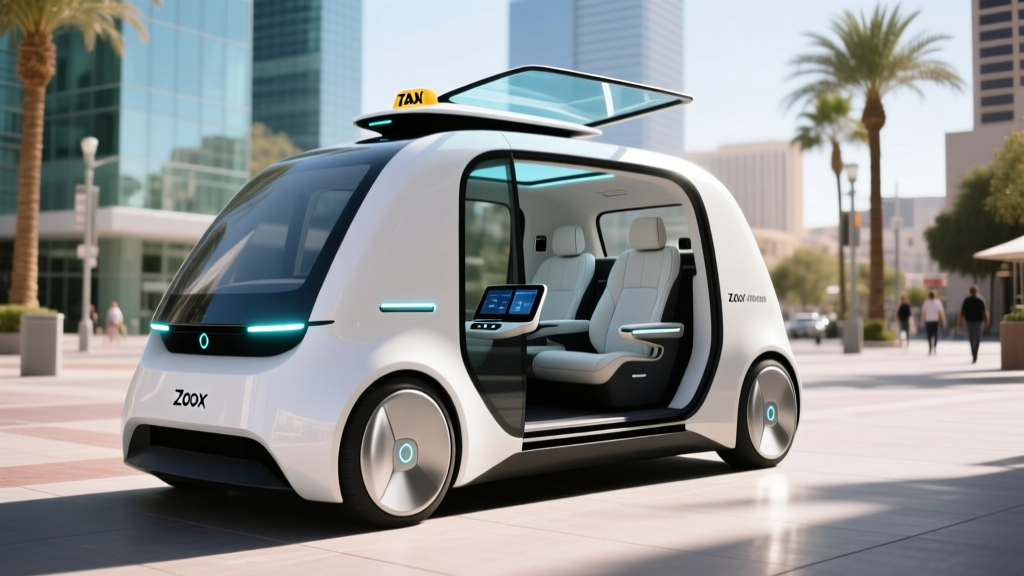
| Zoox | Foster City & parts of San Francisco, CA | Employee/invite-only pilot; limited public | Limited | Zoox purpose-built carriage vehicle |
| Cruise | Suspended — no active commercial U.S. service | Post-incident review; gradual re-entry testing | N/A | Chevrolet Bolt EV / Origin (paused) |
If you're outside these metro areas, Level 4 robotaxi service is not yet available to you. Expansion announcements from Waymo and others should be treated as planned, not live, until rides are bookable in the app.
How Much Does a Robotaxi Cost vs. Uber and Lyft?
Robotaxi pricing is designed to compete with rideshare, not undercut it dramatically. Waymo One pricing in Phoenix and San Francisco generally tracks UberX and Lyft standard fares, with occasional promotional pricing. Here's a representative comparison based on typical urban rides:
| Scenario | Waymo One | UberX | Lyft Standard |
|---|---|---|---|
| 5-mile urban trip (off-peak) | $12–$16 | $11–$15 | $10–$14 |
| 10-mile airport run (off-peak) | $22–$30 | $20–$28 | $19–$27 |
| 5-mile trip (surge/peak) | $16–$22 | $18–$35 (surge) | $17–$32 (surge) |
| Wait time charge | $0 (no wait-time penalty typical) | $0.35–$0.65/min after 2 min | $0.35–$0.60/min after 2 min |
Key pricing insight: Robotaxis don't surge the way Uber and Lyft do during peak demand, because supply is fleet-managed rather than dependent on individual driver availability. However, wait times can be longer during peak periods since the fleet size is finite. Waymo also offers Waymo One membership and promotional credits for new riders.
How to use it: Download the Waymo One app (available in service cities), enter your pickup and dropoff, confirm the fare upfront, and the vehicle arrives. There is no driver to tip. The app lets you track the vehicle's approach, unlock the doors when it arrives, and control music and climate from the rear seat screen.
Robotaxi Safety: What the Real Data Shows
Waymo, as the longest-operating and largest-scale Level 4 service, provides the most meaningful safety dataset:
- Cumulative fully autonomous miles: Over 30 million driverless miles completed across Phoenix, San Francisco, Los Angeles, and Austin as of late 2025.
- Injury-relevant crash rate: Waymo's published safety data (peer-reviewed and submitted to NHTSA) shows an approximately 85% reduction in injury-causing crash involvement compared to human baseline rates per million miles in comparable urban environments.
- Police-contactable crash rate: Approximately 57% lower than human drivers in the same operating areas, per Waymo's validated claims data reviewed by IIHS researchers.
- Common incident types: When incidents do occur, they are overwhelmingly low-speed contacts (under 15 mph), often involving other human-driven vehicles rear-ending or sideswiping the robotaxi at intersections — not the robotaxi initiating the contact.
Important caveats: Robotaxis operate primarily in well-mapped urban environments at moderate speeds. They are not yet tested at scale in high-speed highway merging, rural roads, or severe weather. Comparing robotaxi crash rates to the full national driving average (which includes highway fatalities) requires nuance — the operating domains differ significantly.
The Cruise suspension in late 2023 (following a pedestrian-dragging incident in San Francisco) demonstrated that even established operators can fail in edge-case handling. Cruise's California DMV permit was suspended and the company underwent a full safety review before gradually resuming limited testing. This event underscored that Level 4 safety is not guaranteed — it is earned through continuous validation.
Technology Stack: How Level 4 Robotaxis Actually See the World
Level 4 robotaxis rely on a fundamentally different sensor and compute architecture than any consumer Level 2 vehicle. Here's the technology stack for the current-generation Waymo 6th-generation system:
- Lidar: Multiple high-resolution lidar units providing 360° 3D point-cloud mapping up to ~500 meters. Lidar is the core sensor for spatial awareness — it works in darkness and is largely unaffected by sun glare, unlike cameras alone.
- Cameras: A surround camera array (high dynamic range) for traffic-light state detection, signage reading, lane-marking identification, and object classification. Waymo's 6th-gen cameras are improved for low-light and high-contrast conditions.
- Radar: Imaging radar units for velocity detection of moving objects, particularly in rain and fog where lidar and cameras degrade.
- External audio sensors: Microphone arrays capable of detecting sirens from emergency vehicles and determining direction of approach.
- HD mapping: Centimeter-precision pre-mapped routes within the geofence. The vehicle constantly cross-references its real-time sensor data against the HD map for localization.
- Compute: Custom onboard computing platform processing sensor fusion, prediction models (for pedestrian and vehicle behavior), and path planning in real time — reportedly hundreds of TOPS (trillions of operations per second).
Camera-only vs. multi-sensor debate: Tesla's FSD (Supervised) uses a camera-only ("Tesla Vision") approach with no lidar or radar. This is a Level 2 system requiring driver supervision. Every commercially operating Level 4 robotaxi service uses lidar as a core sensor alongside cameras and radar. The redundancy is not optional at Level 4 — it is a regulatory and safety requirement for driverless operation.
Regulatory Landscape: Who Approves Robotaxi Operations?
Robotaxi deployment in the U.S. involves a patchwork of federal, state, and local oversight:
- Federal (NHTSA): Sets vehicle safety standards (FMVSS). Currently, NHTSA requires a Standing General Order for crash reporting by all ADS-equipped vehicles. NHTSA can issue recalls and investigations but does not directly "approve" robotaxi operations.
- State DMVs and PUCs: States control the actual deployment permits. California's DMV issues testing permits; the California Public Utilities Commission (CPUC) issues commercial passenger-service permits. Arizona takes a permissive approach with minimal state-level regulation. Texas requires operator registration with the state.
- Local/municipal: Cities often negotiate operating agreements covering pickup/dropoff zones, fleet size caps, accessibility requirements, and data-sharing. San Francisco's Board of Supervisors has held multiple hearings on robotaxi operations, reflecting local political oversight.
- Insurance and liability: Level 4 operators carry commercial liability insurance. In California, the CPUC requires minimum $5 million in liability coverage per incident for autonomous vehicle passenger service.
Current Limitations: Where Robotaxis Cannot Go
Level 4 autonomy is impressive within its domain, but that domain is tightly constrained. Here are the real limitations you will encounter:
- Geofencing: Robotaxis operate only within pre-mapped and approved zones. Request a ride outside the geofence and the app will simply decline. Expansions happen incrementally, block by block.
- Weather: Heavy rain, fog, snow, and ice degrade lidar and camera performance. Waymo's Phoenix operations benefit from dry weather; San Francisco fog can reduce service reliability. Snow-covered roads effectively shut down Level 4 operations.
- Construction zones: Unmapped lane shifts, temporary barriers, and flaggers present edge cases. Robotaxis may reroute or pull over rather than navigate complex temporary traffic patterns.
- No highway service (yet): Current Waymo operations are urban/suburban surface streets. Highway on-ramp merging and high-speed lane changes at 65+ mph are not part of the current commercial service profile.
- Pickup/dropoff precision: The vehicle may stop at the nearest safe pull-over point rather than your exact door. Apartment complexes, parking garages, and private driveways are generally not accessible.
- Accessibility: Current Waymo vehicles (Jaguar I-PACE) require passengers to enter a standard vehicle cabin. Wheelchair-accessible robotaxi options remain extremely limited. Zoox's purpose-built vehicle is designed for accessibility but is not yet in broad commercial service.
- No child seats: Passengers must be 18+ in most markets, or accompanied by an adult. You cannot install a child safety seat in a robotaxi.
- Edge-case handling: Unusual scenarios — a fallen tree, an animal on the road, a police officer directing traffic with hand signals — may cause the vehicle to stop and request remote assistance rather than proceed.
Frequently Asked Questions About SAE Autonomous Car Levels
Is Tesla FSD a Level 4 or Level 5 autonomous system?
No. Tesla's Full Self-Driving (Supervised) is a Level 2 system under the SAE J3016 standard. The driver must remain engaged, monitor the road, and be prepared to take over at any moment. Tesla's own owner's manual states this explicitly. The "Supervised" label in the product name reflects this requirement. Tesla has not received regulatory approval for driverless operation in any U.S. jurisdiction.
What SAE level is Mercedes-Benz Drive Pilot?
Mercedes-Benz Drive Pilot is certified as SAE Level 3 — conditional automation. It operates only under very specific conditions: pre-mapped highways, speeds under 40 mph (in heavy traffic), clear weather, and clear lane markings. When engaged, the driver may look away from the road, and Mercedes accepts liability for incidents during system operation. However, the system will request the driver to resume control with advance notice. Drive Pilot is available in limited markets (Germany, Nevada, and California with restrictions) on the S-Class and EQS sedan.
Will Level 5 (full autonomy everywhere) ever exist?
Level 5 — a vehicle that can drive itself in every condition a human can, including unmapped rural roads, blizzards, and off-road terrain — remains a theoretical goal with no credible near-term timeline. Most industry researchers and robotics experts project that Level 5, if achievable at all, is decades away. The current commercial focus is on expanding Level 4 geofences and improving edge-case handling, not on Level 5.
How do robotaxis handle emergencies like an ambulance?
Level 4 robotaxis are equipped with external microphones that detect emergency vehicle sirens. When a siren is detected, the vehicle's system identifies the direction of approach and executes a safe pull-over maneuver to yield right-of-way, similar to what a human driver should do. This behavior is validated extensively in testing before deployment.
Can I use a robotaxi if I'm visually impaired or use a wheelchair?
Waymo has launched an accessibility program and offers features like in-app audio guidance for visually impaired riders. However, the current Jaguar I-PACE fleet is not wheelchair-accessible. Purpose-built robotaxi vehicles (like the Zoox carriage and Waymo's planned next-gen vehicle with Zeekr) are designed with level floors and wider doors for wheelchair access, but these are not yet in widespread commercial service.
What happens if a robotaxi gets into a crash with no driver?
The operating company (Waymo, Zoox, etc.) carries commercial liability insurance and is responsible for incidents during autonomous operation. The vehicle is equipped with in-cabin emergency buttons and a live support line. After any collision, the vehicle is programmed to stop safely, contact emergency services if needed, and the operator's safety team is notified immediately. NHTSA's Standing General Order requires all ADS operators to report crashes within 24 hours for incidents involving injury or tow-away, and within 30 days for all other incidents.