The State of Robotaxis in San Francisco Right Now
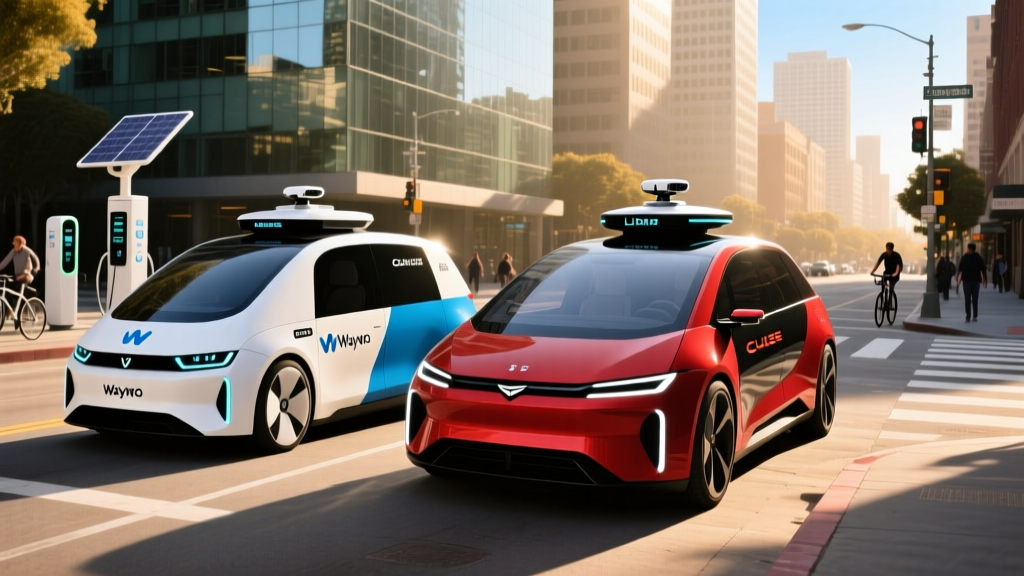
San Francisco remains the most active robotaxi market in the United States. As of early 2026, Alphabet's Waymo operates the only fully commercial, driverless ride-hail service in the city, while GM's Cruise continues a phased return to paid operations following its late-2023 suspension and subsequent restructuring. Zoox, Amazon's autonomous vehicle subsidiary, conducts testing with safety drivers on public roads but has not yet launched a paid rider service in the city.
For residents and visitors, this means one practical option exists today: Waymo One. The service covers a substantial portion of San Francisco proper and has expanded into select neighboring areas. This guide breaks down exactly where you can hail a driverless car, what it costs, the safety record behind the headlines, and the technology that makes it possible — along with the limitations no marketing video will show you.
SAE Automation Levels: Why Robotaxis Are Level 4, Not Level 2
The single most important distinction in autonomous driving is the SAE automation level. Consumer vehicles with features like Tesla Autopilot, Ford BlueCruise, or GM Super Cruise operate at SAE Level 2 — the driver must remain engaged, monitor the road, and be ready to take over instantly. These are driver-assist systems, not self-driving cars.
Robotaxis like Waymo's Jaguar I-PACE fleet operate at SAE Level 4 — high automation within a defined operational design domain (ODD). There is no human driver in the vehicle, no steering wheel intervention expected, and the system handles all driving tasks within its geofenced service area. If the system encounters a scenario it cannot handle, it is designed to execute a minimal-risk maneuver (pull over safely) rather than hand control to a passenger.
| Level | Name | Who Drives? | Example |
|---|---|---|---|
| Level 0 | No Automation | Human only | Basic cruise control |
| Level 1 | Driver Assistance | Human, with steering OR speed assist | Adaptive cruise, lane-keep |
| Level 2 | Partial Automation | Human (must supervise) | Tesla Autopilot, BlueCruise, Super Cruise |
| Level 3 | Conditional Automation | System in specific conditions; human on standby | Mercedes DRIVE PILOT (limited markets) |
| Level 4 | High Automation | System (within geofenced ODD) | Waymo One robotaxi |
| Level 5 | Full Automation | System (all conditions, everywhere) | Does not exist commercially |
Where Can You Actually Use a Robotaxi in San Francisco?
Waymo One's commercial service area in San Francisco has expanded significantly since its initial limited launch. As of 2026, the geofenced zone covers most of San Francisco proper — including neighborhoods from the Embarcadero to the Sunset District, and from the Marina down to the Bayview. The service also extends to portions of the Peninsula, including select areas of San Mateo County, and has begun limited operations in parts of the East Bay.
| Operator | Status | Service Area | Access |
|---|---|---|---|
| Waymo One | Commercial (driverless) | SF proper, portions of Peninsula & East Bay | Open via Waymo app |
| Cruise | Phased return (safety driver present in some vehicles) | Limited SF zones | Invite-only / waitlist |
| Zoox | Testing (safety driver) | SF public roads (no paid rides) | Not available to public |
| Motional (Hyundai/Aptiv) | Not active in SF | N/A | N/A |
To use Waymo One, download the Waymo app (iOS/Android), create an account, and request a ride just as you would with Uber or Lyft. The app confirms pickup within the geofenced zone, shows the approaching vehicle (a white Jaguar I-PACE with visible sensor arrays), and provides a digital key to unlock the doors once the car arrives. No human driver is present. A rider support line is accessible via in-app button at all times.
Robotaxi Pricing vs. Uber and Lyft
Waymo One pricing in San Francisco is competitive with UberX and Lyft Standard, though not consistently cheaper. Fares are calculated on a base rate plus per-mile and per-minute charges, similar to conventional rideshare. During our testing in late 2025 and early 2026, a typical 3-mile trip across SoMa cost between $11 and $16, comparable to an UberX quote for the same route at $10–$14.
| Service | Typical Fare | Surge Pricing | Tip Expected? |
|---|---|---|---|
| Waymo One | $11–$16 | Dynamic (less volatile than rideshare) | No (in-app tip optional) |
| UberX | $10–$14 | Yes (can 1.5x–3x) | Yes (15–20% customary) |
| Lyft Standard | $10–$15 | Yes (Prime Time) | Yes (15–20% customary) |
| Waymo (5+ mile trip) | $18–$28 | Dynamic | No |
One advantage: Waymo's dynamic pricing tends to be less aggressive than Uber/Lyft surge multipliers during peak demand. A rainy Friday evening that triggers 2.5x surge on Uber might show only a modest fare increase on Waymo. However, Waymo's fleet size remains smaller, meaning wait times can be longer — typically 5–12 minutes in central SF, versus 3–7 minutes for Uber/Lyft in the same zone.
Safety Record: What the Data Actually Shows
Robotaxi safety is the most debated topic in autonomous vehicles. Here is what we know from reported data, regulatory filings, and third-party analysis.
Waymo Safety Data Points (Through 2025)
- Fully autonomous miles driven: Over 5 million driverless miles across Phoenix, San Francisco, and Los Angeles combined (Waymo Safety Report)
- Contact rate vs. human benchmark: Waymo's internal analysis, peer-reviewed and published, claims a 85% reduction in injury-causing crash involvement compared to human drivers in the same geographies
- California DMV disengagement reports: Waymo reported an average of one human safety-driver intervention per ~17,000+ autonomous miles during testing phases (pre-commercial). Note: commercial driverless vehicles have no safety driver, so this metric applies only to testing
- NHTSA Standing General Order (SGO) data: Waymo vehicles have been involved in reported incidents, but the vast majority are minor (low-speed contact, no injuries). The SGO database at nhtsa.gov provides the raw filings
Context matters. San Francisco's dense urban environment — with construction zones, double-parked delivery trucks, cyclists, and pedestrians — generates edge cases that stress-test any driving system. Waymo vehicles have been documented making conservative decisions that occasionally frustrate human drivers behind them (extended stops at four-way intersections, cautious behavior around emergency vehicles). These are not failures; they are programmed risk-aversion trade-offs.
The Cruise suspension in October 2023 — triggered by an incident in which a pedestrian was struck by a human-driven vehicle and then run over by a Cruise robotaxi that failed to stop — underscored that Level 4 systems can fail in complex, multi-agent scenarios. Cruise's return to SF has been deliberately slow, with safety drivers present in many vehicles and a reduced fleet. The California Public Utilities Commission (CPUC) and the California DMV remain the primary state regulators overseeing these operations.
The Technology Stack: Lidar, Cameras, and HD Maps
Waymo's sixth-generation "Driver" system, deployed on the Jaguar I-PACE fleet, uses a multi-sensor approach that differs fundamentally from Tesla's camera-only FSD strategy.
Waymo 6th-Gen Sensor Suite
- Lidar: Multiple roof-mounted and body-integrated lidar units providing 360° high-resolution 3D point clouds. Lidar operates independently of ambient light, critical for nighttime and low-visibility operation.
- Cameras: High-resolution cameras covering all directions for object classification, traffic-light state detection, and signage recognition.
- Radar: Imaging radar for velocity detection of moving objects (other vehicles, cyclists) and operation in rain or fog where cameras and lidar degrade.
- External audio sensors: Microphones to detect emergency vehicle sirens and react accordingly.
- HD Maps: Centimeter-precision maps of the geofenced service area, pre-loaded and continuously updated. The vehicle localizes itself within these maps in real time.
This sensor redundancy is the core argument for lidar-based stacks in commercial robotaxi applications. Each sensor modality compensates for the weaknesses of the others: lidar provides depth accuracy that cameras lack, cameras provide semantic understanding (reading a temporary handwritten sign) that lidar cannot, and radar sees through fog that blinds both. The trade-off is cost — a Waymo vehicle's sensor suite is estimated to add $100,000+ in hardware, which is why robotaxis currently operate as fleet services, not consumer vehicles.
By contrast, Tesla's FSD (Supervised) relies on a camera-only "Tesla Vision" approach. While impressive for a Level 2 system, it remains a driver-assist feature requiring human supervision and is not approved for driverless commercial operation anywhere.
Regulatory Landscape: Who Approves Robotaxi Operations?
Robotaxi deployment in the United States involves a layered regulatory framework:
- NHTSA (federal): Sets vehicle safety standards (FMVSS). Currently, NHTSA does not "approve" autonomous driving systems but requires crash reporting via the Standing General Order and can issue recalls or investigations.
- California DMV: Issues testing permits and requires annual disengagement reports. The DMV can suspend testing permits — as it did with Cruise in 2023.
- California CPUC: Regulates commercial passenger service. Any robotaxi charging fares in California must hold a CPUC permit (either a Drivered Deployment or Driverless Deployment permit).
- City/County governments: San Francisco's Board of Supervisors and SFMTA have expressed varying degrees of concern about robotaxi operations, particularly regarding traffic disruption and emergency vehicle interference. Local authorities do not directly issue robotaxi permits but can influence state regulators.
Outside California, Arizona (Phoenix metro) has the most permissive regulatory environment, with no state-level permit requirement for driverless commercial service. Texas (Austin) and Nevada (Las Vegas) have emerging frameworks. Federal legislation specifically governing autonomous vehicle deployment remains stalled in Congress as of 2026.
Current Limitations: Where Robotaxis Cannot Go or Struggle
Operational Limitations of San Francisco Robotaxis
- Geofence boundaries: Waymo will not pick up or drop off outside its mapped service zone. Trips to SFO Airport became available in 2024, but routes to destinations outside the geofence (e.g., Marin County, Napa, most of the South Bay) remain unavailable.
- Heavy fog and rain: While the sensor stack handles light rain and nighttime operation, dense fog (common in SF's western neighborhoods) can degrade lidar and camera performance. Waymo may restrict service or increase following distances in these conditions, resulting in slower trips.
- Construction zones: Temporary lane closures, shifted lanes, and flaggers create scenarios that require real-time adaptation. Waymo handles many of these, but complex multi-phase construction can cause the vehicle to stop and request remote assistance.
- Emergency vehicle encounters: Waymo vehicles are programmed to pull over for emergency vehicles, but there have been documented instances of delayed or confused responses when multiple emergency vehicles are present or when sirens echo off buildings.
- No highway operation (limited): Waymo's SF service primarily covers surface streets. Highway driving at 65+ mph introduces different risk profiles, though Waymo has begun limited freeway segments in some markets.
- Accessibility: The Jaguar I-PACE fleet is not wheelchair-accessible. Waymo has announced plans to integrate accessible vehicles (including the purpose-built Zeekr RT) but these are not yet in SF commercial service.
- Child seats: Passengers traveling with children under 8 (or under 4'9") are responsible for providing and installing an appropriate child restraint. The vehicles do not supply car seats.
- Pets and large cargo: Service animals are accommodated; pets and oversized items are at the driver's (system's) discretion per Waymo policy, practically meaning they should fit on your lap or in the trunk without obstructing sensors.
Is This Truly Self-Driving or Just Advanced Driver-Assist?
Waymo One in San Francisco is a Level 4 driverless service. There is no human in the driver's seat, no steering wheel for a passenger to grab, and no expectation that you will intervene. You are a rider, not a driver. This is fundamentally different from Tesla FSD (Supervised), which remains a Level 2 system where you are legally and practically the driver at all times.
The "Level 4" designation does carry a critical qualifier: it applies within the operational design domain. That means the specific geofenced area, in the weather conditions the system is approved for, on the road types it has been mapped and tested on. Outside those parameters — say, an unmapped road in rural Sonoma County during a wildfire smoke event — the system is not designed to operate, and the service will not dispatch a vehicle there.
Level 5 autonomy — a vehicle that can drive anywhere a human can, in any condition, without a geofence — does not exist commercially in 2026 and no credible operator has announced a timeline for it.
Frequently Asked Questions
Where can I use a robotaxi in San Francisco right now?
Waymo One operates commercially across most of San Francisco proper and select Peninsula/East Bay areas. Download the Waymo app, enter your destination, and the app will confirm whether the trip is within the service zone. Cruise is conducting limited operations with safety drivers and is not broadly available to the public.
How much does a robotaxi cost compared to Uber or Lyft?
Waymo One fares are comparable to UberX/Lyft Standard — typically $11–$16 for a 3-mile trip in central SF. Waymo's dynamic pricing tends to surge less aggressively than rideshare during peak demand, but wait times can be longer (5–12 minutes vs. 3–7 minutes for Uber/Lyft). No tip is expected, though in-app tipping is available.
How safe are robotaxis — is there real data?
Waymo reports over 5 million fully autonomous miles driven across its markets. Its peer-reviewed analysis claims an 85% reduction in injury-causing crash involvement vs. human drivers in comparable geographies. NHTSA's Standing General Order database contains raw incident filings. The Cruise suspension in 2023 demonstrated that Level 4 systems can fail in complex scenarios, and the technology is not infallible. However, available data suggests robotaxis are competitive with or safer than average human drivers in their operating environments.
What are the current limitations of SF robotaxis?
Key limitations include geofenced service boundaries (no trips to Marin, Napa, or most of the South Bay), degraded performance in heavy fog, occasional stops for remote assistance in complex construction zones, limited highway operation, no wheelchair-accessible vehicles, and the requirement that passengers supply their own child car seats.
Is a Waymo robotaxi truly self-driving?
Yes — within its defined operating domain. Waymo One is an SAE Level 4 service with no human driver present. This is categorically different from Level 2 driver-assist systems like Tesla FSD (Supervised) or GM Super Cruise, which require an attentive human driver at all times. Level 5 autonomy (drive anywhere, any condition) does not exist commercially.
Can I take a robotaxi to SFO Airport?
Waymo began offering trips to and from San Francisco International Airport (SFO) in 2024. The app will confirm availability for your specific pickup/dropoff. Oakland Airport (OAK) and San Jose Airport (SJC) availability depends on current geofence expansion.
What happens if the robotaxi gets confused or stuck?
Waymo vehicles can connect to remote guidance operators who provide high-level directional advice (not remote driving). If the vehicle cannot resolve a situation, it will execute a minimal-risk maneuver — typically pulling to the side of the road and stopping. Rider support is accessible via the in-app button at all times.