The Short Answer: No Robotaxi Service Is Live in Orlando Yet
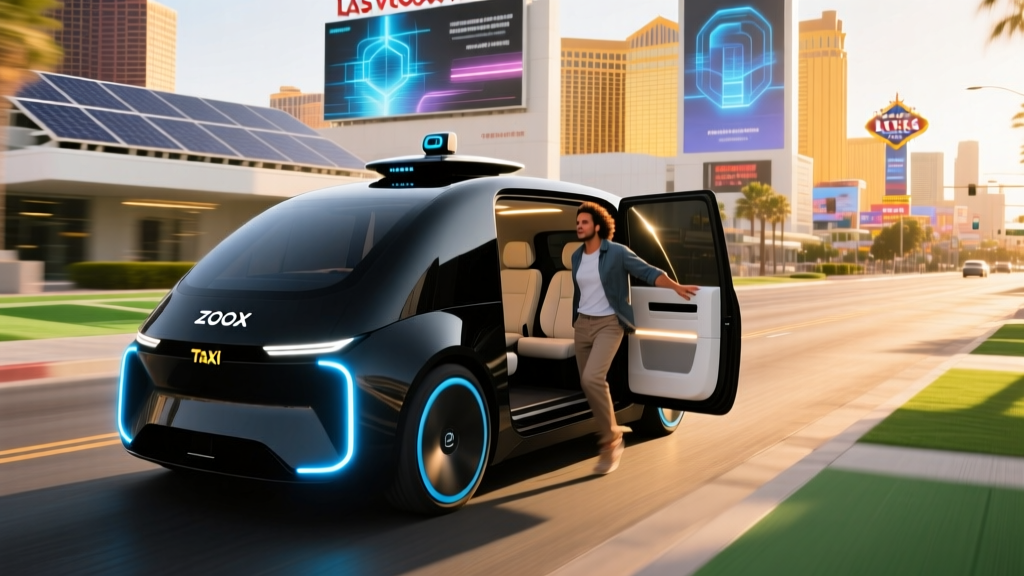
If you've searched for "robotaxi Orlando" hoping to hail a driverless ride to Universal Studios or the airport, the reality as of early 2026 is straightforward: no Level 4 robotaxi service currently operates in Orlando or anywhere in Central Florida. Waymo, the only scaled commercial robotaxi operator in the United States, runs paid driverless service in Phoenix, San Francisco, Los Angeles, and has begun limited expansion in Austin. Cruise, once the second major player, suspended all driverless operations in late 2023 after a serious pedestrian incident in San Francisco and has only partially resumed with human safety operators as of 2025. Zoox operates a small pilot in Las Vegas and Foster City, California, but has not launched in Florida.
That said, Orlando's combination of dense tourism corridors, predictable weather, and wide arterial roads makes it a plausible future expansion target. Here's what you need to know about where robotaxis operate today, how they work, what they cost, and what would need to happen before you can summon one in Central Florida.
- Level 2 (Driver Assist): The car steers and accelerates, but the human driver must remain fully engaged and responsible. Examples: Tesla Autopilot/FSD Supervised, GM Super Cruise, Ford BlueCruise. These are NOT robotaxis.
- Level 3 (Conditional Automation): The vehicle handles all driving in narrow, defined conditions; the human must take over when prompted. Mercedes-Benz Drive Pilot is the only U.S. example, limited to specific highways under 40 mph.
- Level 4 (High Automation): The vehicle drives itself without a human driver in a defined operational design domain (geofenced area, weather conditions). If the system can't handle a situation, it pulls over safely. This is what Waymo and Zoox operate.
- Level 5 (Full Automation): The vehicle drives anywhere, in any condition, without a steering wheel. No Level 5 vehicle exists anywhere in the world.
Robotaxis in Orlando, if they arrive, will be Level 4 — driverless within a mapped geofence, not Level 5 "go anywhere" autonomy.
Where Can I Use a Robotaxi Right Now?
As of 2026, commercial paid robotaxi rides — meaning you open an app, a car with no one in the driver's seat arrives, and it takes you to your destination — are available in exactly four U.S. metro areas. Here's the current operational map:
| City | Operator | Service Type | Hours | Geofence Area |
|---|---|---|---|---|
| Phoenix, AZ (metro) | Waymo | Fully driverless, paid | 24/7 | ~225 sq mi (Chandler, Tempe, Scottsdale, parts of Phoenix proper) |
| San Francisco, CA | Waymo | Fully driverless, paid | 24/7 | Most of SF proper, Daly City, parts of peninsula |
| Los Angeles, CA | Waymo | Fully driverless, paid | 24/7 | Santa Monica, Hollywood, Downtown LA, expanding |
| Austin, TX | Waymo | Limited driverless, paid | Limited hours | Central Austin, initial pilot zone |
| Las Vegas, NV | Zoox | Pilot, no driver | Limited | ~1 sq mi near Strip/Fremont |
| Foster City, CA | Zoox | Pilot, no driver | Limited | Small suburban zone |
Florida status: Waymo has not announced an Orlando, Tampa, or Miami launch date. The company has tested in Florida previously but has committed to no commercial timeline for the state. Cruise's parent company GM has indicated Florida is on a long-term roadmap, but with Cruise still rebuilding its safety credentials post-2023 suspension, a Florida launch is unlikely before 2027 at the earliest.
How Much Does a Robotaxi Cost vs. Uber or Lyft?
Where robotaxis do operate, pricing is competitive with — and sometimes slightly cheaper than — conventional rideshare, though not dramatically so. Waymo prices its rides to be roughly on par with UberX and Lyft standard fares in the same market. Here's a representative comparison based on published fare data from Phoenix and San Francisco:
| Route (Approximate) | Distance | Waymo | UberX | Lyft |
|---|---|---|---|---|
| Airport to downtown (PHX) | 5 mi | $12–$16 | $14–$19 | $13–$18 |
| Cross-town trip (SF) | 3 mi | $10–$14 | $12–$17 | $11–$16 |
| Suburban commute (Chandler, AZ) | 8 mi | $16–$22 | $18–$25 | $17–$24 |
Key pricing notes:
- Waymo does not currently implement surge pricing the way Uber and Lyft do during peak demand, which can make it significantly cheaper during rush hour or major events.
- There is no tipping expectation with a robotaxi — the fare is the fare.
- Wait times vary: in Phoenix and SF, Waymo typically quotes 3–7 minutes. In newer markets like Austin, availability is more limited.
- If robotaxi service ever launches in Orlando's tourist corridors (International Drive, Disney area, airport), pricing would likely follow this same competitive-with-rideshare model, though tourism-area premiums are possible.
How Safe Are Robotaxis? The Real Data
Safety is the most scrutinized — and most debated — aspect of robotaxi operations. Here's what the actual data shows, separated from marketing claims.
- Total driverless miles: Over 10 million fully autonomous miles driven (Waymo's published milestone, reached in 2024)
- Insurance claim rate: Waymo's internal data, validated by third-party insurer analysis, shows a roughly 70% reduction in injury-causing crash involvement compared to human benchmarks in the same operating areas
- Contact rate: Police-contactable incidents occur at a rate well below human drivers per million miles, though minor curb contacts and low-speed collisions with stationary objects have been documented
- Major incident: No passenger fatalities. One notable incident in Phoenix (2024) involved a Waymo vehicle striking a pedestrian who entered the roadway unexpectedly at night; the pedestrian sustained minor injuries. NHTSA investigated and closed the case.
Cruise Safety Record:
- October 2023 incident: A Cruise robotaxi in San Francisco struck and dragged a pedestrian who had been thrown into its path by a human-driven vehicle. Cruise initially failed to disclose the full extent of the drag to regulators, leading to its California DMV permit suspension and a cascading nationwide pullback.
- Post-2023: Cruise resumed operations with human safety drivers in Phoenix, Dallas, and Houston in 2024–2025. Driverless commercial service has not fully resumed at scale.
Sources: NHTSA, Waymo Safety Reports, California DMV public filings.
The data suggests that robotaxis, where they operate at scale, are statistically safer than the average human driver in the same urban environments. However, the sample size is still small relative to the billions of miles humans drive annually, and edge cases — construction zones, erratic pedestrians, unusual weather — remain the primary risk vectors.
Under the Hood: How Robotaxi Technology Works
Understanding why Orlando isn't on the robotaxi map yet requires understanding what these vehicles need to operate safely.
Waymo's Sensor Stack (6th-Generation Driver, 2024–2026 Vehicles)
Waymo's current fleet uses the Jaguar I-PACE and the Zeekr RT (a purpose-built robotaxi entering limited deployment). The 6th-generation "Waymo Driver" hardware suite includes:
- LiDAR: Multiple high-resolution roof-mounted and bumper-mounted units providing 360° 3D point-cloud mapping out to 500+ meters. LiDAR is the core sensor for object detection and spatial awareness.
- Cameras: 29+ cameras covering all directions, used for traffic light state detection, sign reading, lane marking identification, and object classification.
- Radar: 6 external radar units for velocity detection of moving objects, functioning in rain and fog where cameras and LiDAR degrade.
- Audio sensors: External microphones that detect sirens from emergency vehicles, triggering pull-over behavior.
- HD Maps: Waymo does NOT drive without maps. Every operational area is pre-mapped at centimeter-level resolution, and the system uses this map as a baseline for localization and path planning.
Zoox's Approach
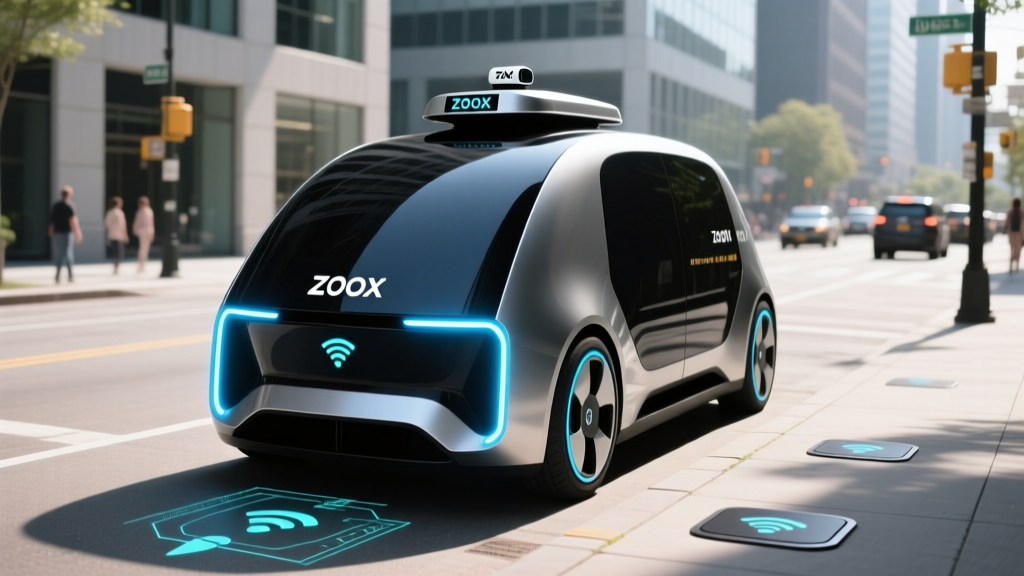
Zoox's purpose-built vehicle (no steering wheel, bidirectional driving) uses a similar LiDAR-camera-radar fusion stack but is designed from the ground up as a robotaxi rather than a retrofitted production car. Its operational footprint remains very small.
Why This Matters for Orlando
Every new city requires extensive HD mapping, regulatory approval, and "validation miles" — thousands of miles driven with safety operators before the driver is removed. Orlando's sprawl, seasonal tourist traffic surges, and frequent construction on I-4 and International Drive would require significant mapping and validation investment before Waymo or any competitor could launch there.
The Regulatory Landscape: Who Decides If Robotaxis Come to Orlando?
Robotaxi deployment in the U.S. involves overlapping layers of regulation, and Florida's framework is actually more permissive than many states.
- Federal (NHTSA): Sets vehicle safety standards (FMVSS). NHTSA can investigate and recall autonomous vehicles but does not approve or deny robotaxi service launches. NHTSA has issued standing general orders requiring crash reporting for all Level 2+ and Level 4 systems.
- State of Florida: Florida Statute §316.86 explicitly permits the operation of fully autonomous vehicles on public roads. The state does not require a special permit for testing or deployment the way California's DMV does. This makes Florida one of the most legally open states for robotaxi deployment.
- Local (City/County): Orlando, Orange County, and Osceola County would need to coordinate on issues like pickup/dropoff zones, geofencing around event venues (Amway Center, Camping World Stadium), and integration with LYNX transit and SunRail. Local jurisdictions can impose operational restrictions even if the state permits deployment.
In short: Florida law would not block a robotaxi launch in Orlando. The barriers are operational (mapping, validation, fleet logistics) and commercial (whether Waymo or a competitor prioritizes Orlando over other expansion targets like Atlanta, Miami, or Dallas).
Current Limitations: What Robotaxis Cannot Do
Even in cities where robotaxis operate today, they face significant constraints that would be amplified in a market like Orlando:
- Geofencing: Vehicles will not drive outside their mapped operational zone. If your destination is outside the geofence, the app will not let you book the ride. In Orlando, this could mean service to Disney World but not to Daytona Beach or even some suburban neighborhoods.
- Heavy rain and flooding: While Waymo's 6th-gen hardware handles moderate rain, Florida's intense afternoon thunderstorms with near-zero visibility can trigger the vehicle to pull over and wait. This is a safety feature, not a bug, but it affects reliability.
- Construction zones: Major roadwork that changes lane configurations can confuse the system. Waymo handles many construction scenarios, but complex or poorly marked zones may cause the vehicle to stop and request remote assistance or reroute.
- Unusual events: Parades, protests, marathon road closures, and theme-park shuttle traffic create scenarios the system may not be trained for. Orlando's event calendar is dense with these.
- No highway driving (mostly): Waymo's current service areas include some highway segments, but most robotaxi rides are surface-street focused. An Orlando airport-to-Disney trip via SR-417 or the Beachline Expressway would require highway-capable routing.
- Accessibility: Current Waymo vehicles (Jaguar I-PACE) require passengers to enter and exit independently and cannot accommodate wheelchairs without folding them. Zoox's purpose-built vehicle addresses this better but is not widely deployed.
- No stops along the route: You cannot ask a robotaxi to stop at a drive-through, wait while you run into a store, or make multiple stops. It's point A to point B.
When Could a Robotaxi Actually Arrive in Orlando?
Based on Waymo's current expansion cadence — roughly one to two new metro areas per year — and the operational complexity of the Orlando market, a realistic timeline for commercial robotaxi service in Central Florida is 2027–2028 at the earliest, and more likely 2029 for meaningful coverage beyond a small initial geofence.
Factors that could accelerate this:
- A partnership with a tourism operator (Disney, Universal) that provides a private-campus use case, reducing public-road complexity.
- Orlando International Airport (MCO) establishing dedicated autonomous-vehicle pickup infrastructure, as Phoenix Sky Harbor has explored.
- Competitive pressure if a second operator (Cruise, Aurora, or a new entrant) launches in Florida first.
Factors that could delay it:
- A high-profile robotaxi incident in any U.S. city triggering a national regulatory pause.
- Waymo prioritizing denser, higher-revenue markets (New York, Chicago) where per-ride economics are stronger.
- Insurance cost escalation making Florida's already-high auto-insurance market prohibitive for robotaxi fleet operators.
Frequently Asked Questions
Is Tesla's FSD a robotaxi I can use in Orlando?
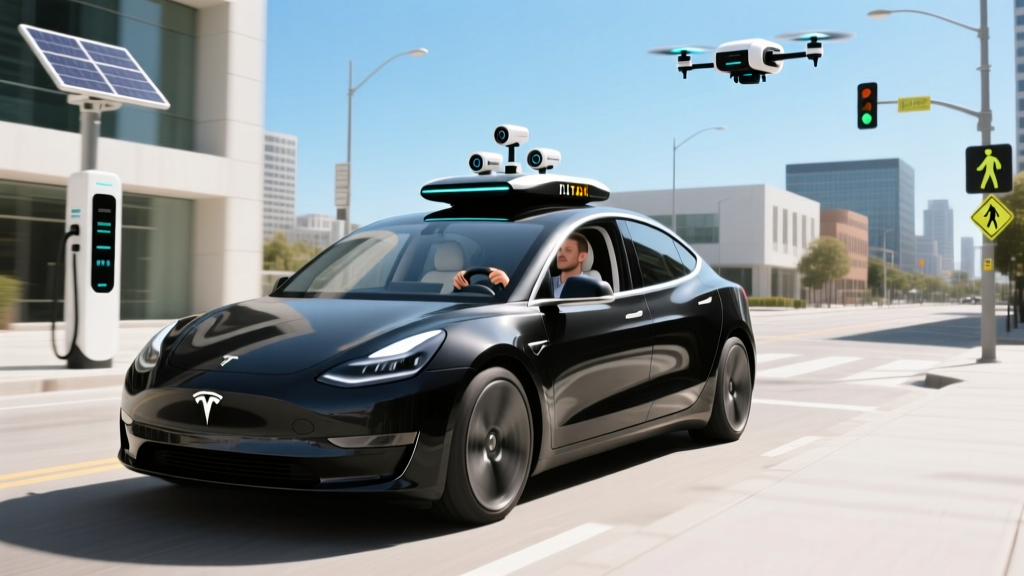
No. Tesla's Full Self-Driving (Supervised) is an SAE Level 2 driver-assistance system. The driver must remain attentive, keep hands available, and is legally responsible for the vehicle at all times. Tesla has discussed a future "Robotaxi" product, but as of 2026, no Tesla vehicle operates as a driverless commercial service anywhere. Any Tesla owner in Orlando can use FSD Supervised on their own car, but that is fundamentally different from hailing a driverless ride.
Can I take a Waymo from Orlando International Airport to Disney World?
Not today. Waymo does not operate in Florida. Even when/if service launches, airport-to-resort routing would depend on whether MCO and the Disney corridor are within the initial geofence, which is not guaranteed.
How do robotaxis handle Florida thunderstorms?
Waymo's 6th-generation sensor suite handles moderate rain, but in heavy downpours with severely reduced visibility, the vehicle may execute a "minimal risk condition" maneuver — pulling to the side of the road and waiting until conditions improve. In Florida's summer storm season, this could mean 10–20 minute delays on some rides.
Would a robotaxi in Orlando be cheaper than Uber during spring break or theme-park peak season?
Probably, yes. One advantage of robotaxi pricing is the absence of dynamic surge multipliers. During peak tourism periods when Uber and Lyft fares in Orlando can spike 2–3x, a robotaxi (if available) would likely maintain standard pricing, making it significantly cheaper during high-demand windows.
What's the difference between Waymo and Zoox?
Waymo uses retrofitted production vehicles (currently Jaguar I-PACE, adding Zeekr RT) and operates at scale across multiple cities with a mature sensor stack refined over 20+ million miles. Zoox uses a purpose-built, symmetric vehicle with no steering wheel, designed exclusively as a robotaxi, but operates in a very limited footprint (Las Vegas, Foster City) and has not yet scaled commercially. Waymo is the clear market leader in 2026.