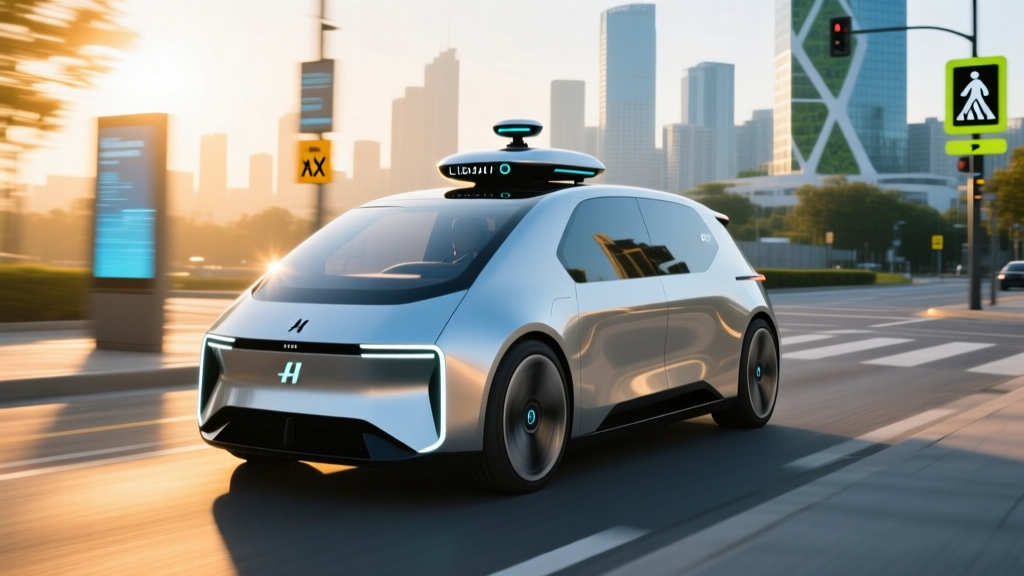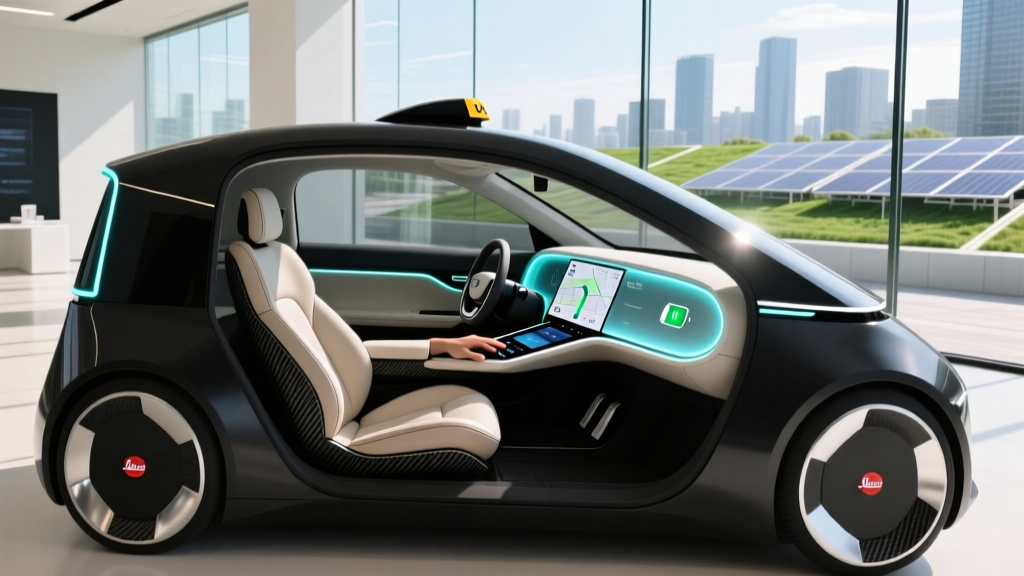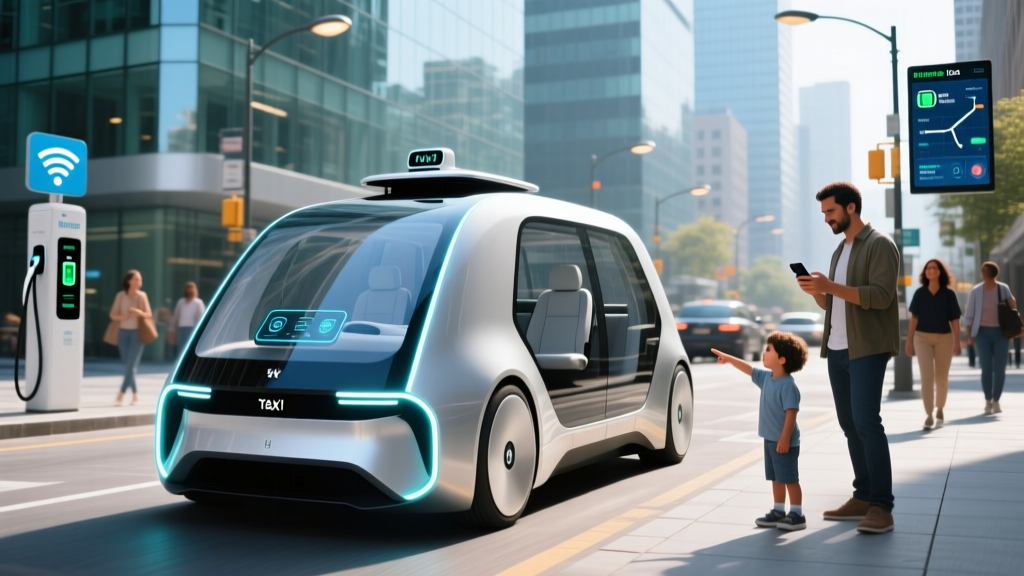
If you've been asking when is robotaxi launch coming to your city, the honest answer in 2026 is: it depends entirely on where you live. Fully driverless commercial services are real, operational, and expanding — but they remain confined to a specific set of metro areas with favorable weather, mapped streets, and permissive regulators. Here's exactly where you can hail one today, what it costs, and what the safety record actually shows.
SAE Automation Levels: Why It Matters for Robotaxis
Before mapping availability, you need the vocabulary. The SAE International J3016 standard defines six levels of driving automation, and conflating them is the single most common error in EV and autonomy coverage.
| Level | Name | Who Drives? | Examples |
|---|---|---|---|
| 0 | No Automation | Human always | Conventional car |
| 1 | Driver Assistance | Human (one axis assisted) | Adaptive cruise OR lane-keep |
| 2 | Partial Automation | Human supervises constantly | Tesla Autopilot/FSD Supervised, GM Super Cruise, Ford BlueCruise |
| 3 | Conditional Automation | System drives in narrow ODD; human on standby | Mercedes Drive Pilot (limited markets) |
| 4 | High Automation | System drives within a geofenced ODD; no human needed | Waymo One, Zoox, Cruise (when operational) |
| 5 | Full Automation | System drives everywhere, all conditions | Does not exist commercially |
Every commercial robotaxi you can hail today is SAE Level 4 — driverless within a defined Operational Design Domain (ODD). Tesla's FSD (Supervised), despite the branding, is Level 2: the driver must remain engaged, hands on or near the wheel, eyes on the road. This is not a semantic quibble; it's the difference between a vehicle with no steering wheel (Zoox) and one that legally requires an attentive human behind it.
Where Can I Use a Robotaxi Right Now?
As of early 2026, three operators run paid, driverless robotaxi services in the U.S. at meaningful scale. Here is the current live-service map — not announced expansions, not pilot permits, but places you can open an app and ride today.
| Operator | City | Service Type | Hours | Notes |
|---|---|---|---|---|
| Waymo One | Phoenix, AZ (metro) | Fully driverless, paid | 24/7 | Largest continuous service area |
| Waymo One | San Francisco, CA | Fully driverless, paid | 24/7 | Dense urban, some street restrictions |
| Waymo One | Los Angeles, CA | Fully driverless, paid | Limited hours expanding | Rolling neighborhood-by-neighborhood |
| Waymo One | Austin, TX | Fully driverless, paid | Daytime/evening | Launched commercially 2025 |
| Zoox | Las Vegas, NV (Strip corridor) | Fully driverless, paid | Limited hours | Purpose-built bidirectional vehicle |
| Zoox | Foster City, CA | Fully driverless, paid | Limited hours | Small service area |
| Cruise | — (suspended) | Paused since late 2023 incident | — | Gradual re-entry testing with safety drivers in Phoenix/Dallas; no paid driverless service active |
If your city isn't on that list, you cannot hail a driverless robotaxi today. Announced expansions (Atlanta, Miami, Seattle, Washington D.C.) are in testing or permitting phases — treat them as upcoming, not live.
How Much Does a Robotaxi Cost vs. Uber or Lyft?
Robotaxi pricing is not uniformly cheaper than rideshare. Operators are balancing unit economics against rider acquisition, so expect fare parity or a modest premium in most markets — with aggressive promotional discounts for new users.
| Service | Base Fare | Per-Mile | Per-Minute | 5-Mile / 15-Min Trip |
|---|---|---|---|---|
| Waymo One | ~$5.00 | ~$1.50 | ~$0.30 | ~$17 |
| UberX | ~$3.50 | ~$1.25 | ~$0.28 | ~$14 |
| Lyft Standard | ~$3.75 | ~$1.30 | ~$0.30 | ~$15 |
| Zoox | Promo pricing active | Varies | Varies | Often $5–$10 (subsidized) |
Waymo's pricing is generally within $2–$5 of an UberX or Lyft for comparable trips. The gap narrows during surge periods — robotaxi fares don't surge the way human-driver rideshare does, which can make Waymo the cheaper option at 8 a.m. or on a rainy Friday night. Zoox, still scaling, runs heavy introductory pricing that won't persist.
How Safe Are Robotaxis? The Real Data
Safety is the right question, and the answer requires separating incident rates from incident severity, and robotaxi data from human-driver baselines.
- Cumulative fully driverless miles: over 10 million (Waymo's published milestone, late 2024; continued accumulation through 2025)
- Insurance claim rate: Waymo's self-reported data, validated by third-party analysis from the Insurance Institute for Highway Safety (IIHS), shows property-damage claims at roughly 75% below the human-driver baseline in comparable geographies
- Injury-related claims: approximately 90% below human baseline in the same comparison
- Contact police-reported incidents: roughly 6 per million miles, vs. the U.S. human average of approximately 500+ per million miles (NHTSA)
The nuance: these are self-selected environments. Waymo operates in geofenced, mapped areas, largely avoids severe weather, and doesn't run in construction-heavy or unmapped corridors. The comparison to human drivers is directionally valid but not apples-to-apples across all driving conditions.
The Cruise incident of October 2023 — a pedestrian dragged after being struck by a human-driven vehicle, then run over by a Cruise robotaxi that failed to stop — was a defining regulatory moment. California's DMV suspended Cruise's permit; the company pulled all driverless operations nationwide. As of 2026, Cruise is back on roads with safety drivers in select cities but has not resumed paid driverless service. The National Highway Traffic Safety Administration (NHTSA) maintains an open investigation and standing general order requiring all ADS-equipped vehicles to report crashes within 24 hours.
Under the Hood: The Technology Stack
Robotaxi operators use fundamentally different sensor architectures than consumer driver-assist systems, and this is where the Level 2 vs. Level 4 gap becomes physical hardware, not just software.
| Operator | Primary Sensors | LiDAR | Camera-Only? | HD Maps | Geofence |
|---|---|---|---|---|---|
| Waymo (6th-gen) | LiDAR + radar + camera | Custom roof-mounted + side units | No | Yes, cm-level | Yes, strict |
| Zoox | LiDAR + radar + camera | Corner-mounted, 360° overlap | No | Yes | Yes, very tight |
| Cruise (Origin) | LiDAR + radar + camera | Roof + perimeter | No | Yes | Yes |
| Tesla (FSD Supervised — Level 2) | Camera only | None (removed) | Yes | No | No (but driver required) |
Every operational Level 4 robotaxi uses LiDAR as a primary sensor. The camera-only approach (Tesla) remains unproven at Level 4 and is not deployed in any driverless commercial service. HD mapping and strict geofencing are load-bearing parts of the safety case — remove them and the system is not approved to operate.
Who Regulates Robotaxis, and What's Approved?
The regulatory landscape is fragmented, and understanding it explains why robotaxi availability is so geographically uneven.
- Federal (NHTSA): Sets vehicle safety standards (FMVSS). Can grant exemptions for vehicles without steering wheels (Zoox, Cruise Origin received limited exemptions). Investigates crashes. Does not currently license robotaxi operations.
- State DMVs and PUCs: The actual gatekeepers. California DMV issues testing permits; California Public Utilities Commission (CPUC) issues commercial passenger-service permits. Arizona takes a permissive approach via executive order. Texas, Nevada, and others have their own frameworks.
- Local (city/county): Can restrict operating hours, zones, and fleet sizes through municipal agreements. San Francisco's Board of Supervisors famously attempted to cap Waymo and Cruise operations before CPUC overruled.
The practical upshot: expansion is a state-by-state, sometimes city-by-city process. A permit in Phoenix tells you nothing about whether the same operator can run in Chicago.
Current Limitations — Where Robotaxis Cannot Go
The limitations are not edge cases; they define the service envelope.
- Weather: Heavy rain, fog, snow, and ice degrade LiDAR and camera performance. Waymo pauses or restricts service during monsoon storms in Phoenix and heavy fog in San Francisco. No robotaxi operates in snowy conditions.
- Geofence boundaries: If your origin or destination falls outside the mapped ODD, the ride cannot be booked. Expansion is measured in blocks and corridors, not entire metro areas.
- Construction zones: Rapidly changing lane configurations remain a challenge. Operators often geofence around long-term construction or require remote assistance.
- Airport and highway access: Some services include limited freeway segments; many are surface-street only. Airport pickups are available in Phoenix (Sky Harbor) but not universally.
- No-go scenarios: Unpaved roads, private property, drive-throughs, and multi-stop trips are generally unsupported.
- Accessibility: Waymo's 6th-gen vehicles include wheelchair-accessible configurations in limited numbers; Zoox's low-floor design helps but fleet scale is small.
Frequently Asked Questions
Is a robotaxi truly self-driving, or is it driver-assist?
Operational Waymo and Zoox services are SAE Level 4 — fully driverless within their geofence, with no human in the vehicle. Tesla FSD (Supervised), GM Super Cruise, and Ford BlueCruise are Level 2 driver-assist and require an attentive human driver at all times. The distinction is not marketing; it's a legal and engineering boundary.
When will robotaxis launch in my city?
Waymo has announced testing or planned commercial launches in Atlanta, Miami, Seattle, and Washington D.C., but none are live paid services as of early 2026. If your city isn't Phoenix, San Francisco, Los Angeles, Austin, Las Vegas, or Foster City, expect to wait — likely measured in years, not months — for a commercial driverless service.
Can I summon a robotaxi outside its geofence?
No. The app will refuse to book a ride with an origin or destination outside the approved ODD. Geofence boundaries are visible in the Waymo and Zoox apps before you request a ride.
What happens if a robotaxi gets confused or stuck?
Operators use remote assistance — a human specialist reviews the vehicle's sensor feed and can authorize a path or maneuver. The remote assistant does not steer the vehicle in real time; they resolve the ambiguity so the vehicle's system can proceed. Pull-overs and wait-for-help scenarios do occur and add to trip time.
How does robotaxi insurance work if there's a crash?
The operator (Waymo, Zoox) carries commercial liability coverage for the ride. You are not required to provide your own insurance as a passenger. Claim processes run through the operator's insurance, not a personal auto policy.
Are robotaxis available 24/7?
Waymo runs 24/7 in Phoenix and San Francisco. Los Angeles, Austin, and Zoox services operate on more limited hours that expand as fleets and confidence grow. Check the app for your specific market.