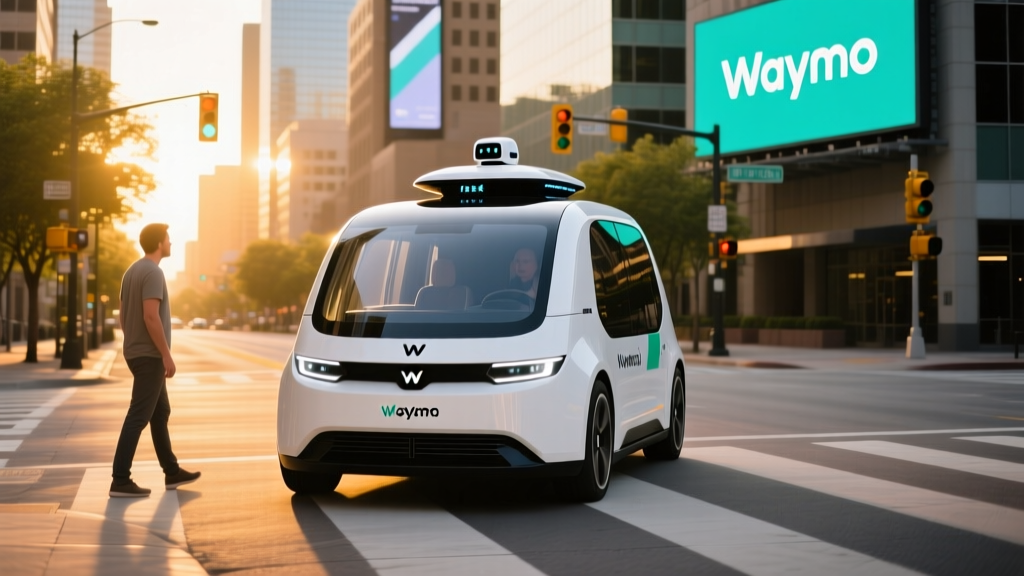
Dallas-Fort Worth has emerged as one of the key battlegrounds for autonomous ride-hailing. But if you're searching for a robotaxi in Dallas, the picture is more nuanced than headlines suggest. Waymo, the Alphabet-backed autonomous vehicle leader, has been testing in the DFW metroplex and has moved toward commercial service — but availability, geofencing, and regulatory approval determine whether you can actually hail a driverless ride today.
This guide breaks down exactly where robotaxi services operate in the Dallas area, the technology powering them, verified safety data, real pricing compared to Uber and Lyft, and the hard limitations you need to know before relying on one.
Where Can You Use a Robotaxi in Dallas Right Now?
As of 2026, Waymo One is the primary robotaxi service available to the public in Texas. Waymo began mapping and testing in the Dallas-Fort Worth area in 2023 and has progressively expanded its operational footprint. However, service is not metro-wide — it operates within a defined geofence.
| Metro Area | Service Status (2026) | Approximate Coverage Area | Public Access |
|---|---|---|---|
| Dallas-Fort Worth | Commercial service (expanding) | ~100+ sq mi core zones | Yes — via Waymo One app |
| Phoenix, AZ | Fully commercial | ~500+ sq mi | Yes — largest market |
| San Francisco, CA | Fully commercial | City-wide + airport | Yes |
| Los Angeles, CA | Commercial service | ~80+ sq mi (expanding) | Yes |
| Austin, TX | Testing / limited commercial | Select zones | Limited / waitlist |
In DFW, Waymo's geofenced service area has focused on high-demand corridors including downtown Dallas, Uptown, Deep Ellum, the Design District, and portions of Plano and Frisco. The company has also been working toward DFW Airport access, a critical milestone for any metro robotaxi deployment. Suburban coverage continues to expand, but if your pickup or drop-off falls outside the geofence, the app will not let you book the ride.
Practical tip: Download the Waymo One app and enter your destination before planning your trip. The app confirms availability in real time based on your exact coordinates.
SAE Automation Level: What "Self-Driving" Actually Means Here
Before riding, it's essential to understand what level of autonomy you're experiencing. The SAE International J3016 standard defines six levels of driving automation, and the distinction between consumer and commercial systems is critical:
SAE Level 4 — High Automation (Waymo One)
Waymo's robotaxis operate at SAE Level 4 within their geofenced service area. This means the vehicle handles all driving tasks — steering, braking, navigation, lane changes, and obstacle response — without any human driver present. There is no steering wheel interaction or pedal input from a passenger. If the system encounters a scenario it cannot handle, it pulls over safely rather than handing control to the rider.
This is fundamentally different from SAE Level 2 consumer systems like Tesla Autopilot, Ford BlueCruise, or GM Super Cruise, which require continuous driver supervision and are not self-driving.
| Level | Name | Who Drives | Examples |
|---|---|---|---|
| Level 0 | No Automation | Human | Conventional vehicles |
| Level 1 | Driver Assistance | Human (system assists) | Adaptive cruise, lane-keep |
| Level 2 | Partial Automation | Human (must supervise) | Tesla Autopilot, BlueCruise, Super Cruise |
| Level 3 | Conditional Automation | System (human on standby) | Mercedes Drive Pilot (limited conditions) |
| Level 4 | High Automation | System (no human needed in ODD) | Waymo One, Zoox |
| Level 5 | Full Automation | System (all conditions) | Does not exist commercially |
How Waymo's Robotaxi Tech Stack Works
Waymo's vehicles — primarily the Jaguar I-PACE electric SUV equipped with the company's custom Waymo Driver hardware suite — rely on a multi-sensor approach that differs sharply from camera-only systems.
Waymo Driver Sensor Suite (5th Generation)
- LiDAR: Multiple roof-mounted and side-mounted units providing 360° 3D point-cloud mapping up to 500+ meters. LiDAR works in darkness and most weather conditions independent of visible light.
- Cameras: High-resolution surround cameras for traffic light detection, sign reading, lane marking identification, and object classification.
- Radar: Forward and surround radar for velocity detection of other moving objects, particularly in rain or fog where camera and LiDAR performance can degrade.
- Audio detection: External microphones that can detect emergency vehicle sirens and adjust behavior accordingly.
- HD Mapping: Pre-built centimeter-accurate maps of every service area, updated continuously. The vehicle localizes itself within this map in real time.
This sensor fusion approach provides redundancy: if one sensor type is degraded (e.g., cameras in heavy rain), others compensate. This is a deliberate contrast to Tesla's camera-only FSD approach and is one reason Waymo has been able to achieve Level 4 operations while camera-only systems remain at Level 2.
The vehicle's onboard compute processes sensor data through Waymo's proprietary perception, prediction, and planning stack — identifying every object in the environment, predicting their likely behavior (a pedestrian stepping off a curb, a car preparing to merge), and planning a safe trajectory multiple times per second.
Robotaxi Safety Record: What the Data Shows
Waymo Safety Data (through 2025)
- Total autonomous miles driven: Over 40 million fully driverless miles across all markets (per Waymo's published data)
- Injury-causing crash rate: Waymo reported a 85% reduction in injury-causing crashes compared to human baseline drivers in comparable urban environments, based on data published in collaboration with insurance and safety researchers
- Contact rate: Waymo's at-fault contact rate was approximately 0.4 per million miles, significantly below the human driver average
- NHTSA reporting: Waymo submits Standing General Order incident reports to the National Highway Traffic Safety Administration as required for all ADS-equipped vehicles
It's important to contextualize these numbers. Waymo operates primarily in geofenced, well-mapped urban areas at moderate speeds — not rural highways or unmapped roads. The comparison to human drivers is most valid in similar urban environments. No robotaxi fleet has achieved zero incidents, and isolated events (a vehicle contacting a stationary object, minor low-speed collisions) have been documented in NHTSA filings.
For Dallas specifically, Waymo's DFW safety data is bundled into its fleet-wide reporting. As the Dallas fleet accumulates more miles, granular local data will become more available. The NHTSA automated vehicle transparency reports remain the authoritative source for incident data.
Robotaxi Pricing: Waymo vs. Uber and Lyft in Dallas
One of the most common questions about Dallas robotaxi service is cost. Waymo prices its rides competitively with UberX and Lyft standard fares, with some important nuances:
| Service | Base Fare | Per-Mile Rate | Per-Minute Rate | Typical 5-Mile Ride |
|---|---|---|---|---|
| Waymo One | ~$3.00–$4.00 | ~$1.25–$1.75 | ~$0.35–$0.50 | $12–$18 |
| UberX | ~$2.50–$3.50 | ~$1.10–$1.60 | ~$0.30–$0.45 | $10–$16 |
| Lyft Standard | ~$2.50–$3.50 | ~$1.10–$1.60 | ~$0.30–$0.45 | $10–$16 |
Key pricing notes:
- No surge pricing (typically): Waymo has generally avoided the dramatic surge multipliers that Uber and Lyft apply during peak demand. However, wait times may increase during high-demand periods rather than prices.
- No tipping: There is no driver to tip, which effectively reduces the total trip cost by 15–20% compared to a rideshare ride where tipping is customary.
- Promotional pricing: In newer markets like Dallas, Waymo frequently offers discounted or free initial rides to build adoption. Check the app for current promos.
- Wait times: Expect 3–8 minutes in core service zones during peak hours, though this varies with fleet density in DFW.
For a typical Uptown-to-Deep Ellum trip (~3 miles), Waymo often comes in at or slightly above UberX before tip, and below UberX after accounting for the no-tip factor.
How to Hail a Robotaxi in Dallas
Using Waymo One in Dallas follows a straightforward process:
- Download the Waymo One app (iOS or Android) and create an account.
- Enter your pickup and drop-off locations. The app will confirm whether both points fall within the active service area.
- Confirm your ride. You'll see an estimated fare, wait time, and vehicle details before confirming.
- Meet the vehicle. The app provides real-time tracking. When the Jaguar I-PACE arrives, confirm the license plate and use the app to unlock the doors.
- Start the ride. Once seated and belted, tap "Start Ride" on the rear-seat screen. The vehicle departs autonomously.
- In-ride experience. Rear-seat screens show the vehicle's perception view (detected objects, planned route). You can adjust climate and music. A support line is available at all times.
- Arrival. The vehicle pulls to your destination and unlocks the doors. Payment is processed automatically.
Riders must be 18+ with a valid account. Waymo has also begun allowing riders to bring small children in appropriate car seats in select markets, but check current DFW policy in the app.
Current Limitations of Dallas Robotaxi Service
Robotaxis are not a universal replacement for all driving scenarios. Here are the hard constraints you'll encounter in Dallas:
What Waymo Robotaxis in Dallas Cannot Do
- Geofence boundaries: Pickup and drop-off must both fall within the approved service area. Suburbs like Richardson, Garland, Irving, and Fort Worth may have partial or no coverage depending on current expansion status.
- Severe weather: Heavy rain, hail, or ice can suspend service. While the sensor suite handles moderate rain, Dallas's severe thunderstorms and occasional winter ice events may trigger operational pauses.
- Highway driving: Waymo's Dallas operations primarily cover surface streets. Highway segments within the geofence may be used, but the service is not designed for long-distance highway trips (e.g., Dallas to Houston).
- Construction zones: Major, unanticipated road construction can confuse the system or cause the vehicle to reroute or pull over. Dallas's constant infrastructure work is a real-world friction point.
- Multi-stop trips: As of 2026, Waymo One supports point-A-to-point-B rides. You cannot add intermediate stops like you can with Uber.
- Cargo and pets: Large items, groceries in bulk, or unsecured pets may not be practical. The vehicle interior is maintained for passenger use.
- Airport access: DFW Airport and Love Field access depends on regulatory approval and geofence expansion. Check the app — airport service may be available or pending.
Regulatory Landscape: Who Approves Robotaxi Operations in Texas?
Autonomous vehicle regulation involves multiple layers of government:
Federal level: NHTSA sets vehicle safety standards and requires incident reporting through Standing General Orders. However, there is no comprehensive federal framework for commercial robotaxi deployment — much of the authority is delegated to states.
State level: Texas passed SB 2205 and related legislation establishing a regulatory framework for autonomous vehicles. Texas law permits driverless vehicles on public roads without a human safety operator, provided the vehicle meets insurance, registration, and safety requirements. The Texas Department of Motor Vehicles and the Texas Department of Public Safety oversee compliance.
Local level: Cities like Dallas have authority over local traffic ordinances, curb management, and pickup/drop-off zones. Waymo works with municipal governments to coordinate geofence boundaries, school zones, and event-related restrictions.
This patchwork means robotaxi expansion is city-by-city, even within the same state. Austin, for instance, has a different regulatory engagement than Dallas despite both being in Texas.
Frequently Asked Questions
Is a Dallas robotaxi truly self-driving, or is there a remote driver?
Waymo One vehicles in Dallas operate at SAE Level 4 with no human driver in the vehicle — not behind the wheel, not remotely piloting in real time. However, Waymo does employ remote assistance: if a vehicle encounters an ambiguous situation (e.g., an unusual construction zone), a remote support agent can provide high-level guidance (confirming it's safe to proceed) but does not steer or brake the vehicle directly. The onboard system handles all real-time driving decisions.
Can I use Waymo in Fort Worth or other DFW suburbs?
Coverage varies and is expanding. As of early 2026, Waymo's DFW service area focuses on core Dallas zones with select suburban extensions. Fort Worth, Arlington, and outer suburbs may not yet be within the geofence. Always check the Waymo One app for your specific origin and destination.
How does Waymo handle Dallas heat and summer storms?
The sensor suite and thermal management system in the Jaguar I-PACE are designed for Phoenix-level heat, so Dallas summers are within operational parameters. However, severe thunderstorms with heavy rain and reduced visibility can trigger service pauses. Waymo monitors weather conditions in real time and will notify you via the app if service is temporarily suspended.
What happens if the robotaxi gets into an accident?
Waymo carries commercial insurance for all rides. In the event of a collision, the vehicle is designed to pull over safely, contact emergency services if needed, and connect the rider to live support. Incident data is logged and reported to NHTSA as required. Riders are not held liable for vehicle operation.
Are Waymo robotaxis electric vehicles?
Yes. Waymo's current fleet uses the Jaguar I-PACE, a fully electric SUV with a 90 kWh battery pack and approximately 234 miles of EPA range. The upcoming Waymo-custom vehicle (developed with Geely/Zeekr) is also fully electric. Waymo's next-generation fleet aims to be more purpose-built for ride-hailing with lower floors, wider doors, and no front seats.
Is Waymo cheaper than Uber for airport runs in Dallas?
If DFW Airport is within the active geofence, Waymo pricing is typically comparable to or slightly below UberX for the same route — especially once you factor in no tipping and no surge pricing. However, airport availability is one of the last major expansion milestones, so confirm in the app before planning an airport trip.