Understanding Robotaxi Crash Data: Beyond the Headlines
When a robotaxi crash makes the news, it dominates social media and local coverage in ways that routine human-caused collisions never do. This visibility bias creates a distorted picture of autonomous vehicle safety. The reality, based on millions of driverless miles logged by Level 4 operators like Waymo and Zoox, tells a more nuanced story — one where robotaxis demonstrate measurable safety advantages in specific operational domains while still facing genuine edge-case challenges.
To evaluate robotaxi safety honestly, we need to separate SAE automation levels, examine actual incident data from regulatory filings, and understand the operational constraints that define where and how these vehicles can operate in 2026.
SAE Automation Levels: Why Level 4 Robotaxis Are Different
Before analyzing crash data, it's critical to distinguish between consumer driver-assist systems and true robotaxi services. Tesla Autopilot, FSD Supervised, Ford BlueCruise, and GM Super Cruise are all SAE Level 2 systems — they require continuous driver supervision and are not autonomous. Robotaxis from Waymo and Zoox operate at SAE Level 4, meaning they handle all driving tasks within defined operational design domains (ODDs) without any human driver present.
| Level | Name | Driver Required? | Examples (2026) |
|---|---|---|---|
| Level 2 | Partial Automation | Yes — must supervise at all times | Tesla Autopilot/FSD Supervised, Ford BlueCruise, GM Super Cruise |
| Level 3 | Conditional Automation | No in specific conditions (driver must be ready to resume) | Mercedes Drive Pilot (limited markets, <40 mph highway) |
| Level 4 | High Automation | No — within geofenced ODD | Waymo One, Zoox (limited pilot areas) |
| Level 5 | Full Automation | No — anywhere, any condition | Not commercially available |
This distinction matters for crash analysis: Level 2 incidents involve a human who failed to supervise, while Level 4 incidents involve a system that failed to handle a scenario within its operational domain. The regulatory frameworks, liability structures, and safety implications are fundamentally different.
Where Can I Use Robotaxi Services Right Now?
As of early 2026, fully driverless robotaxi services remain limited to specific geofenced areas in a handful of U.S. cities. This isn't a beta test or announced expansion — these are live, bookable services:
| Operator | Cities | Service Hours | Vehicle |
|---|---|---|---|
| Waymo One | Phoenix (metro), San Francisco (most areas), Los Angeles (limited zones) | 24/7 in Phoenix & SF; limited hours in LA | Jaguar I-PACE (custom-integrated sensors) |
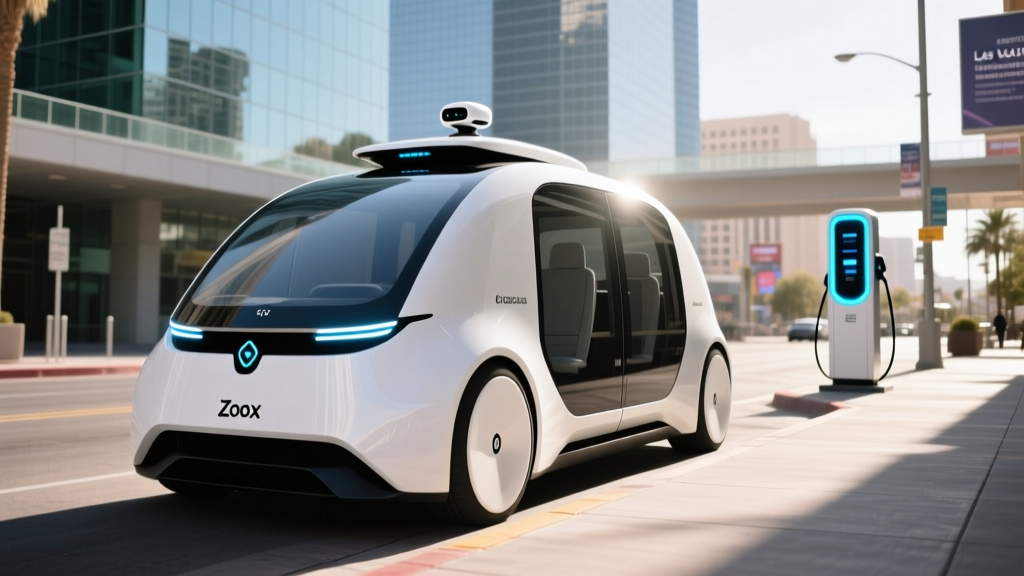
| Zoox | Las Vegas (Strip corridor), Foster City, CA (pilot) | Limited hours, invitation-only in Foster City | Zoox purpose-built vehicle (no steering wheel) |
| Cruise | Service suspended since late 2023; limited testing in Phoenix with safety drivers | N/A — not open to public | Chevrolet Bolt EV (retired), next-gen Origin (delayed) |
Notice what's missing: no robotaxi operates in New York, Chicago, Miami, Seattle, or most major metros. Geofencing, regulatory approval, and mapping complexity limit expansion. If you're outside these zones, Level 4 robotaxis aren't an option yet.
Robotaxi Crash Data: What the Numbers Actually Show
California's DMV requires all autonomous vehicle testers to file annual disengagement reports and collision summaries. Arizona, where Waymo operates its largest fleet, has less stringent public reporting but still mandates incident documentation. Here's what the available data reveals:
- Miles driven (driverless): Over 20 million fully autonomous miles as of late 2025
- Reported collisions: Approximately 1 per 100,000-150,000 miles (mostly low-speed, property damage only)
- Injury severity: Vast majority are minor (bruises, whiplash); no fatalities in driverless operations
- Common scenarios: Rear-ended at stoplights, sideswiped in merging zones, contact with delivery robots/pedestrians in crosswalks
For context, the NHTSA FARS database shows human drivers cause approximately 1 fatality per 100 million miles and 1 injury crash per 500-1,000 miles. Robotaxis appear to have higher minor-contact rates (they're conservative and stop unexpectedly, causing rear-end collisions) but dramatically lower severe-injury and fatality rates.
The Cruise suspension in late 2023 provides a cautionary case study: a pedestrian was struck by a human-driven vehicle and thrown into the path of a Cruise robotaxi, which then dragged the person ~20 feet while attempting to pull over. The incident wasn't a fatal crash, but the post-collision behavior and initial mischaracterization to regulators led to permit revocation in California. This highlights that robotaxi safety isn't just about avoiding crashes — it's about appropriate post-incident response.
How Much Does a Robotaxi Cost vs. Uber/Lyft?
Pricing varies by market and time of day, but robotaxis are generally competitive with rideshare — not dramatically cheaper or more expensive:
| Route | Waymo One | UberX | Lyft |
|---|---|---|---|
| 5-mile trip (Phoenix, midday) | $12-15 | $11-14 | $10-13 |
| 10-mile trip (SF, evening) | $22-28 | $20-26 | $18-24 |
| Airport run (15+ miles) | $35-45 | $32-42 | $30-40 |
Waymo occasionally offers promotional credits for new users, but base pricing reflects the reality that robotaxi fleets have massive upfront sensor/compute costs ($150,000+ per vehicle) and remote-assistance overhead. The long-term economic model depends on removing the driver cost (typically 60-70% of rideshare fares), but that advantage is offset by vehicle depreciation, mapping, and 24/7 monitoring infrastructure.
Technology Stack: How Robotaxis "See" the World
Level 4 robotaxis use sensor fusion — combining multiple perception systems to build a real-time 3D model of their environment:
- LiDAR: Roof-mounted spinning or solid-state units create centimeter-accurate point clouds out to 200+ meters. Waymo uses custom 5th-gen LiDAR; Zoox uses a proprietary array.
- Cameras: 8-12 high-dynamic-range cameras provide color, texture, and traffic-light/sign recognition. Redundant coverage ensures no blind spots.
- Radar: Long-range radar (200m+) tracks velocity of distant objects, critical in rain/fog where LiDAR scatters.
- Ultrasonic sensors: Short-range (5m) for parking, curb detection, and immediate-proximity obstacles.
- HD maps + localization: Pre-mapped routes with centimeter precision; vehicles localize using LiDAR/camera matching against the map.
- Compute: Trunk-mounted servers (often NVIDIA Orin or custom ASICs) processing 2-5 TB/hour of sensor data.
This is fundamentally different from Tesla's camera-only FSD approach. Robotaxi operators argue that LiDAR provides essential redundancy and depth accuracy that vision-only systems can't match, especially in edge cases like construction zones with temporary signage or pedestrians partially occluded by parked cars.
Regulatory Landscape: Who Approves Robotaxi Operations?
Autonomous vehicle regulation in the U.S. is a patchwork of state-level frameworks with minimal federal oversight:
- California (DMV + CPUC): Requires testing permits, annual disengagement reports, and separate deployment permits for commercial service. Local municipalities (SF, LA) can impose additional restrictions.
- Arizona: Minimal regulation; operators self-certify and submit basic safety plans. This permissive environment made Phoenix the first large-scale robotaxi market.
- Nevada: Requires testing permits and insurance; Las Vegas has hosted Zoox pilots.
- Federal (NHTSA): No comprehensive AV regulation as of 2026. NHTSA issues voluntary guidance and investigates incidents but doesn't pre-approve systems. The NHTSA AV safety page provides current guidance documents.
This fragmented approach means a robotaxi legal in Phoenix might be illegal in neighboring states. Interstate travel isn't possible, and expansion requires state-by-state approval processes that can take years.
Current Limitations: Where Robotaxis Can't Go
Level 4 autonomy is impressive within its operational design domain, but that domain is narrow. Robotaxis in 2026 cannot handle:
- Heavy rain/snow: LiDAR scatters in precipitation; most services suspend operations during storms. Phoenix's dry climate is a strategic advantage.
- Construction zones: Temporary lane shifts, flaggers, and missing lane markings confuse HD-map-dependent systems. Remote assistance is often required.
- Unmapped areas: Geofencing is strict — a robotaxi won't drive outside its pre-approved zone, even if the road looks identical.
- Complex intersections: Unprotected left turns across multiple lanes of traffic, roundabouts with aggressive human drivers, and multi-point intersections remain challenging.
- Highway driving: Most robotaxis avoid highways entirely or limit speed to 45-55 mph. Merging at 70+ mph with human drivers is considered too risky.
- Emergency vehicles: Detecting and yielding to ambulances/fire trucks with flashing lights is improving but not foolproof.
These limitations aren't temporary software bugs — they're fundamental challenges that require years of additional data collection, simulation, and edge-case resolution. Full Level 5 autonomy (anywhere, any condition) remains a research goal, not a near-term product.
Frequently Asked Questions
Are robotaxis safer than human drivers?
Within their operational domains (mapped urban areas, fair weather, moderate speeds), the data suggests yes — robotaxis have lower severe-injury and fatality rates per million miles. However, they have higher minor-contact rates due to overly cautious braking and unpredictable behavior that confuses human drivers. The comparison is also unfair: robotaxis avoid highways, bad weather, and unmapped areas where most severe crashes occur.
What happens if a robotaxi crashes with no driver?
The vehicle is programmed to pull over safely, activate hazard lights, and contact remote assistance. Sensors record the incident, and the operator files a report with state regulators. Liability typically falls on the operator (Waymo, Zoox) rather than the passenger, though insurance frameworks are still evolving.
Can I use a robotaxi in New York or Chicago?
No. As of 2026, only Phoenix, San Francisco, Los Angeles (limited), and Las Vegas have live robotaxi services. Expansion to dense, complex cities like NYC faces regulatory, technical, and infrastructure hurdles that will take years to resolve.
Is Tesla FSD a robotaxi?
No. Tesla FSD Supervised is an SAE Level 2 driver-assist system that requires the driver to remain engaged and supervise at all times. It's not autonomous, and Tesla does not offer a driverless ride-hailing service. Conflating FSD with Level 4 robotaxis like Waymo is a category error — they operate under fundamentally different safety models and regulatory frameworks.
How do robotaxis handle emergencies or medical situations?
Passengers can contact remote assistance via in-app chat or voice call. For medical emergencies, the vehicle can be routed to the nearest hospital, but there's no onboard medical equipment or trained responder. If you have a condition that might require immediate assistance, a robotaxi isn't the right choice.
The Bottom Line: Robotaxi Safety in Perspective
Robotaxi crash data from 2022-2025 shows that Level 4 vehicles are remarkably safe within their operational constraints — likely safer than the average human driver in equivalent urban, fair-weather scenarios. But those constraints are significant: no highways, no bad weather, no unmapped areas, no complex construction zones.
The high-profile incidents that make headlines (Cruise's pedestrian drag, Waymo's minor collisions) are real and deserve scrutiny, but they're statistically rare. For most people in Phoenix or San Francisco, hailing a Waymo is a safe, convenient, and increasingly routine transportation option. For everyone else, robotaxis remain a fascinating technology demonstration that's years away from broad availability.
If you're considering a robotaxi ride, understand what you're getting: a highly capable but geographically and environmentally limited autonomous system that's safer than the alternative in specific conditions — not a magic bullet for all transportation needs.