The Short Answer: Rivian Does Not Offer Self-Driving
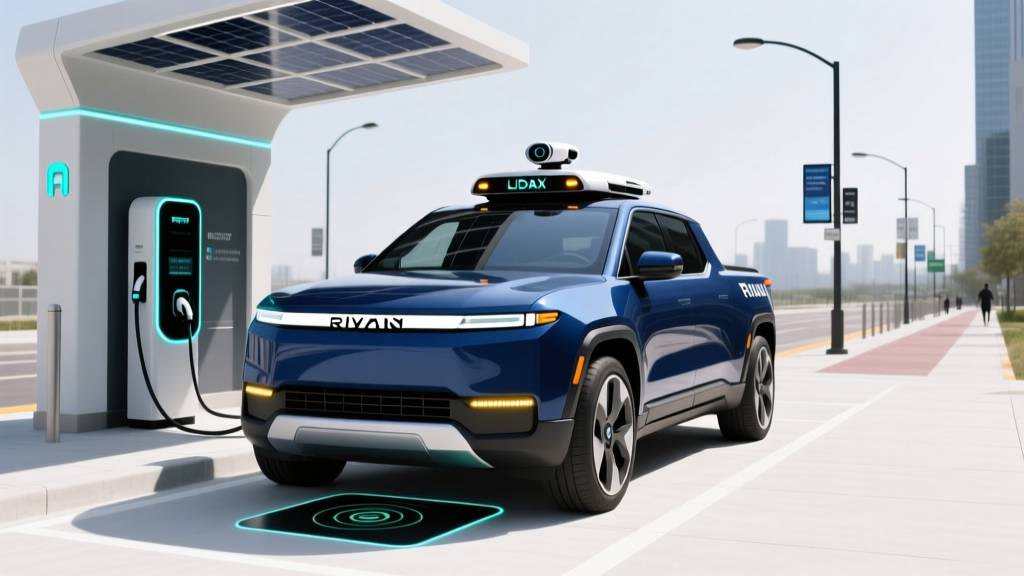
If you're wondering whether Rivians have self-driving capability, the direct answer is no. The Rivian R1T pickup and R1S SUV — including the latest Generation 2 (Gen 2) models rolling out through 2026 — are equipped with advanced driver-assistance systems (ADAS), not autonomous or self-driving technology. Every Rivian on the road today requires the human driver to remain fully engaged, eyes on the road and hands ready to intervene, at all times.
This distinction is not a knock on Rivian. It reflects the current state of the entire consumer auto industry. No production vehicle sold to a private buyer in the United States is certified for unsupervised self-driving. The confusion arises because marketing language — "Full Self-Driving," "Autopilot," "Driver+" — blurs the line between driver-assist and true autonomy. Let's clarify exactly what Rivian's systems can do, what they cannot, and where Rivian's autonomy ambitions actually point.
SAE Automation Levels: Where Rivian Sits in 2026
The Society of Automotive Engineers (SAE) defines six levels of driving automation, from Level 0 (no automation) to Level 5 (full automation in all conditions). Understanding this framework is essential before evaluating any vehicle's autonomy claims.
| Level | Name | Who Drives? | Example |
|---|---|---|---|
| 0 | No Automation | Human does everything | Basic cruise control |
| 1 | Driver Assistance | Human drives; system assists one function | Adaptive cruise OR lane-keep |
| 2 | Partial Automation | Human drives; system assists steering AND speed | Rivian Driver+, Tesla Autopilot, GM Super Cruise, Ford BlueCruise |
| 3 | Conditional Automation | System drives in narrow conditions; human on standby | Mercedes DRIVE PILOT (limited markets/speeds) |
| 4 | High Automation | System drives fully within a geofence; no human needed | Waymo One, Zoox (robotaxis) |
| 5 | Full Automation | System drives everywhere, all conditions | Does not exist in production |
Rivian Driver+: What the ADAS Suite Actually Does
Rivian bundles its driver-assistance features under the Driver+ umbrella. On Gen 2 vehicles (2025–2026 R1T and R1S), the system leverages a revised sensor suite that Rivian simplified from the Gen 1 architecture, reducing component count while maintaining functionality. Key capabilities include:
- Adaptive Cruise Control (ACC): Maintains a set speed and following distance, including stop-and-go traffic.
- Lane-Keeping Assist / Lane Centering: Provides steering input to keep the vehicle centered in marked lanes.
- Highway Assist: Combines ACC and lane centering for sustained highway driving — the core Level 2 experience.
- Automatic Emergency Braking (AEB): Detects vehicles, pedestrians, and cyclists and applies brakes if the driver does not react.
- Blind-Spot Monitoring with Rear Cross-Traffic Alert.
- Trailer Assist (R1T): Aids in backing up with a trailer attached, though this is a convenience feature, not an autonomy feature.
Rivian's Gen 2 sensor stack relies primarily on cameras and radar. Unlike some competitors that have added lidar to consumer vehicles (e.g., certain Lotus and Mercedes models), Rivian has not equipped production R1T or R1S trucks with lidar. The vision-centric approach keeps costs down but means the system, like all Level 2 suites, can struggle in low-visibility conditions such as heavy rain, fog, construction-zone lane shifts, and faded lane markings.
Rivian's Autonomy Ambitions: The Rivian Autonomy Platform
Rivian has been publicly developing what it calls the Rivian Autonomy Platform (RAP), a hardware and software stack designed to support higher levels of automation in the future. Key points:
- Compute: Gen 2 Rivians feature an upgraded onboard compute platform that Rivian says is designed with future autonomy capability in mind, including higher-throughput neural-network processing.
- Camera-first architecture: Rivian has signaled a vision-heavy approach similar to Tesla's, rather than the lidar-dense stacks used by Waymo and Zoox for Level 4 robotaxi operations.
- Over-the-air updates: Rivian has a track record of adding features via OTA, and the company has indicated that autonomy-related improvements will follow this pattern.
- No Level 3 or 4 timeline announced for consumer vehicles: As of 2026, Rivian has not announced a production date for unsupervised self-driving on the R1T or R1S. Any future Level 3 or 4 capability would require regulatory approval that does not yet exist at the federal level in the U.S.
Rivian's commercial-delivery partnership with Amazon (the EDV — Electric Delivery Van) is a separate program. Those vans operate with driver-assist features, not autonomous operation, and Amazon's logistics network uses human drivers.
Rivian ADAS vs. True Robotaxis: A Side-by-Side Comparison
To understand why Rivians do not have self-driving, it helps to compare their Level 2 system with actual Level 4 robotaxi services that do operate without a human driver.
| Attribute | Rivian Driver+ (Level 2) | Waymo One (Level 4) |
|---|---|---|
| SAE Level | 2 — driver must supervise | 4 — fully driverless in geofence |
| Human driver required? | Yes, always | No |
| Operational area | Any road (driver responsible) | Geofenced metro areas (Phoenix, SF, LA, Austin) |
| Sensor stack | Cameras + radar | Custom lidar + cameras + radar |
| Weather limits | Driver adapts; system may degrade | Service suspended in severe weather |
| Purchase model | Buy the vehicle (~$70,000–$100,000+ MSRP) | Per-ride, via app (comparable to Uber/Lyft) |
| Regulatory approval | NHTSA vehicle safety standards | State-level permits (CPUC in CA, AZ DOT, etc.) |
Where Can You Actually Use a Driverless Robotaxi Today?
If you're looking for a genuine self-driving ride in 2026, you'll need to be in one of the cities where Level 4 robotaxi services hold active permits:
| Service | Operator | Live Cities | Access |
|---|---|---|---|
| Waymo One | Waymo (Alphabet) | Phoenix, San Francisco, Los Angeles, Austin | Public app; no waitlist in most metros |
| Waymo (expansion) | Waymo | Highway testing in select corridors (not yet public) | N/A |
| Zoox | Amazon/Zoox | Limited Las Vegas and Foster City operations | Invite-only / employee pilots |
| Cruise | GM/Cruise | Paused/scaled back post-2023 incident; limited supervised ops | Restricted |
None of these services use Rivian vehicles. Waymo operates custom Jaguar I-PACE-based vehicles and is transitioning to the Zeekr RT01 (Geely). Zoox uses its own purpose-built carriage-style vehicle. Rivian is not currently a robotaxi hardware supplier to any Level 4 operator.
How Much Does a Robotaxi Ride Cost vs. Uber or Lyft?
For context on what true Level 4 autonomy costs riders today, here's a comparison from Waymo One markets in early 2026. Pricing varies by city, time of day, and distance, but these ranges are representative:
| Route Type | Waymo One | UberX | Lyft |
|---|---|---|---|
| Short (3–5 miles) | $10–$16 | $11–$18 | $10–$17 |
| Medium (8–12 miles) | $18–$28 | $20–$32 | $19–$30 |
| Airport run (15–20 miles) | $35–$55 | $38–$60 | $36–$58 |
Waymo's pricing is broadly competitive with Uber and Lyft for comparable rides, with occasional promotional discounts. The key difference: no human driver is in the vehicle. Surge pricing still applies during peak demand. Tipping is not expected (no driver to tip), though in-app tipping exists for cleaning or exceptional scenarios.
Safety Data: How Do Robotaxis Actually Perform?
Any discussion of autonomy requires sober safety data, not marketing claims. Here's what's publicly available as of 2026:
Cruise's 2023 incident in San Francisco — in which a pedestrian was struck by a human-driven vehicle and then dragged under a Cruise robotaxi — remains a cautionary case. The California DMV suspended Cruise's permit, and GM ultimately restructured the program. This incident illustrates that Level 4 systems can fail in complex edge cases involving interactions with other road users' unpredictable behavior.
Rivian's ADAS safety profile is tracked by NHTSA and IIHS like any production vehicle. Rivian's AEB and collision-avoidance systems contribute to crash-test performance, but because Driver+ is Level 2, any incidents occurring while the system is active are attributed to the human driver, not the vehicle's autonomy. There is no public dataset specifically isolating Rivian Driver+ intervention rates comparable to Waymo's disengagement disclosures.
Current Limitations of Rivian's Driver+ (and Level 2 Systems Generally)
Whether you're driving a Rivian, Tesla, or Ford with Level 2 assist, these limitations are universal and non-negotiable:
- Lane-marking dependency: Systems degrade or disengage on unmarked roads, faded lines, and active construction zones.
- Weather sensitivity: Heavy rain, snow, fog, and direct sun glare can blind cameras and reduce radar reliability.
- Edge-case handling: Unusual obstacles (debris, animals, erratic pedestrians), unmapped detours, and complex intersections require human judgment.
- Driver monitoring: Rivian uses a cabin camera to verify driver attention. If you look away or close your eyes, the system escalates warnings and eventually disengages. This is a feature, not a bug — it's what keeps Level 2 legal and insurable.
- No hands-free operation on Rivian (as of 2026): Unlike GM Super Cruise or Ford BlueCruise on pre-mapped highways, Rivian's Driver+ still expects hands-on-wheel contact or torque input. Rivian has not announced a hands-free highway mode as of this writing.
Regulatory Landscape: Why Consumer Self-Driving Is Still Pending
In the United States, there is no federal framework that certifies a consumer vehicle for unsupervised self-driving. NHTSA regulates vehicle safety standards but has not issued FMVSS rules for Level 4+ consumer vehicles. State-level regulation is patchwork:
- California (CPUC/DMV): Permits Waymo and limited operators; requires extensive testing data and incident reporting.
- Arizona: Among the most permissive; Waymo launched first in Phoenix.
- Texas: Austin has become a key Waymo market; state law permits testing with minimal restriction.
- Many states: Have no specific robotaxi legislation, effectively blocking commercial Level 4 deployment.
For Rivian to offer Level 3 or 4 on a consumer R1T or R1S, the company would need state-by-state approvals, extensive validation data, and likely new federal rulemaking. This is a multi-year process at minimum, even for companies that have been testing for over a decade.
Bottom Line: Buy a Rivian for the Truck, Not the Autonomy
Rivian makes excellent electric vehicles. The R1T remains one of the most capable electric pickups on the market, with EPA range up to 420 miles on the Max Pack (Dual-Motor), 190 kW peak DC fast charging (10–80% in roughly 30 minutes on Max Pack), and class-leading adventure-oriented design. The R1S delivers three-row electric SUV practicality with similar performance credentials.
But if your purchase decision hinges on self-driving capability, Rivian is not the answer — and neither is any other consumer vehicle sold in the U.S. in 2026. Driver+ is a competent Level 2 ADAS suite that reduces fatigue on long highway drives and adds a layer of active safety. It is not autonomy. If you want a truly driverless ride today, your only option is to hail a Waymo in one of four U.S. cities.
Frequently Asked Questions
Do Rivians have self-driving?
No. Rivian's Driver+ is a Level 2 driver-assistance system. The human driver must remain fully engaged at all times. No Rivian vehicle offers unsupervised self-driving.
Is Rivian Driver+ the same as Tesla's Full Self-Driving?
Both are SAE Level 2 systems requiring driver supervision. Tesla's FSD (Supervised) has broader city-street capabilities in beta form, while Rivian's Driver+ is more focused on highway and structured-road scenarios. Neither is self-driving despite the naming.
Will Rivian ever offer self-driving?
Rivian is developing its Autonomy Platform (RAP) with future higher-level autonomy in mind, but no timeline for Level 3 or 4 consumer features has been announced. Regulatory approval would also be required.
Can I take my hands off the wheel in a Rivian?
No. As of 2026, Rivian's Driver+ requires hands-on-wheel contact or detectable torque input. The cabin camera monitors driver attention, and the system will issue escalating warnings and disengage if attention is not maintained.
What's the safest way to use Rivian's Driver+?
Treat it as a co-pilot, not a replacement. Keep your eyes on the road, hands detectable on the wheel, and be prepared to take over instantly — especially in construction zones, bad weather, and complex urban intersections.