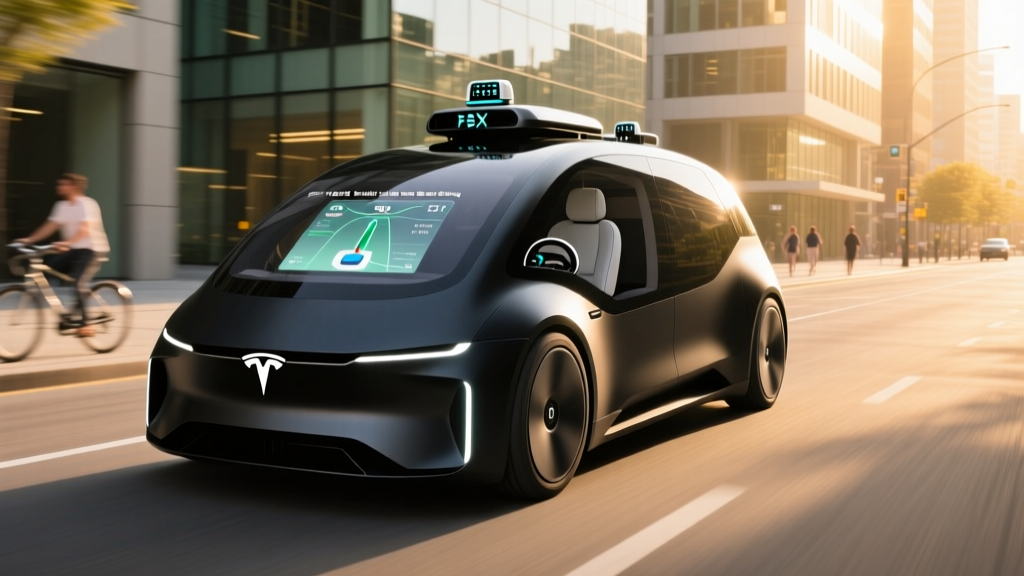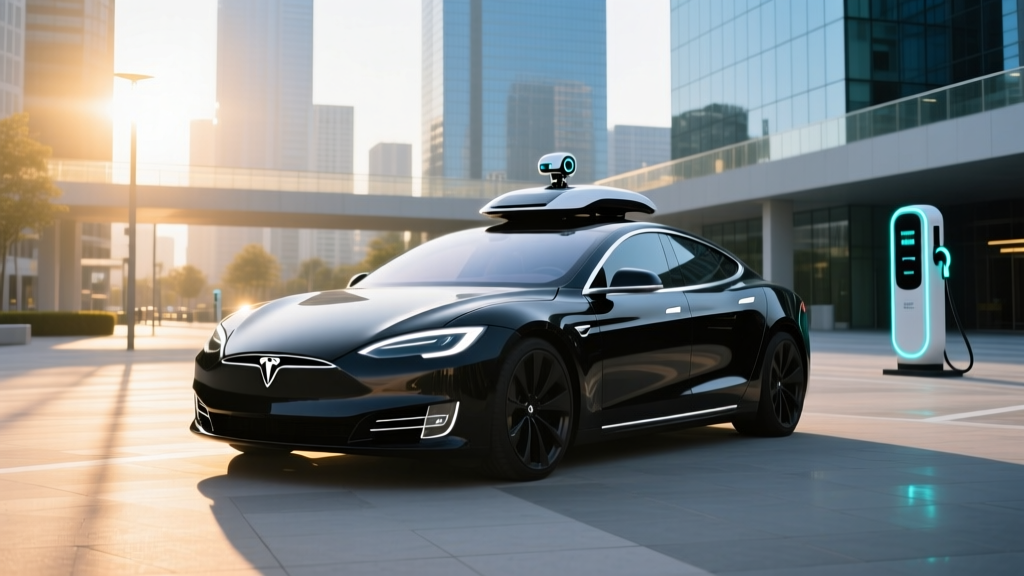
Tesla's Full Self-Driving (Supervised) remains one of the most debated optional packages in the automotive industry. At $8,000 for a lifetime purchase — or $99 per month as a subscription — it represents either a forward-looking investment in increasingly capable software or an expensive beta test that demands your constant attention. If you're weighing whether to purchase Tesla lifetime FSD on a new Model 3, Model Y, Model S, or Model X in 2026, this guide gives you the exact numbers, real-world capabilities, and honest limitations you need to decide.
What Tesla FSD (Supervised) Actually Does
Tesla Full Self-Driving (Supervised) is an advanced driver-assistance system built on a vision-only architecture. Since removing ultrasonic sensors and radar from production vehicles (a transition completed across the fleet by 2023), Tesla relies on a suite of external cameras — typically eight — paired with its Hardware 4 (HW4) AI inference computer to perceive the environment.
FSD (Supervised) extends the base Autopilot system with several additional capabilities:
| Feature | Basic Autopilot (Standard) | Enhanced Autopilot ($6,000) | FSD Supervised ($8,000) |
|---|---|---|---|
| Traffic-Aware Cruise Control | ✓ | ✓ | ✓ |
| Autosteer (lane centering) | ✓ | ✓ | ✓ |
| Auto Lane Change | — | ✓ | ✓ |
| Navigate on Autopilot (highway exits/on-ramps) | — | ✓ | ✓ |
| Autopark (parallel & perpendicular) | — | ✓ | ✓ |
| Summon / Smart Summon | — | ✓ | ✓ |
| Traffic Light & Stop Sign Control | — | — | ✓ |
| City Street Autosteer (surface streets) | — | — | ✓ |
The headline capability is City Street Autosteer — the system's ability to navigate intersections, make turns, respond to traffic signals, and handle surface-street driving without a pre-mapped route. This is the feature that separates FSD from Enhanced Autopilot and from virtually every other consumer ADAS on the market.
Under the hood, Tesla's neural network processes real-time camera feeds to detect lane markings, vehicles, pedestrians, cyclists, traffic lights, and road signs. The system builds a live 3D representation of the driving environment and plans a path accordingly. Tesla has moved to an end-to-end neural network approach (introduced progressively through 2024–2025), where a single unified model handles perception and planning rather than modular handoffs between subsystems.
SAE Automation Level: This Is NOT Self-Driving
SAE Level 2 — Partial Driving Automation. Tesla FSD (Supervised) is classified as SAE Level 2, the same automation tier as Ford BlueCruise, GM Super Cruise, and Toyota's highway assist systems. The driver must remain fully engaged, monitor the environment at all times, and be prepared to take over instantly. Tesla's own owner's manual states: "Full Self-Driving Capability is intended for use with a fully attentive driver."
SAE Level 2 — Partial Driving Automation. Tesla FSD (Supervised) is classified as SAE Level 2, the same automation tier as Ford BlueCruise, GM Super Cruise, and Toyota's highway assist systems. The driver must remain fully engaged, monitor the environment at all times, and be prepared to take over instantly. Tesla's own owner's manual states: "Full Self-Driving Capability is intended for use with a fully attentive driver."
This distinction matters enormously. SAE Level 2 means the system can simultaneously control steering and acceleration/braking, but the human driver retains full legal and operational responsibility. You are driving the car; the car is assisting you. If a crash occurs while FSD is engaged, you are liable — not Tesla.
For context, only Waymo's robotaxi service (operating in Phoenix, San Francisco, Los Angeles, and Austin as of 2026) and Zoox's purpose-built shuttle qualify as SAE Level 4 — true driverless operation within defined geographic and environmental boundaries. No consumer vehicle sold today, including any Tesla, offers Level 3 or higher autonomy.
Tesla's use of "Full Self-Driving" in the product name has drawn scrutiny from the National Highway Traffic Safety Administration (NHTSA) and consumer advocacy groups. Tesla added the "(Supervised)" qualifier in late 2024 to clarify the driver-engagement requirement, but the naming still causes confusion among buyers who expect autonomous capability.
How Much Does Tesla FSD Cost in 2026?
Tesla offers FSD through two pricing structures. Here's the current breakdown:
| Option | Cost | Transferability | Best For |
|---|---|---|---|
| Lifetime Purchase | $8,000 (one-time) | Tied to vehicle; does not transfer to a new Tesla | Long-term owners (5+ years), high-mileage drivers |
| Monthly Subscription | $99/month | Tied to your Tesla account; cancellable anytime | Short-term owners, occasional users, commitment-averse buyers |
| Enhanced Autopilot | $6,000 (one-time) | Tied to vehicle | Highway-heavy commuters who don't need city-street features |
The Break-Even Math
At $99/month, the subscription costs $1,188 per year. The $8,000 lifetime purchase breaks even at approximately 6 years and 9 months. If you plan to keep your Tesla for seven years or more, the lifetime purchase is the cheaper option. If you trade vehicles every three to four years — as many lessees do — the subscription saves you thousands.
Important caveats:
- The lifetime purchase is tied to the vehicle, not to you. If you sell the car, FSD transfers with it (which may add modest resale value, though far less than the $8,000 purchase price).
- Tesla has periodically offered FSD transfers to new vehicle purchases as a promotional incentive. These are time-limited and not guaranteed.
- The $8,000 FSD purchase is not eligible for the federal §30D EV tax credit, which applies only to the vehicle itself — not software add-ons. See IRS guidance on clean vehicle credits for current eligibility rules.
- Tesla has adjusted FSD pricing multiple times. The lifetime price was $15,000 as recently as 2023 before being reduced. Future price changes in either direction are possible.
Which Tesla Models Include FSD, and How to Get It
No Tesla model ships with FSD as standard equipment. Every new Tesla in 2026 — Model 3, Model Y, Model S, and Model X — includes Basic Autopilot at no additional cost. FSD (Supervised) is available as an add-on at the time of purchase or can be activated later through the Tesla app.
Here's how FSD availability breaks down by model and trim:
| Model | Starting MSRP | Hardware | FSD Available | Standard ADAS |
|---|---|---|---|---|
| Model 3 Rear-Wheel Drive | ~$38,990 | HW4 | Yes (+$8,000 or $99/mo) | Basic Autopilot |
| Model 3 Long Range AWD | ~$45,490 | HW4 | Yes (+$8,000 or $99/mo) | Basic Autopilot |
| Model 3 Performance | ~$52,990 | HW4 | Yes (+$8,000 or $99/mo) | Basic Autopilot |
| Model Y Long Range AWD | ~$46,490 | HW4 | Yes (+$8,000 or $99/mo) | Basic Autopilot |
| Model Y Performance | ~$51,490 | HW4 | Yes (+$8,000 or $99/mo) | Basic Autopilot |
| Model S Long Range | ~$79,990 | HW4 | Yes (+$8,000 or $99/mo) | Basic Autopilot |
| Model X Long Range | ~$84,990 | HW4 | Yes (+$8,000 or $99/mo) | Basic Autopilot |
Older Tesla vehicles equipped with Hardware 3 (HW3, produced roughly 2019–2023) can run FSD, though Tesla has indicated that HW4 provides superior processing capability. Some HW3 vehicles have been offered hardware upgrades; check your Tesla app or service center for eligibility.
Real-World Capabilities and Honest Limitations
FSD (Supervised) has improved substantially through 2024–2026 software updates, particularly with the shift to end-to-end neural networks. In favorable conditions — clear weather, well-marked roads, moderate traffic — the system handles highway driving, surface streets, and even complex intersections with notable competence. Many owners report hundreds or thousands of miles with zero interventions.
However, real-world performance is not uniform. Here are the limitations you must understand before purchasing:
What FSD (Supervised) Does NOT Do Reliably:
- Heavy rain, fog, or snow: Camera-only perception degrades significantly in reduced visibility. The system may disengage or issue a takeover request.
- Faded or missing lane markings: Construction zones, rural roads, and poorly maintained urban streets can confuse the system's path planning.
- Complex unprotected left turns: While improved, the system sometimes hesitates or misjudges gaps in oncoming traffic at uncontrolled intersections.
- Temporary traffic control: Flaggers, temporary signals in work zones, and non-standard road configurations remain edge cases.
- Phantom braking: The system occasionally applies brakes abruptly when it misidentifies shadows, overpasses, or roadside objects as obstacles. NHTSA has investigated phantom braking complaints across multiple Tesla model years.
- Sun glare and direct backlighting: Camera washout can cause momentary perception loss.
Driver requirement: Tesla monitors engagement through a cabin camera that tracks your eye gaze. Repeated inattention warnings can result in temporary FSD suspension (a "strike" system). You cannot read your phone, watch a video, or nap while FSD is active.
How It Compares to the Competition
| System | Brand | SAE Level | City Streets | Hands-Free (Eyes-Off) | Cost |
|---|---|---|---|---|---|
| FSD (Supervised) | Tesla | Level 2 | Yes | No | $8,000 / $99/mo |
| Super Cruise | GM (Cadillac, Chevy, GMC) | Level 2 | Limited (mapped highways only) | Yes (eyes-off on compatible roads) | ~$2,500 or included on select trims |
| BlueCruise | Ford | Level 2 | No (highway only) | Yes (eyes-off on pre-mapped divided highways) | $2,100 / $75/mo |
| Autopilot (basic) | Tesla | Level 2 | No | No | Standard (included) |
| ProPILOT Assist 2.0 | Nissan | Level 2 | No (highway only) | Yes (hands-off on mapped highways) | Included on higher trims |
| Toyota Safety Sense / Advanced Drive | Toyota/Lexus | Level 2 | No | Limited (eyes-off in traffic jams, select models) | Included or ~$5,000 add-on |
The key differentiator for Tesla FSD is surface-street capability without geofencing. GM's Super Cruise and Ford's BlueCruise offer genuine hands-free, eyes-off driving — but only on pre-mapped divided highways (roughly 750,000+ miles of compatible roads in North America for Super Cruise). Tesla FSD works on virtually any road, but requires your hands on the wheel (or at least periodic torque input) and your eyes on the road at all times.
If your primary use case is long highway commutes, Super Cruise or BlueCruise may deliver a more relaxing experience because you can legally remove your hands and, on compatible roads, look away briefly. If you want assistance on surface streets, in neighborhoods, and on rural roads, Tesla FSD is currently the only consumer system that attempts it.
Is Purchasing Lifetime FSD Worth It? A Decision Framework
Purchase Tesla Lifetime FSD ($8,000) if:
- You plan to keep your Tesla for 7+ years (break-even vs. subscription).
- You drive in varied conditions where city-street assist adds daily value.
- You enjoy early-access technology and accept that the system will occasionally make errors requiring your intervention.
- You believe Tesla's software will continue improving and that the feature set will expand over time.
Subscribe monthly ($99/mo) if:
- You lease or plan to trade your Tesla within 3–5 years.
- You want to try FSD before committing $8,000.
- You only need FSD for specific trips (road trips, unfamiliar cities) and can cancel between uses.
Skip FSD entirely (stick with Basic Autopilot) if:
- You primarily drive on highways — basic Autopilot's traffic-aware cruise and lane centering handles this well at no extra cost.
- You are uncomfortable acting as a safety monitor for an imperfect system.
- You want hands-free driving — look at GM Super Cruise or Ford BlueCruise instead.
Resale Value Considerations
Data from used-Tesla listings suggests that FSD adds roughly $2,000–$4,000 to resale value — significantly less than the $8,000 purchase price. You should not buy FSD as a financial investment expecting to recoup the cost at trade-in. The value is in the utility during ownership, not at resale.
Safety Data and Regulatory Context
Tesla publishes quarterly safety reports claiming that vehicles driven with Autopilot engaged experience fewer crashes per million miles than the U.S. average. However, these statistics are not directly comparable: Tesla's Autopilot is predominantly used on highways (inherently safer driving environments), and Tesla's vehicle fleet skews newer and is equipped with standard active-safety features that also reduce crash rates.
NHTSA has issued multiple investigations and recalls related to Tesla's Autopilot and FSD systems, including:
- A 2023 recall requiring increased driver-engagement monitoring (the cabin-camera enforcement update).
- Ongoing scrutiny of Autopilot behavior near emergency vehicles with flashing lights.
- Investigations into phantom braking events across Model 3 and Model Y fleets.
The Insurance Institute for Highway Safety (IIHS) has consistently rated partial-automation systems — including Tesla's — as requiring stronger driver-monitoring safeguards. IIHS research indicates that drivers using Level 2 systems can develop automation complacency, becoming slower to react when the system encounters a scenario it cannot handle.
Bottom line: treat FSD as a sophisticated convenience feature, not a safety system that replaces your attention. Your vigilance is the final safety layer.
Frequently Asked Questions
Can I transfer my FSD purchase to a new Tesla?
Generally, no. The lifetime FSD purchase is tied to the VIN of the vehicle on which it was activated. Tesla has occasionally offered promotional FSD transfers (typically for a limited window when purchasing a new Tesla), but this is not standard policy. Check Tesla's current offers before trading in.
Does FSD work everywhere in the United States?
FSD (Supervised) is available in the U.S. and Canada. City Street Autosteer works on most roads, but performance varies with road quality, signage, and weather. It is not geofenced to specific areas like Super Cruise, but it is also not uniformly reliable on every street.
Will Tesla eventually make FSD truly autonomous (Level 4)?
Tesla has projected full autonomy for years, but as of 2026, FSD remains SAE Level 2. Achieving Level 4 would require regulatory approval, extensive validation, and likely additional sensor hardware (lidar or redundant systems) that current Tesla vehicles do not carry. There is no confirmed timeline for Level 4 capability on consumer Tesla vehicles.
Does FSD affect my insurance premium?
It depends on your insurer and state. Some insurers offer discounts for ADAS-equipped vehicles; others charge more due to higher repair costs for sensor/camera-equipped cars. Tesla offers its own insurance product in many states that uses real-time driving data (including Autopilot/FSD usage) to calculate premiums — the "Safety Score" model.
What happens if I buy FSD and Tesla discontinues the software?
Tesla has not indicated any plan to discontinue FSD. However, the lifetime purchase does not include a contractual guarantee of future feature additions. You are purchasing the software as it exists and as Tesla chooses to update it. Regulatory action could theoretically limit or modify FSD's capabilities in the future.
Can I use the $7,500 federal EV tax credit to offset the FSD purchase price?
No. The §30D federal tax credit applies to the vehicle purchase price, subject to MSRP caps ($55,000 for sedans, $80,000 for SUVs/pickups), buyer income limits, and battery-sourcing requirements. Software add-ons like FSD are not part of the credit calculation. Consult a tax professional for your specific eligibility.
The Verdict on Purchasing Lifetime FSD
Whether to purchase Tesla lifetime FSD comes down to your ownership timeline, driving patterns, and tolerance for beta-stage technology. At $8,000, it's a significant add-on that breaks even against the $99/month subscription only after nearly seven years. For long-term owners who drive in varied conditions and accept the supervision requirement, FSD offers the most broadly capable consumer driver-assist system available — surface streets, highways, and parking, without geofencing.
For everyone else, the monthly subscription provides flexibility without the sunk cost. And if your priority is genuinely hands-free highway driving, GM's Super Cruise and Ford's BlueCruise deliver that experience — within their operational limits — at a lower price point and with less driver burden.
Whatever you choose, remember: no Tesla sold in 2026 drives itself. You are the driver. FSD is the assistant.