What Is ProPILOT Assist and How Does It Work?
If you've been researching Nissan's electric vehicles — particularly the Ariya or the refreshed Leaf — you've likely encountered the term ProPILOT Assist. But marketing language around driver-assistance features tends to obscure more than it clarifies. Let's cut through that.
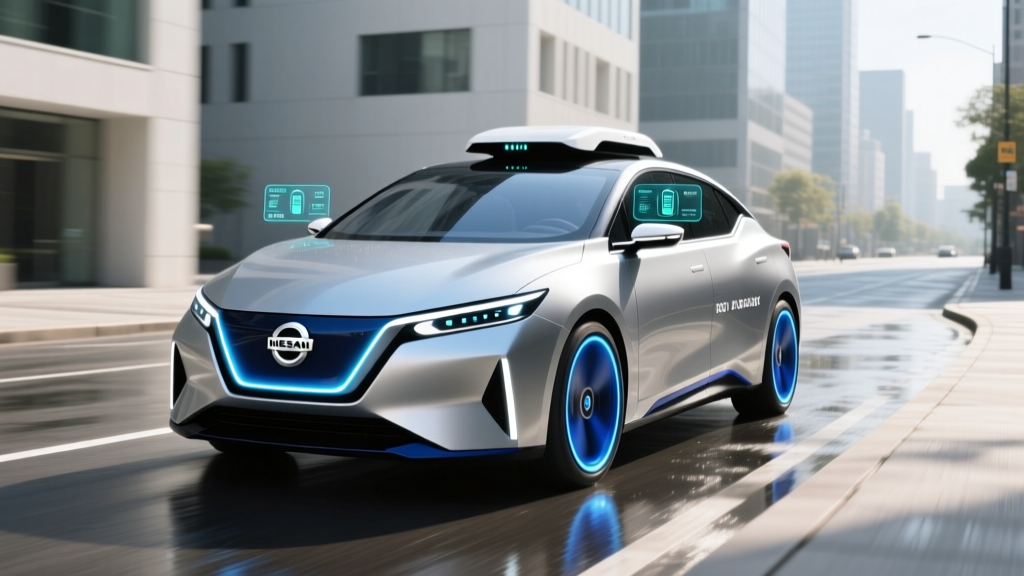
ProPILOT Assist is Nissan's branded suite of SAE Level 2 advanced driver-assistance systems (ADAS). It combines adaptive cruise control (ACC) with lane-keeping assist (LKA) to manage steering, acceleration, and braking under driver supervision on highways and in stop-and-go traffic. The driver must keep hands on the wheel and eyes on the road at all times.
Technically, the system relies on a sensor fusion approach:
- Forward-facing radar (typically 77 GHz millimeter-wave) mounted behind the front grille to track the distance and speed of vehicles ahead
- Front-facing camera (mounted behind the windshield near the rearview mirror) to detect lane markings, traffic signs, and obstacles
- Ultrasonic sensors around the vehicle perimeter for low-speed proximity detection
- Steering torque sensor to confirm the driver's hands remain on the wheel
The camera and radar data feed into Nissan's onboard ADAS controller, which calculates steering torque inputs and longitudinal speed adjustments in real time. When you activate ProPILOT Assist via the steering-wheel button, the system locks onto the lane ahead and the vehicle in front, maintaining your set following distance and centering the car within detected lane lines.
ProPILOT Assist is classified as SAE Level 2 per the SAE J3016 standard. This means the system can simultaneously control steering and speed, but the human driver is the fallback — responsible for monitoring the environment and intervening at any moment. This is not autonomous driving. Level 4 systems (like Waymo's robotaxi service) operate without a human driver in defined conditions. ProPILOT Assist requires your full attention.
ProPILOT Assist vs. ProPILOT Assist 2.0: What's the Difference?
For the 2026 model year, Nissan offers two tiers of its driver-assist technology, and the distinction matters significantly for buyers:
| Capability | ProPILOT Assist 1.1 | ProPILOT Assist 2.0 |
|---|---|---|
| Adaptive Cruise Control | ✓ Full speed range, stop-and-go | ✓ Full speed range, stop-and-go |
| Lane Centering Assist | ✓ Steering torque input | ✓ Steering torque input |
| Hands-Off Driving | ✗ Hands-on required | ✓ Hands-off on pre-mapped highways (eyes-on) |
| Lane Change Assist | ✗ Not available | ✓ Driver-confirmed automated lane changes |
| Overtake Assist | ✗ Not available | ✓ Suggests and executes passing maneuvers (driver confirmed) |
| Navigation-Linked Speed Adjust | ✗ Not available | ✓ Adjusts speed for curves and interchanges |
| Driver Monitoring Camera | ✗ Torque sensor only | ✓ Infrared camera monitors eye/face direction |
ProPILOT Assist 2.0 is the more advanced system, available on higher trims of the Ariya. It uses high-definition 3D map data and GPS to enable hands-off single-lane driving on compatible divided highways — similar in concept to GM's Super Cruise or Ford's BlueCruise. However, the driver's eyes must remain on the road, verified by the infrared monitoring camera. If you look away for more than a few seconds, the system escalates warnings and eventually disengages.
ProPILOT Assist 1.1 is the more widely deployed version. It requires constant hand contact on the steering wheel (detected via torque input) and works on any road with visible lane markings — not just pre-mapped highways.
Which 2026 Nissan Models Include ProPILOT Assist?
Nissan has made ProPILOT Assist a key differentiator across its lineup, but availability varies by model and trim. Here's where it stands for 2026:
| Model | Powertrain | ProPILOT Version | Availability | Starting MSRP |
|---|---|---|---|---|
| Nissan Ariya | BEV (87 kWh usable, NMC) | 1.1 standard; 2.0 on Platinum+ and e-4ORCE trims | Standard on all trims (1.1); 2.0 on top trims | ~$39,590 (Venture+); ~$54,090 (Platinum+ e-4ORCE) |
| Nissan Leaf | BEV (40 kWh / 60 kWh) | 1.1 only | Standard on SV Plus; available on SV | ~$28,140 (S); ~$36,190 (SV Plus) |
| Nissan Rogue | ICE / e-POWER (HEV) | 1.1 standard | Standard on SL and Platinum trims | ~$30,330 (SV) |
| Nissan Pathfinder | ICE | 1.1 | Standard on SL and Platinum | ~$40,520 |
For EV buyers specifically, the Ariya is where Nissan's most advanced ADAS technology lives. The Ariya's ProPILOT Assist 2.0 is a no-subscription, one-time-included feature on Platinum+ and e-4ORCE trims — a meaningful cost advantage over competitors that charge monthly fees.
How Much Does ProPILOT Assist Cost?
This is where Nissan's approach diverges sharply from some competitors:
| System | Cost Model | Price |
|---|---|---|
| Nissan ProPILOT Assist 1.1 | Included in vehicle MSRP (no subscription) | $0 additional (standard or bundled in trim) |
| Nissan ProPILOT Assist 2.0 | Included in vehicle MSRP (no subscription) | $0 additional (included on qualifying trims) |
| Tesla Full Self-Driving (Supervised) | One-time purchase or monthly subscription | $8,000 upfront or $99/month |
| Ford BlueCruise | Included trial, then subscription | $75/year or $2,100 one-time (varies by model) |
| GM Super Cruise | Included trial, then subscription | $25/month after 3-year trial |
Nissan does not currently charge a subscription fee for ProPILOT Assist at either tier. When you buy an Ariya Platinum+ with ProPILOT Assist 2.0, the feature is yours for the life of the vehicle with no recurring payments. This is a significant ownership-cost advantage, especially over a 5-year period where a $99/month FSD subscription would total $5,940.
Real-World Capabilities and Honest Limitations
ProPILOT Assist performs well in its intended use case: divided highways with clear lane markings, moderate traffic, and fair weather. In our experience, the lane-centering is confident on well-maintained interstates, and the adaptive cruise control handles stop-and-go congestion smoothly without abrupt braking or acceleration.
However, the system has concrete limitations that every buyer should understand before relying on it:
- Not self-driving. You are the driver. You are liable. The system does not detect all obstacles, construction zones, or erratic drivers.
- Lane markings required. The camera-based system degrades or disengages on roads with faded, snow-covered, or absent lane lines.
- Weather sensitivity. Heavy rain, fog, snow, or direct low-angle sunlight can blind the forward camera and radar, causing sudden disengagement.
- No traffic light or stop sign recognition. The system does not automatically stop for red lights or stop signs on surface streets.
- Construction zones. Temporary lane shifts, cones, and barriers can confuse the system. Take over immediately in work zones.
- Sharp curves. ProPILOT Assist 1.1 may not maintain lane centering on tight highway curves (radius below ~250m). Version 2.0 with nav-linked speed adjust handles these better but is not infallible.
- Hands-off ≠ attention-off. Even with ProPILOT Assist 2.0's hands-off capability, the driver monitoring camera will issue escalating warnings if your eyes leave the road. Three warnings result in system lockout for the rest of the drive.
In cold-weather and winter-driving conditions, expect ProPILOT Assist to disengage more frequently. Ice or road-salt spray accumulating on the forward radar (behind the grille) or camera (behind the windshield) will trigger a "sensor blocked" warning. Keeping these surfaces clean is an ownership reality that marketing materials rarely mention.
For a detailed look at how ADAS features perform in crash-avoidance testing, refer to IIHS crash-prevention ratings, which evaluate automatic emergency braking and lane-keeping systems under controlled conditions.
ProPILOT Assist vs. Competing ADAS Systems
How does Nissan's system stack up against the ADAS you'd find on competing electric vehicles? Here's a functional comparison:
| Feature | Nissan ProPILOT 2.0 | Tesla Autopilot / FSD | Ford BlueCruise | GM Super Cruise |
|---|---|---|---|---|
| SAE Level | Level 2 | Level 2 | Level 2 | Level 2 |
| Hands-Off Capable | Yes (mapped highways) | No (hands-on torque required) | Yes (mapped highways) | Yes (mapped highways) |
| Eyes-Off Capable | No | No | No | No |
| Automated Lane Change | Yes (driver confirmed) | Yes (FSD only, driver confirmed) | Yes (driver confirmed) | Yes (driver confirmed) |
| Driver Monitoring | IR camera (2.0) | Cabin camera | IR camera | IR camera |
| Subscription Required | No | FSD: $99/mo or $8,000 | Yes, after trial | Yes, after trial |
| Road Coverage | Mapped divided highways | All roads (Autopilot/FSD) | ~130,000 miles mapped | ~750,000 miles mapped |
The key takeaway: Tesla's Autopilot works on more roads (any road with sufficient visual data) but requires constant hand contact. Super Cruise has the broadest mapped-road network and allows hands-off, but requires a subscription after the trial period. ProPILOT Assist 2.0 offers hands-off capability with no subscription, but on a smaller mapped road network.
For EV buyers prioritizing long-term cost of ownership, Nissan's no-subscription model is compelling. Over five years, you avoid $4,500–$6,000 in cumulative subscription fees that Ford or GM would charge.
Safety Data and Regulatory Context
Nissan's ProPILOT Assist has not been subject to a standalone NHTSA defect investigation as of early 2026, which is notable given that Tesla's Autopilot and FSD have faced multiple NHTSA probes regarding crash behavior near emergency vehicles and driver monitoring adequacy.
The Ariya earned the IIHS Top Safety Pick+ designation when equipped with specific headlights, and its standard automatic emergency braking (which operates independently of ProPILOT Assist) received a Superior rating for vehicle-to-vehicle crash prevention.
It's worth noting that ProPILOT Assist is not a substitute for attentive driving. NHTSA's Standing General Order requires manufacturers to report crashes involving Level 2+ systems, and all major ADAS providers — Nissan included — have reported incidents. The data consistently shows that driver inattention, not system failure, is the primary causal factor in ADAS-related incidents.
Frequently Asked Questions
Is ProPILOT Assist truly self-driving?
No. ProPILOT Assist is an SAE Level 2 system. Even the hands-off-capable 2.0 version requires the driver to monitor the road continuously. The system does not handle all driving scenarios, cannot navigate unmapped roads autonomously, and will disengage if sensors are obstructed or lane markings are absent. You remain the responsible driver at all times.
Does ProPILOT Assist work in rain and snow?
It works in light rain, but performance degrades in heavy precipitation. The forward camera can be blinded by water film on the windshield, and radar performance can decrease with ice or road-salt buildup on the grille sensor. Expect more frequent disengagements in winter conditions. Always keep the windshield and grille sensor area clean.
Can I add ProPILOT Assist 2.0 to a base-trim Ariya after purchase?
No. ProPILOT Assist 2.0 requires specific hardware (high-definition map module, driver-monitoring IR camera, additional processing) that is installed at the factory. It cannot be retrofitted or activated via over-the-air update on trims that did not ship with it. Choose your trim accordingly at purchase.
How does ProPILOT Assist handle highway construction zones?
Poorly — like all Level 2 systems. Temporary lane shifts, barrel markers, and moved barriers can confuse the camera-based lane detection. Nissan's owner's manual explicitly instructs drivers to take manual control in construction zones. This is not a scenario where any current consumer ADAS should be trusted.
Will ProPILOT Assist stop at red lights?
No. ProPILOT Assist is designed for highway use and does not include traffic signal recognition or automatic stop at red lights or stop signs. Nissan's separate Intelligent Cruise Control on some models may display a traffic-sign recognition overlay, but it does not command braking based on signal state.
Does using ProPILOT Assist affect my Ariya's range?
Minimally. The system's computational load draws negligible power from the 12V auxiliary battery (charged by the DC-DC converter from the traction battery). The more relevant factor is driving behavior: ProPILOT Assist's smooth acceleration and deceleration profiles can actually improve efficiency slightly compared to aggressive manual driving, typically by 2–5% in highway conditions based on consistent speed maintenance.