Mercedes-Benz Self-Driving Car: What You're Actually Buying
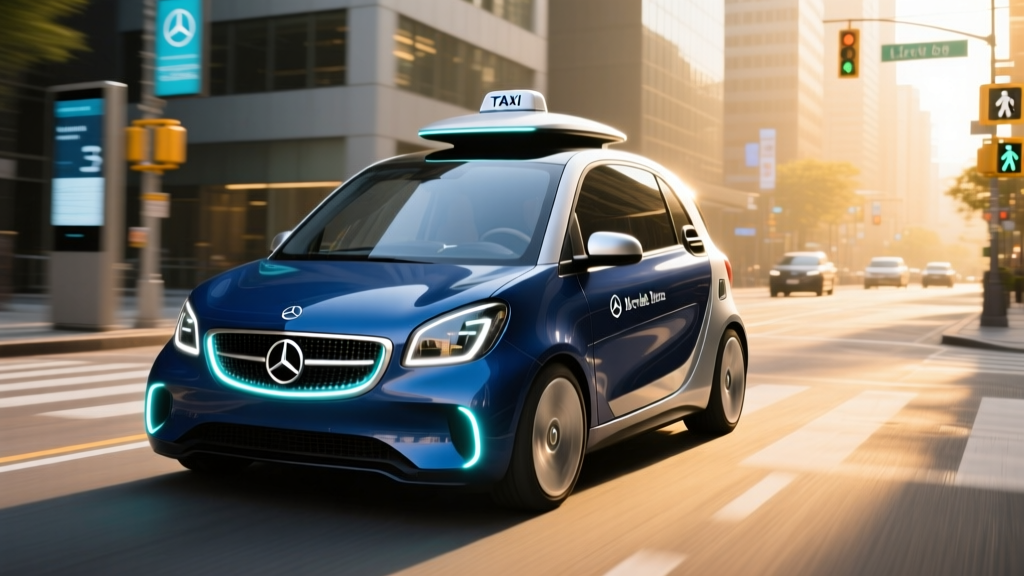
When shoppers search for a "Mercedes-Benz self-driving car," they're usually thinking of the S-Class or EQS equipped with Drive Pilot — the brand's most advanced driver-assistance system. But here's the critical distinction: this isn't a robotaxi you summon via app. It's a personal vehicle with conditional autonomy that works only under strict parameters.
SAE Automation Level: Conditional Automation (Level 3)
Drive Pilot is certified as SAE Level 3, meaning the car handles all driving tasks in specific conditions while the driver remains available to take over within seconds. This differs fundamentally from Level 2 systems (Tesla Autopilot, GM Super Cruise) where the driver must remain engaged, and Level 4 robotaxis (Waymo) that operate without any human backup in geofenced areas.
As of 2026, Mercedes-Benz offers Drive Pilot as a $2,500 option on the S-Class sedan and EQS electric sedan in select U.S. markets. The system allows hands-off, eyes-off driving at speeds up to 60 mph on approved highways — but only during daylight, in clear weather, and when traffic is dense enough to qualify as "congested."
Where Can I Use Mercedes Drive Pilot Right Now?
Unlike robotaxi services that operate in specific city zones, Drive Pilot travels with your vehicle but only activates on pre-mapped, divided highways that Mercedes has validated. As of early 2026, approved routes include:
| State | Approved Highway Segments | Status |
|---|---|---|
| Nevada | I-15 (Las Vegas to state line), portions of US-93 | Live since 2024 |
| California | Selected I-5, I-10, I-405 segments (LA/SF metro areas) | Live since 2025 |
| Germany | 13,191 km of Autobahn (nationwide coverage) | Live since 2022 |
The catch: Drive Pilot won't activate on surface streets, in construction zones, during rain/snow, at night, or when speeds exceed 60 mph. If traffic clears and you're cruising at 75 mph, the system disengages and you're back to conventional Level 2 assistance (Active Distance Assist Distronic).
How Drive Pilot Works: Technology Stack Explained
Mercedes took a sensor-fusion approach that contrasts sharply with Tesla's camera-only philosophy. The Drive Pilot stack includes:
- LiDAR: Valeo Scala 3 laser scanner (roof-mounted) providing 360-degree depth mapping up to 150 meters
- Cameras: Stereo windshield cameras plus surround-view units for lane marking and object classification
- Radar: Long-range front radar (250m) plus corner radars for blind-spot coverage
- Ultrasonic sensors: Close-proximity detection for cut-in scenarios
- HD maps: Centimeter-precision mapping of approved highways, updated OTA
- Redundant computing: Dual NVIDIA Orin-based control units with fail-operational architecture
The redundancy matters. If one sensor fails or gets obscured, backup systems maintain safe operation long enough for the driver to resume control. Mercedes claims the car can execute a controlled emergency stop if the driver doesn't respond to takeover requests within 10 seconds.
Is Mercedes Drive Pilot Actually Safe? The Data
Safety Record (as of Q1 2026)
- Miles driven on Drive Pilot: ~12 million miles (global fleet, primarily Germany)
- Reported at-fault incidents: 0 (per Mercedes-Benz and German KBA records)
- Takeover requests: Average 1.2 per 100 miles in approved conditions
- NHTSA investigations: None specific to Drive Pilot as of 2026
Source: Mercedes-Benz official safety documentation, German Federal Motor Transport Authority (KBA)
The zero-incident claim requires context. Drive Pilot operates in the most constrained environment of any automated system: low-speed, clear-weather, mapped-highway traffic jams. Compare this to Waymo's Level 4 robotaxis navigating chaotic urban streets, and the safety bar differs dramatically.
That said, Mercedes assumes legal liability when Drive Pilot is engaged — a significant commitment that Tesla, GM, and Ford avoid with their Level 2 systems. If the car causes a crash while in Level 3 mode, Mercedes' insurance covers damages. This liability shield incentivizes conservative system design.
Drive Pilot vs Robotaxi: Pricing and Use-Case Comparison
| Service | Cost Structure | Availability | Autonomy Level |
|---|---|---|---|
| Mercedes Drive Pilot | $2,500 one-time + vehicle purchase ($115K+ S-Class) | Personal vehicle, approved highways only | Level 3 (conditional) |
| Waymo One | $1.50-$2.50/mile (comparable to Uber/Lyft) | Phoenix, SF, LA metro areas | Level 4 (no driver) |
| Cruise (paused) | N/A (service suspended late 2024) | Limited test operations only | Level 4 (no driver) |
| Tesla FSD Supervised | $8,000 or $99/month subscription | Nationwide (driver must remain engaged) | Level 2 (driver-assist) |
The economic reality: Drive Pilot makes sense if you regularly sit in highway congestion on approved routes and value the productivity gain (reading, emailing, video calls are permitted). For occasional use, the $2,500 premium is steep. Robotaxis like Waymo offer broader capability without vehicle ownership, but only in specific cities.
Current Limitations: What Drive Pilot Cannot Do
- Speed ceiling: 60 mph max — useless on free-flowing highways where traffic moves at 70+ mph
- Weather restrictions: System disables in rain, snow, fog, or when sensors detect moisture
- Nighttime blackout: No operation after sunset or before sunrise (camera visibility requirements)
- Geofence dependency: Only works on pre-mapped divided highways — no surface streets, no rural roads
- Traffic density requirement: Designed for congested flow; disengages when traffic clears
- Takeover time: Driver must be prepared to resume control within 10 seconds — no sleeping, no intoxication
- Construction zones: System exits autonomous mode when approaching temporary lane shifts
- Limited market availability: Only Nevada and California as of 2026; no East Coast or Midwest coverage
These constraints frustrate early adopters expecting "full self-driving." The reality: Drive Pilot is a traffic-jam assistant that lets you check email during your commute — not a chauffeur replacement.
Regulatory Landscape: Who Approves Self-Driving Cars?
Mercedes secured the first U.S. Level 3 certification through Nevada's Department of Motor Vehicles in 2024, followed by California DMV approval in 2025. The process required:
- Third-party validation of system safety by TÜV SÜD (German technical inspection association)
- Submission of operational design domain (ODD) specifications to state regulators
- Liability insurance documentation proving Mercedes assumes crash responsibility
- Driver monitoring system certification (cameras ensure eyes are open, head is forward)
Federal oversight remains minimal. NHTSA has issued voluntary guidance but no binding Level 3/4 standards. This creates a patchwork: a car legal in Nevada may require separate approval in California, Texas, or Florida. Mercedes has indicated no plans to expand beyond current states through 2026, citing the cost of state-by-state validation.
Should You Buy a Mercedes-Benz Self-Driving Car?
Drive Pilot represents genuine innovation — the first system where you can legally disengage from driving and the manufacturer assumes liability. But it's a niche solution:
Choose Drive Pilot if:
- You commute daily on approved I-15 or I-5 segments in heavy congestion
- You're already purchasing an S-Class or EQS and value cutting-edge tech
- You understand the 60 mph, daylight, clear-weather constraints
- You want the productivity benefit of hands-off time in traffic
Look elsewhere if:
- You need autonomy for long-distance highway cruising at 70+ mph
- You live outside Nevada/California or frequently drive in rain/snow
- You expect a robotaxi-style experience (door-to-door without driver involvement)
- The $2,500 option cost isn't justified by your use case
Frequently Asked Questions
Is Mercedes Drive Pilot truly self-driving?
It's conditionally autonomous (Level 3), meaning the car handles all driving tasks in specific scenarios — congested highways under 60 mph in clear weather during daylight. Outside those parameters, you're driving with conventional Level 2 assistance. This differs from Level 4 robotaxis (Waymo) that require no human backup.
Can I sleep or watch movies while Drive Pilot is active?
You can watch videos on the central display and take video calls, but you cannot sleep. The driver monitoring camera tracks eye openness and head position. If you close your eyes or look away for more than a few seconds, the system issues escalating warnings before executing an emergency stop.
What happens if I get into a crash while using Drive Pilot?
Mercedes-Benz assumes legal liability for crashes that occur while Drive Pilot is properly engaged within its operational design domain. The company's insurance covers damages, not your personal policy. This liability assumption is unique to Level 3 systems and doesn't apply to Level 2 driver-assist (Tesla Autopilot, GM Super Cruise).
Will Drive Pilot expand to more states or work at higher speeds?
Mercedes has announced testing of an 80 mph version for 2027 model-year vehicles, but regulatory approval is pending. Geographic expansion beyond Nevada and California isn't planned for 2026. The company cites the cost of HD mapping and state-by-state certification as limiting factors.
How does Drive Pilot compare to Tesla Full Self-Driving?
Tesla FSD is a Level 2 driver-assist system requiring constant supervision — you're legally responsible for crashes. Drive Pilot is Level 3 conditional autonomy where Mercedes assumes liability. Tesla's system works nationwide on any road; Drive Pilot only activates on pre-mapped highways under strict conditions. Different philosophies: Tesla offers broad capability with driver responsibility, Mercedes offers narrow capability with manufacturer liability.