What Does FSD Actually Mean?
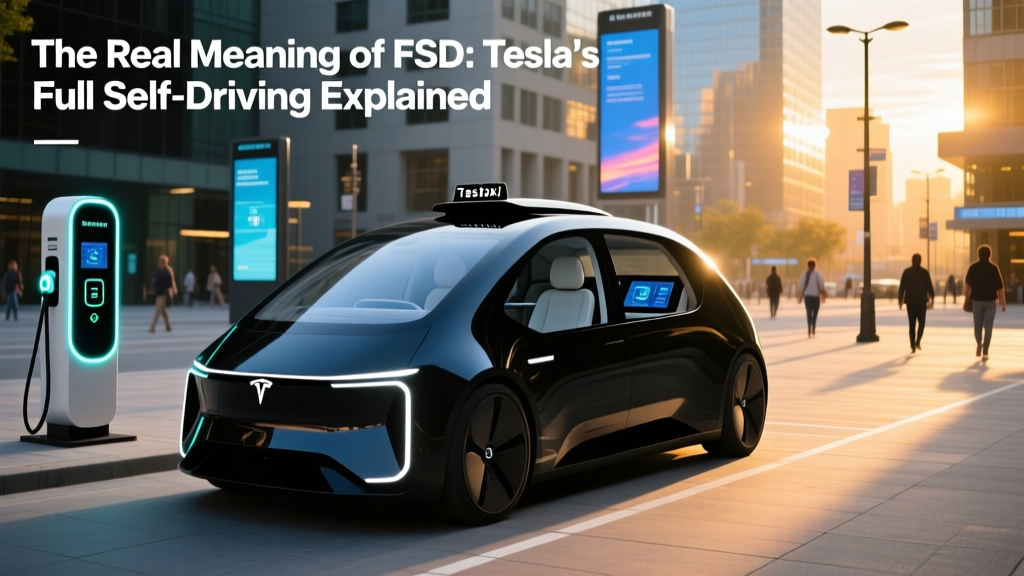
The term "FSD" stands for Full Self-Driving (Capability) — Tesla's most advanced driver-assistance software suite. Despite the name, FSD does not make the car self-driving. It is a Level 2 advanced driver-assistance system (ADAS) that requires continuous human supervision. The meaning of FSD has evolved since Tesla first introduced the branding in 2016, and understanding what the system can and cannot do is essential before spending thousands on the package.
FSD builds on Tesla's base Autopilot system, adding features like Navigate on Autopilot (automatic highway interchanges), Auto Lane Change, Autosteer on city streets, Traffic Light and Stop Sign Control, and Smart Summon. In 2026, Tesla markets the system under the umbrella "FSD (Supervised)" — the parenthetical being a legally important distinction that underscores the driver's ongoing responsibility.
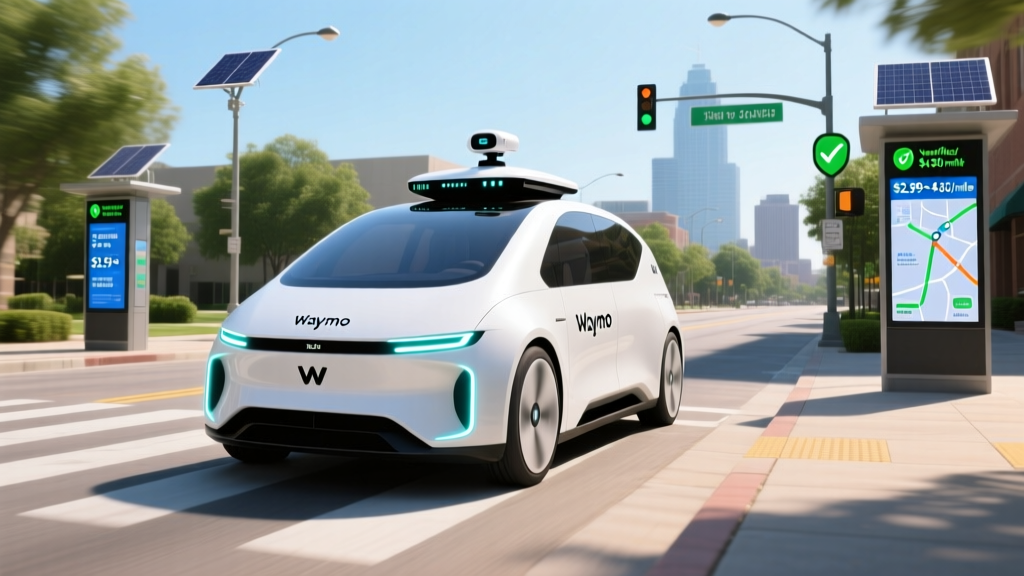
Tesla FSD (Supervised) operates at SAE Level 2 — partial automation. The driver must remain attentive, keep hands available, and be prepared to take over at any moment. This is the same automation level as GM Super Cruise, Ford BlueCruise, and Hyundai Highway Driving Assist. Only Level 4 robotaxi services like Waymo operate without a human driver in geofenced areas.
How FSD Works: Sensors, Cameras, and Neural Nets
Tesla's FSD relies entirely on a camera-only vision system — a design philosophy called "Tesla Vision." Since late 2022, Tesla has removed ultrasonic sensors and radar from its production vehicles, betting that eight surround cameras combined with neural-network processing can replicate human driving perception.
The hardware suite on current (2025–2026) Tesla vehicles includes:
- 8 cameras — front-facing (narrow and wide), repeater (side-forward), rear-view, and pillar-mounted cameras providing 360° coverage
- HW4 (Hardware 4) computer — Tesla's second-generation FSD computer with higher-resolution camera processing and improved inference throughput over HW3
- GPS and IMU — for localization and dead-reckoning when lane markings are absent
Unlike competitors such as GM Super Cruise (which uses LiDAR-mapped HD maps) or Mercedes Drive Pilot (which adds LiDAR and radar for its Level 3 system in limited conditions), Tesla processes all environmental data through deep neural networks in real time. This approach allows broader geographic coverage — FSD can theoretically operate on any road — but it also means the system can struggle in edge cases where vision alone is insufficient.
FSD Feature Breakdown: What It Actually Does
| Feature | What It Does | Where It Works |
|---|---|---|
| Autosteer | Maintains lane centering and speed | Highways and most city streets |
| Navigate on Autopilot | Automatic on/off-ramp transitions and highway interchanges | Divided highways |
| Auto Lane Change | Initiates and completes lane changes based on navigation route or driver confirmation | Highways and multi-lane roads |
| Traffic Light & Stop Sign Control | Detects and responds to traffic signals and stop signs | Intersections with clear markings |
| City Street Autosteer | Navigates turns, crosswalks, and urban traffic | Surface streets (most US roads) |
| Smart Summon | Car navigates a parking lot to the driver's phone location | Parking lots (low-speed) |
| Autopark | Identifies and executes parallel or perpendicular parking | Marked parking spaces |
Is FSD Really Self-Driving?
No. The meaning of FSD is aspirational branding, not a description of current capability. Tesla FSD (Supervised) requires the driver to monitor the driving environment at all times. The system uses a cabin camera to track driver attention, issuing escalating warnings — audible alerts, visual prompts, and eventually system lockout — if the driver appears disengaged.
- Drive without a licensed, attentive operator in the driver's seat
- Handle all construction zones, emergency vehicles, or unmapped detours reliably
- Perform safely in heavy rain, snow, fog, or direct sun glare that obscures cameras
- Replace driver judgment in complex scenarios (unprotected left turns across heavy traffic, unmarked rural roads at night)
- Qualify as SAE Level 3 or higher — you are legally and operationally the driver
The National Highway Traffic Safety Administration (NHTSA) has scrutinized Tesla's Autopilot and FSD naming conventions, and in 2024 the company began appending "(Supervised)" to FSD branding to reduce consumer confusion. For truly driverless operation, Level 4 services like Waymo One remain the only proven consumer option — and those operate only in geofenced metro areas like Phoenix, San Francisco, and Los Angeles.
FSD Pricing: Purchase, Subscription, and What's Included
Tesla offers FSD through two pricing models, and the economics differ significantly depending on ownership duration and mileage plans.
| Option | Cost (2026) | Notes |
|---|---|---|
| FSD (Supervised) — One-Time Purchase | $8,000 | Transfers with the vehicle at sale; adds to purchase price |
| FSD Monthly Subscription | $99/month | Cancel anytime; does not transfer to a new Tesla |
| Basic Autopilot | Included (standard) | Traffic-Aware Cruise Control + Autosteer on highways |
| Enhanced Autopilot (discontinued) | N/A for new orders | Folded into FSD tier; existing owners retain features |
The subscription model makes financial sense for drivers who plan to own their Tesla for fewer than 6.7 years ($99 × 80 months ≈ $8,000). For long-term owners, the one-time purchase marginally reduces total cost but also locks capital into a depreciating software feature. Notably, FSD purchase does not significantly boost resale value — used-Tesla buyers rarely pay a premium for the feature.
Which Tesla Models and Trims Include FSD?
FSD (Supervised) is available as an add-on across Tesla's entire 2026 lineup, but it is never standard equipment. Every new Tesla ships with Basic Autopilot at no additional cost.
| Model | Base MSRP (2026) | FSD Availability | Hardware |
|---|---|---|---|
| Model 3 (Rear-Wheel Drive) | $38,990 | Add-on: $8,000 or $99/mo | HW4 |
| Model 3 Long Range AWD | $45,990 | Add-on: $8,000 or $99/mo | HW4 |
| Model Y (Long Range AWD) | $44,990 | Add-on: $8,000 or $99/mo | HW4 |
| Model S (Dual Motor) | $79,990 | Add-on: $8,000 or $99/mo | HW4 |
| Model X (Dual Motor) | $84,990 | Add-on: $8,000 or $99/mo | HW4 |
| Cybertruck (AWD) | $79,990 | Add-on: $8,000 or $99/mo | HW4 |
Older Teslas built before approximately April 2022 with HW3 computers may require a hardware retrofit to run the latest FSD neural network software. Tesla has offered this upgrade for free to owners who previously purchased FSD, but vehicles with HW3 that never bought FSD may face upgrade costs.
FSD vs. Competing ADAS Systems
Understanding the meaning of FSD requires context against rival systems. Each manufacturer brands its Level 2 technology differently, and capabilities vary widely.
| System | Manufacturer | SAE Level | Hands-Free? | Cost |
|---|---|---|---|---|
| FSD (Supervised) | Tesla | Level 2 | No (hands-on/attention monitoring) | $8,000 or $99/mo |
| Super Cruise | GM (Cadillac, Chevy) | Level 2 | Yes (on mapped highways only) | ~$2,200 package or included on premium trims |
| BlueCruise | Ford / Lincoln | Level 2 | Yes (on mapped highways, ~130k miles) | $2,100 one-time or $75/mo after trial |
| Drive Pilot | Mercedes-Benz | Level 3 (limited) | Yes (under 40 mph, specific highways) | $2,500/year subscription (CA/NV) |
| Highway Driving Assist 2 | Hyundai / Genesis | Level 2 | No | Included on SEL+ and above trims |
| ProPILOT Assist 2.0 | Nissan | Level 2 | Yes (mapped highways) | Included on SL/Platinum trims |
GM Super Cruise and Ford BlueCruise offer true hands-free driving on pre-mapped divided highways, using LiDAR-based HD maps and infrared driver-monitoring cameras. These systems are more geographically limited than FSD but arguably more polished in their operating domains. Mercedes Drive Pilot is the only SAE Level 3 system available in the US (California and Nevada), allowing the driver to legally disengage below 40 mph in heavy highway traffic — but its operational design domain is extremely narrow.
Tesla's advantage is geographic breadth: FSD can engage on virtually any road in the US, from neighborhood streets to rural highways. Its disadvantage is consistency — the system handles routine scenarios well but occasionally exhibits unpredictable behavior in edge cases that competitors simply refuse to attempt.
Real-World Limitations and Edge Cases
Based on extensive real-world testing across varying conditions, these are the scenarios where FSD (Supervised) requires heightened driver vigilance:
Weather and Visibility
Heavy rain, snow accumulation on camera lenses, and direct low-angle sunlight can degrade Tesla Vision performance. The system may disengage abruptly with a "Camera Visibility Limited" warning, requiring immediate driver takeover. Unlike radar-equipped competitors, Tesla's camera-only system has no sensor redundancy in low-visibility conditions.
Construction Zones and Lane Shifts
FSD can struggle with temporary lane markings, orange construction barrels, and shifted travel lanes. The system occasionally follows faded old lane markings instead of current ones, particularly on resurfaced highways. Driver intervention is frequently required in active construction zones.
Unprotected Left Turns
City-street FSD handles protected intersections reasonably well but can be overly hesitant or occasionally aggressive at unprotected left turns across oncoming traffic. This remains one of the most challenging scenarios for vision-based systems, and Tesla has iterated on this behavior through over-the-air updates throughout 2024–2026.
Rural and Unmarked Roads
Roads without painted lane markings, narrow rural lanes, and roads with degraded surfaces present difficulty. FSD may wander or disengage where the vision system cannot reliably determine lane boundaries.
Safety Data and Regulatory Context
Tesla publishes quarterly Vehicle Safety Reports claiming that vehicles with Autopilot engaged record fewer crashes per million miles than the US average. However, these reports have methodological limitations — they do not isolate FSD from basic Autopilot, and the comparison mixes highway driving (where ADAS is engaged) with the general driving population (which includes higher-risk urban and impaired driving).
NHTSA's Standing General Order requires manufacturers to report crashes involving Level 2+ systems. Data from these reports shows Tesla Autopilot/FSD-involved incidents, though raw counts must be contextualized against Tesla's market share and the system's high utilization rate among owners.
The Insurance Institute for Highway Safety (IIHS) has repeatedly emphasized that no Level 2 system has been proven to reduce crash risk as much as basic automatic emergency braking and lane-keeping assist. Robust, independent data on FSD-specific safety outcomes remains limited.
Should You Buy FSD?
Buy FSD (subscription) if: You drive a Tesla daily in moderate-to-heavy traffic, want to reduce commute fatigue, and are willing to supervise actively. The $99/month model lets you cancel when the novelty wears off or when you sell the car.
Buy FSD (one-time) if: You plan to keep your Tesla for 7+ years and drive 15,000+ miles annually in conditions where FSD's capabilities are useful. Accept that the $8,000 will not meaningfully increase resale value.
Skip FSD if: You primarily drive in heavy snow regions, rural areas with poor road markings, or you expect a self-driving experience. Basic Autopilot (included) handles highway lane-centering and adaptive cruise control adequately for most drivers.
Frequently Asked Questions
What does FSD stand for?
FSD stands for "Full Self-Driving (Capability)." Despite the name, it is a Level 2 driver-assistance system that requires the driver to remain fully attentive and ready to take control at any time.
Is Tesla FSD truly self-driving?
No. FSD is classified as SAE Level 2 partial automation. The driver must supervise the system continuously. Only Level 4 robotaxi services like Waymo operate without a human driver, and only within geofenced service areas.
How much does FSD cost in 2026?
Tesla FSD (Supervised) costs $8,000 as a one-time purchase or $99 per month as a subscription. Basic Autopilot, which includes Traffic-Aware Cruise Control and Autosteer, is included at no extra cost on every new Tesla.
Does FSD work on all roads?
FSD can technically engage on most US roads, including city streets. However, performance varies significantly. Highway driving is where the system performs best. City streets, construction zones, unmarked rural roads, and adverse weather conditions all degrade capability and require heightened driver attention.
Can FSD be transferred to a new Tesla?
FSD purchased as a one-time add-on stays with the vehicle when you sell it — it does not transfer to a new Tesla you buy. Tesla has occasionally offered limited-time transfer promotions, but these are exceptions, not policy. The subscription model does not carry over between vehicles.
How does FSD compare to GM Super Cruise?
GM Super Cruise offers true hands-free driving but only on approximately 750,000 miles of pre-mapped divided highways, using LiDAR-based HD maps. Tesla FSD works on virtually any road but requires hands-on or attention-monitored engagement at all times. Super Cruise is more polished in its limited domain; FSD is broader in coverage but less consistent at the edges.