When Mariah Carey partnered with Waymo in a high-profile promotional campaign, it pushed the robotaxi conversation well beyond the tech and transportation crowd. But celebrity polish aside, the real question for riders is practical: can you actually summon a driverless car today, what does it cost, and how safe is it? This guide strips away the marketing gloss and examines Waymo's Level 4 robotaxi service as it operates in 2026 — with concrete data on pricing, safety, coverage, and the limitations you'll encounter as a rider.
What the Mariah Carey Waymo Campaign Actually Signals
The Mariah Carey Waymo collaboration — which featured the singer using Waymo's driverless ride-hail service in promotional content — was designed to normalize robotaxi use for mainstream audiences, not just early adopters in Silicon Valley. For consumers, the relevant takeaway isn't the celebrity tie-in but the service maturity it reflects. By 2026, Waymo has accumulated tens of millions of fully driverless miles across multiple U.S. metros, moved beyond invitation-only beta programs, and opened its app to the general public in every operational city. The partnership signals that Waymo views its service as ready for everyday riders — school runs, airport trips, nights out — not just tech-curious experimenters.
SAE Automation Level: Why Waymo Is Level 4, Not Level 2
Understanding Waymo's autonomy level is essential because it defines what the system can and cannot do — and who is responsible when something goes wrong.
SAE Level 4 — High Automation (Waymo One): The vehicle performs all driving tasks within a defined operational design domain (geofenced area, specific weather conditions) with no human driver present. There is no steering wheel or pedals accessible to passengers. The company, not the rider, bears operational responsibility.
This is fundamentally different from SAE Level 2 systems like Tesla Autopilot, Ford BlueCruise, or GM Super Cruise, which require a licensed, attentive driver behind the wheel at all times. Level 2 is driver-assist. Level 4, in its operational domain, is driverless.
| Level | Name | Who Drives | Example |
|---|---|---|---|
| Level 2 | Partial Automation | Human (must monitor) | Tesla Autopilot, BlueCruise |
| Level 3 | Conditional Automation | System (in narrow conditions); human on standby | Mercedes DRIVE PILOT (limited markets) |
| Level 4 | High Automation | System (within geofence); no human needed | Waymo One, Zoox |
| Level 5 | Full Automation | System (everywhere, all conditions) | Does not exist commercially |
Where Can You Use Waymo Right Now?
As of early 2026, Waymo One — the company's commercial rider service — operates in a defined set of U.S. metropolitan areas. Service is geofenced, meaning you can only request rides within approved boundaries that cover core urban corridors, major airports, and surrounding suburbs. Expansion is ongoing but deliberate; new cities are added only after extensive mapping, testing, and regulatory approval.
| City / Region | Status | Key Coverage Areas |
|---|---|---|
| Phoenix, AZ (Metro) | Fully operational | Chandler, Tempe, Mesa, Scottsdale, Sky Harbor Airport |
| San Francisco, CA | Fully operational | City-wide, SFO airport service |
| Los Angeles, CA | Fully operational | Downtown, Santa Monica, Hollywood, LAX corridor |
| Austin, TX | Operational (expanding) | Downtown, South Congress, airport service |
| Additional metros | Testing / announced | Check Waymo's official rider page for live map |
Important caveat: "Operational" means you can download the Waymo app, create an account, and request a ride without a waitlist. However, coverage boundaries are strict — if your destination falls outside the geofence, the app will not let you book. Always confirm your exact origin and destination in the app before planning around a Waymo ride.
How to Ride and What It Costs vs. Uber and Lyft
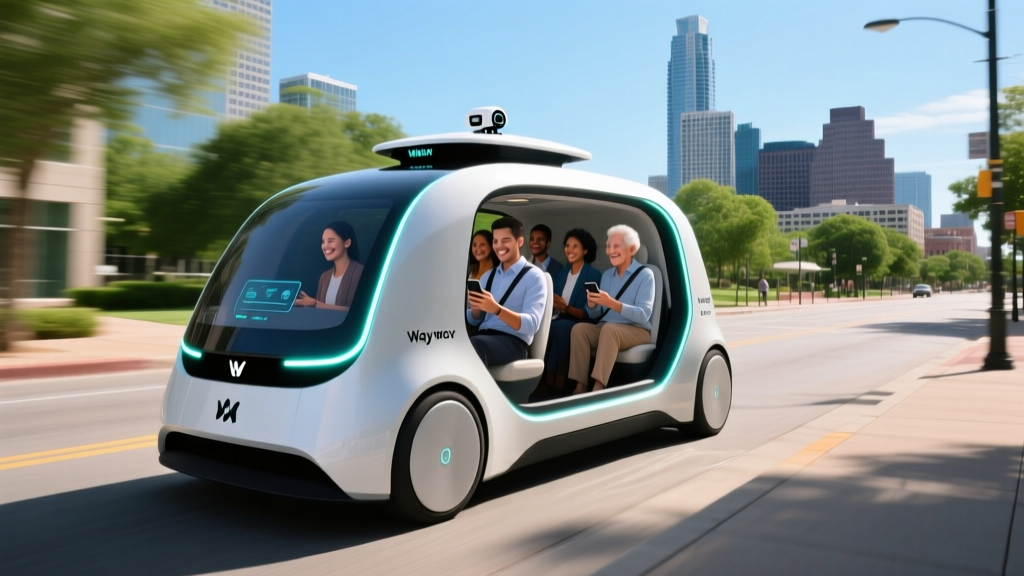
Booking a Waymo One ride works almost identically to Uber or Lyft: download the Waymo app, enter your pickup and drop-off, confirm the fare upfront, and a vehicle arrives. The difference is that no driver is behind the wheel. The vehicles in the 2026 fleet are primarily the 6th-generation Waymo Driver-equipped Jaguar I-PACE EVs, with the custom-built Zeekr RT robotaxi beginning limited deployment.
| Scenario | Waymo One | UberX / Lyft Standard | Notes |
|---|---|---|---|
| Short urban trip (3–5 mi) | $8–$14 | $10–$18 | Waymo often competitive on short hops |
| Airport run (10–15 mi) | $25–$40 | $28–$50 | Surge pricing affects rideshare more |
| Longer suburban (15–25 mi) | $35–$55 | $35–$60 | Roughly comparable |
| Surge / peak demand | Minimal surge | 1.5x–3x multiplier common | Waymo pricing more predictable |
Waymo's pricing model tends to avoid the aggressive surge multipliers that Uber and Lyft deploy during peak demand, which can make it notably cheaper during events, rush hour, or bad weather — when available. Promo codes and first-rider discounts are periodically offered (the Mariah Carey campaign included rider credits), but standard pricing is generally within the same band as conventional rideshare.
Safety Record: What the Data Actually Shows
Safety is the single biggest question for prospective robotaxi riders, and it's where vague reassurances don't suffice. Waymo publishes periodic safety reports and has submitted data to the National Highway Traffic Safety Administration (NHTSA) as required under federal standing general orders for autonomous vehicle incidents.
Key safety data points (cumulative through 2025 reporting):
- Fully driverless miles: Over 30 million autonomous ride-hail miles completed across operational cities.
- Injury-causing crash rate: Waymo's published data indicates approximately 85% fewer police-reported injury-causing crashes per million miles compared to human driver benchmarks in comparable urban environments.
- Contact rate: Property-damage-only contact incidents occur at a rate lower than human benchmarks, with the majority being low-speed, minor-impact events (e.g., being rear-ended at a stop).
- NHTSA standing general order compliance: All reportable incidents filed within required timelines; data publicly summarized in periodic safety reports.
Sources: Waymo Safety Reports, NHTSA AV Safety Data
The context matters: Waymo vehicles operate primarily in dense urban environments at moderate speeds, which is a different risk profile than highway driving. The vehicles are also highly visible (distinctive roof-mounted sensor arrays), which may affect how other drivers interact with them. The data is encouraging but should be interpreted as reflecting geofenced, fair-weather-to-moderate-conditions urban driving — not all-condition, all-road autonomy.
Technology Stack: Lidar, Cameras, and the Sensor Fusion Approach
Unlike Tesla's camera-only Autopilot/FSD architecture, Waymo employs a redundant sensor fusion stack that combines multiple perception modalities. The 6th-generation Waymo Driver, deployed on the current Jaguar I-PACE fleet, includes:
- Lidar: Multiple roof- and body-mounted lidar units providing 360-degree, high-resolution 3D point-cloud mapping out to 500+ meters. Lidar is the primary depth-perception sensor and works independently of ambient light.
- Cameras: A suite of high-dynamic-range cameras covering 360 degrees for object classification, traffic-light state detection, and signage reading.
- Radar: Imaging radar units for velocity detection of moving objects and redundancy in low-visibility conditions (rain, fog).
- External audio receivers: Microphones capable of detecting emergency vehicle sirens and triggering appropriate yielding behavior.
- HD mapping: Pre-built centimeter-accuracy maps of every operational road, updated continuously. The vehicle localizes within this map in real time.
This multi-sensor approach means Waymo vehicles don't rely on any single perception channel. If heavy rain degrades camera visibility, lidar and radar maintain object detection. If a construction zone alters lane markings, the HD map and lidar together provide ground-truth positioning. This redundancy is a defining characteristic of Level 4 systems — the vehicle must handle sensor degradation without handing control back to a human, because there is no human to hand it to.
Regulatory Landscape: Who Approves Robotaxi Operations
Robotaxi deployment in the United States is governed by a patchwork of state and local regulations, not a single federal permit. Here's how the approval chain works:
- Federal (NHTSA / DOT): Sets vehicle safety standards (FMVSS) and requires incident reporting under standing general orders. Does not currently issue "approval" for autonomous operations but can investigate and order recalls.
- State level: Each state determines whether driverless testing and commercial deployment are legal. California's DMV Autonomous Vehicle Program issues testing and deployment permits. Arizona has taken a permissive approach with minimal state-level barriers. Texas regulates at the state level with specific AV statutes.
- Local / municipal: Cities and counties control road access, curb management, and can impose operational restrictions (school zones, event corridors, specific streets). Airport authorities separately approve pickup/drop-off access.
- Public Utilities Commissions: In some states (notably California's CPUC), commercial passenger service requires a separate permit beyond the DMV's AV permit.
For riders, this means Waymo's service availability is directly tied to regulatory approval in each market. A city may be technically ready (mapped, tested) but not yet approved for commercial rides. Always check the Waymo app for live availability rather than assuming service based on news of testing in a given city.
Current Limitations: What Waymo Cannot Do in 2026
Waymo One in 2026 is a mature Level 4 service within its operational domain — but that domain has hard boundaries. Here's what the service does not yet handle:
- Heavy snow and ice: Service is suspended or restricted in conditions where road markings are obscured by snow accumulation and lidar/camera performance degrades. Phoenix and LA riders rarely encounter this; future northern-city riders will.
- Outside the geofence: If your destination is 200 feet past the service boundary, the app won't let you book. There is no "manual override" — the vehicle physically will not navigate outside its approved map.
- Unmapped construction zones: While Waymo handles many construction scenarios, long-term or complex road reconfigurations that haven't been re-mapped may cause the vehicle to pull over and wait for remote assistance or reroute.
- Highway driving at high speeds: Most current operations are on surface streets and lower-speed corridors. Limited freeway segments are included in some cities (e.g., Phoenix), but long interstate trips are not available.
- Unstructured environments: Private driveways, parking garages, dirt roads, and off-road scenarios are outside the operational design domain.
- Emergency detours: In the event of a road closure or police-directed detour outside the mapped network, the vehicle may stop and request remote guidance rather than improvise.
Frequently Asked Questions
Is Waymo truly self-driving, or is there a remote human controlling it?
Waymo vehicles are genuinely driverless — there is no human in the vehicle, and no remote operator driving the car in real time. Remote assistance exists but is used sparingly: a remote agent can confirm a plan (e.g., "proceed around this obstacle") but does not steer or control the vehicle directly. The onboard AI handles all real-time driving decisions.
How much does a Waymo ride cost compared to Uber or Lyft?
Typical fares are comparable to standard UberX or Lyft rides — roughly $8–$14 for short urban trips, $25–$40 for airport runs. The main pricing advantage is that Waymo does not apply aggressive surge multipliers during peak demand, making it more predictable and often cheaper during high-demand periods.
Where can I use Waymo right now in 2026?
Waymo One is fully operational in Phoenix (metro-wide including Sky Harbor Airport), San Francisco (city-wide plus SFO), Los Angeles (downtown to LAX corridor), and Austin (expanding coverage). Check the Waymo rider page for the current live service map, as boundaries update periodically.
How safe are Waymo robotaxis compared to human drivers?
Waymo's published data — based on over 30 million driverless miles — shows approximately 85% fewer police-reported injury-causing crashes per million miles compared to human benchmarks in comparable urban settings. Property-damage-only contacts also trend below human rates. However, this data reflects geofenced urban driving in moderate conditions, not all driving environments. See Waymo's safety reports and NHTSA AV data for details.
Can I use Waymo in heavy rain or snow?
Waymo operates in moderate rain and nighttime conditions without issue. However, service may be suspended or restricted during heavy snowfall, ice storms, or conditions that obscure lane markings and degrade sensor performance. This is a current limitation of Level 4 systems operating in geofenced areas not designed for winter weather extremes.
What vehicle will pick me up?
The current Waymo One fleet primarily uses the Jaguar I-PACE, a fully electric SUV equipped with the 6th-generation Waymo Driver sensor suite. The custom Zeekr RT robotaxi — designed from the ground up without a steering wheel — is beginning limited deployment in select markets. Both vehicles are all-electric, so your ride produces zero tailpipe emissions.