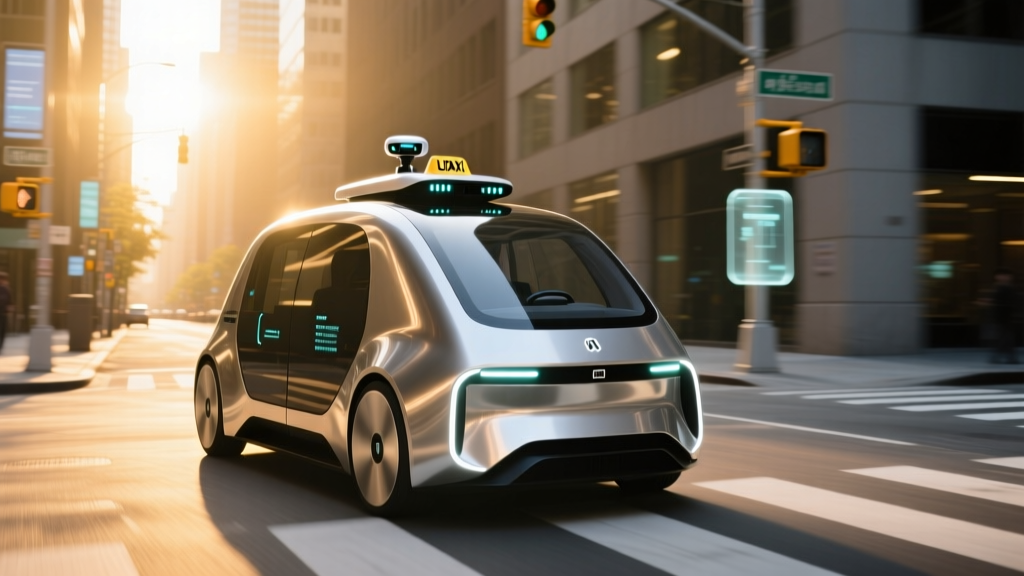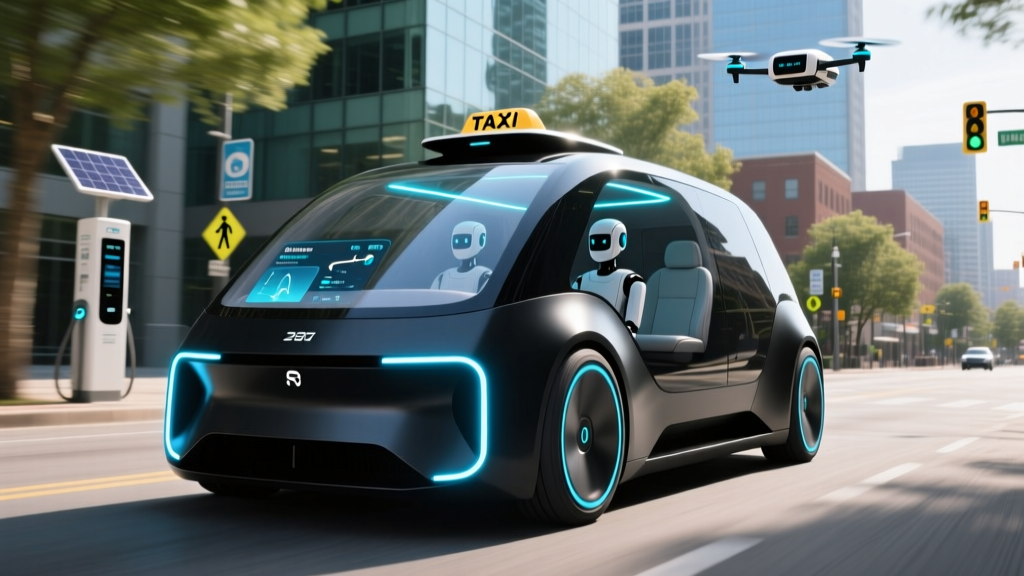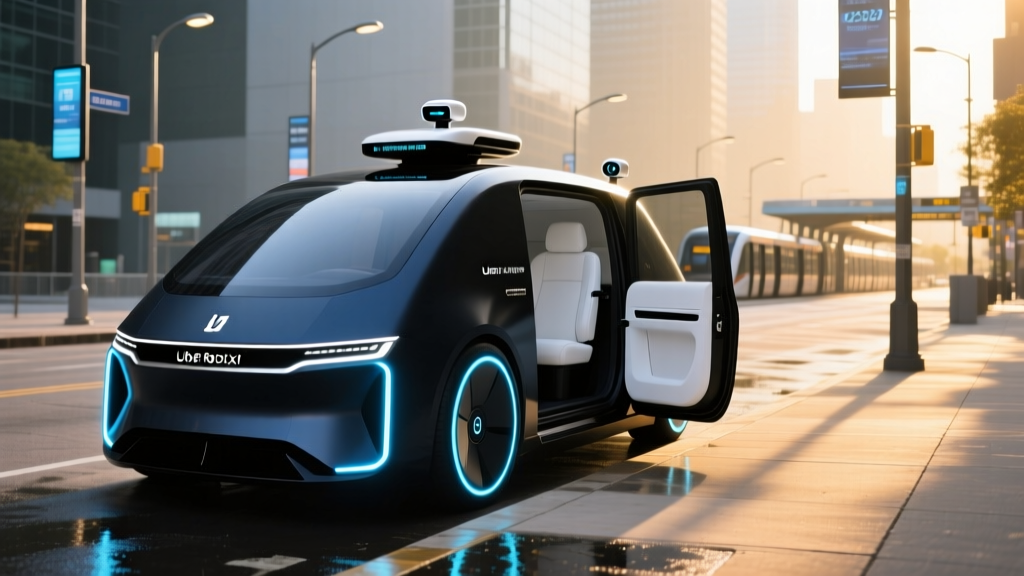
In early 2025, Uber Technologies and Lucid Motors announced a strategic collaboration to develop and deploy autonomous ride-hailing vehicles using Lucid's purpose-built electric platform. Dubbed by industry observers as the Lucid Uber robotaxi partnership, the deal positioned Lucid's upcoming midsize platform as a potential fleet vehicle for Uber's autonomous network. But as we move through 2026, separating confirmed facts from speculation is critical for anyone tracking the robotaxi space.
This guide breaks down exactly what has been announced, what remains in development, and how the Lucid-Uber arrangement compares to established Level 4 robotaxi operators like Waymo and Cruise's successor services. We'll cover autonomy levels, technology, regulatory status, and the hard limitations that still define this sector.
Is the Lucid Uber Robotaxi Truly Self-Driving?
The short answer: not yet, and understanding the SAE automation framework is essential before evaluating any robotaxi claim.
SAE Automation Levels — What They Actually Mean
| Level | Name | Driver Required? | Examples |
|---|---|---|---|
| Level 2 | Driver Assistance | Yes — hands on, eyes on | Tesla Autopilot, GM Super Cruise, Lucid DreamDrive Pro |
| Level 3 | Conditional Automation | Eyes off in limited zones | Mercedes Drive Pilot (selected markets) |
| Level 4 | High Automation | No driver — geofenced areas | Waymo One, Zoox |
| Level 5 | Full Automation | No driver, anywhere | Does not exist commercially |
Lucid's current production vehicles — the Air sedan and the Gravity SUV — ship with DreamDrive Pro, which is a Level 2 driver-assistance system. It uses a suite of cameras, radar, and ultrasonic sensors to provide adaptive cruise control, lane centering, and automated lane changes. The driver must remain engaged at all times.
The Uber partnership, however, targets a Level 4 robotaxi deployment using Lucid's next-generation midsize platform (internally referenced as the Lucid Midsize, expected to underpin a production vehicle in the 2026–2027 timeframe). Level 4 means no human driver behind the wheel — but only within geofenced operational zones under defined conditions. The partnership has not yet produced a commercially available Level 4 fleet vehicle as of mid-2026.
Partnership Structure: What Lucid and Uber Actually Agreed To
The collaboration, first reported in 2025, involves several layers:
- Vehicle supply: Lucid would manufacture a purpose-built electric vehicle optimized for high-utilization fleet duty — meaning enhanced durability, easier cleaning and maintenance, and rear-seat passenger experience prioritized over driver engagement.
- Autonomy stack integration: Uber's autonomous vehicle division (spun out from the former ATG and restructured under the Aurora Innovation relationship, plus Uber's own AV mapping and dispatch layer) would integrate its self-driving software and sensor suite into the Lucid platform.
- Fleet deployment: Vehicles would operate on Uber's existing ride-hailing network, dispatched through the Uber app alongside human-driven rides in approved metro areas.
This structure mirrors the model Uber has pursued with other OEM partners — providing the demand network and autonomy integration while the automaker supplies a vehicle engineered for the punishing duty cycle of rideshare (often 60,000+ miles per year per vehicle).
Technology Stack: Sensors, Compute, and the Lucid Advantage
Expected Robotaxi Sensor Configuration
- LiDAR: Multiple solid-state or semi-solid-state units (roof-mounted and corner positions) for 360° depth perception — essential for Level 4 redundancy
- Cameras: 10+ high-resolution cameras covering overlapping fields of view, building on Lucid's existing vision system
- Radar: 4D imaging radar for adverse weather performance (rain, fog, dust)
- Ultrasonics: Short-range proximity sensors for low-speed maneuvering and docking
- Compute: High-TOPS (tera operations per second) AI inference platform, likely NVIDIA DRIVE Orin or successor, with redundant compute paths
- HD Mapping: Pre-built centimeter-accuracy maps of geofenced service areas, continuously updated
Lucid's engineering DNA gives it a potential edge in the robotaxi vehicle supply market. The Air's powertrain efficiency — currently achieving up to 516 miles EPA range on the Air Grand Touring with its 118 kWh usable battery (NMC chemistry) — means fewer charging downtime hours per vehicle per day. In fleet operations, a vehicle that can run 18–20 hours before needing a 45-minute DC fast charge session (the Air peaks at ~250 kW on Level 3 DC, reaching 10–80% in approximately 25 minutes) is materially more profitable than one requiring more frequent stops.
The Lucid midsize platform is expected to use a smaller battery (estimated 70–85 kWh) but retain the company's hallmark efficiency, potentially delivering 350+ miles EPA in a more compact, lower-cost package suited to urban fleet duty.
Where Can You Use This Robotaxi Service Right Now?
As of mid-2026, there is no live Lucid-branded robotaxi service operating on the Uber network. The partnership remains in the development and pilot-testing phase.
For context, here is where established Level 4 robotaxi services currently operate:
| Service | Operator | Live Cities (2026) | Status |
|---|---|---|---|
| Waymo One | Waymo (Alphabet) | Phoenix, San Francisco, Los Angeles, Austin | Commercial — driverless |
| Zoox | Zoox (Amazon) | Las Vegas, Foster City (limited) | Commercial — driverless |
| Cruise successor | GM Cruise (restructured) | Phoenix, Dallas (phased relaunch) | Limited commercial |
| Uber AV (Aurora/Motional) | Uber + partners | Pittsburgh, Las Vegas (pilot zones) | Pilot — safety driver |
| Lucid-Uber AV | Lucid + Uber | Not yet announced | Development — not live |
Uber's existing autonomous pilots have used vehicles from partners like Aurora Innovation (using Toyota Sienna-based platforms) and Motional (Hyundai Ioniq 5-based). The Lucid vehicle would join this multi-supplier fleet strategy, but no specific launch city or date has been publicly confirmed for the Lucid platform integration.
Pricing: Robotaxi vs. Standard Uber and Lyft Rides
Since the Lucid-Uber robotaxi is not yet in commercial service, exact pricing is not available. However, based on current Waymo One pricing and Uber's stated strategy for autonomous rides, we can project the likely structure:
| Ride Type | Base Fare | Per Mile | Per Minute | 5-Mile Trip Est. |
|---|---|---|---|---|
| UberX (human driver) | $2.50–$3.50 | $1.25–$1.75 | $0.30–$0.45 | $12–$18 |
| Lyft Standard | $2.25–$3.25 | $1.20–$1.60 | $0.28–$0.40 | $11–$16 |
| Waymo One (Phoenix/SF) | $2.00–$3.00 | $1.10–$1.50 | $0.25–$0.40 | $10–$16 |
| Uber AV (projected) | $2.00–$3.00 | $1.00–$1.40 | $0.20–$0.35 | $9–$15 |
The economic thesis of robotaxis is that removing the driver (who typically takes 55–70% of the fare) allows the platform to reduce prices while still covering vehicle depreciation, charging, insurance, and remote-assistance operators. Uber CEO Dara Khosrowshahi has publicly stated that autonomous rides will be priced at or slightly below comparable UberX fares to encourage adoption, with the margin improvement coming from eliminating the driver payout.
However, the actual cost equation for operators is complex: Level 4 sensor suites add $30,000–$80,000+ in hardware per vehicle, remote fleet operators monitor multiple cars simultaneously, and insurance costs for autonomous fleets remain elevated. These overheads mean the per-ride discount to the consumer may be modest in early deployment phases.
Safety Data: What the Numbers Show for Robotaxis
Robotaxi Safety Record — Key Data Points
- Waymo (2024–2025): Over 20 million fully driverless miles completed. Waymo's published safety data (peer-reviewed, 2024) showed a 85% reduction in injury-causing crash rates compared to human benchmarks in comparable urban environments (source: Waymo Safety Report).
- Cruise (pre-suspension, 2023): Approximately 3.5 million driverless miles before the October 2023 San Francisco incident led to California DMV permit suspension. NHTSA opened investigations into multiple incidents.
- NHTSA Standing General Order: All Level 4 operators must report crashes within 24 hours. Data is publicly available via NHTSA's AV reporting portal.
- Lucid-Uber AV: No public safety data exists — the fleet has not operated driverlessly on public roads as of mid-2026.
It is important to evaluate robotaxi safety with nuance. Waymo's data is the most robust dataset available and shows strong performance in geofenced urban environments. However, robotaxis have faced documented challenges with:
- Construction zones with shifted lane markings
- Emergency vehicles approaching from unexpected angles
- Extreme weather (heavy rain, snow) that degrades sensor performance
- Edge-case interactions with pedestrians in non-standard crossing scenarios
Any future Lucid-Uber robotaxi fleet will need to accumulate millions of supervised and driverless test miles before regulators and the public can assess its safety profile with confidence.
Regulatory Landscape: Who Approves Robotaxi Operations?
Robotaxi deployment in the United States is governed by a patchwork of state and local regulations — there is no single federal license for autonomous vehicle operations.
- California (CPUC + DMV): The most mature regulatory framework. Operators need a DMV deployment permit (requiring extensive testing data, insurance, and safety reporting) and a CPUC permit to charge passengers. The Cruise suspension in late 2023 demonstrated that permits can be revoked.
- Arizona: The most permissive major market. No state-level permit required for testing or deployment, though operators must comply with standard vehicle registration and insurance requirements. Waymo's Phoenix operation launched here for this reason.
- Texas: Allows autonomous vehicle operation with a licensed operator (which can be remote). Austin has become a key testing ground.
- Nevada: Permits testing and limited deployment under DMV oversight.
- Federal (NHTSA): Sets vehicle safety standards (FMVSS) and requires crash reporting. NHTSA does not currently "approve" AV software but can issue recalls or investigations. The NHTSA AV safety portal tracks all reported incidents.
For the Lucid-Uber robotaxi to launch commercially, it would need to clear regulatory hurdles in each target state. This is a city-by-city, state-by-state process — not a single approval that unlocks nationwide service.
Current Limitations of the Lucid-Uber Robotaxi Program
Key Limitations and Unknowns (Mid-2026)
- No live service: The Lucid robotaxi is not available to riders anywhere. It remains in development and pilot testing.
- Vehicle not yet in production: The Lucid midsize platform targeted for fleet use has not reached series production. Lucid's current lineup (Air, Gravity) is not the basis for the robotaxi program.
- Autonomy stack unproven at scale: Uber's AV software, whether proprietary or Aurora-based, has not accumulated the driverless miles that Waymo has logged.
- Weather limitations: All current Level 4 systems degrade in heavy rain, snow, and fog. LiDAR and camera performance drops significantly in adverse conditions.
- Geofencing: When launched, service will be restricted to pre-mapped urban zones — likely specific neighborhoods within a metro area, not citywide coverage.
- No highway operation: Level 4 robotaxis currently operate on surface streets only. Highway-speed autonomy requires different safety validation.
- Regulatory uncertainty: Post-Cruise-incident regulatory scrutiny has slowed permitting timelines in several states.
Lucid's EV Platform: Why Uber Chose This Partner
Beyond the autonomy question, Lucid brings specific EV engineering advantages that make sense for fleet operations:
| Spec | Lucid Air Grand Touring | Expected Midsize Platform | Fleet Relevance |
|---|---|---|---|
| EPA Range | 516 mi | ~350+ mi (est.) | More driving hours per charge cycle |
| Battery | 118 kWh usable, NMC | ~70–85 kWh, NMC or LFP | Lower cost per vehicle |
| DC Fast Charge | ~250 kW peak, 10–80% in ~25 min | ~200–250 kW (est.) | Minimized charging downtime |
| Efficiency | ~4.0 mi/kWh (145 MPGe combined) | ~4.2+ mi/kWh (est.) | Lower per-mile energy cost |
| Powertrain Warranty | 8 years / 100,000 miles | TBD (fleet warranty likely) | Critical for high-mileage fleet |
| 0–60 mph | 3.0 seconds | ~5.0 sec (est., fleet tune) | Not a priority for robotaxi |
Lucid's efficiency leadership in the EV space — driven by proprietary motor design, low-drag aerodynamics, and advanced thermal management — directly translates to lower operating costs per mile in a fleet context. For Uber, this means a potentially lower total cost of ownership compared to less efficient EV platforms, even if the Lucid vehicle carries a higher upfront purchase price.
Real-world range caveat: the Air Grand Touring's 516-mile EPA figure assumes mixed driving at moderate temperatures. In highway-heavy fleet use at 70+ mph, expect ~380–420 real-world miles. In cold weather (below 32°F), that drops further to ~320–360 miles due to battery chemistry limitations and cabin heating demand, even with a heat pump system.
Frequently Asked Questions
Where can I ride in a Lucid robotaxi today?
You cannot. As of mid-2026, the Lucid-Uber robotaxi partnership has not produced a commercially available ride-hailing service. The vehicle platform is still in development, and no city has an active Lucid robotaxi fleet. If you want a driverless robotaxi ride today, Waymo One in Phoenix, San Francisco, Los Angeles, or Austin is your primary option.
How much will a Lucid-Uber robotaxi ride cost compared to regular Uber?
No pricing has been announced. Based on current Waymo pricing and Uber's stated strategy, expect fares at or slightly below standard UberX rates — roughly $9–$15 for a typical 5-mile urban trip. The long-term goal is lower prices than human-driven rides, but early deployment costs (sensor hardware, remote monitoring, insurance) may limit initial discounts.
Is Lucid's DreamDrive Pro system self-driving?
No. DreamDrive Pro is an SAE Level 2 driver-assistance system, equivalent to Tesla Autopilot or GM Super Cruise. It requires the driver to keep hands on the wheel and eyes on the road at all times. The robotaxi partnership targets a separate, future Level 4 system with no driver present — that system does not yet exist in commercial operation.
What are the main technical hurdles before this launches?
The key challenges include: validating the autonomy software across millions of supervised and driverless test miles; achieving regulatory approval in target states (a process that has slowed industry-wide post-Cruise); ensuring the midsize vehicle platform reaches production quality and volume; and proving reliability in adverse weather and complex urban edge cases.
How does this partnership differ from Waymo's approach?
Waymo is vertically integrated — it designs its own sensor suite (Waymo Driver), develops its own autonomy software, and operates its own fleet (currently using the Jaguar I-PACE and Zeekr custom vehicles). The Lucid-Uber model separates responsibilities: Lucid builds the vehicle, Uber (with partners like Aurora) provides the autonomy stack and demand network. This multi-party approach can scale faster but requires complex integration and shared safety validation.
Will the Lucid robotaxi qualify for the federal EV tax credit?
The §30D federal tax credit applies to personal vehicle purchases, not fleet vehicles bought by corporations for ride-hailing. However, the commercial clean vehicle credit (§45W) may apply to fleet purchases, offering up to $7,500 for vehicles under 14,000 lbs GVWR. Specific eligibility depends on battery sourcing and critical mineral requirements per current IRS guidelines. Consult a tax professional for fleet-purchase credit eligibility.
The Bottom Line
The Lucid Uber robotaxi partnership represents a credible strategic play — Lucid's efficiency-leading EV platform paired with Uber's massive demand network and autonomy partnerships. But as of mid-2026, it remains a development program, not a service you can hail. The path from announcement to revenue-generating driverless rides requires vehicle production, millions of test miles, regulatory approvals in multiple states, and demonstrated safety at scale. For EV buyers and rideshare users alike, the partnership is worth monitoring, but the timeline to broad availability is measured in years, not months.