What Is a Lidar Detector in an EV, and Why Does It Matter?
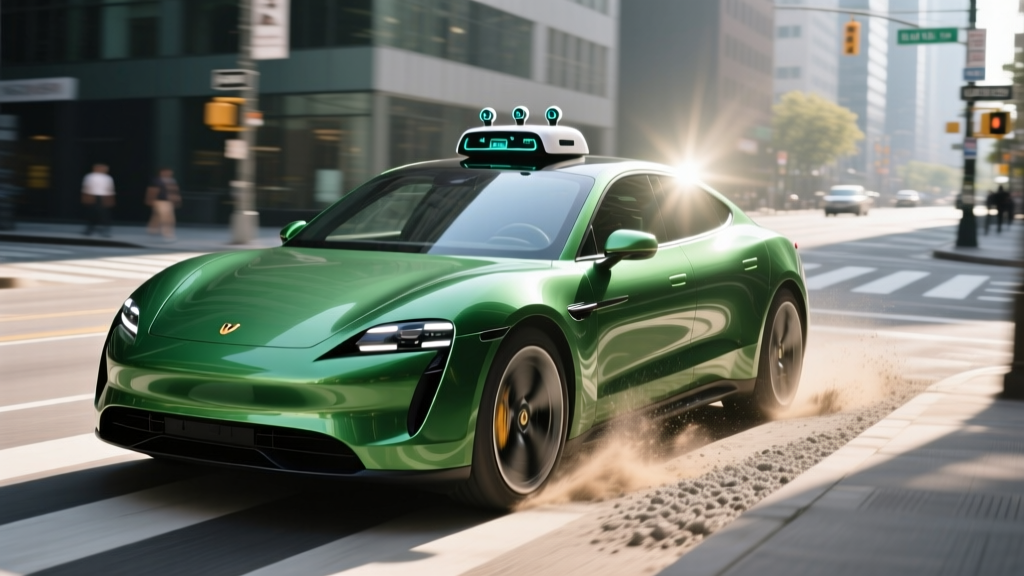
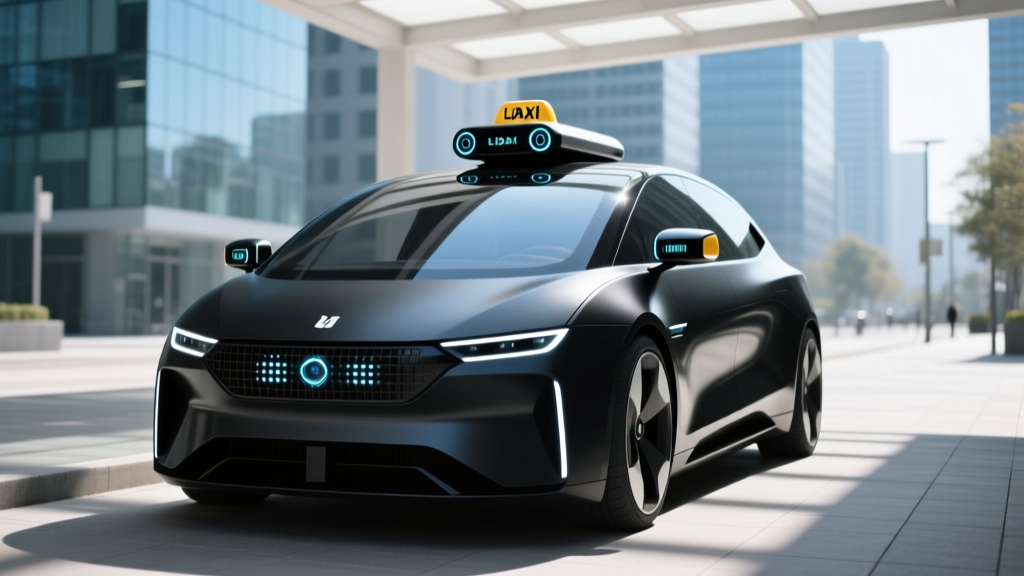
When enthusiasts hear "lidar detector," they often picture radar-detector-style dash gadgets from the early 2000s. But in the context of modern electric vehicles, a lidar detector refers to the light detection and ranging (lidar) sensors integrated into a vehicle's advanced driver-assistance system (ADAS). These sensors emit pulsed laser light and measure the time it takes for reflections to return, building a high-resolution 3D point cloud of the vehicle's surroundings up to 200+ meters away.
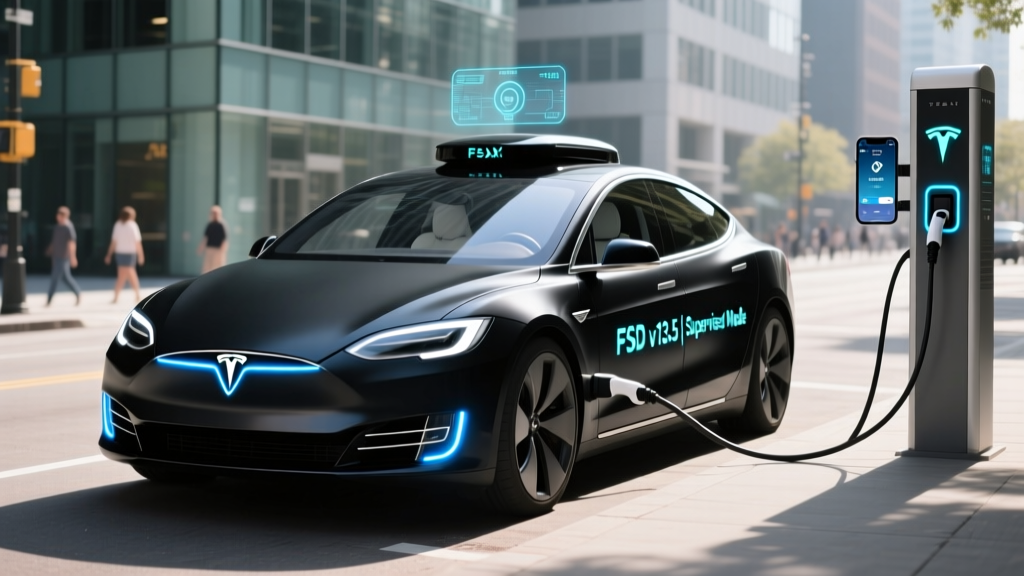
Unlike cameras (which rely on ambient light and can struggle in glare or darkness) and radar (which excels at velocity detection but offers lower spatial resolution), lidar provides precise depth perception regardless of lighting conditions. In 2026, lidar detectors are a core component of sensor-fusion architectures used by several major automakers — though notably not Tesla, which continues to rely on its camera-only "Tesla Vision" approach.
The practical result: vehicles equipped with lidar-augmented ADAS can more reliably detect stationary obstacles, construction-zone barriers, debris, and pedestrians at distance — particularly in challenging conditions like direct sun glare, tunnel exits, or poorly marked roads.
Every consumer ADAS system available for purchase in 2026 — including those using lidar — is classified as SAE Level 2. This means the system can manage steering, acceleration, and braking simultaneously, but the driver must remain fully engaged, hands on or near the wheel, and eyes on the road at all times. The vehicle does not handle all driving scenarios, and the human driver is legally responsible. Only robotaxi services like Waymo operate at Level 4, and those are not consumer-purchasable vehicles.
How Lidar Sensor Fusion Works Technically
Modern lidar-equipped ADAS stacks combine data from multiple sensor types in a process called sensor fusion. Here's how the typical architecture breaks down:
- Lidar (1-5+ units): Generates a 3D point cloud with centimeter-level depth accuracy. Common units include roof-mounted long-range lidar (150-250m) and corner-mounted short-range units for intersection and lane-change awareness.
- Cameras (8-12 units): Provide color, texture, and signage recognition. Forward-facing units handle lane-keeping; surround cameras cover blind spots.
- Radar (3-5 units): Excels at detecting object velocity and performs reliably in rain, fog, and snow where lidar and cameras degrade.
- Ultrasonic sensors (8-12 units): Short-range parking and low-speed obstacle detection.
- High-definition maps + GPS/IMU: Provide road-geometry context and precise vehicle localization.
The vehicle's central compute platform — often an NVIDIA DRIVE Orin or Qualcomm Snapdragon Ride chip delivering 200-500+ TOPS (trillions of operations per second) — fuses these inputs in real time to build a unified environmental model. Lidar's contribution is particularly valuable for classifying stationary objects that camera-only systems sometimes misidentify or miss entirely.
Which EVs Use Lidar-Based ADAS in 2026?
Lidar adoption varies significantly by manufacturer. Here's a brand-by-brand breakdown of how major EV makers name, price, and deploy their lidar-augmented (or lidar-free) driver-assist systems:
| Brand / System | Lidar? | System Name | Availability | Cost (2026) |
|---|---|---|---|---|
| Mercedes-Benz | Yes (1 roof-mounted) | DRIVE PILOT (Level 3, limited) / Active Distance Assist DISTRONIC (Level 2) | EQS, EQE, S-Class | $2,500 option / DRIVE PILOT: $5,000 + subscription |
| Volvo / Polestar | Yes (1 Luminar roof-mounted) | Pilot Assist with LiDAR | EX90, Polestar 3 | Included on Ultra trims (~$5,000 package on lower trims) |
| Lotus | Yes (4 units) | Lotus Pilot | Eletre, Emeya | Standard on all trims |
| Lucid | Yes (1 roof-mounted) | DreamDrive Pro | Air (all trims) | Included standard |
| GM (Cadillac/Chev) | No (radar + camera + HD maps) | Super Cruise | Lyriq, Blazer EV, Silverado EV, Celestiq | $2,200/yr subscription after 3-yr trial |
| Ford | No (radar + camera + HD maps) | BlueCruise | Mustang Mach-E, F-150 Lightning | $75/mo or $800/yr after trial |
| Tesla | No (camera-only Tesla Vision) | Autopilot / FSD (Supervised) | All models | FSD: $8,000 one-time or $99/mo |
| BMW | No (radar + camera + ultrasonic) | Driving Assistant Professional | iX, i7, i5 | $1,700 option package |
Real-World Capabilities: Where Lidar Detectors Excel
In real-world driving, lidar-equipped ADAS systems demonstrate measurable advantages in specific scenarios that camera-only or radar-primary systems handle less confidently:
- Stationary object detection at highway speed: Lidar's 3D point cloud identifies a stalled vehicle, fallen debris, or construction barrier at 150+ meters, giving the system 4-5 seconds of additional reaction time at 70 mph compared to camera systems that may misclassify the object.
- Low-light and glare conditions: Exiting a bright tunnel into shadow, or driving into direct sunset glare, lidar maintains consistent depth perception while cameras can be temporarily blinded.
- Pedestrian and cyclist classification at night: Lidar detects the shape and distance of a pedestrian in dark clothing at 80+ meters, even on unlit roads.
- Complex urban intersections: Short-range corner lidars (on vehicles like the Lotus Eletre) provide 360° close-proximity awareness that ultrasonic sensors alone cannot match at speeds above 15 mph.
| Capability | Lidar + Camera + Radar | Camera + Radar Only | Camera Only (Tesla Vision) |
|---|---|---|---|
| Highway lane centering | Excellent | Excellent | Good–Excellent |
| Stationary obstacle detection (70 mph) | Excellent | Good | Fair–Good |
| Direct sun glare resilience | Excellent | Fair | Poor–Fair |
| Heavy rain / fog performance | Good (radar compensates) | Good (radar compensates) | Poor |
| Traffic sign recognition | Excellent (camera) | Excellent (camera) | Excellent (camera) |
| Night pedestrian detection (unlit road) | Excellent | Fair–Good | Fair |
| Hands-free highway (mapped roads) | Yes (Mercedes, Volvo*) | Yes (Super Cruise, BlueCruise) | No (FSD Supervised requires hands) |
*Volvo EX90's lidar-enhanced Pilot Assist supports hands-off on select highways with driver-monitoring camera confirmation; eyes-on is still required.
Limitations: What Lidar-Equipped ADAS Cannot Do
- Driver supervision is mandatory. You must remain alert, eyes on the road, and ready to take over immediately. All Level 2 systems monitor driver engagement via steering-wheel torque sensors or cabin-facing cameras.
- Severe weather degrades all sensors. Heavy snow accumulation on the lidar dome, ice buildup, or dense fog will reduce range and may cause the system to disengage. Keep sensor surfaces clean.
- Construction zones and temporary lane shifts may confuse the system even with lidar. HD map data can become stale, and temporary barriers may not match expected road geometry.
- Unmapped roads. Hands-free features (where available) are geofenced to pre-mapped divided highways. Surface streets, rural roads, and parking lots require full manual control with standard adaptive cruise/lane-keep assist.
- Edge cases persist: Emergency vehicles stopped at odd angles, unusual road debris shapes, animals partially in the roadway, and faded or missing lane markings remain challenging scenarios.
- Lidar cannot read traffic lights or signs. That task still falls to cameras. Lidar provides geometry and depth, not color or text recognition.
Cost Breakdown: Purchase, Subscription, and What's Included
The cost of lidar-equipped ADAS varies dramatically by manufacturer. Some brands bundle lidar hardware into the vehicle price; others charge premiums for the software that leverages it:
| System | Hardware Cost | Software/Subscription | 5-Year Total Cost |
|---|---|---|---|
| Volvo EX90 Pilot Assist (lidar) | Included (Ultra trim) / ~$5,000 (Plus trim) | No subscription required | $0–$5,000 |
| Mercedes DRIVE PILOT (lidar, Level 3 limited) | $5,000 option | ~$250/yr subscription | ~$6,250 |
| Lucid DreamDrive Pro (lidar) | Standard (included in MSRP) | No subscription | $0 |
| GM Super Cruise (no lidar) | $2,200 option package | $25/mo after 3-yr trial | ~$2,800 |
| Ford BlueCruise (no lidar) | Included on select trims | $75/mo or $800/yr after trial | $0–$2,400 |
| Tesla FSD Supervised (no lidar) | $8,000 one-time | Or $99/mo | $5,940–$8,000 |
Lidar vs. Camera-Only: The Industry Debate
The most consequential technical disagreement in consumer ADAS is whether lidar is necessary. Tesla CEO Elon Musk has famously called lidar a "crutch" and insists that camera-only systems, powered by advanced neural networks, can match or exceed lidar-based perception. Meanwhile, NHTSA has not mandated any specific sensor modality, leaving the engineering choice to manufacturers.
The data paints a nuanced picture. Tesla's FSD (Supervised) has accumulated billions of real-world miles and handles a remarkably wide range of scenarios — but IIHS research has shown that camera-only systems can struggle with certain stationary-object edge cases that lidar-equipped vehicles handle more consistently. Volvo's decision to equip the EX90 with a roof-mounted Luminar lidar was driven partly by internal testing showing a measurable reduction in severe-collision risk when lidar data was fused with camera and radar inputs.
For buyers, the practical takeaway: lidar is not a guarantee of superiority in every scenario, but it provides a redundant sensing layer that adds margin in the most safety-critical edge cases — particularly high-speed encounters with stationary objects in suboptimal lighting.
Frequently Asked Questions
Can I buy an aftermarket lidar detector for my EV?
No. Consumer-grade lidar sensors are not available as aftermarket add-ons. The lidar units in vehicles like the Volvo EX90, Lucid Air, and Mercedes EQS are deeply integrated into the vehicle's compute architecture, wiring harness, and calibration systems. Retrofitting is not feasible or legal. The term "lidar detector" in an automotive context refers to factory-installed systems only.
Is lidar-based ADAS truly self-driving?
No. Every lidar-equipped consumer vehicle sold in 2026 operates at SAE Level 2 (with Mercedes' DRIVE PILOT offering a limited Level 3 mode on specific German autobahn sections under 40 mph, where the driver can look away but must be ready to resume). In the US, all systems require active driver supervision. You are the driver — the system is an assistant.
Does lidar work in heavy rain or snow?
Lidar performance degrades in heavy precipitation. Water droplets and snowflakes scatter the laser pulses, reducing effective range. However, sensor-fusion systems compensate by relying more heavily on radar (which penetrates precipitation well) in these conditions. The vehicle will alert you if sensor degradation is severe enough to require manual driving. Always keep the lidar dome and camera housings clear of ice, mud, and debris.
Which EV has the best lidar-equipped ADAS in 2026?
Among lidar-equipped production EVs, the Volvo EX90 and Lucid Air offer the most comprehensive lidar-fusion implementations standard or widely available. The EX90's Luminar lidar provides up to 250m range and is backed by Volvo's long safety pedigree. The Lucid Air's DreamDrive Pro uses a single roof-mounted lidar combined with 32 total sensors. For hands-free highway driving without lidar, GM's Super Cruise remains highly rated on mapped roads, and Ford's BlueCruise covers over 130,000 miles of divided highway.
Will lidar become standard on all EVs eventually?
Industry trends suggest lidar adoption will grow, but it won't be universal. Lidar unit costs have dropped from over $75,000 in 2017 to approximately $500-$1,000 per unit in 2026 (per Luminar and Innoviz pricing disclosures), making it feasible for mid-priced vehicles. However, Tesla's continued success with camera-only approaches and the effectiveness of radar+camera fusion in systems like Super Cruise demonstrate that lidar is one viable path, not the only one. Expect lidar to become common on vehicles above $50,000 MSRP and optional on many mainstream models through 2028.