If you've ever wondered whether your Tesla's Autopilot is truly "self-driving" or how Waymo's driverless taxis actually work, the answer lies in a standardized framework called the SAE levels of automation. Understanding the levels of autonomous vehicles is essential for any EV buyer evaluating driver-assist features or anyone curious about hailing a robotaxi. This guide breaks down every level with real-world context, current service availability, safety data, and the technology powering each tier.
The SAE Levels of Autonomous Vehicles: A Complete Breakdown
The Society of Automotive Engineers (SAE International) defines six levels of driving automation, from Level 0 (no automation) to Level 5 (full automation in all conditions). The distinction that matters most to consumers is between Level 2 — where the driver must remain fully engaged — and Level 4, where the vehicle operates without any human driver in defined conditions. Let's map each level precisely.
| SAE Level | Name | Who Drives? | Current Examples | Driver Required? |
|---|---|---|---|---|
| Level 0 | No Automation | Human | Basic cruise control, warnings only | Yes, always |
| Level 1 | Driver Assistance | Human + one assist | Adaptive cruise OR lane-keeping | Yes, always |
| Level 2 | Partial Automation | Human + combined assist | Tesla Autopilot, GM Super Cruise, Ford BlueCruise, Toyota Safety Sense | Yes — hands on or eyes on |
| Level 3 | Conditional Automation | System (limited) | Mercedes DRIVE PILOT (approved in NV/CA), Honda Legend (Japan) | No — but must be ready to take over |
| Level 4 | High Automation | System (geofenced) | Waymo One, Zoox, Cruise (limited restart) | No — no driver present |
| Level 5 | Full Automation | System (everywhere) | None in production | No — no steering wheel needed |
Where Can You Actually Use a Robotaxi Right Now?
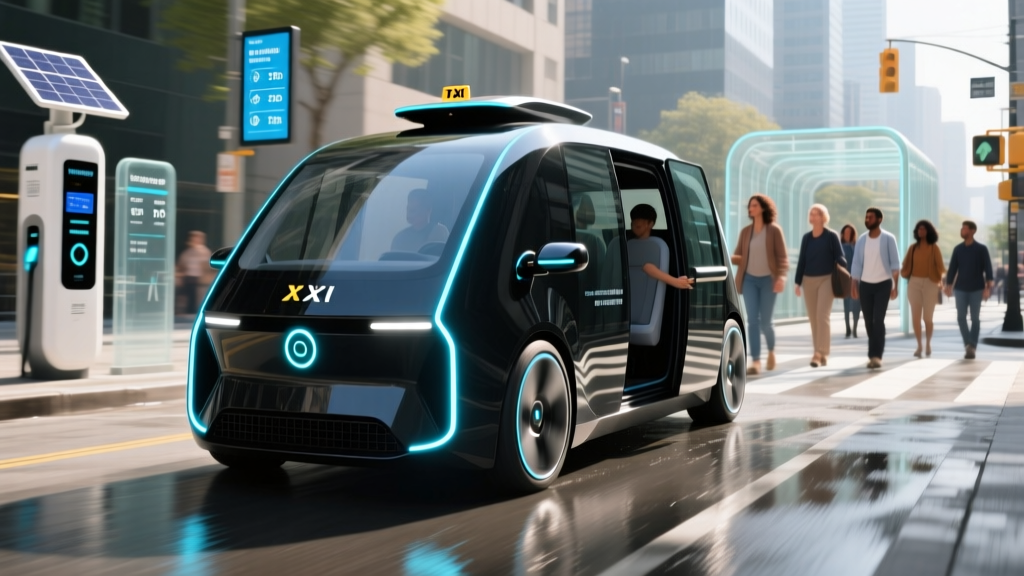
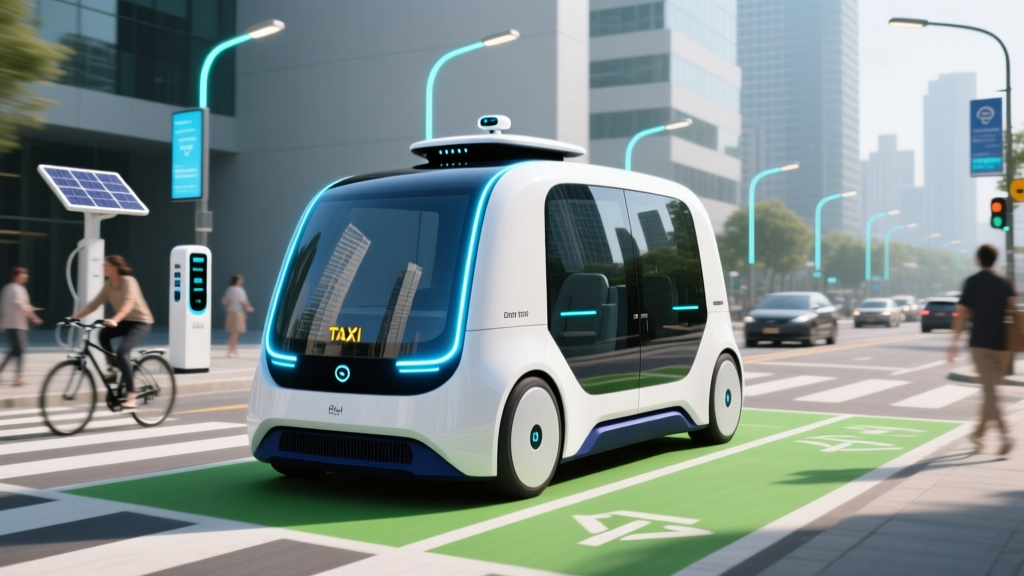
Level 4 robotaxi services are operational in a handful of U.S. cities, with availability expanding cautiously after the industry's recalibration following Cruise's 2023 safety incident in San Francisco. Here's where you can hail a truly driverless ride as of 2026.
| Service | Operator | Cities (Driverless) | Hours | Vehicle |
|---|---|---|---|---|
| Waymo One | Waymo (Alphabet) | Phoenix metro, San Francisco, Los Angeles, Austin (partial) | 24/7 in Phoenix & SF; limited hours in LA/Austin | Jaguar I-PACE (custom-equipped), Zeekr RT (newer fleet) |
| Zoox | Amazon/Zoox | Las Vegas (select corridors), Foster City, CA (testing) | Limited pilot hours | Zoox purpose-built carriage (bidirectional, no steering wheel) |
| Cruise | GM/Cruise | Phoenix (limited restart), Dallas (testing) | Restricted daytime hours | Chevrolet Bolt EV (equipped), Origin (paused) |
| Motional (Hyundai/Aptiv) | Hyundai | Las Vegas (via Lyft partnership, safety driver present) | Select hours | Hyundai Ioniq 5 robotaxi |
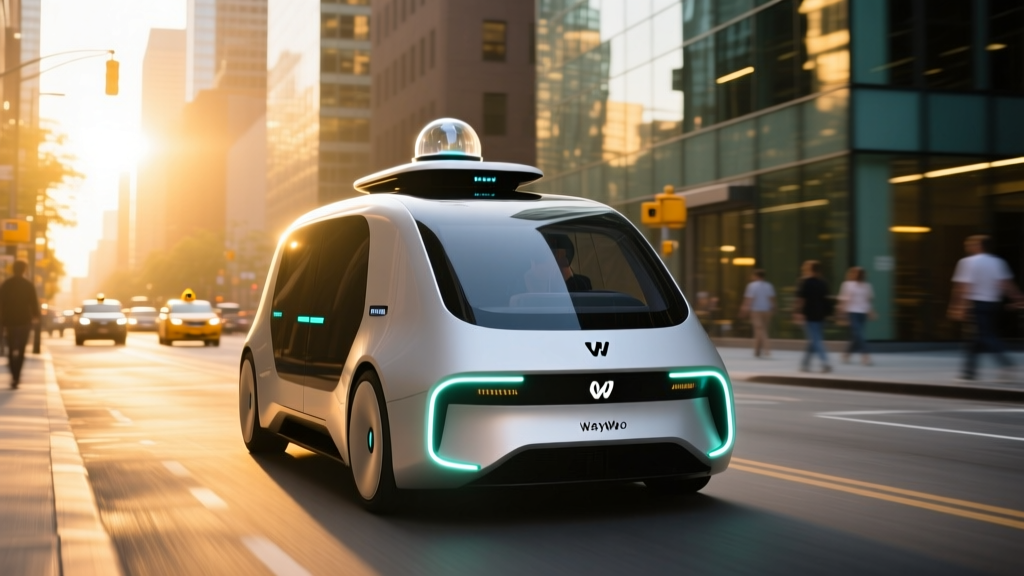
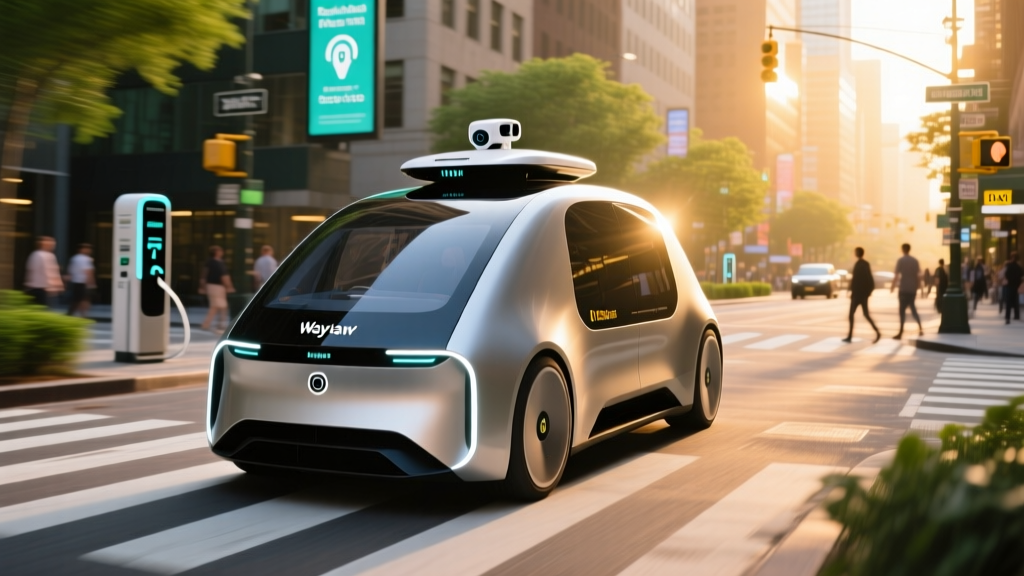
Waymo One remains the most accessible driverless service. In Phoenix, the service covers roughly 225 square miles including Chandler, Tempe, Mesa, and parts of Scottsdale. San Francisco coverage spans most of the city proper. Los Angeles operations cover downtown, Hollywood, West Hollywood, Santa Monica, and Venice. Austin launched in late 2024 with gradual expansion. To use Waymo One, download the app, enter your destination, and a vehicle arrives — typically within 3–7 minutes in core coverage areas.
Zoox's purpose-built vehicle, which has no steering wheel and seats four passengers facing each other, began limited commercial rides in Las Vegas in late 2024. The service area is a defined corridor on the Strip and surrounding streets. Access has been via waitlist and invitation.
Robotaxi Pricing vs. Uber and Lyft: What Does a Ride Cost?
Robotaxi pricing varies by operator, city, and time of day, but the general pattern is that robotaxis aim to undercut traditional rideshare on comparable routes while building market share. Here's how costs compare for a typical 5-mile urban trip.
| Service | Typical 5-Mile Fare | Per-Mile Rate (approx.) | Surge Pricing? | Tips? |
|---|---|---|---|---|
| Waymo One | $10–$16 | $1.50–$2.20/mi | Rare; occasional demand pricing | In-app tipping available (no driver to receive it — goes to cleaning/maintenance crews) |
| UberX (comparison) | $12–$22 | $1.80–$3.00/mi | Yes, frequent during peak | Expected (15–20%) |
| Lyft Standard (comparison) | $11–$20 | $1.70–$2.80/mi | Yes, Prime Time pricing | Expected (15–20%) |
| Waymo (promotional) | $5–$8 (first rides / promos) | Discounted | No | No |
Waymo frequently offers promotional pricing for new riders, with initial rides sometimes as low as $5. On a standard basis, Waymo fares tend to land in the lower-middle range between UberX and Uber Comfort — competitive but not dramatically cheaper. The real savings come from the absence of surge pricing in most markets and no tipping expectation. For a daily commuter making a 5-mile round trip, Waymo could save $30–$60 per month compared to Uber with surge and tips factored in.
How Safe Are Robotaxis? Examining the Real Data
Safety is the most scrutinized aspect of autonomous vehicles, and the data tells a nuanced story. Robotaxis are not flawless, but aggregated data suggests they perform comparably to — and in some metrics better than — human drivers in their operational domains.
- Total autonomous miles driven: Over 40 million fully driverless miles (Waymo's 5th-generation fleet alone surpassed 30 million driverless miles by mid-2025, per Waymo's safety reports)
- Injury-causing crash rate: Waymo's driverless fleet showed an 85% reduction in injury-causing crash rates compared to human benchmarks in the same geographies, according to a study published by the Insurance Institute for Highway Safety (IIHS) and Waymo's own actuarial analysis
- Property-damage-only crashes: Approximately 57% lower than human drivers per million miles
- Contact incidents: Mostly low-speed (under 10 mph), involving stationary objects or minor sideswipes in complex urban environments
Source: Waymo Safety Reports, IIHS analysis, NHTSA Standing General Order crash data
The National Highway Traffic Safety Administration (NHTSA) requires all operators of automated driving systems to report crashes under a Standing General Order. This data is publicly available and shows that robotaxi incidents do occur — but the severity profile is notably different from human-driven crashes. Robotaxi crashes are overwhelmingly low-speed, in dense urban traffic, and rarely involve serious injuries.
The Cruise incident in October 2023 — where a pedestrian was struck by a human-driven vehicle and then run over by a Cruise robotaxi in San Francisco — was a pivotal moment. It led to Cruise suspending all driverless operations nationwide for months, losing its California DMV permit temporarily, and undergoing a comprehensive safety review. Cruise has since restarted limited operations with safety drivers and gradually in Phoenix, but has not regained its prior scale. This incident underscored that Level 4 systems can fail in edge cases involving unpredictable multi-actor scenarios.
The Technology Stack: Lidar, Cameras, and Sensor Fusion
Robotaxi technology stacks differ significantly from consumer Level 2 systems, and the debate over sensor approaches remains one of the defining technical divides in autonomous driving.
Waymo: Multi-Sensor Fusion
Waymo's 5th-generation and 6th-generation (Zeekr-based) vehicles use a combination of:
- Lidar: Custom-built roof-mounted units providing 360° 3D point clouds with range up to 500+ meters. Lidar is the backbone of Waymo's perception, providing precise distance measurements regardless of lighting.
- Cameras: High-resolution surround cameras (8+ units) for object classification, traffic light state detection, and lane marking identification.
- Radar: Multiple radar units for velocity detection of moving objects, functioning in rain and fog where lidar and cameras degrade.
- Audio sensors: External microphones to detect sirens from emergency vehicles.
- HD Maps: Pre-built centimeter-accurate maps of every operational road, updated continuously. The vehicle localizes itself within these maps in real time.
Tesla FSD (Supervised): Camera-Only (Level 2)
Tesla uses a vision-only approach — cameras plus neural networks — with no lidar or radar (radar was removed starting in 2021). This is a Level 2 system requiring driver supervision. Tesla's argument is that cameras mimic human vision and that neural networks can learn to extract depth and velocity from image data alone. The trade-off: camera-only systems are more susceptible to degradation in heavy rain, fog, direct sun glare, and low-light conditions. As of 2026, Tesla FSD (Supervised) remains Level 2 and has not achieved regulatory approval for driverless operation anywhere.
Zoox: Purpose-Built Sensor Suite
Zoox's carriage vehicle integrates 12 cameras, 12 lidar units, and multiple radar modules providing overlapping 360° coverage with redundancy. The vehicle is designed from the ground up as autonomous — bidirectional (no designated front or back), with four-wheel steering and a top speed of 75 mph. Every sensor has redundant backup.
The lidar-versus-camera debate has practical implications. Lidar provides direct depth measurement independent of lighting, which is why every Level 4 operator currently uses it. Camera-only approaches are cheaper and may eventually achieve Level 4, but as of 2026, no camera-only system has received regulatory approval for driverless commercial operation.
Regulatory Landscape: Who Approves Robotaxi Operations?
Autonomous vehicle regulation in the United States is a patchwork of federal and state authority, and understanding who controls what is essential for interpreting where robotaxis can operate.
- Federal (NHTSA): Sets vehicle safety standards (FMVSS) and investigates crashes. NHTSA does not "approve" autonomous driving systems for deployment but can issue recalls, demand crash data, and investigate safety defects. The NHTSA Standing General Order requires all ADS-equipped vehicles to report crashes within 24 hours.
- State DMVs: Most states require permits or licenses for testing and commercial deployment. California's DMV issues testing permits and deployment permits (separate approvals). Arizona has taken a permissive approach with minimal state-level barriers, which is why Phoenix became Waymo's first commercial market. Nevada, Texas, and a growing list of states have passed AV-enabling legislation.
- State Public Utilities Commissions (PUCs): In California, the CPUC must also approve commercial passenger service — adding a second regulatory gate beyond the DMV.
- Local governments: Cities can restrict AV operations through local ordinances, speed limits, and zone restrictions. San Francisco's Board of Supervisors has at times pushed back against expansion, citing traffic disruption concerns.
As of 2026, 30+ states have enacted AV-related legislation, but there is no comprehensive federal framework governing commercial robotaxi deployment. This means operators must navigate state-by-state approval processes, which is a major factor in the slow geographic expansion of services.
Current Limitations: What Robotaxis Cannot Do
Level 4 robotaxis are impressive within their operational design domain (ODD), but they have well-documented limitations that constrain where and when they can operate.
- Geofencing: Every current Level 4 service operates within a mapped boundary. Drive to the edge of the service area and the vehicle will not proceed. Waymo's Phoenix coverage, while large, does not extend to exurbs or rural roads. San Francisco coverage excludes certain steep hills and unmapped construction zones.
- Weather: Heavy rain, snow, fog, and ice significantly degrade sensor performance. Waymo in Phoenix benefits from 300+ days of clear weather per year. Operations in cities with harsh winters (Chicago, Boston, Minneapolis) remain years away for driverless service. Even moderate rain can reduce lidar range and camera clarity, prompting more conservative driving behavior or service suspension.
- Construction zones: Unexpected lane closures, temporary barriers, and flaggers can confuse perception systems. Most operators have improved construction-zone handling through updated mapping and machine learning, but novel configurations still cause the vehicle to stop and request remote assistance.
- Emergency vehicles: While robotaxis can detect sirens and pull over, complex emergency scenes with multiple vehicles, responders on foot, and dynamic lane blocking remain challenging.
- Unprotected left turns: Crossing oncoming traffic at uncontrolled intersections is one of the most difficult maneuvers for autonomous systems. Waymo has improved significantly here, but the vehicle may take longer than a human driver would to find a gap, sometimes frustrating human drivers behind it.
- Pedestrian-dense areas: Crowded sidewalks with pedestrians stepping into the street, jaywalkers, and cyclists weaving between lanes require constant prediction. Robotaxis tend to drive more conservatively than humans in these scenarios, which can mean slower trips.
- No highway merging at high speed (some operators): Zoox's carriage vehicle has a 75 mph top speed, limiting highway use. Waymo handles highway segments in Phoenix and SF, but some operators restrict freeway operation.
Level 2 vs. Level 4: Why the Confusion Persists
The marketing language around autonomous driving has created widespread confusion. When a manufacturer uses terms like "Full Self-Driving" for a Level 2 system, consumers reasonably — but incorrectly — assume the car can drive itself. Here's the practical difference:
| Attribute | Level 2 (Tesla FSD, Super Cruise, BlueCruise) | Level 4 (Waymo One, Zoox) |
|---|---|---|
| Driver present? | Yes, required and legally responsible | No — vehicle is empty up front |
| Eyes on road? | Yes (most systems); some allow eyes-off with monitoring (Super Cruise) | N/A — no driver seat |
| Operational area | Any road (highway-assist) or mapped highways (Super Cruise/BlueCruise) | Strictly geofenced urban zones |
| Liability in a crash | Driver is liable | Operator (Waymo/Zoox) is liable |
| Available to buy? | Yes, on consumer vehicles | No — ride-hail service only |
| Weather limits | System may disengage in rain/snow; driver takes over | Service may suspend; no trip offered |
If you're shopping for an EV with advanced driver-assist, every system available — including Tesla FSD (Supervised) at its current $8,000 add-on or subscription price — requires your full attention. These are sophisticated cruise control and lane-keeping systems, not autonomous vehicles. The SAE level is the clearest way to cut through marketing and understand exactly what you're getting.
Frequently Asked Questions
Where can I use a robotaxi service right now?
Waymo One is the most widely available driverless robotaxi, operating in Phoenix, San Francisco, Los Angeles, and Austin. Zoox has a limited pilot in Las Vegas. Cruise is rebuilding with restricted operations in Phoenix. Motional offers rides with a safety driver in Las Vegas via Lyft. No robotaxi service is available in most U.S. cities — expansion is gradual and city-by-city.
How much does a robotaxi cost vs. Uber or Lyft?
Waymo One fares typically range from $10–$16 for a 5-mile urban trip, comparable to or slightly below UberX ($12–$22) and Lyft Standard ($11–$20) on the same route. The biggest savings come from the absence of surge pricing and no tipping expectation. Promotional pricing for new users can bring fares as low as $5.
How safe are robotaxis compared to human drivers?
Waymo's driverless fleet has logged over 40 million autonomous miles. Actuarial analysis and IIHS-reviewed data show an approximately 85% reduction in injury-causing crash rates compared to human benchmarks in the same cities. Most robotaxi incidents are low-speed, property-damage-only events. However, the Cruise pedestrian incident in San Francisco (October 2023) demonstrated that serious edge-case failures can occur. NHTSA crash data is publicly available under the Standing General Order.
What are the current limitations of robotaxis?
Geofencing restricts operation to mapped zones. Heavy rain, snow, and fog can suspend service. Construction zones, unprotected left turns, and dense pedestrian areas cause conservative or delayed driving. Level 4 vehicles cannot operate outside their defined operational design domain — there is no Level 5 production system that works everywhere in all conditions.
Is Tesla FSD truly self-driving?
No. Tesla Full Self-Driving (Supervised) is an SAE Level 2 driver-assist system. The driver must remain engaged, monitor the road, and be prepared to take over at any moment. The "Supervised" label Tesla added reflects this reality. No Tesla vehicle has received regulatory approval for driverless operation. FSD is a capable highway and city assist feature, but it is not autonomous driving in the Level 4 sense.
Can I buy a Level 4 autonomous vehicle?
No. Level 4 vehicles from Waymo, Zoox, and Cruise are not available for consumer purchase. They are purpose-built or heavily modified fleet vehicles operated as ride-hail services. The only Level 3 system available to consumers is Mercedes-Benz DRIVE PILOT, approved for use at speeds up to 40 mph on suitable highways in Nevada and California — and even that requires the driver to be present and ready to resume control when prompted.