What "Level 5 Self-Driving" Actually Means — and Where We Really Are
The phrase "Level 5 self-driving" gets tossed around in headlines and investor decks, but for anyone actually trying to hail a driverless ride in 2026, the distinction between SAE automation levels is the difference between a car that steers itself on a highway and one that can navigate a snow-covered construction zone in downtown Pittsburgh without any human input whatsoever.
The SAE International J3016 standard defines six levels of driving automation, and understanding them is essential before you evaluate any robotaxi claim.
| Level | Name | Who Drives? | Where Today | Example |
|---|---|---|---|---|
| 0 | No Automation | Human does everything | Legacy vehicles | 2005 Honda Civic |
| 1 | Driver Assistance | Human + one system (steering OR speed) | Most new cars | Adaptive cruise control |
| 2 | Partial Automation | Human supervises steering AND speed | Widely available | Tesla Autopilot, GM Super Cruise, Ford BlueCruise |
| 3 | Conditional Automation | System drives in narrow conditions; human must take over on request | Limited deployment | Mercedes Drive Pilot (selected highways, ≤40 mph) |
| 4 | High Automation | System drives fully within a defined ODD (geofence, weather, speed) | Commercial robotaxis | Waymo One, Zoox |
| 5 | Full Automation | System drives everywhere, all conditions, no human needed | Does not exist commercially | None — still theoretical |
The bottom line: No production vehicle or commercial service in 2026 operates at SAE Level 5. The robotaxis you can actually hail today — Waymo, Zoox, and a handful of others — are Level 4 systems. They are genuinely driverless within their operational design domain (ODD), but they cannot handle every road, every weather condition, or every city. That distinction matters for safety expectations, regulatory approval, and your wallet.
Key Distinction: Tesla's Full Self-Driving (Supervised) and similar systems from other automakers are SAE Level 2 driver-assist. The driver must remain engaged, monitor the road, and be ready to take over at any moment. These are not robotaxis and are not "self-driving" in the regulatory or technical sense.
Where Can You Actually Use a Robotaxi Right Now?
Level 4 robotaxi services are live and carrying paying passengers in a growing but still limited set of U.S. metro areas. Availability is geofenced — the vehicles operate within mapped zones and will not enter areas outside their approved ODD.
| Service | Operator | Live Cities | Service Hours | How to Ride |
|---|---|---|---|---|
| Waymo One | Waymo (Alphabet) | Phoenix (metro-wide), San Francisco, Los Angeles, Austin | 24/7 in Phoenix & SF; limited hours in LA/Austin | Waymo app (iOS/Android) |
| Zoox | Zoox (Amazon) | Las Vegas (strip corridor + downtown), Foster City, CA (limited) | Limited hours, invitation/early-access | Zoox app (restricted access) |
| Waymo (expansion) | Waymo | Announced: Atlanta, Miami (testing; not yet commercial) | N/A | N/A |
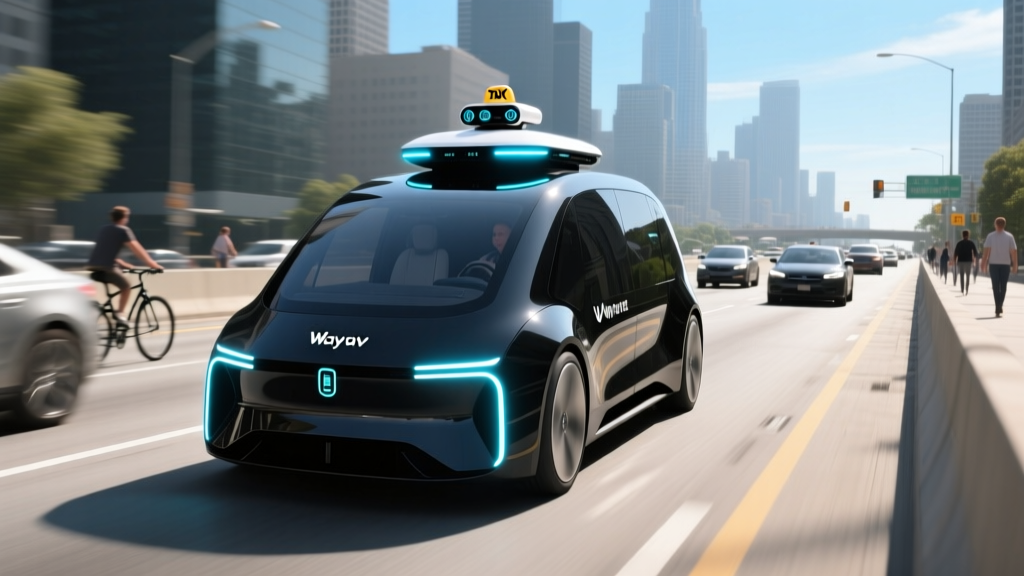
Where can I use a robotaxi service right now? If you live in or visit Phoenix, San Francisco, Los Angeles, or Austin, you can download the Waymo One app, set your pickup and drop-off within the geofenced zone, and be matched with a fully driverless vehicle — no human behind the wheel. Phoenix has the broadest coverage area, spanning much of the East Valley including Chandler, Tempe, Mesa, and Gilbert. San Francisco coverage extends across most of the city. Los Angeles and Austin zones are more limited but expanding.
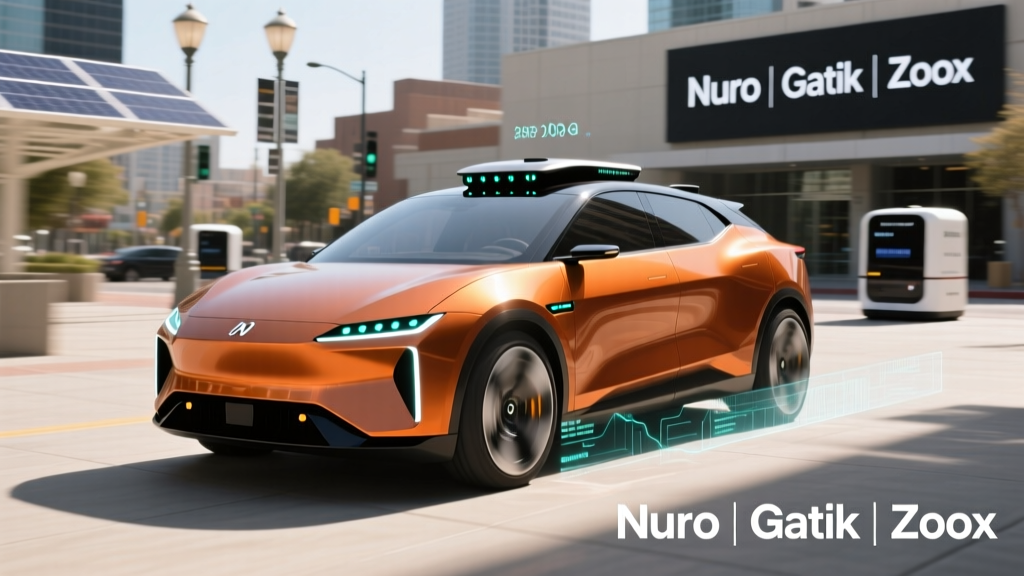
Zoox's purpose-built carriage-style vehicle (no steering wheel, bidirectional) operates in Las Vegas and has been conducting limited rides in Foster City, California, but public access remains restricted compared to Waymo.
Cruise, which previously operated in San Francisco and other cities, suspended commercial operations in late 2023 following a serious incident in San Francisco and has been slowly returning to testing with safety drivers. As of early 2026, Cruise has not resumed fully driverless commercial service. Always check the operator's official channels for the most current status.
Robotaxi Pricing: What Does a Driverless Ride Cost?
One of the most common questions from prospective riders: is a robotaxi cheaper than Uber or Lyft? The answer depends on distance, time of day, and city — but here's how the economics stack up in early 2026.
| Service | Base Fare | Per-Mile Rate | Est. Total (5 mi) | Surge Pricing? |
|---|---|---|---|---|
| Waymo One | ~$5.00 | ~$1.25/mi | ~$11–14 | Limited demand pricing; less volatile than rideshare |
| UberX | ~$3.50 | ~$1.10/mi | ~$9–12 | Yes — can 1.5x–3x during peak |
| Lyft Standard | ~$3.50 | ~$1.05/mi | ~$9–11 | Yes — Prime Time surges |
How much does it cost vs. Uber/Lyft? In most markets, Waymo One pricing is roughly comparable to UberX or Lyft Standard during non-peak hours — sometimes slightly higher, sometimes slightly lower. The key advantage is pricing predictability: Waymo does not currently employ the aggressive surge multipliers that rideshare platforms use during peak demand. A Friday-night airport run that might trigger 2.5x surge on Uber could be significantly cheaper on Waymo.
However, Waymo is not subsidized indefinitely. Alphabet has invested over $30 billion in Waymo's development, and current pricing likely does not reflect full operating costs including vehicle depreciation, remote fleet assistance, sensor maintenance, and insurance. Expect pricing to adjust upward as the service scales and moves toward profitability.
Tipping is not expected or accepted in Waymo vehicles. There is no driver to tip — a cultural shift that some riders find awkward and others welcome.
How Safe Are Robotaxis? The Real Data
Safety is the most scrutinized — and most politicized — aspect of autonomous driving. Both proponents and skeptics cherry-pick incidents. Here's what the available data actually shows.
Waymo Safety Data — Key Figures
- Cumulative driverless miles: Over 10 million fully autonomous (no safety driver) miles as of mid-2025, continuing to grow. Source: Waymo Safety Reports
- Claim rate vs. human benchmarks: Waymo's internal analysis (peer-reviewed methodology) showed a 76% reduction in injury-causing crash involvement compared to human benchmarks in comparable urban environments
- Contact rate: Waymo reported approximately 0.41 police-reported crashes per million autonomous miles in its Phoenix and SF operations — compared to roughly 1.5–2.0 per million for human drivers in similar urban settings (NHTSA data)
- Severity profile: The vast majority of robotaxi-involved incidents have been low-speed rear-end or side-swipe contacts, often initiated by the other (human-driven) vehicle
How safe are robotaxis (real data)? The available evidence suggests that Level 4 robotaxis in their approved ODDs have a lower crash-involvement rate than human drivers in comparable urban environments. However, several caveats are critical:
- Sample size limitations: Even 10+ million miles is a fraction of the ~3.2 trillion miles driven annually by Americans. Rare edge-case scenarios may not yet be fully represented in the data.
- ODD filtering: Robotaxis operate in mapped, geofenced areas and avoid the most challenging conditions (heavy snow, unmapped construction zones). Human crash data includes all conditions. This makes direct comparison imperfect.
- Reporting bias: Robotaxi incidents receive outsized media attention and regulatory scrutiny. A minor fender-bender involving a Waymo makes national news; the same incident between two human drivers goes unreported.
- The Cruise incident: In October 2023, a Cruise robotaxi in San Francisco dragged a pedestrian who had been thrown into its path by another vehicle. The incident — and Cruise's subsequent handling of data disclosure — led to permit suspension by the California Public Utilities Commission (CPUC) and a nationwide operational pause. This underscored that Level 4 autonomy, while statistically promising, still faces edge-case failures with serious consequences.
The National Highway Traffic Safety Administration (NHTSA) requires manufacturers and operators to report certain crashes involving ADS-equipped vehicles through Standing General Order 2021-01. This data is publicly queryable and provides the most comprehensive federal crash dataset for autonomous vehicles.
Under the Hood: How Robotaxi Technology Works
Every Level 4 robotaxi relies on a sensor stack, high-definition mapping, and real-time decision-making software. The specific architecture varies significantly between operators.
Waymo (6th-Generation Driver)
- LiDAR: Multiple proprietary LiDAR units providing 360° 3D point-cloud mapping; effective range exceeding 300 meters
- Cameras: High-resolution surround cameras for lane detection, traffic signal recognition, pedestrian classification
- Radar: Imaging radar for velocity detection and adverse-weather penetration
- Audio sensors: External microphones to detect sirens from emergency vehicles
- HD Maps: Centimeter-precision pre-mapped routes within the geofence; the vehicle localizes against this map in real time
- Compute: Custom Waymo compute platform with redundant processing paths
Zoox (Purpose-Built Vehicle)
- Symmetrical sensor layout: Identical sensor pods on all four corners, providing redundant 360° coverage with no blind spots
- LiDAR + cameras + radar: Multi-modal fusion stack similar to Waymo but integrated into a ground-up vehicle design (not a retrofitted production car)
- Bidirectional driving: The vehicle has no steering wheel and can travel in either direction — useful for dead-end streets and tight urban maneuvers
- Speed: Limited to 75 mph; primarily designed for dense urban corridors
Tesla (FSD Supervised — Level 2, Not a Robotaxi)
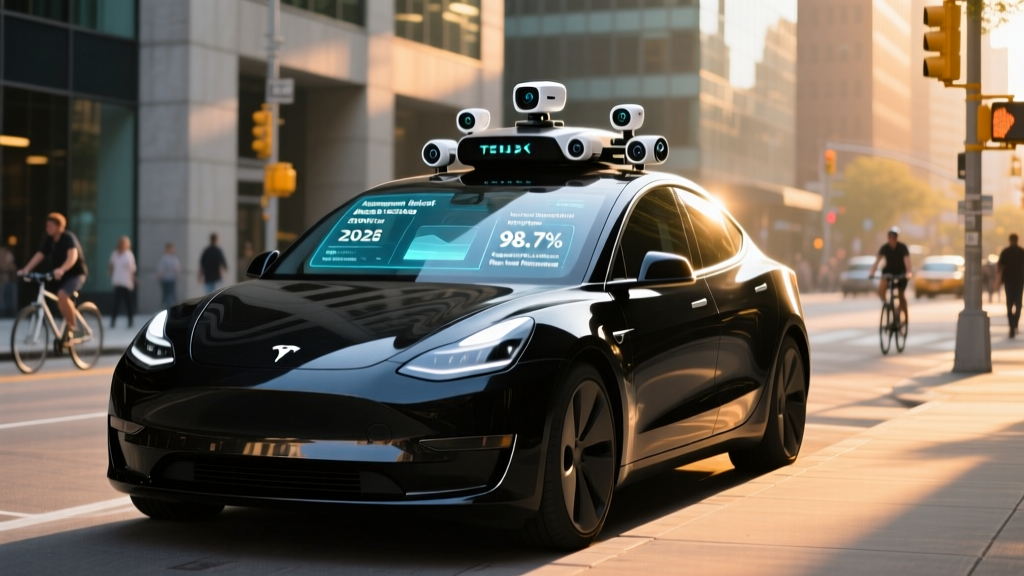
- Camera-only (Tesla Vision): Eight surround cameras, no LiDAR, no radar (removed in 2021+ vehicles)
- Neural-network-based: End-to-end deep learning for perception and planning
- No HD maps: Relies on real-time perception rather than pre-mapped routes
- Classification: SAE Level 2 — requires continuous driver supervision. Not approved for driverless operation in any jurisdiction
The LiDAR-vs-camera debate remains the defining technical schism in autonomous driving. Waymo, Zoox, Cruise, and virtually every other robotaxi operator use LiDAR as a core sensor, arguing that redundant depth perception is essential for safety-critical applications. Tesla has bet entirely on camera-based vision, arguing that if humans can drive with eyes alone, a sufficiently advanced neural network can too. As of 2026, no camera-only system has been approved for Level 4 driverless commercial operation.
The Regulatory Landscape: Who Approves Robotaxis?
Autonomous vehicle regulation in the U.S. is a patchwork of federal and state authority, and understanding who controls what explains why robotaxis are available in Phoenix but not in, say, Boston.
Federal Level
- NHTSA sets Federal Motor Vehicle Safety Standards (FMVSS) — the baseline rules every vehicle must meet. Current FMVSS assumes a human driver (steering wheel, mirrors, pedals), which is why Zoox required a special exemption for its steering-wheel-free vehicle.
- NHTSA Standing General Order 2021-01 mandates crash reporting for all ADS-equipped vehicles — the primary federal data-collection mechanism.
- There is no comprehensive federal framework for ADS deployment. Congressional efforts to pass AV legislation have stalled repeatedly.
State Level — Where the Real Power Lies
- California (CPUC + DMV): The DMV issues testing permits; the CPUC approves commercial passenger service. California has the most detailed regulatory framework and the most public data on AV operations.
- Arizona: Among the most permissive states. No specific state-level AV permit is required for testing or deployment — a major reason Waymo launched commercially in Phoenix first.
- Texas: AVs are permitted under state law (HB 2021-era legislation). Austin has become a key Waymo market.
- Nevada: Early AV adopter; permissive regulatory environment enabling Zoox's Las Vegas operations.
- Restrictive states: Some states and municipalities have imposed moratoriums or heavy restrictions on driverless testing, often in response to specific incidents.
The absence of a unified federal framework means operators must navigate 50 different regulatory environments — a significant barrier to the nationwide availability that Level 5 autonomy promises but Level 4 cannot deliver.
Current Limitations: What Robotaxis Cannot Do
Is this truly self-driving or driver-assist? Level 4 robotaxis are genuinely driverless — there is no human in the vehicle and no expectation that a passenger will intervene. But "driverless" does not mean "capable of anything." Here are the hard limitations as of 2026:
- Geofencing: Vehicles will not operate outside their approved, pre-mapped zones. You cannot take a Waymo from Phoenix to Flagstaff — the vehicle will refuse the trip if the destination is outside its ODD.
- Weather: Heavy rain, fog, and snow degrade sensor performance. Waymo vehicles in Phoenix and SF may pause operations or pull over during heavy precipitation. Snow-covered roads (where lane markings and curbs are obscured) remain a fundamental challenge. You will not see a robotaxi operating in a Minneapolis winter.
- Construction zones: While improving, temporary lane shifts, barrel-marked detours, and flagger-directed traffic remain difficult for ADS. Vehicles may stop and wait, route around, or require remote assistance.
- Unprotected left turns: Some operators still restrict or avoid unprotected left turns at busy intersections — one of the most complex urban driving maneuvers.
- Highway speeds: Most current Level 4 services operate primarily on surface streets. Waymo has begun highway-capable operations in select areas, but the core service is urban/suburban.
- Edge cases: Unusual objects in the roadway, erratic pedestrian behavior, emergency situations requiring rule-breaking (e.g., crossing a double yellow to avoid a collision) — these remain areas where the system may default to a conservative stop, potentially causing traffic disruption.
- No rural roads: Unmapped, unpaved, or poorly marked rural roads are completely outside the current ODD of any commercial robotaxi.
- Pickup/drop-off precision: The vehicle may not be able to pull into a specific driveway or parking garage. Pickup points are typically on public roadways, which can be inconvenient for riders with mobility challenges or heavy luggage.
What Level 4 robotaxis do NOT do: Drive you anywhere you want. Handle severe weather. Navigate unmapped areas. Replace a personal vehicle for all use cases. These are urban/suburban mobility services operating within defined boundaries — not a replacement for car ownership in most of America.
Level 5: When — or If — It Arrives
What are the current limitations preventing Level 5? True Level 5 autonomy — a system that can drive any vehicle, on any road, in any weather, anywhere on Earth, with no human fallback — requires solving problems that remain open research challenges:
- Sensor degradation in adverse weather: LiDAR scatters in heavy snow; cameras are blinded by sun glare, fog, and rain. No current sensor suite matches human adaptability across all conditions.
- Common-sense reasoning: A human driver intuitively understands that a mattress in the road means a moving truck is nearby, or that children near an ice cream truck may dart into the street. Encoding this contextual reasoning at scale remains unsolved.
- Infrastructure variability: Roads in rural India, downtown Manhattan, and suburban Phoenix present wildly different challenges. A Level 5 system must handle all of them without pre-mapping.
- Regulatory and liability frameworks: No jurisdiction has established a legal framework for a vehicle with zero human oversight in all conditions.
Industry timelines for Level 5 have shifted dramatically. Predictions of "by 2020" (made circa 2016) gave way to "by 2025," and now most credible researchers and industry leaders describe Level 5 as a decade or more away — with some arguing it may never be practically achievable or economically necessary. The Level 4 model (geofenced, condition-limited driverless operation) may prove sufficient for the vast majority of commercial use cases without requiring the leap to full Level 5.
Frequently Asked Questions
Can I buy a Level 5 self-driving car today?
No. No vehicle sold to consumers in 2026 is capable of Level 5 autonomy. The most advanced consumer systems — Tesla FSD (Supervised), GM Super Cruise, Ford BlueCruise — are SAE Level 2 driver-assist systems that require an attentive human driver at all times. Mercedes-Benz Drive Pilot is the only Level 3 system available to U.S. consumers (on the EQS sedan in Nevada and California), but it operates only on approved highways at speeds up to 40 mph in clear conditions.
How is a Waymo different from Tesla's Full Self-Driving?
Waymo is a Level 4 driverless robotaxi — there is no human driver, no steering wheel accessible to passengers, and the vehicle operates autonomously within its geofenced zone. Tesla FSD (Supervised) is a Level 2 driver-assist system where the human owner is legally and practically responsible for the vehicle at all times. Tesla's FSD has not been approved for driverless operation in any jurisdiction. The naming similarity is a significant source of consumer confusion.
What happens if a robotaxi gets into an accident?
The vehicle is programmed to stop, secure the scene, and contact Waymo's remote support team. Emergency services are dispatched as needed. Waymo carries commercial insurance, and riders are not held liable for accidents during a trip. The NHTSA requires incident reporting, and state regulators (like the CPUC in California) may investigate and impose operational restrictions based on incident patterns.
Will robotaxis replace Uber and Lyft drivers?
Not in the near term. Robotaxi availability is limited to a handful of cities and geofenced zones. Uber and Lyft operate in virtually every U.S. metro area and handle conditions (highway trips, rural routes, adverse weather) that robotaxis cannot. Waymo has partnered with Uber to offer Waymo rides through the Uber app in select markets, suggesting a hybrid future rather than outright replacement.
How do I know if I'm in a robotaxi service area?
Download the Waymo One app and enter your address. The app will show the service boundary on a map. If your pickup or drop-off falls outside the geofenced zone, the app will not allow you to book the ride. Service areas expand periodically — check the app regularly if you're near the boundary.