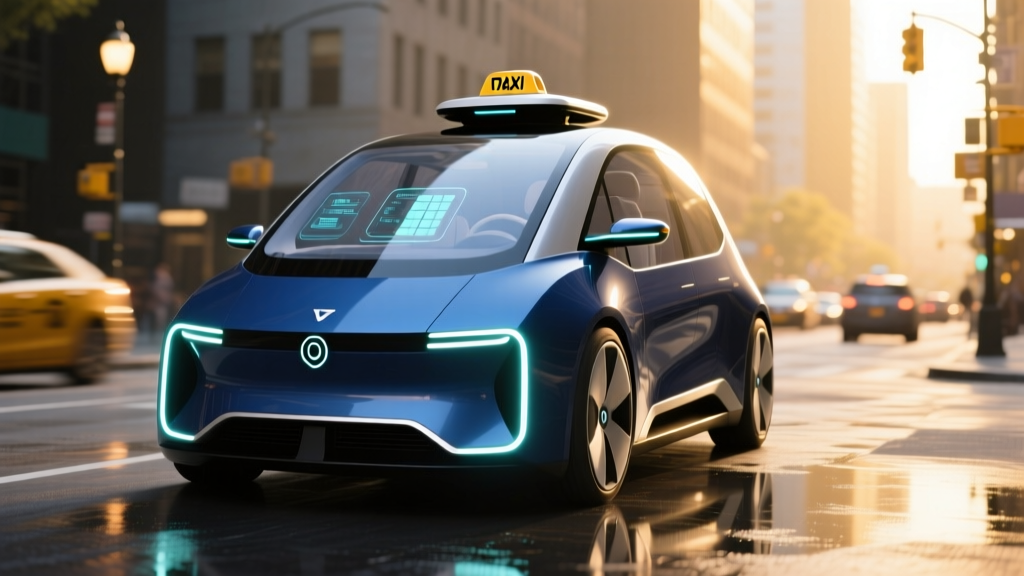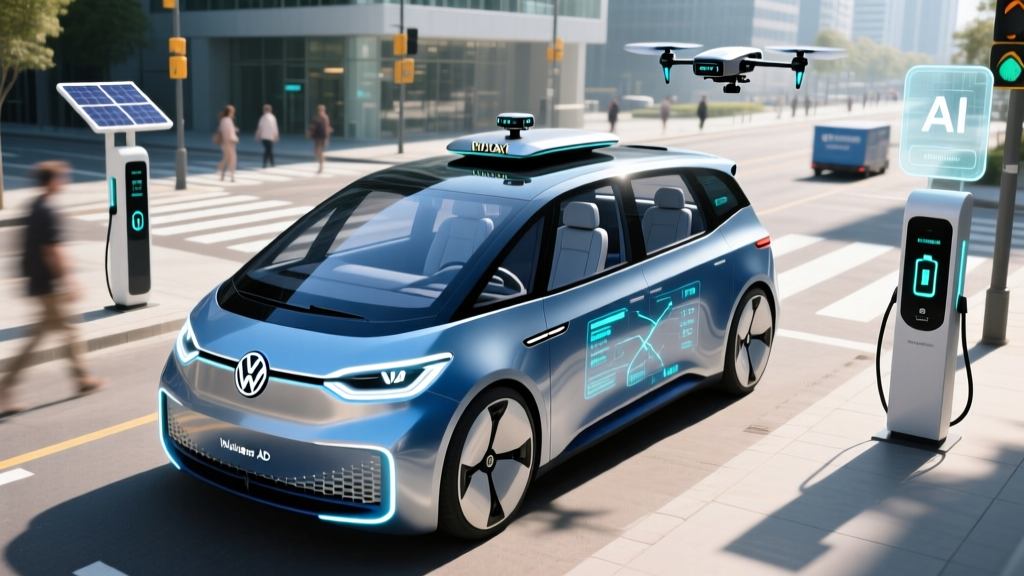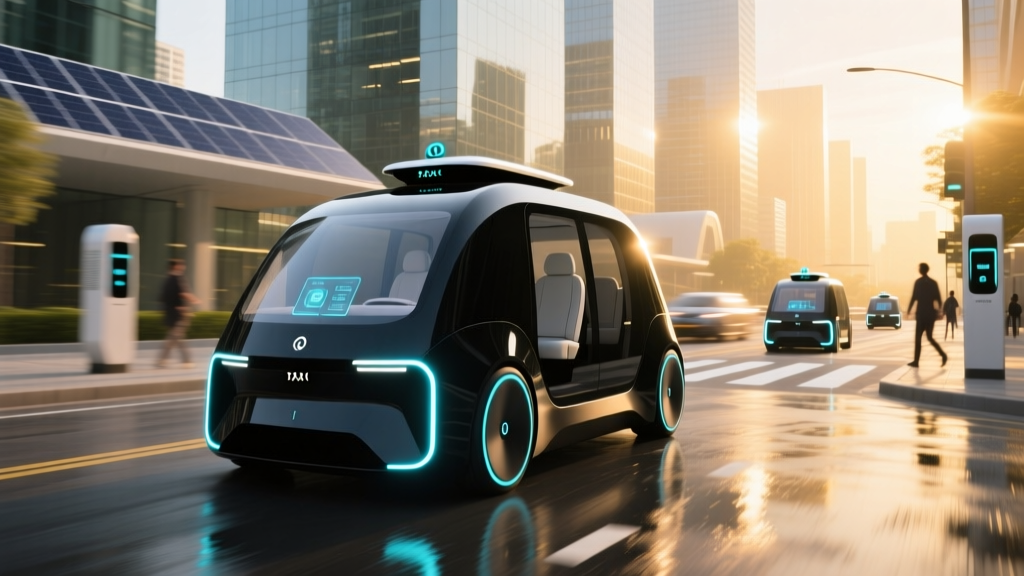
The Level 5 Promise vs. the Level 4 Reality
If you've been following autonomous vehicle headlines for the past decade, you've likely encountered the term level 5 autonomous driving — the vision of a steering-wheel-free car that can navigate any road, in any weather, anywhere on Earth, without a human ever touching a control. That vision remains exactly what it was in 2016: a vision. As of 2026, no production vehicle or commercial ride-hail service operates at SAE Level 5. Not Waymo, not Cruise, not Zoox, not Tesla.
What does exist is far more impressive — and far more limited — than most marketing suggests. Level 4 robotaxis are carrying paying passengers every day in a handful of US cities, operating within tightly defined geofences, under specific conditions, with remote support teams monitoring fleets. Understanding the gap between what's real and what's promised is essential before you climb into one of these vehicles or invest in a company betting its future on autonomy.
SAE Automation Levels — What They Actually Mean
| SAE Level | Name | Who Drives | Real-World Example (2026) |
|---|---|---|---|
| Level 0 | No Automation | Human | Basic car, no driver aids |
| Level 1 | Driver Assistance | Human (one aid active) | Adaptive cruise OR lane-keeping |
| Level 2 | Partial Automation | Human (must supervise) | Tesla Autopilot, GM Super Cruise, Ford BlueCruise |
| Level 3 | Conditional Automation | System (human on standby) | Mercedes Drive Pilot (limited markets, low speed) |
| Level 4 | High Automation | System (within ODD) | Waymo One, Zoox (geofenced cities) |
| Level 5 | Full Automation | System (anywhere, anytime) | Does not exist |
Source: SAE International J3016
The critical distinction: Level 4 vehicles are driverless within their Operational Design Domain (ODD) — a defined geographic area, speed range, and weather envelope. Level 5 means no ODD restrictions whatsoever. That distinction is the difference between a robotaxi that can handle downtown Phoenix on a sunny Tuesday and one that can handle a snow-covered mountain pass in rural Montana at 2 AM. Nobody has solved the latter.
Where You Can Actually Hail a Robotaxi Right Now
Despite the Level 5 hype, Level 4 robotaxi services have quietly expanded into meaningful commercial operations. Here is the current landscape as of early 2026:
| Service | Operator | Live Cities | Hours | Vehicle |
|---|---|---|---|---|
| Waymo One | Waymo (Alphabet) | Phoenix, San Francisco, Los Angeles, Austin | 24/7 in most markets | Jaguar I-PACE (6th-gen sensor suite) |
| Zoox | Zoox (Amazon) | Las Vegas, San Francisco (limited zones) | Limited hours | Zoox purpose-built carriage |
| Cruise | Cruise (GM) | Phoenix, Dallas, Houston (gradual relaunch) | Daytime + limited evening | Chevrolet Bolt EV / Origin (phased) |
| Motional | Hyundai/Aptiv JV | Las Vegas (Uber/Lyft integration) | Select hours | Hyundai Ioniq 5 |
Waymo dominates the commercial market. By late 2025, Waymo reported completing over 10 million fully driverless paid trips across its service areas. The company's 6th-generation Waymo Driver hardware — featuring improved lidar, radar, and camera arrays — has been rolling out across its fleet since 2024, reducing per-vehicle sensor costs substantially.
Zoox takes a different approach with its purpose-built bidirectional vehicle, which has no steering wheel or pedals. It launched its first paid public rides in Las Vegas in mid-2025, operating on a fixed-route basis before expanding to on-demand service in defined zones.
Cruise, meanwhile, has been cautiously rebuilding after its October 2023 pedestrian-dragging incident in San Francisco, which led to its California DMV permit suspension. The company relaunched with human safety drivers in Phoenix in 2024 and has been gradually returning to driverless operations in limited geofenced areas.
How Much Does a Robotaxi Ride Actually Cost?
Early robotaxi rides were heavily subsidized — Waymo and Cruise offered free or deeply discounted rides to build ridership and gather data. That era is ending. Here's how current pricing compares to traditional rideshare:
| Route Example | Waymo One | UberX | Lyft |
|---|---|---|---|
| Downtown SF → SFO (~14 mi) | $35–$45 | $30–$50 | $28–$48 |
| Phoenix midtown, 5-mi trip | $12–$18 | $10–$16 | $9–$15 |
| LA Westside, 8-mi trip | $18–$28 | $15–$25 | $14–$24 |
Robotaxi pricing has converged with UberX and Lyft standard fares. Waymo uses dynamic pricing in high-demand periods, similar to surge pricing, though its surges tend to be less aggressive. The key difference: no human driver to tip. A $20 Waymo ride costs exactly $20. For frequent riders, that 15-20% tip savings on rideshare adds up to meaningful parity.
How to use the service: Download the Waymo One app (or request through Uber in supported markets), set your pickup and dropoff within the service area, and a vehicle arrives — typically within 3-8 minutes in core coverage zones. The app shows the vehicle approaching, unlocks the doors when it arrives, and you're off. No small talk, no navigation arguments, no rating anxiety.
The Safety Record: What the Data Actually Shows
Robotaxi Safety by the Numbers
- Waymo driverless miles: Over 50 million fully autonomous miles driven (cumulative through 2025)
- Waymo injury-rate comparison: Waymo's published safety data shows an 85% reduction in injury-causing crash rates compared to human benchmarks in its operating cities
- NHTSA Standing General Order: All ADS-equipped vehicles must report crashes within 24 hours; NHTSA's crash database is publicly searchable
- Cruise October 2023 incident: A Cruise vehicle struck a pedestrian who had been thrown into its path by a human-driven car, then dragged the pedestrian ~20 feet while pulling to the curb. The incident led to California DMV permit suspension and a company-wide operational pause.
The safety case for robotaxis rests on a straightforward statistical argument: human drivers cause roughly 40,000 traffic fatalities annually in the US, with distraction, impairment, and speeding as leading factors. A Level 4 system doesn't get drunk, text, or fall asleep. Waymo's internal data, validated in part by third-party studies, suggests its vehicles are involved in fewer police-reported and injury-causing crashes per million miles than the human average in comparable urban environments.
But context matters enormously. Robotaxis operate primarily in mapped, geofenced urban areas at moderate speeds. They avoid highways, construction zones, and severe weather. Comparing a Waymo's crash rate in sunny Phoenix to the national human average — which includes rural highways, icy roads, and drunk driving — overstates the robotaxi advantage. A more honest comparison is against human drivers in the same urban, daytime, fair-weather conditions, where the advantage narrows but persists.
The Cruise incident exposed a different class of risk: edge cases involving multi-actor scenarios and post-collision decision-making. The vehicle's initial response (braking) was correct, but its subsequent behavior (pulling to the curb with a person underneath) revealed gaps in the system's understanding of complex post-collision states. This is precisely the kind of scenario that Level 5 autonomy must solve — and that Level 4 operators manage by limiting their operational domain.
Under the Hood: The Technology Stack
How Level 4 Robotaxis See the World
Sensor fusion (Waymo, Cruise, Zoox, Motional): These systems combine multiple sensor types to build a redundant, real-time 3D model of the vehicle's surroundings:
- Lidar: Spinning or solid-state units project laser pulses to create precise 3D point clouds. Waymo's 6th-gen system uses multiple lidar units for 360° coverage with range exceeding 300 meters. Cost per unit has dropped from ~$75,000 (2016) to under $5,000 (2025).
- Cameras: 12-20+ cameras provide color, texture, and semantic information (reading signs, detecting traffic light states, identifying pedestrian intent).
- Radar: Millimeter-wave radar excels at measuring velocity of other objects and works reliably in rain, fog, and darkness where lidar and cameras struggle.
- HD Maps: Pre-built centimeter-accurate maps of every street in the service area provide a baseline the vehicle compares against in real time.
- IMU + GPS: Inertial measurement units and GPS (augmented with local correction) track the vehicle's precise position within the map.
Camera-only approach (Tesla FSD): Tesla's Full Self-Driving system relies exclusively on cameras and neural networks, rejecting lidar and radar. As of 2026, FSD remains a Level 2 driver-assist system — the driver must remain engaged and is legally responsible. Tesla has not received regulatory approval for driverless operations anywhere in the US.
The sensor-fusion camp argues that redundancy is non-negotiable for driverless operation: if a camera is blinded by sun glare, lidar still sees the pedestrian. If rain scatters lidar returns, radar tracks the car ahead. The camera-only camp argues that neural networks trained on billions of miles of video data will eventually match human visual intelligence without expensive hardware.
As of 2026, the market has spoken: every commercially operating driverless robotaxi uses lidar-based sensor fusion. No camera-only system has received regulatory approval for driverless passenger service.
Regulatory Landscape: Who Allows This?
Autonomous vehicle regulation in the US is a patchwork of state and federal authority with no unified national framework:
- Federal (NHTSA): Sets vehicle safety standards (FMVSS) and requires crash reporting via Standing General Order. NHTSA does not currently "approve" ADS software — it regulates outcomes (crashes, recalls) rather than pre-certifying systems.
- State DMVs and PUCs: California's DMV issues testing and deployment permits. The California Public Utilities Commission (CPUC) regulates commercial passenger service. Arizona takes a permissive approach — Waymo launched commercially in Phoenix with relatively light state oversight. Texas requires a permit through TxDOT for driverless operations.
- Local municipalities: Cities often negotiate operating agreements covering pickup zones, curb access, and emergency response protocols. San Francisco's Board of Supervisors has been notably more skeptical than Phoenix's city council.
The regulatory bottleneck for Level 5 is straightforward: no regulator has defined a safety standard that a Level 5 system could be tested against. How do you certify a vehicle for "any road, any condition, anywhere"? The testing surface is effectively infinite. This is why every commercial deployment is Level 4 — the ODD constraints make the safety case tractable and the regulatory approval achievable.
Current Limitations: What Robotaxis Cannot Do
Hard Limits of Today's Level 4 Systems
- Geofencing: Vehicles will not operate outside their mapped service area. Request a ride from downtown Phoenix to Sedona — the app won't let you.
- Weather: Heavy rain, fog, snow, and ice cause most services to suspend operations or restrict service areas. Waymo's Phoenix fleet operates in light rain but pulls back during monsoon downpours. Snow operations remain unsolved for commercial service.
- Construction zones: Unmapped lane shifts, temporary barriers, and flaggers can confuse systems. Most robotaxis will pull over safely and request remote assistance rather than attempt to navigate complex construction.
- Highway driving: Most Level 4 services avoid freeways or restrict highway segments. Waymo has begun limited highway-capable routes, but the majority of rides are surface-street only.
- Unprotected left turns: A notorious edge case — turning left across oncoming traffic at an uncontrolled intersection requires predicting the behavior and intent of multiple human drivers simultaneously. Systems handle this, but conservatively, sometimes waiting longer than a human would.
- Emergency vehicles: Detecting and responding appropriately to approaching ambulances, fire trucks, and police (pulling over, yielding, not blocking intersections) remains an area of active improvement.
- Passenger emergencies: No driver means no one to assist a passenger having a medical event. Services provide in-vehicle support buttons connecting to remote agents, but physical assistance is impossible.
These limitations are precisely why Level 5 doesn't exist. Solving any single one — say, snow driving — requires sensor performance, prediction algorithms, and decision-making capabilities that generalize far beyond today's geofenced urban environments. Level 5 demands that all of these be solved simultaneously, everywhere, without the fallback of a geofence or remote operator.
When — or Whether — Level 5 Arrives
Industry timelines for Level 5 have shifted dramatically. In 2016-2018, executives from Ford, GM, and various startups predicted Level 5 by 2021-2023. Those predictions were wrong by a wide margin. The current industry consensus, to the extent one exists, places Level 5 well beyond 2030 — and many robotics researchers question whether the SAE Level 5 framework is even a useful engineering target.
The more pragmatic path is the expansion of Level 4: larger geofences, more cities, broader weather envelopes, and eventually highway operation. Each expansion requires validating the system against a new set of scenarios, which takes millions of real-world miles and years of data collection. Waymo's expansion from Phoenix to San Francisco to Los Angeles took over five years, with each city presenting unique challenges (SF's hills and dense cyclists, LA's sprawling freeways and aggressive merging).
For consumers and investors, the practical takeaway is this: Level 4 robotaxis are real, growing, and increasingly reliable within their domains. Level 5 autonomous driving remains a theoretical construct — an aspiration, not a product roadmap. If someone tells you otherwise, ask them which vehicle they're talking about and in which city you can hail it today. The answer will always be the same: you can't, because it doesn't exist.
Frequently Asked Questions
Is Tesla FSD a Level 5 autonomous system?
No. Tesla Full Self-Driving (Supervised) is an SAE Level 2 driver-assist system. Despite the name, the driver must remain fully engaged, monitor the road, and is legally responsible for the vehicle's operation at all times. Tesla has not received regulatory approval for driverless operation in any jurisdiction. The "Full Self-Driving" branding has drawn scrutiny from NHTSA and consumer advocacy groups for potentially misleading consumers about the system's capabilities.
Where can I use a robotaxi service right now?
As of 2026, the primary commercial robotaxi markets are Phoenix (Waymo One, Cruise), San Francisco (Waymo One), Los Angeles (Waymo One), Austin (Waymo One), and Las Vegas (Zoox, Motional). Service availability is limited to geofenced zones within these metro areas — you cannot hail a robotaxi to destinations outside the approved service area.
How much does a robotaxi cost vs. Uber or Lyft?
Robotaxi fares have converged with standard UberX and Lyft pricing — typically $1.50-$3.00 per mile depending on the market and demand. The main cost difference: no driver tip. A 10-mile ride might cost $18-$28 on Waymo vs. $15-$25 on UberX (plus a $3-$5 tip). During surge periods, Waymo's dynamic pricing tends to be less extreme than rideshare surge multipliers.
How safe are robotaxis compared to human drivers?
Waymo's published data indicates an approximately 85% lower injury-causing crash rate compared to human benchmarks in its operating cities. However, this comparison is imperfect — robotaxis operate in favorable conditions (mapped urban streets, fair weather, moderate speeds) while the human benchmark includes all driving conditions. In comparable conditions, the robotaxi safety advantage appears real but narrower. The Cruise October 2023 incident demonstrated that edge-case failures can have serious consequences even with an overall strong safety record.
What happens if a robotaxi gets confused or encounters something unexpected?
Level 4 systems are designed to fail safely. When the system encounters a scenario it cannot handle — an unmapped construction zone, a complex emergency scene, sensor degradation — it will slow down, pull to the side of the road, and stop. A remote assistance team monitors the fleet and can provide guidance or authorize a path forward. The vehicle will not attempt a maneuver it is not confident it can execute safely.
Will Level 5 autonomous driving ever be possible?
It may be, but not within the current decade based on the trajectory of technology and regulation. Level 5 requires solving perception, prediction, and decision-making in every conceivable driving environment — from rural dirt roads to blizzard conditions to chaotic traffic in developing-world cities — without any geographic or weather restrictions. The engineering challenge is orders of magnitude greater than Level 4, and the regulatory framework for certifying such a system does not yet exist.