The Honest Truth About Level 5 Autonomous Cars
If you've been searching for a level 5 autonomous cars list, here's the short answer: it's empty. Not a single vehicle on public roads today qualifies as SAE Level 5 — meaning full self-driving capability in all conditions, on all roads, with no steering wheel and no human fallback required, anywhere on Earth.
That's not a pessimistic take; it's an engineering reality confirmed by every major automaker, the National Highway Traffic Safety Administration (NHTSA), and the SAE International framework that defines these levels. What does exist is a growing fleet of Level 4 robotaxis operating within tightly defined geographic zones, plus Level 2 and Level 3 driver-assist systems in consumer vehicles that still require human attention.
This guide cuts through the marketing noise to explain exactly where autonomous driving stands in 2026, which services you can actually hail today, what they cost, and how safe they are — with real numbers, not hype.
SAE Autonomy Levels Explained: Where Every System Actually Sits
The SAE International J3016 standard defines six levels of driving automation, from zero to five. Understanding these distinctions is essential because automakers and media frequently blur them.
| Level | Name | Who Drives | Who Monitors | Examples (2026) |
|---|---|---|---|---|
| 0 | No Automation | Human | Human | Any car without ADAS |
| 1 | Driver Assistance | Human + system (one axis) | Human | Adaptive cruise OR lane-keep |
| 2 | Partial Automation | System (steering + speed) | Human (must supervise) | Tesla Autopilot/FSD Supervised, GM Super Cruise, Ford BlueCruise |
| 3 | Conditional Automation | System (in limited ODD) | System (human must take over on request) | Mercedes Drive Pilot (approved select markets, ≤40 mph, highway) |
| 4 | High Automation | System (in geofenced ODD) | System (no human needed within zone) | Waymo One, Zoox, Baidu Apollo Go |
| 5 | Full Automation | System (everywhere, all conditions) | System | None in production or deployment |
Level 4 Robotaxis You Can Actually Ride in 2026
While the level 5 autonomous cars list remains blank, Level 4 robotaxi services have expanded meaningfully. These vehicles operate without a human driver inside a defined Operational Design Domain (ODD) — a geofenced area with mapped roads, approved speeds, and (usually) favorable weather conditions.
| Service | Operator | Live Cities | Vehicle Platform | Hours | Geofence Notes |
|---|---|---|---|---|---|
| Waymo One | Waymo (Alphabet) | Phoenix, San Francisco, Los Angeles, Austin | Jaguar I-PACE (custom sensor suite), Hyundai Ioniq 5 (newer fleet) | 24/7 in most markets | Expanding suburban coverage; highway segments approved in Phoenix |
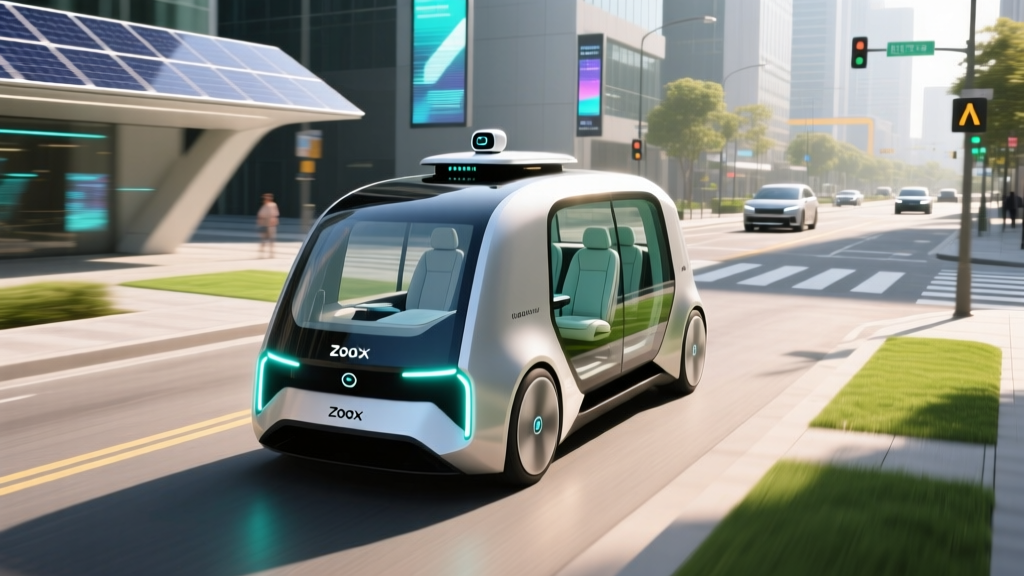
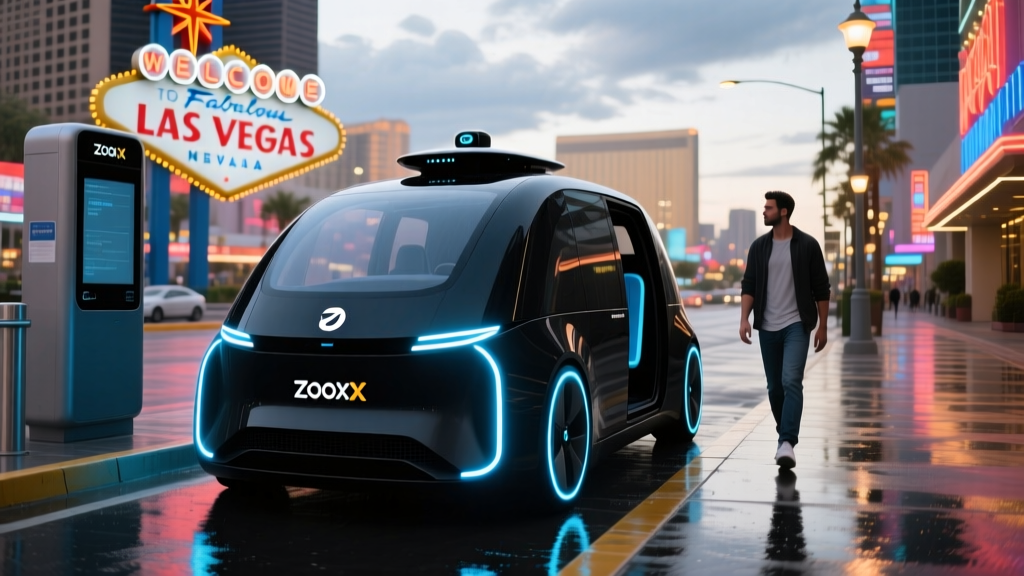
| Zoox | Zoox (Amazon) | Las Vegas, San Francisco (limited zones) | Zoox purpose-built carriage (no steering wheel) | Limited hours, expanding | Dense urban core zones; no highway |
| Cruise | Cruise (GM) | Phoenix, Houston, Dallas (relaunched post-2023 suspension) | Chevrolet Bolt EV / Origin (announced) | Daytime/evening | Phased re-entry with safety driver first, then driverless |
| Baidu Apollo Go | Baidu | Wuhan, Beijing, Chongqing, Shenzhen (China) | Various (RT6 6th-gen) | 24/7 in Wuhan | Largest global fleet by ride volume; China-only |
| Motional | Motional (Hyundai/Aptiv JV) | Las Vegas (via Lyft) | Hyundai Ioniq 5 | Limited | Strip and downtown corridor |
Where can I use a robotaxi service right now? In the U.S., your best bet is Waymo One in Phoenix (the broadest coverage area, including suburban and some highway driving), San Francisco (citywide), Los Angeles (expanding zones), and Austin. Las Vegas offers both Zoox and Motional. If you're outside these metro areas, Level 4 robotaxi access does not yet exist near you.
How Robotaxis Work: Hailing, Pricing, and the Uber Comparison
Riding in a Level 4 robotaxi feels like rideshare without the driver. Here's the typical flow:
- Download the operator's app (e.g., Waymo One).
- Enter pickup and dropoff — both must fall within the geofenced service area.
- Wait for the vehicle — usually 3–8 minutes in well-covered zones.
- Unlock via app — the car verifies your identity and unlocks the doors.
- Ride — a screen shows the route; an in-car support button connects to a remote agent if needed.
- Arrive and exit — the ride ends automatically; payment processes via the app.
| Service | Base Fare | Per Mile | Per Minute | 5-Mile Trip Estimate | Comparable UberX |
|---|---|---|---|---|---|
| Waymo One (Phoenix) | $3.50 | $1.25 | $0.30 | ~$12–15 | ~$11–14 |
| Waymo One (SF) | $3.50 | $1.40 | $0.35 | ~$14–18 | ~$13–17 |
| Zoox (Las Vegas) | Promotional/free periods | Varies | Varies | ~$8–12 (intro pricing) | ~$12–16 |
| Baidu Apollo Go (Wuhan) | ¥4 (~$0.55) | ¥1.8/mi (~$0.25) | ¥0.5/min | ~¥12 (~$1.65) | ~¥18 (~$2.50) |
How much does a robotaxi cost vs. Uber/Lyft? In most U.S. markets, Waymo One pricing is roughly comparable to UberX — sometimes slightly higher during peak demand, sometimes cheaper because robotaxis don't surge the way human-driven rideshare does. In China, Baidu Apollo Go undercuts traditional rideshare significantly, partly due to aggressive subsidization to build market share. Zoox has used promotional pricing during its expansion phases.
Robotaxi Safety: What the Real Data Shows
Here's what we know from publicly reported data and regulatory filings as of early 2026:
- Waymo published a study (peer-reviewed, using data through 2024) showing its fleet of over 5 million autonomous miles in Phoenix and San Francisco had an injury-causing crash rate approximately 85% lower than the human benchmark in comparable urban driving, and a police-reported crash rate roughly 75% lower. No fatalities were reported in Waymo's driverless operations through early 2026.
- Cruise's 2023 San Francisco incident — where a pedestrian was dragged after being thrown into the path of a Cruise vehicle by a human-driven car — led to California DMV permit suspension and a nationwide operational pause. Cruise has since relaunched with phased safety-driver operations before returning to driverless service. This incident underscored that edge cases (multi-vehicle interactions, pedestrians in unexpected positions) remain the hardest problems.
- Zoox has logged over 1 million autonomous miles with no reported at-fault injuries in driverless mode as of early 2026, though its operational footprint remains small.
- Baidu Apollo Go claims over 100 million cumulative autonomous miles across its Chinese fleet with zero fatalities attributed to the autonomous system, though independent verification of Chinese robotaxi safety data is limited.
How safe are robotaxis? The available data from Waymo — the most transparent U.S. operator — suggests that within their geofenced, mostly lower-speed urban ODDs, robotaxis are performing at or better than human-driver baselines for injury-causing crashes. But the sample sizes remain small relative to the trillions of miles humans drive annually, and the operating conditions are constrained. These are promising results, not definitive proof at scale.
The Technology Stack: Lidar, Cameras, and Why It Matters
Every Level 4 robotaxi in commercial service today uses a multi-sensor approach. This is a deliberate engineering choice that contrasts with Tesla's camera-only strategy for its Level 2 FSD system.
| Operator | Primary Sensors | Lidar Units | Cameras | Radar | HD Mapping | Geofencing |
|---|---|---|---|---|---|---|
| Waymo (6th-gen) | Lidar + camera + radar fusion | 5 (custom-built, 360° coverage) | 29+ | 6 (4D imaging radar) | Yes, centimeter-precision | Strict geofence |
| Zoox | Lidar + camera + radar fusion | 4 (corner-mounted, overlapping) | Multiple high-res | Multiple | Yes | Strict geofence |
| Cruise (Bolt EV) | Lidar + camera + radar fusion | 5+ | 16+ | Multiple | Yes | Strict geofence |
| Baidu Apollo Go (RT6) | Lidar + camera + radar fusion | 4 (roof + sides) | Multiple | Multiple | Yes | City-level geofence |
| Tesla FSD (Level 2 — for comparison) | Camera-only (Tesla Vision) | 0 | 8 | 0 (removed) | No (uses navigation maps) | No geofence (driver must supervise everywhere) |
Why lidar? Light Detection and Ranging sensors provide precise 3D point clouds of the vehicle's surroundings regardless of lighting conditions. They excel at detecting object distance and shape — critical for identifying pedestrians, cyclists, and debris in darkness, glare, or shadow. Camera-only systems must infer depth computationally, which can fail in edge cases (e.g., a white truck trailer against a bright sky — the scenario involved in a fatal 2016 Tesla Autopilot crash).
HD mapping and geofencing are what make Level 4 possible today. These vehicles don't figure out where they are from scratch — they compare real-time sensor data against centimeter-accurate maps of roads they've been approved to drive. This is both their strength (extremely reliable within the zone) and their limitation (they cannot operate outside it).
Current Limitations: Where Robotaxis Cannot Go
Understanding what Level 4 robotaxis cannot do is as important as knowing what they can. These constraints are why Level 5 remains elusive.
- Geofence boundaries: If your trip crosses outside the mapped zone, the service won't allow it. You cannot hail a Waymo from Phoenix to Flagstaff.
- Heavy rain and snow: Most operators reduce service or pause during heavy precipitation. Lidar scatters in dense rain; cameras struggle with snow-covered lane markings. Waymo has improved rain performance but still has operational thresholds.
- Construction zones: Unexpected lane shifts, temporary barriers, and flaggers create scenarios that may exceed the system's ODD. Some operators route around construction; others pause.
- Unmapped roads: New developments, private roads, and rural routes are simply not available.
- Complex multi-point stops: Drive-throughs, parking garages, and private driveways may not be supported. Dropoffs occur at designated curbside points.
- Emergency vehicle interactions: While improving, there have been documented instances of robotaxis stopping in intersections or failing to yield promptly to approaching emergency vehicles. NHTSA has investigated several such incidents.
- No intercity/highway driving (mostly): Waymo has begun limited highway-capable operations in Phoenix, but most robotaxi services are urban-only at speeds under 45 mph.
Is this truly self-driving or driver-assist? Within their geofenced zones, Waymo, Zoox, and Baidu Apollo Go vehicles are genuinely driverless — no human behind the wheel, no remote teleoperator "driving" the car in real-time (remote agents can assist with routing decisions but do not control steering or braking). This is fundamentally different from Tesla FSD, GM Super Cruise, or Ford BlueCruise, which are all Level 2 systems requiring continuous driver supervision regardless of how capable they appear.
The Regulatory Landscape: Who Approves Robotaxi Operations
Robotaxi deployment in the U.S. requires navigating a patchwork of state and federal oversight:
- State DMVs and Public Utilities Commissions issue the permits for testing and commercial deployment. California's DMV and CPUC have been the most active regulators, with detailed reporting requirements for disengagement events and collisions. Texas (where Austin and Houston operate) has a lighter regulatory framework.
- NHTSA oversees vehicle safety standards and investigates crashes involving automated systems. In 2022, NHTSA issued a Standing General Order requiring all manufacturers and operators to report crashes involving Level 2–5 systems within 24 hours. This has been the primary source of transparent incident data.
- Federal motor vehicle safety standards (FMVSS) currently assume a human driver (steering wheel, mirrors, pedals). The Zoox vehicle, which lacks all of these, required a specific FMVSS exemption from NHTSA — a process that took years and limits production volume to 2,500 units annually under current exemption rules.
- Local governments control road access, curb management, and can restrict operations. San Francisco's Board of Supervisors has at times pushed to limit robotaxi expansion over concerns about traffic obstruction and emergency response interference.
The regulatory environment is evolving. States like Arizona and Texas have been more permissive, while California has tightened oversight following the Cruise incident. There is no comprehensive federal framework for Level 4 deployment — a gap that the industry and safety advocates both want addressed, though they disagree on the shape it should take.
Why Level 5 Remains Years Away (at Minimum)
The jump from Level 4 to Level 5 is not incremental — it's exponential in difficulty. A Level 5 vehicle must handle:
- Unmapped rural roads with no lane markings
- Blizzards in Montana and monsoons in Mumbai
- Construction zones it has never encountered
- Off-road recovery situations
- Every country's traffic norms, signage, and infrastructure
- Edge cases that occur once in billions of miles
No company has publicly demonstrated a prototype that approaches this capability. Industry leaders, including Waymo's CEO Tekedra Mawakana, have framed Level 5 as a research aspiration rather than a product timeline. The honest assessment from engineers across the sector: Level 5 is not a matter of "a few more years of data" — it likely requires fundamental advances in general-purpose AI reasoning that don't yet exist.
What is happening is the steady expansion of Level 4: larger geofences, more cities, improved weather tolerance, and eventually highway-speed operation. That's meaningful progress — it just isn't Level 5.
Frequently Asked Questions
Are there any Level 5 autonomous cars I can buy?
No. Zero Level 5 vehicles exist in production, in testing, or as functional prototypes capable of driving anywhere without human oversight. Any company claiming to sell or imminently deliver Level 5 autonomy is either misrepresenting its technology or defining Level 5 differently from the SAE standard. The closest you can get to driverless is a Level 4 robotaxi service like Waymo One within its geofenced cities.
What's the difference between Tesla FSD and Waymo's robotaxi?
Tesla Full Self-Driving (Supervised) is a Level 2 driver-assist system. It can steer, accelerate, and brake on highways and city streets, but the driver must remain alert and ready to take over at any moment. Tesla uses cameras only — no lidar. Waymo's robotaxi is Level 4: truly driverless within a mapped geofence, using lidar, cameras, and radar. Tesla's system works on more roads but requires you to drive; Waymo's system drives itself but only on approved roads in a handful of cities.
How do I know if a robotaxi service is available in my city?
Check the operator's app or website for current service area maps. Waymo One shows its geofence directly in the app. As of early 2026, U.S. availability is limited to Phoenix, San Francisco, Los Angeles, Austin, Las Vegas, Houston, and Dallas — with most cities offering only partial metro coverage.
Has a robotaxi ever been in a fatal crash?
As of early 2026, no fatality has been attributed to a Level 4 robotaxi operating in driverless mode in the U.S. Cruise's 2023 San Francisco incident involved serious pedestrian injury (not a fatality from the robotaxi itself — the pedestrian was struck by a human-driven vehicle first), but it led to a full operational suspension. The NHTSA Standing General Order database tracks all reported incidents involving automated driving systems.
Will Level 5 ever happen?
Possibly, but not within any credible near-term timeline. The engineering challenges — generalizing across every road, weather condition, and traffic culture on Earth — require advances in AI that remain in the research stage. Most industry experts consider widespread Level 4 expansion (more cities, larger zones, more weather conditions) to be the realistic trajectory for the next decade, not Level 5.
What about Mercedes Drive Pilot — isn't that self-driving?
Mercedes-Benz Drive Pilot is a Level 3 system, approved in Germany and select U.S. markets (Nevada, California). It allows the driver to legally disengage from driving — watching a video, for example — but only under strict conditions: highway driving, speeds below 40 mph, clear weather, good lane markings, and the system will request the driver take back over with ~10 seconds' notice. It's a significant milestone (the first production Level 3 in the U.S.), but it's a far cry from Level 5.