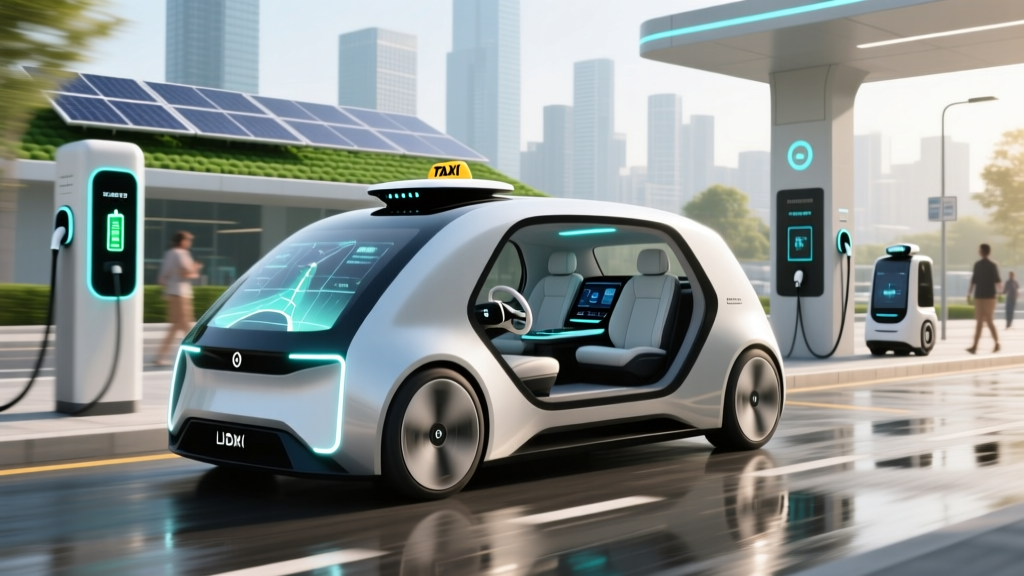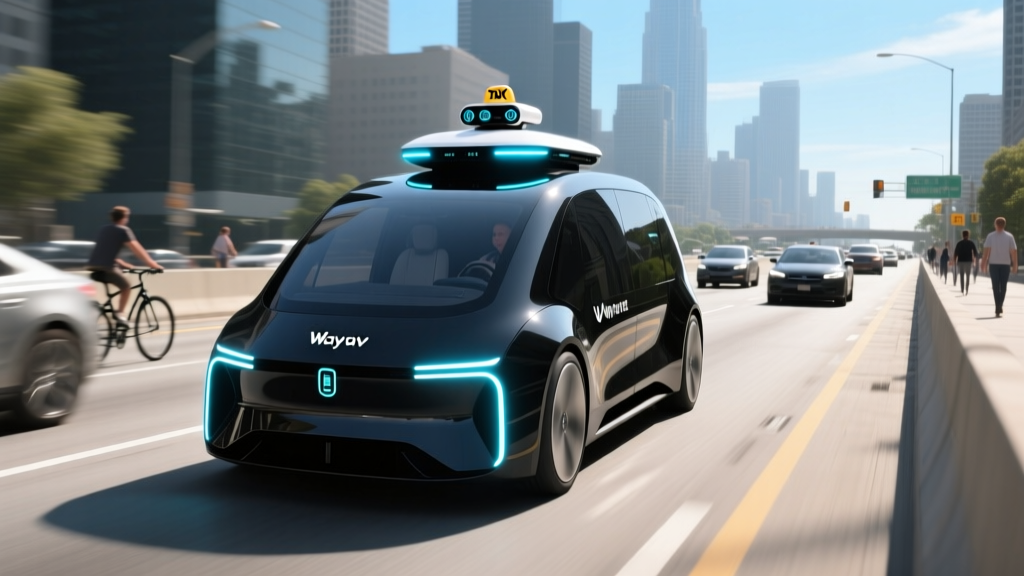
The phrase "self-driving" gets thrown around loosely — applied to everything from highway lane-keeping to fully driverless taxis. But in 2026, true Level 4 self-driving services are real, operational, and carrying paying passengers without anyone behind the wheel. They are also geographically constrained, heavily regulated, and fundamentally different from the driver-assist features in your personal car.
This guide breaks down exactly what Level 4 autonomy means today, where you can hail a driverless ride, what it costs, how safe the data says it is, and where the hard limits remain.
What Level 4 Self-Driving Actually Means (and What It Doesn't)
The Society of Automotive Engineers (SAE) defines six levels of driving automation, from Level 0 (no automation) to Level 5 (full autonomy everywhere, in all conditions). Understanding these distinctions is critical because marketing language routinely blurs them.
| Level | Name | Who Drives? | Example |
|---|---|---|---|
| 0 | No Automation | Human | Conventional car |
| 1 | Driver Assistance | Human (system assists steering OR speed) | Adaptive cruise control |
| 2 | Partial Automation | Human (system assists steering AND speed) | Tesla Autopilot, GM Super Cruise, Ford BlueCruise |
| 3 | Conditional Automation | System (human must take over when requested) | Mercedes Drive Pilot (limited markets, ≤40 mph) |
| 4 | High Automation | System (within its operational design domain) | Waymo One, Zoox |
| 5 | Full Automation | System (everywhere, all conditions) | Does not yet exist commercially |
Level 4 self-driving means the vehicle handles all driving tasks — steering, braking, navigation, obstacle avoidance — without any human intervention, but only within a defined operational design domain (ODD). That ODD is typically a geofenced urban area with mapped roads, and it may exclude severe weather, unmapped construction zones, or certain road types. Outside that domain, the vehicle will not operate autonomously.
This is fundamentally different from the Level 2 systems in consumer vehicles like Tesla's Full Self-Driving (Supervised), Ford BlueCruise, or GM Super Cruise. Those systems require continuous driver supervision — your eyes on the road, your hands available. Calling Level 2 "self-driving" is inaccurate and dangerous. Only Level 4 and Level 5 systems operate without a human driver in the loop.
Where Can You Actually Use a Level 4 Robotaxi Right Now?
As of early 2026, fully driverless commercial robotaxi services in the United States remain concentrated in a handful of metro areas. Expansion has been deliberate and incremental, particularly after regulatory scrutiny intensified following incidents in 2023–2024.
| Service | Operator | Live Markets | Hours | Status |
|---|---|---|---|---|
| Waymo One | Waymo (Alphabet) | Phoenix metro, San Francisco, Los Angeles, Austin | 24/7 (Phoenix, SF); limited hours (LA, Austin) | Fully driverless, open to public |
| Zoox | Zoox (Amazon) | Las Vegas (Strip corridor), Foster City, CA | Limited hours | Driverless, invite/early-access |
| Cruise | Cruise (GM) | None (suspended operations late 2023, gradual restart with safety drivers in select cities 2024–2025) | N/A | Not fully driverless commercially as of 2026 |
| Motional | Motional (Hyundai/Aptiv) | Las Vegas (via Uber/Lyft partnerships, limited) | Limited | Safety driver present in most operations |
Waymo One remains the only scaled, fully driverless robotaxi service open to the general public across multiple U.S. cities. In Phoenix, the service covers a geofenced area exceeding 200 square miles across Chandler, Tempe, Mesa, and Gilbert. San Francisco operations cover most of the city. Los Angeles and Austin launched more recently with smaller initial zones. You download the Waymo One app, enter your destination, and a Jaguar I-PACE–based vehicle (being supplemented by newer Zeekr RT purpose-built robotaxis) arrives without anyone in the driver's seat.
Zoox has taken a different approach, deploying its purpose-built bidirectional carriage-style vehicle (no steering wheel, no pedals) on fixed routes in Las Vegas and limited testing in Foster City, California. Access has been more restricted — typically employee shuttles or invitation-based rides rather than open public hailing.
How Much Does a Robotaxi Ride Cost vs. Uber and Lyft?
Robotaxi pricing has been competitive with conventional rideshare, sometimes subsidized as operators prioritize ridership data over near-term profitability. Here's what typical fares look like in 2026:
| Trip Type | Waymo One | UberX | Lyft Standard |
|---|---|---|---|
| Short (3–5 mi, city) | $8–$14 | $9–$16 | $9–$15 |
| Medium (8–12 mi) | $16–$28 | $18–$32 | $17–$30 |
| Airport (15–20 mi) | $30–$50 | $35–$55 | $32–$52 |
| Surge pricing? | No dynamic surge (fixed algorithm) | Yes, can 1.5–3x | Yes, can 1.5–3x |
Waymo's pricing is generally on par with or slightly below UberX and Lyft Standard for equivalent trips, and critically, it does not implement the aggressive surge multipliers that human-driven rideshare does during peak demand. Wait times vary — typically 3–8 minutes in well-covered Phoenix zones, somewhat longer in newer markets like Austin and LA where fleet density is lower.
One practical note: Waymo does not currently offer shared/pool rides, so you're paying for a private vehicle. There's also no tipping — a meaningful cost difference versus rideshare where a 15–20% tip adds $2–$8 per trip.
How Safe Are Robotaxis? The Real Data
Safety is the most scrutinized — and most contested — question in autonomous vehicles. Both proponents and critics selectively cite statistics, so it's worth looking at what the actual reported data shows.
- Over 50 million fully driverless miles completed across Phoenix, SF, and LA combined (per Waymo's published safety reports).
- Waymo's own analysis, peer-reviewed and published, claims a 76% reduction in police-reported crash involvement compared to human benchmarks in equivalent operating environments, and an 85% reduction in injury-causing crashes.
- However, robotaxis are involved in more minor contact incidents (low-speed bumps with stationary objects, curb strikes) per million miles than human drivers — partly because the vehicles are extremely conservative and sometimes stop abruptly in complex scenarios.
- No passenger fatalities have been reported in Waymo's driverless operations as of early 2026.
Source: Waymo Safety Reports; NHTSA ADS Standing General Order
For context, the NHTSA requires all Level 2+ and Level 4 operators to report crashes under its Standing General Order. This means robotaxi incident data is more transparent than human-driver data, where minor collisions frequently go unreported. This reporting asymmetry can make robotaxi safety records look worse in raw counts than they actually are.
The Cruise suspension in late 2023 — triggered by a pedestrian-dragging incident in San Francisco and subsequent failures in transparency with regulators — remains a cautionary case. It demonstrated that the gap between "technically capable" and "safely operated at scale" is significant, and that regulatory trust is fragile. Cruise has not returned to fully driverless commercial operations as of 2026.
The Technology Stack: Lidar, Cameras, and Geofencing
Level 4 robotaxis rely on sensor suites and mapping strategies far beyond what any consumer vehicle offers. Understanding the tech stack helps explain both their capabilities and their limitations.
- Lidar (Light Detection and Ranging): 360° roof-mounted units plus short-range side/rear units. Generates precise 3D point clouds of the environment in real time. Waymo's 6th-generation "Halo" lidar system provides detection at 500+ meters. Lidar works in darkness and is not fooled by sun glare — a critical advantage over camera-only approaches.
- Cameras: 12–20+ high-resolution cameras covering 360° overlap, used for lane detection, traffic-light state recognition, sign reading, and pedestrian intent prediction.
- Radar: Forward and corner-mounted millimeter-wave radar for velocity detection of other vehicles, particularly in rain or fog where lidar and cameras degrade.
- HD Maps: Centimeter-precision pre-mapped road networks. The vehicle constantly compares live sensor data to its stored map, providing a "second opinion" on road geometry, lane markings, and signage.
- Compute: Custom onboard AI processors handling 100+ teraflops of sensor fusion, prediction, and planning in real time. Waymo's 6th-generation driver system uses custom silicon.
- Geofencing: The vehicle will only operate autonomously within a pre-approved, extensively mapped geographic boundary. Attempt to summon a Waymo outside its zone and the app simply won't offer the ride.
The lidar vs. camera-only debate remains relevant. Tesla's consumer FSD system relies exclusively on cameras (no lidar, no radar), which keeps hardware costs low but means the system must infer depth from 2D images — a fundamentally harder problem. Every commercial Level 4 robotaxi operator uses lidar as a primary sensor, treating camera-only as insufficient for unsupervised driving. This is one reason no Tesla vehicle operates as a driverless robotaxi commercially, despite the "Full Self-Driving" branding.
Current Limitations: Where Level 4 Breaks Down
Level 4 self-driving is impressive within its domain, but that domain has hard edges. These limitations are not theoretical — they affect real rides every day.
- Weather: Heavy rain, fog, and snow degrade lidar and camera performance. Waymo operates in Phoenix (dry) and San Francisco (mild) for a reason. The vehicles will refuse to operate or pull over safely in severe conditions. There is no Level 4 service operating in cities with regular snowfall.
- Geofence boundaries: You cannot take a Waymo from Phoenix to Tucson, or from San Francisco to Sacramento. The service area is fixed, and the boundary is absolute.
- Construction zones: While improving, robotaxis still struggle with unmapped lane shifts, temporary barriers, and flagger-directed traffic. The vehicle may route around the zone or, in some cases, stop and request remote assistance.
- Complex unprotected turns: Multi-lane unprotected left turns with oncoming traffic and pedestrians remain some of the most challenging scenarios. Robotaxis handle them, but often more slowly and conservatively than a human driver — which can frustrate drivers behind them.
- No rural or highway operations: Current Level 4 services operate in mapped urban and suburban environments. Interstate highway driving at 70+ mph is not part of the operational domain for any commercial robotaxi service in 2026.
- Edge cases: Emergency vehicles, unusual road debris, animals, and non-standard road users (horse-drawn carriages, oversized loads) can cause the vehicle to stop and wait. Remote operators can assist, but this adds latency.
Regulatory Landscape: Who Approves Robotaxi Operations?
Robotaxi deployment in the United States requires approval from multiple regulatory bodies, and the patchwork varies by state:
- State Public Utilities Commissions (PUCs): In California, the California Public Utilities Commission (CPUC) issues permits for commercial passenger service. Waymo holds a TCP (Transportation Charter-Party Carrier) permit and a Driverless Pilot/Deployment permit. The CPUC can revoke permits — as it effectively did with Cruise in late 2023.
- State DMVs: Most states require autonomous vehicle testing and deployment permits through their DMV. Arizona, which has taken a more permissive approach, requires less oversight than California.
- NHTSA (Federal): The National Highway Traffic Safety Administration sets vehicle safety standards and requires crash reporting under its Standing General Order for all ADS-equipped vehicles. NHTSA does not currently "approve" robotaxi services but can issue recalls or investigations.
- Local municipalities: Cities can restrict or condition robotaxi operations through local ordinances, curb management rules, and emergency-response coordination requirements.
The regulatory environment tightened significantly after 2023. Several states introduced legislation requiring more granular incident reporting, minimum insurance coverage (typically $5–10 million per vehicle), and real-time data sharing with local authorities. Any operator seeking to expand into a new city faces a 6–18 month regulatory approval process before commercial launch.
Frequently Asked Questions
Is Tesla FSD a Level 4 self-driving system?
No. Tesla's Full Self-Driving (Supervised) is a SAE Level 2 driver-assistance system. It requires the driver to remain attentive, keep hands available, and be prepared to take over at any moment. Despite the "Full Self-Driving" name, no Tesla vehicle operates without a human driver responsible for the vehicle. Tesla has announced plans for a robotaxi service, but as of 2026, it has not launched a commercial driverless service and has not received regulatory approval for driverless operations in any U.S. jurisdiction.
Can I use a robotaxi in any city?
No. Fully driverless robotaxi service in 2026 is available in Phoenix, San Francisco, Los Angeles, Austin (Waymo One), and limited routes in Las Vegas (Zoox). If you live outside these metro areas, Level 4 service is not available to you. Expansion to additional cities is underway but proceeds slowly due to regulatory approvals, mapping requirements, and fleet scaling.
What happens if a robotaxi gets confused or encounters something it can't handle?
The vehicle will typically come to a safe stop, activate its hazard lights, and connect to a remote assistance operator. This human operator does not "drive" the vehicle remotely but can provide high-level guidance (e.g., "proceed past the cone on the left"). The vehicle then resumes autonomous driving. In rare cases, the ride may be terminated and you'll need alternate transportation.
Are robotaxis electric vehicles?
Yes. Waymo's current fleet uses the all-electric Jaguar I-PACE (EPA range 234 miles, 90 kWh battery), and is transitioning to the purpose-built Zeekr RT robotaxi. Zoox's custom vehicle is fully electric with a bidirectional design. Electric powertrains are standard in robotaxis due to lower operating costs, regenerative braking for smoother stops, and the ability to integrate drive-by-wire controls more cleanly than with internal combustion.
How much does it cost to ride vs. owning a car?
A single robotaxi ride costs roughly the same as an UberX trip ($8–$50 depending on distance). For daily commuters, robotaxi costs can add up — 20 rides per month at $15 each is $300/month, comparable to a car payment but without insurance, fuel, or maintenance costs. Robotaxis make the most economic sense for occasional urban trips, airport runs, and scenarios where parking is expensive or unavailable.