What "Level 4 Self-Driving Car" Actually Means
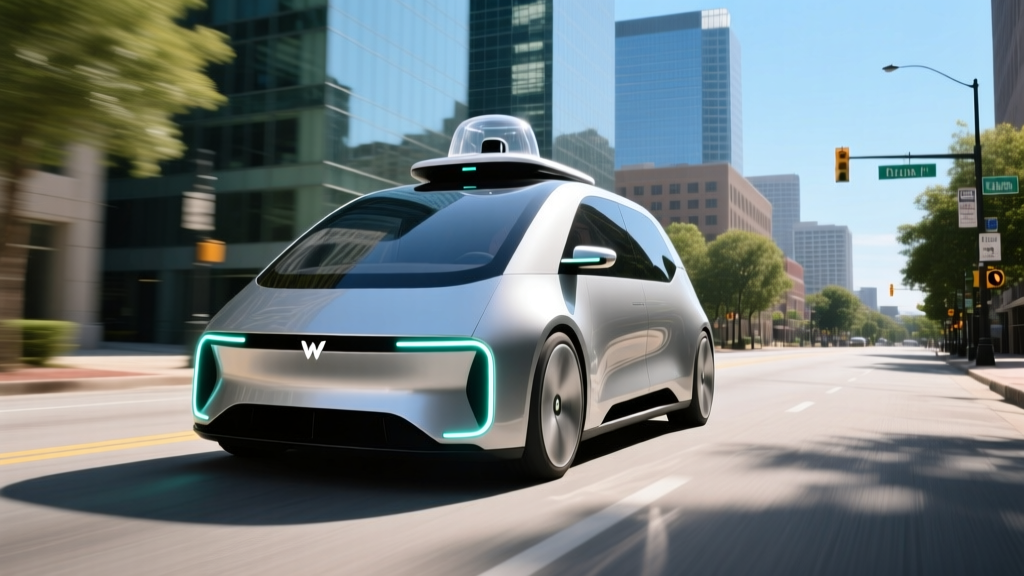
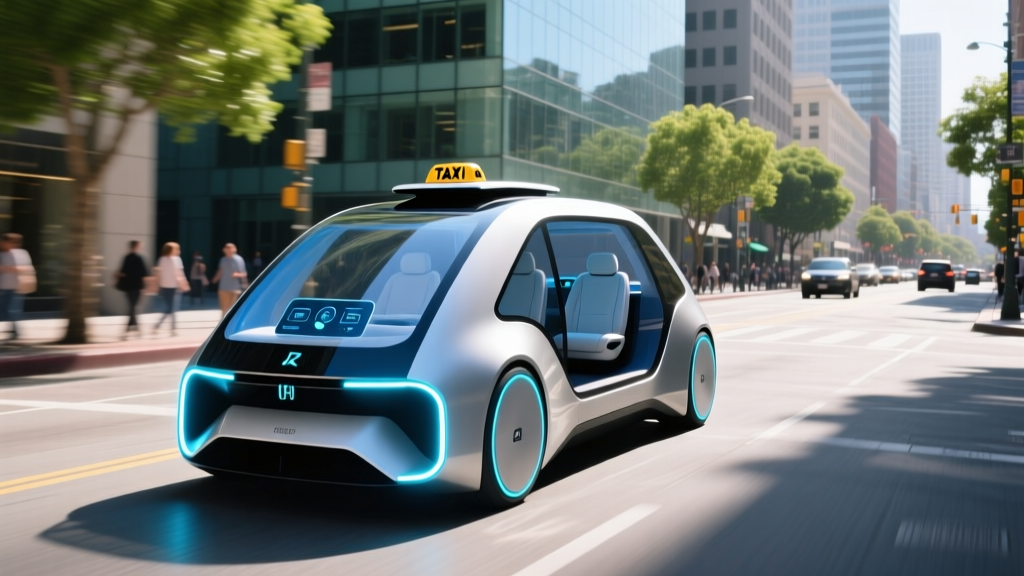
When people search for a Level 4 self-driving car, they're looking for a vehicle that operates without any human driver behind the wheel — no steering wheel, no pedals, no safety operator ready to grab control. That's the promise of SAE Level 4 automation, and as of 2026, it exists in specific geofenced areas through commercial robotaxi services. It does not exist in any vehicle you can buy for personal use.
The distinction between Level 4 robotaxis and the Level 2 driver-assist systems sold by Tesla, Ford, GM, and others is the single most important thing to understand before reading further. Conflating the two leads to dangerous expectations and bad purchasing decisions.
| Level | Name | Who Drives? | Example |
|---|---|---|---|
| Level 0 | No Automation | Human always | Basic cruise control |
| Level 1 | Driver Assistance | Human (one feature assisted) | Adaptive cruise OR lane-keep |
| Level 2 | Partial Automation | Human (must supervise) | Tesla Autopilot, GM Super Cruise, Ford BlueCruise |
| Level 3 | Conditional Automation | System (human on standby) | Mercedes DRIVE PILOT (limited conditions) |
| Level 4 | High Automation | System (no human needed in zone) | Waymo One, Zoox |
| Level 5 | Full Automation | System (anywhere, any condition) | Does not exist commercially |
Source: SAE International J3016
A Level 4 self-driving car handles all driving tasks within its Operational Design Domain (ODD) — a defined geographic area, speed range, and set of weather conditions. Outside that domain, the vehicle will not operate. This is fundamentally different from Level 2 systems like Tesla's Full Self-Driving (Supervised), which require continuous driver attention everywhere they operate.
Where Can You Actually Ride in a Robotaxi Right Now?
As of early 2026, fully driverless commercial robotaxi services remain limited to a handful of U.S. metro areas. Expansion is happening, but it's measured in neighborhoods, not states.
| Operator | Vehicle | Live Service Areas (2026) | Service Type |
|---|---|---|---|
| Waymo One | Jaguar I-PACE (custom-equipped), Zeekr RT (testing) | Phoenix metro (Chandler, Tempe, Scottsdale, Mesa), San Francisco, Los Angeles (select zones), Austin (limited) | 24/7 commercial rides |
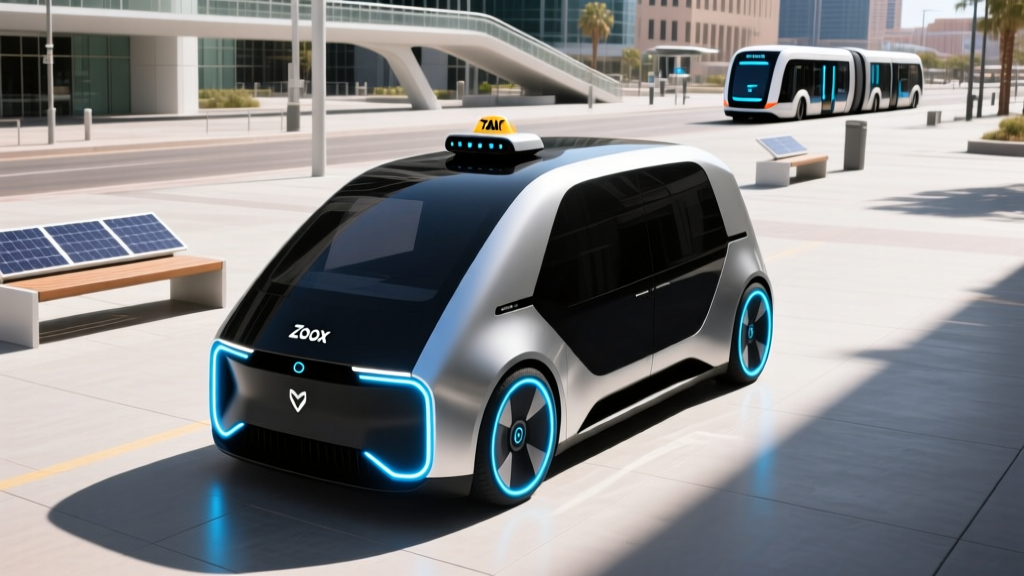
| Zoox | Zoox purpose-built vehicle (no steering wheel) | Las Vegas Strip corridor, Foster City (CA, employee/testing) | Limited public rides; testing phase |
| Cruise | Chevrolet Bolt EV / Origin (announced) | Operations suspended in most cities post-2023 incident; limited supervised testing in Phoenix, Dallas, Houston | Suspended / gradual re-entry with safety drivers |
| Motional | Hyundai Ioniq 5 (custom-equipped) | Las Vegas (via Lyft partnership) | Limited commercial rides |
Waymo (Alphabet's autonomous driving subsidiary) remains the clear leader in operational scale. Their Phoenix service covers over 225 square miles, and the San Francisco service handles tens of thousands of paid rides per week. If you're asking "where can I hail a Level 4 self-driving car today?" — Phoenix and San Francisco are your most reliable answers.
Zoox, owned by Amazon, has taken a different approach: building a purpose-built vehicle from scratch with no steering wheel or pedals, seating four passengers face-to-face. Their Las Vegas service is operational but limited in scope. The Zoox vehicle is not available for purchase — it exists exclusively as a ride-hail platform.
How Robotaxis Work: Hailing, Riding, and Paying
Using a robotaxi is similar to Uber or Lyft, with a few important differences rooted in the technology's limitations.
How to Use Waymo One
- Download the Waymo One app (available in service-area app stores)
- Set pickup and dropoff — both must be within the approved service zone (geofenced)
- Confirm the ride — the app shows your vehicle's license plate, model, and ETA
- Unlock the vehicle — tap "Start Ride" in the app when the car arrives; doors unlock automatically
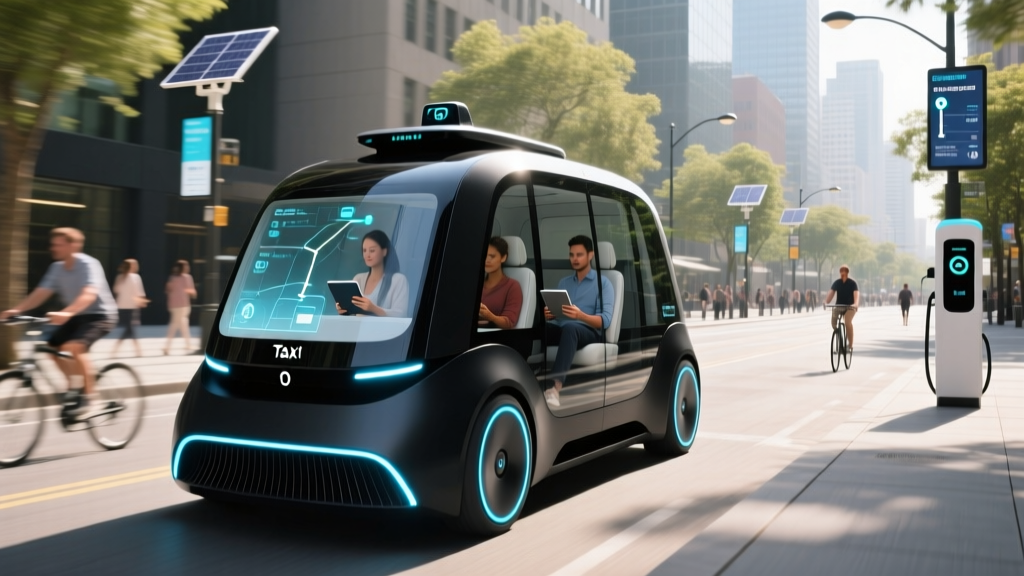
- Ride — screens inside show the route, speed, and what the vehicle's sensors detect; no human is in the driver's seat
- Payment — charged automatically to your linked card after dropoff
Robotaxi Pricing vs. Rideshare
| Service | Base Fare | Per Mile | Per Minute | 5-Mile Trip Est. |
|---|---|---|---|---|
| Waymo One | ~$3.00 | ~$1.25 | ~$0.35 | $12–$18 |
| UberX (Phoenix avg.) | ~$2.50 | ~$1.10 | ~$0.28 | $10–$16 |
| Lyft Standard (Phoenix avg.) | ~$2.20 | ~$1.05 | ~$0.30 | $9–$15 |
Robotaxi pricing is broadly competitive with standard rideshare, though surge pricing dynamics differ. Waymo doesn't surge as aggressively as Uber/Lyft during peak demand, but wait times can be longer in less-dense service zones. Expect to pay a modest premium for the novelty and technology, but not a transformative one. Waymo frequently offers promotional credits for new riders.
How Safe Are Robotaxis? The Data Behind the Headlines
Safety is the most scrutinized — and most polarized — topic in autonomous vehicles. Headlines about robotaxi incidents are common, but raw numbers require context.
- Cumulative fully driverless miles: Over 10 million driverless miles completed (as of late 2025 reporting)
- Injury-causing crash rate: Waymo's published analysis claims an 85% reduction in injury-causing crash rate compared to human benchmarks in equivalent operating areas (NHTSA standing general order data)
- Contact rate: Lower police-reported crash involvement per million miles than human drivers in Phoenix and SF, per Waymo's peer-reviewed studies
- Notable incidents: Vehicles have been involved in minor collisions (typically low-speed, other-party-at-fault); a small number of incidents involved contact with pedestrians or cyclists, investigated by NHTSA
For comparison, the U.S. human-driver fatality rate is approximately 1.35 deaths per 100 million vehicle miles traveled, per NHTSA data. Robotaxi fleets have not recorded a passenger fatality as of early 2026, though the total mileage is still orders of magnitude below the national driving population.
The critical caveat: robotaxis operate in geofenced, mapped urban areas at relatively low speeds (typically under 45 mph), in fair weather. They are not being tested in the full spectrum of conditions that human drivers encounter — rural highways, mountain passes, heavy snow, or construction-zone chaos. Comparing their safety record to all human driving is therefore an imperfect exercise.
Cruise's October 2023 incident in San Francisco — where a pedestrian was dragged under a robotaxi after being struck by a human-driven vehicle — remains the most consequential safety event in the industry. It led to Cruise's California permit suspension, a nationwide operational pause, and a fundamental restructuring of Cruise's safety protocols. GM subsequently reduced Cruise's funding and integrated the team more closely with GM's ADAS division. This event illustrates that Level 4 autonomy, while statistically promising, carries edge-case risks that the industry is still learning to manage.
The Technology Stack: How a Level 4 Self-Driving Car "Sees"
Every Level 4 robotaxi on the road today relies on a multi-sensor suite. The "camera-only" approach championed by Tesla for its consumer FSD system is not used by any current Level 4 commercial operator. Here's why the sensor mix matters.
| Sensor | Function | Strength | Weakness |
|---|---|---|---|
| LiDAR (roof-mounted, multi-unit) | 3D point cloud of surroundings | Precise distance measurement; works in darkness | Reduced performance in heavy rain/snow; high cost ($5K–$50K+ per unit) |
| Cameras (8–16+ around vehicle) | Object classification, lane markings, traffic signals, color | Rich semantic data; reads signs and lights | Degraded by glare, fog, direct sun |
| Radar (front, rear, corners) | Velocity detection, object tracking through weather | Works in rain/fog; measures relative speed directly | Low spatial resolution; struggles with stationary objects |
| Ultrasonic (short-range) | Near-field obstacle detection (parking, low-speed) | Cheap, reliable at <5 meters | Useless above low speeds |
| HD Maps + GNSS/IMU | Centimeter-level localization within pre-mapped environment | Provides redundant positioning context | Must be constantly updated; limits ODD flexibility |
The combination of LiDAR, cameras, and radar creates sensor redundancy — if one modality is degraded (e.g., cameras blinded by sunset glare), others compensate. This redundancy is a non-negotiable requirement for Level 4 operation without a human fallback.
Waymo's 6th-generation "Driver" hardware suite uses custom LiDAR with improved range and resolution, alongside higher-resolution cameras and imaging radar. The Jaguar I-PACE vehicles also carry multiple redundant compute platforms, braking systems, and steering actuators — if a primary system fails, a backup takes over and pulls the vehicle to a safe stop (a "minimal risk condition" in SAE terminology).
Geofencing is equally critical. Robotaxis operate only within areas that have been HD-mapped to centimeter precision. Every lane, curb, crosswalk, speed limit, and traffic signal is encoded in the map. The vehicle continuously localizes itself against this map using LiDAR point clouds and GNSS. If the vehicle detects it is approaching the edge of its geofence, it will not proceed and will reroute or end the trip.
Regulatory Framework: Who Approves Robotaxi Operations?
There is no single federal license for operating a driverless vehicle in the United States. Instead, robotaxi deployment is governed by a patchwork of state and local regulations, with federal oversight focused on vehicle safety standards and crash reporting.
- Federal (NHTSA): Sets vehicle safety standards (FMVSS). Currently, vehicles without steering wheels or pedals (like Zoox and the GM Cruise Origin) require exemptions from certain FMVSS requirements. NHTSA also mandates crash reporting via Standing General Order for all ADS-equipped vehicles. NHTSA does not approve or certify autonomous driving systems.
- State DMVs/Regulators: States like California (CPUC & DMV), Arizona, and Texas have created specific permitting frameworks for driverless testing and commercial deployment. California requires both a DMV testing permit and a CPUC commercial passenger service permit. Arizona has taken a more permissive approach, allowing Waymo to scale with fewer regulatory hurdles.
- Local/Municipal: Cities often negotiate directly with operators on pickup/dropoff zones, traffic management integration, and emergency response protocols.
The lack of a unified federal framework for ADS deployment means that a robotaxi approved in Phoenix cannot simply begin operating in Miami. Each state requires separate permitting, safety case documentation, and often legislative action. This regulatory fragmentation is one of the primary reasons Level 4 self-driving cars have scaled more slowly than many predicted.
Current Limitations: What Level 4 Robotaxis Cannot Do
Understanding the boundaries of today's Level 4 self-driving car is essential for setting realistic expectations. These are not minor footnotes — they define the entire use case.
- Geofence restricted: Cannot drive outside pre-mapped service zones. No highway intercity travel, no rural roads.
- Weather limited: Most services suspend or degrade operations in heavy rain, fog, snow, or ice. Phoenix's dry climate is a strategic advantage for Waymo.
- No complex unmapped zones: Construction sites with shifted lanes, temporary traffic control, or newly built roads may cause the vehicle to stop and wait for remote assistance.
- Speed limited: Typically capped at 35–45 mph. No freeway-speed operation in most current deployments.
- No valet or door-to-door in all locations: Pickup/dropoff must occur at approved locations. The vehicle cannot enter parking garages, driveways, or private roads.
- Remote assistance dependency: When the vehicle encounters an unresolvable scenario ("edge case"), a remote human operator may need to approve a path or direct the vehicle. This is not remote driving — the human does not steer or brake — but it introduces latency.
- Limited accessibility: Current robotaxi fleets cannot accommodate wheelchair users or passengers requiring assistance entering/exiting the vehicle. Zoox's purpose-built design aims to address this but is not yet widely deployed.
- No tipping, no conversation: The vehicle cannot respond to verbal requests, adjust temperature on demand (in some implementations), or handle situations requiring human judgment like a police officer directing traffic with hand signals.
These limitations are not bugs — they're the defined boundaries of the Operational Design Domain. The Level 4 self-driving car is not a replacement for all driving; it's a replacement for specific, constrained driving scenarios within dense urban environments in fair weather.
Level 4 Robotaxi vs. Level 2 Driver-Assist: The Buyer's Reality
If you're shopping for a personal vehicle, no Level 4 self-driving car is available for purchase. Every vehicle you can buy today with advanced driver-assist features — Tesla Model 3/Y with FSD (Supervised), Mercedes with DRIVE PILOT, GM with Super Cruise, Ford with BlueCruise — is a Level 2 system (or, in Mercedes' very limited case, Level 3 under strict conditions). You remain the responsible driver at all times.
The practical implication: if you want to experience Level 4 autonomy today, you ride in a robotaxi as a passenger. If you want a car that assists your driving on highways, you buy a Level 2-equipped vehicle and keep your hands on the wheel and eyes on the road.
The timeline for Level 4 personal vehicles — a car you own that can drive itself on your commute without you watching — remains uncertain. Industry leaders project late 2020s at the earliest for limited consumer availability, with significant cost, regulatory, and technical barriers still in place. Anyone selling you a vehicle today with the implication that it's "almost self-driving" is selling a Level 2 system that requires your full attention.
Frequently Asked Questions
Is a Level 4 self-driving car truly self-driving, or is someone still watching?
In the Level 4 robotaxi, no human is in the driver's seat and no remote operator is actively steering or braking. The vehicle's onboard AI handles all driving tasks within its geofenced zone. Remote assistance exists for edge cases — think of it as a dispatcher, not a driver. This is fundamentally different from Level 2 systems (Tesla Autopilot, Ford BlueCruise) where you are the driver and must remain engaged.
Where can I use a robotaxi service right now?
Waymo One operates commercially in Phoenix (Chandler, Tempe, Scottsdale, Mesa), San Francisco, parts of Los Angeles, and limited areas of Austin. Zoox has limited operations in Las Vegas. Motional partners with Lyft in Las Vegas. Service areas expand gradually — check each operator's app for the current boundary map.
How much does a robotaxi ride cost compared to Uber or Lyft?
Waymo One pricing is comparable to standard UberX or Lyft rides, typically within $1–$4 of equivalent rideshare trips for a 5-mile journey ($12–$18 estimated). Waymo tends to have less aggressive surge pricing but may have longer wait times at the edges of its service area. Promotional credits are frequently available for new users.
How safe are robotaxis compared to human drivers?
Waymo reports an 85% reduction in injury-causing crash rates compared to human benchmarks in equivalent operating areas, based on over 10 million driverless miles. No passenger fatalities have been recorded in commercial robotaxi service. However, robotaxis operate in constrained conditions (low speed, mapped roads, fair weather) and their total mileage is a tiny fraction of national driving. The Cruise pedestrian incident in 2023 demonstrated that edge-case failures can have serious consequences.
Can a robotaxi drive me in the rain or snow?
Heavy rain, snow, and fog degrade LiDAR and camera performance. Most robotaxi services reduce operations or suspend service in significant precipitation. Phoenix's dry climate and San Francisco's mild weather are partly why those cities were chosen as early deployment zones. This is a fundamental physics limitation, not a software bug.
Can I buy a Level 4 self-driving car for personal use?
No. As of 2026, no consumer vehicle sold in the United States is certified for Level 4 operation. The most advanced personal vehicle systems (Tesla FSD Supervised, GM Super Cruise, Ford BlueCruise) are Level 2 — they assist the driver but require continuous human supervision. Mercedes' DRIVE PILOT is Level 3 but only under very specific conditions (pre-mapped highways, under 40 mph, clear weather) in limited markets.
What happens if a robotaxi encounters construction or an unmapped road?
If the vehicle cannot resolve the scenario using its onboard systems and HD map, it will pull to a safe stop and contact a remote assistance center. A human operator reviews the situation and may approve a path or direct the vehicle to take an alternate route. This can add minutes of delay. In persistent cases, the ride may be ended and the passenger offered a credit.
Sources: NHTSA Automated Vehicles Safety, SAE International J3016, IIHS Advanced Driver Assistance, manufacturer disclosures. Service areas and pricing reflect early 2026 data and are subject to change.