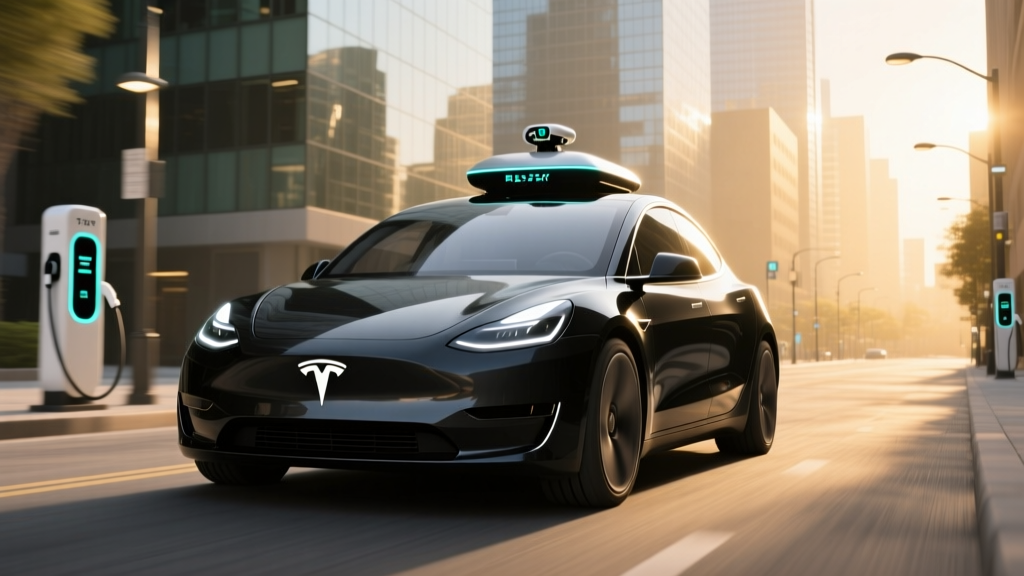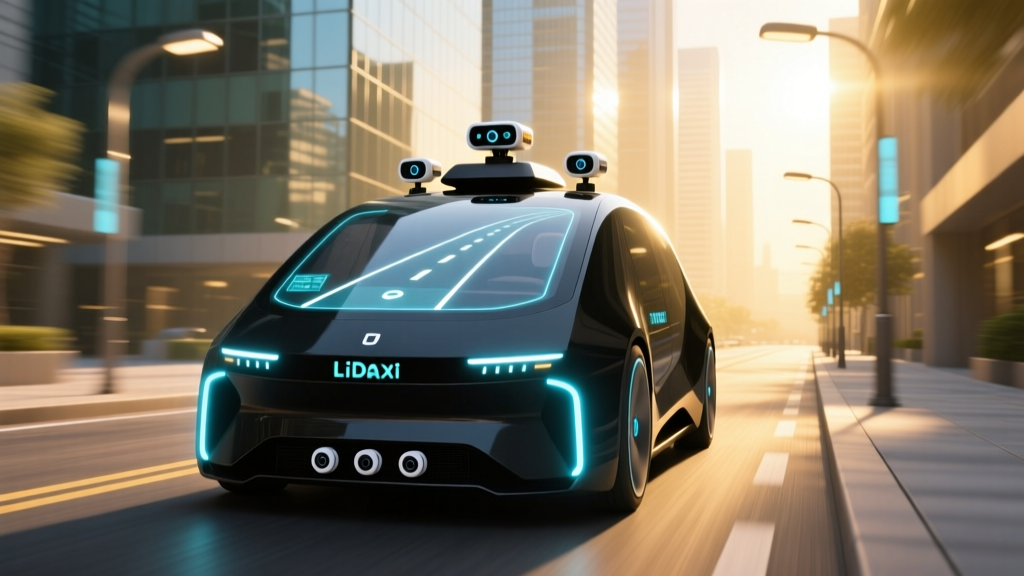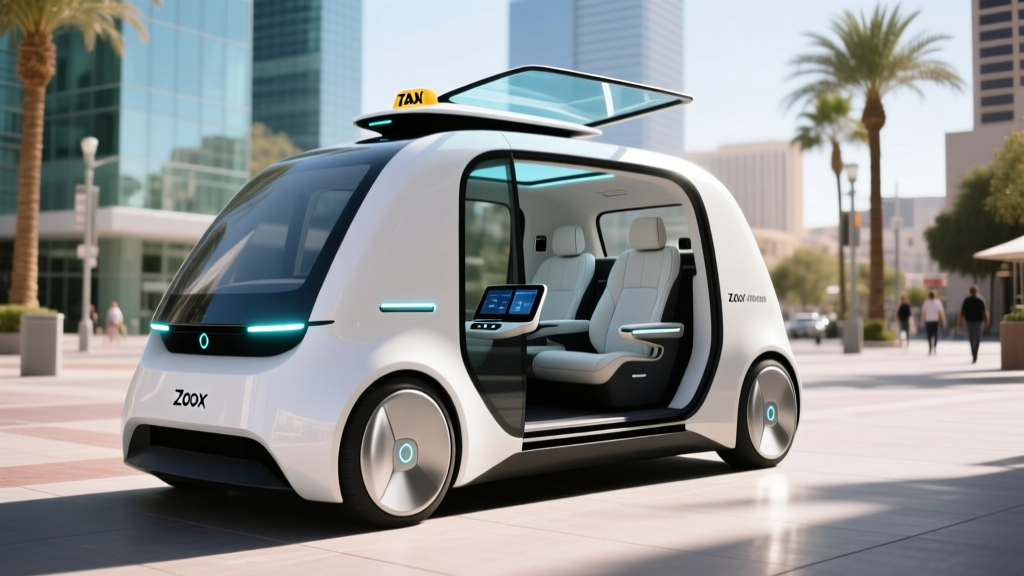
If you have searched for the Las Vegas Zoox car hoping to hail one on the Strip, the short answer is: Zoox operates in Las Vegas, but access remains tightly controlled. The Amazon-backed autonomous-vehicle company has been running its purpose-built robotaxi — a bidirectional, steering-wheel-free carriage — on Nevada roads since late 2023, first with safety drivers and later in limited driverless mode. As of early 2026, Zoox has expanded its operational footprint but has not yet opened a fully public, on-demand ride-hail service comparable to Waymo One in Phoenix or San Francisco.
This guide breaks down exactly what the Las Vegas Zoox car can do today, where you can ride it, what it costs, how safe the platform is, and what limitations still apply.
Is the Las Vegas Zoox Car Truly Self-Driving?
The Zoox robotaxi is engineered as an SAE Level 4 vehicle — meaning it handles all driving tasks within its defined Operational Design Domain (ODD) without any human driver intervention. Unlike Tesla Autopilot or Ford BlueCruise (Level 2 systems that require constant driver supervision), the Zoox vehicle has no steering wheel, no pedals, and no expectation that a passenger will take over. However, Level 4 autonomy is geofenced: the car operates only in pre-mapped areas under specific conditions.
This distinction matters enormously. Consumer driver-assist systems — Tesla FSD (Supervised), GM Super Cruise, BMW Highway Assistant — are all Level 2. The driver remains legally responsible and must monitor the road at all times. The Zoox robotaxi is a fundamentally different category: a driverless commercial transport service where the company and its software bear full responsibility for vehicle operation within its approved zone.
Where Can You Ride the Zoox Robotaxi Right Now?
Zoox has been testing and operating in multiple U.S. cities, but availability varies significantly by location and access type. Here is the current operational status as of early 2026:
| City | Status | Access Type | Notes |
|---|---|---|---|
| Las Vegas, NV | Active operations | Invite-only / employee + limited public | Geofenced corridors near Strip and downtown; no open public app yet |
| Foster City, CA (HQ) | Active operations | Employee shuttle + limited public rides | Most mature test environment; employee commuter routes |
| San Francisco, CA | Testing / limited rides | Invite-only | Competing with Waymo One's established public service |
| Austin, TX | Testing | Internal / safety-driver phase | Expansion market; not yet driverless public |
| Seattle, WA | Testing | Internal | Early-stage mapping and validation |
Las Vegas specifics: The Zoox robotaxi operates on designated road corridors in the Las Vegas area, including routes near the Strip and parts of downtown. The Nevada Department of Motor Vehicles (DMV) and the Nevada Office of the Governor for Economic Development issued permits allowing Zoox to test and operate autonomous vehicles on public roads. However, unlike Waymo's open ride-hail service in Phoenix, Zoox has not launched a general-public app in Las Vegas where anyone can request a ride at will. Access is primarily through invitations, employee programs, and limited public experience events.
How to Use the Service and What It Costs
Because Zoox has not opened a fully public ride-hail platform in Las Vegas, there is no published per-ride price for consumers to compare directly against Uber or Lyft. Here is what we know about Zoox's pricing model and how it compares:
| Service | Estimated Cost (3-mile ride) | Surge Pricing | Availability |
|---|---|---|---|
| Zoox (invite-only rides) | Free or heavily subsidized during preview | No surge (not yet commercial) | Invite-only |
| Waymo One (Phoenix/SF) | $8–$14 | Limited surge in peak hours | Open public app |
| UberX (Las Vegas) | $10–$18 | Yes, frequent on Strip | On-demand |
| Lyft (Las Vegas) | $9–$17 | Yes, frequent on Strip | On-demand |
Zoox has indicated that when it eventually launches a commercial service, pricing will be competitive with rideshare — potentially lower, since there is no human driver to pay. The company's long-term strategy, backed by Amazon's deep capital reserves, is to undercut traditional rideshare on per-mile cost while offering a premium, purpose-built passenger experience (facing seats, climate control, large windows, no driver partition).
For now, if you receive an invitation to ride the Zoox car in Las Vegas, the ride is typically complimentary — part of the company's data-gathering and public-experience program.
How Safe Are Robotaxis? Real Data on Zoox
- Testing miles: Zoox has logged millions of autonomous miles across its test fleet in multiple cities, though the company does not publish a single cumulative figure as frequently as Waymo.
- Disengagement reports: Under California DMV regulations, Zoox files annual disengagement reports. In its most recent filings, Zoox reported decreasing disengagement rates (miles per human intervention), though specific numbers trail Waymo's published figures.
- No reported at-fault collisions with passengers in Las Vegas as of early 2026 during its limited driverless operations.
- NHTSA Standing General Order: Zoox is required to report all crashes involving its ADS-equipped vehicles. Public filings show minor low-speed incidents consistent with urban testing — no serious injuries reported.
Sources: NHTSA Standing General Order, California DMV Disengagement Reports
Context matters. Robotaxi safety data is still evolving, and direct comparisons between Zoox, Waymo, and Cruise (now paused) require nuance. Waymo, with over 5 million driverless miles and an open public service, has published peer-reviewed data showing its vehicles are involved in fewer police-reported crashes per million miles than human drivers in comparable urban environments. Zoox, operating at smaller scale, has less public data available.
The Zoox vehicle itself is engineered with safety as a primary differentiator. Its symmetrical, bidirectional design means it has identical crash structures front and rear. It features a custom airbag system designed for the facing-seat layout, and its sensor suite provides 360-degree perception with overlapping redundancy. The vehicle's top speed is limited to approximately 75 mph, appropriate for urban and suburban corridors.
Inside the Zoox Tech Stack: Sensors, Compute, and Geofencing
| Component | Specification |
|---|---|
| LiDAR | Multiple solid-state and spinning LiDAR units providing overlapping 360° point clouds |
| Cameras | Multi-spectrum camera array (visible light + near-infrared) for object classification and lane detection |
| Radar | Long-range and short-range radar for velocity detection and adverse-weather perception |
| Compute | Custom high-performance computing platform (redundant) running Zoox's full-stack ADS |
| Vehicle design | Purpose-built: bidirectional, no steering wheel, four facing seats, battery-electric |
| Battery | Electric powertrain (exact kWh not publicly disclosed); designed for all-day urban duty cycles with opportunity charging |
| Geofencing | HD-mapped ODD with real-time localization; vehicle will not operate outside approved corridors |
Unlike Tesla's camera-only approach to autonomy, Zoox relies on a multi-sensor fusion stack combining LiDAR, cameras, and radar. This is the same philosophy used by Waymo and the broader autonomous-vehicle industry (with Tesla as the notable outlier). LiDAR provides precise depth mapping regardless of lighting conditions — critical for nighttime operations on the Las Vegas Strip, where neon lights, reflections, and pedestrian density create challenging perception scenarios.
The vehicle's bidirectional capability is not a gimmick. It allows the robotaxi to reverse out of dead-end situations, perform U-turns in tight spaces, and maneuver in ways that conventional vehicles cannot — useful in construction zones or blocked-lane scenarios common in urban Las Vegas.
Regulatory Landscape: Who Approves Zoox in Nevada?
Nevada was one of the first U.S. states to create a legal framework for autonomous vehicle testing and deployment. Here is how the regulatory chain works for the Las Vegas Zoox car:
- Nevada DMV: Issues Autonomous Vehicle Testing Permits. Companies must demonstrate insurance coverage, vehicle safety compliance, and operational plans.
- Nevada Legislature (AB 511, 2011 and subsequent updates): Established the legal framework allowing driverless vehicles on public roads, including provisions for vehicles without steering wheels.
- NHTSA (Federal): Zoox received an exemption from certain Federal Motor Vehicle Safety Standards (FMVSS) that assume a human driver — such as requirements for a steering wheel, mirrors, and a traditional windshield. This exemption, granted in 2024, was critical for the purpose-built carriage vehicle to operate legally.
- NHTSA Standing General Order: Requires all ADS developers to report crashes within one day (serious) or monthly (minor).
The NHTSA's evolving regulatory framework continues to shape how companies like Zoox scale beyond test programs into commercial services. Nevada's relatively permissive stance makes Las Vegas an attractive deployment market, but full commercial licensure for open public ride-hail requires additional insurance, operational, and safety benchmarks.
Current Limitations of the Las Vegas Zoox Car
- Open public access: No ride-hail app is available for the general public in Las Vegas. You cannot simply request a Zoox ride the way you would an Uber.
- Strip hotel-to-hotel routes on demand: Despite operating near the Strip, the geofenced corridors do not cover every hotel entrance, side street, or parking structure.
- Highway driving: The vehicle's top speed (~75 mph) and ODD restrictions mean it stays on surface streets and lower-speed arterials, not I-15 or US-95.
- Heavy rain or dust storms: Like most robotaxis, Zoox vehicles reduce operations or pull over during severe weather that degrades sensor performance — a relevant concern during Las Vegas monsoon season (July–September).
- Construction zones outside mapped ODD: Rapidly changing construction zones on Las Vegas Boulevard and surrounding areas can exceed the vehicle's ODD, requiring remote assistance or route changes.
- Airport pickups: Harry Reid International Airport (LAS) is not currently within the Zoox operational zone for public rides.
- 24/7 operations: Operational hours are limited; the service does not run around the clock like traditional rideshare.
These limitations are typical of Level 4 robotaxis. Waymo in Phoenix and San Francisco faces similar constraints — geofenced boundaries, weather restrictions, and airport-access challenges. The difference is scale: Waymo has been iterating on public roads longer and has opened commercial service, while Zoox is still in the pre-commercial validation phase in Las Vegas.
Zoox vs. Waymo: How Do Las Vegas Robotaxi Options Compare?
Las Vegas visitors interested in autonomous rides should understand the competitive landscape. As of 2026, Zoox is not the only autonomous-vehicle presence in the city, though it is the most high-profile purpose-built robotaxi.
| Feature | Zoox (Las Vegas) | Waymo One (Phoenix / SF / LA) |
|---|---|---|
| Vehicle | Purpose-built carriage (no steering wheel) | Jaguar I-PACE (modified, with steering wheel) |
| SAE Level | Level 4 (geofenced) | Level 4 (geofenced) |
| Public app | Not yet | Yes — open to public |
| Las Vegas service | Invite-only, limited corridors | Not available in Las Vegas (as of 2026) |
| Sensor stack | LiDAR + cameras + radar | LiDAR + cameras + radar (Custom "Waymo Driver" 6th gen) |
| Backing | Amazon | Alphabet (Google) |
| Public miles driven | Millions (not fully disclosed) | 10M+ driverless miles (published) |
The key takeaway: Waymo is further ahead in commercial deployment and public availability, but it does not operate in Las Vegas. Zoox's advantage is its purpose-built vehicle — designed from the ground up as a passenger carriage rather than a retrofitted consumer SUV — and Amazon's logistics and capital infrastructure. Whether Zoox can convert that potential into an open Las Vegas service before competitors enter the market remains the central question.
Frequently Asked Questions
Can anyone hail the Las Vegas Zoox car right now?
No. As of early 2026, Zoox operates in Las Vegas on an invite-only basis. There is no public app or open ride-hail service. Rides are offered through employee programs, partner events, and limited public experience invitations.
How much will a Zoox ride cost when it launches publicly?
Zoox has not published consumer pricing. The company has signaled that rides will be competitive with Uber/Lyft — likely $8–$15 for typical urban trips — with the long-term goal of undercutting human-driven rideshare by eliminating driver compensation costs.
Is the Zoox car electric? What is its range?
Yes, the Zoox robotaxi is fully battery-electric. The company has not publicly disclosed the exact battery capacity (kWh) or EPA-equivalent range, but the vehicle is designed for all-day urban duty cycles with opportunity charging between rides. Urban robotaxi routes typically cover 80–150 miles per day, well within the capability of modern EV platforms.
Has the Zoox robotaxi been in any accidents?
Under NHTSA's Standing General Order, Zoox reports all crashes involving its autonomous vehicles. Public records show minor, low-speed incidents consistent with dense urban testing. As of early 2026, no serious passenger injuries have been reported in Zoox's Las Vegas operations. The NHTSA crash reporting portal is the authoritative source for updated data.
What happens if the Zoox car encounters a situation it cannot handle?
The vehicle is designed to execute a Minimal Risk Condition (MRC) — essentially pulling over safely or stopping in place — when it encounters a scenario outside its capability. Zoox also employs remote assistance operators who can provide guidance to the vehicle's planning system, though these operators do not "drive" the car in real time via teleoperation.
Will Zoox expand to other cities beyond Las Vegas?
Zoox is already testing in Foster City, San Francisco, Austin, and Seattle. Las Vegas and the San Francisco Bay Area are the most mature operational zones. Expansion to additional cities will depend on regulatory approvals, mapping completion, and safety-validation milestones in each market.
How does the Zoox car differ from Tesla's Full Self-Driving?
They are entirely different categories. Tesla FSD (Supervised) is an SAE Level 2 driver-assist system that requires the driver to remain alert and in control at all times. The Zoox robotaxi is an SAE Level 4 driverless service — no human driver is present, and the vehicle operates autonomously within its geofenced area. Comparing the two is like comparing a cruise-control system to a chauffeured town car.
The Las Vegas Zoox car represents one of the most ambitious bets in autonomous mobility: a vehicle designed from the ground up as a robotaxi, operating in one of the most complex urban environments in the United States. The technology is real, the safety engineering is substantial, and the regulatory pathway exists. What remains is the hardest part — scaling from invite-only test rides to a reliable, open, commercial service that Las Vegas visitors and residents can count on. When that happens, the economics of urban transportation will shift. Until then, keep your Uber app handy.