Las Vegas Self-Driving Taxi: What's Actually Running in 2026
Las Vegas has become one of the most active proving grounds for driverless ride-hailing in the United States. But if you're searching for a las vegas self driving taxi, the reality on the ground is more nuanced than the headlines suggest. Two major operators — Waymo (Alphabet's autonomous vehicle division) and Motional (the Hyundai-Aptiv joint venture) — have run commercial or pilot services on the Strip and surrounding corridors, though availability, geofencing, and regulatory approvals have shifted repeatedly since 2023.
This guide breaks down exactly which robotaxi services you can hail in Las Vegas right now, what they cost compared to Uber and Lyft, the real safety data behind the miles driven, and the hard limitations you need to know before you book.
Is This Truly Self-Driving? SAE Automation Levels Explained
The term "self-driving" gets abused in marketing. For robotaxis operating in Las Vegas, the correct classification is SAE Level 4 — meaning the vehicle handles all driving tasks within a defined operational design domain (ODD) without any human intervention. There is no steering wheel interaction from a passenger, and no remote "driver" actively piloting the car in real time (though remote assistance may be available for edge cases).
This is fundamentally different from the Level 2 systems you find in consumer EVs like Tesla Autopilot, Ford BlueCruise, or GM Super Cruise, which require continuous driver supervision.
| Level | Name | Who Drives | Example |
|---|---|---|---|
| Level 2 | Driver Assistance | Human (hands on or eyes on) | Tesla Autopilot, BlueCruise, Super Cruise |
| Level 3 | Conditional Automation | System in limited conditions; human on standby | Mercedes Drive Pilot (limited markets) |
| Level 4 | High Automation | System fully within geofenced ODD; no human needed | Waymo One, Motional robotaxi |
| Level 5 | Full Automation | System everywhere, all conditions | Does not exist commercially |
Source: SAE International J3016
Where Can I Use a Robotaxi in Las Vegas Right Now?
As of early 2026, Las Vegas robotaxi availability is concentrated in specific geofenced zones. Here's the current landscape:
| Operator | Vehicle Platform | Service Area | Status | How to Book |
|---|---|---|---|---|
| Waymo | Jaguar I-PACE (custom sensor suite) | San Francisco, Phoenix, Los Angeles, Austin (primary); Las Vegas testing/partnered rides | Limited commercial / invited rider | Waymo One app (where available) |
| Motional | Hyundai Ioniq 5 (lidar-equipped) | Las Vegas Strip corridor, downtown, select suburban routes | Commercial pilot via Uber/Lyft integration | Uber app (select AV rides) or Lyft |
| Zoox | Zoox purpose-built vehicle | Las Vegas (testing); commercial in SF, limited other cities | Testing / employee-only in LV | Not publicly bookable in LV |
| Cruise | Chevrolet Bolt EV / Origin | Suspended in most markets post-2023 incident; LV not active | Paused / wind-down | N/A |
Key takeaway: Motional is the most accessible option for visitors seeking a driverless ride in Las Vegas. Through its partnership with Uber, you can occasionally be matched with a Motional Ioniq 5 robotaxi when requesting a ride within the geofenced zone — though availability is not guaranteed on every request. Waymo's Las Vegas presence has been more focused on testing and mapping than open commercial service, though the company has signaled expansion plans.
How Much Does a Robotaxi Cost vs. Uber and Lyft?
Pricing for autonomous rides in Las Vegas varies depending on the operator and whether the service is in a subsidized pilot phase or fully commercial.
| Service | Base Fare | Per-Mile Rate | Estimated 5-Mile Trip | Surge Pricing? |
|---|---|---|---|---|
| Motional (via Uber) | ~$2.50 | ~$1.20–$1.50/mi | $8.50–$10.00 | Generally no |
| UberX (human driver) | ~$2.80 | ~$1.30–$1.70/mi | $9.30–$11.30 | Yes (Strip events, peak hours) |
| Lyft (human driver) | ~$2.50 | ~$1.25–$1.65/mi | $8.75–$10.75 | Yes |
| Waymo One (where available) | ~$2.00–$3.00 | ~$1.10–$1.40/mi | $7.50–$10.00 | Generally no |
Robotaxi fares are typically on par with or slightly cheaper than standard UberX/Lyft rides, primarily because the operator is subsidizing the service to build ridership data. Don't expect the dramatically lower prices that some projections promise — those depend on fleet scale that hasn't arrived yet. One advantage: robotaxis generally don't surge-price during conventions or weekend nights on the Strip, which can make them significantly cheaper during peak demand.
How Safe Are Robotaxis? The Real Data
Safety is the most scrutinized question in autonomous vehicles. Here's what the data shows, drawn from operator reports and regulatory filings:
Robotaxi Safety Record — Key Data Points
- Waymo (through 2025): Over 30 million fully autonomous miles driven across Phoenix, San Francisco, Los Angeles, and Austin. Waymo's own data (submitted to NHTSA) indicates a contact rate (police-reportable crashes per million miles) approximately 57% lower than human benchmarks in comparable urban environments for injury-causing crashes.
- Motional: Has logged over 2 million autonomous miles in Las Vegas and other test cities. Public incident reports are fewer due to smaller fleet size, but Motional's safety framework requires a human safety operator during initial deployment phases, transitioning to fully driverless as regulatory approval is granted.
- Cruise (cautionary data): Following a severe pedestrian-dragging incident in San Francisco in October 2023, Cruise suspended nationwide operations. The California DMV revoked its deployment permit. This event underscores that Level 4 autonomy is not fail-proof — edge cases involving post-collision behavior remain a critical challenge.
- NHTSA Standing General Order: Since June 2022, all ADS-equipped vehicles must report crashes to NHTSA. This data is publicly accessible and provides the most comprehensive federal view on robotaxi incident rates. See NHTSA crash reporting.
Context matters: Robotaxis operate in geofenced, mapped areas at moderate speeds (typically under 45 mph). They don't drive in heavy snow, on unmapped roads, or in construction zones without prior mapping updates. This makes direct comparison with human drivers — who drive everywhere in all conditions — imperfect. Within their ODD, robotaxis demonstrate strong safety records, but the ODD is narrow by design.
Under the Hood: Robotaxi Technology Stack
What makes a Level 4 robotaxi capable of navigating the Las Vegas Strip without a human driver? The technology stack varies by operator, but the core sensor architecture follows a common pattern:
Typical Level 4 Robotaxi Sensor Suite
| Sensor Type | Function | Range | Used By |
|---|---|---|---|
| Lidar (roof-mounted, 360°) | 3D point-cloud mapping of surroundings; object detection and classification | Up to 200–300 m | Waymo, Motional, Zoox |
| Cameras (8–12+ around vehicle) | Traffic light recognition, lane detection, signage, object classification | Up to 250 m | All operators |
| Radar (front, rear, corners) | Velocity and distance measurement; works in rain/fog where cameras degrade | Up to 200 m | Waymo, Motional |
| Ultrasonic sensors | Near-field object detection (parking, low-speed maneuvers) | Up to 5 m | All operators |
| HD Maps + GPS/IMU | Pre-built centimeter-accurate maps; vehicle localization | N/A | Waymo, Motional |
| Redundant compute (dual ECU) | Failover processing; real-time sensor fusion and path planning | N/A | All operators |
Lidar vs. camera-only debate: Tesla's consumer FSD system uses a camera-only (vision) approach, arguing that lidar is unnecessary. Every commercial Level 4 robotaxi operator — Waymo, Motional, Zoox — uses lidar as a core sensor. The reason: redundancy. Lidar provides precise depth data independent of lighting conditions, which is critical when a vehicle has no human fallback. On the Las Vegas Strip at night, with neon reflections, pedestrian crowds, and sudden jaywalkers, lidar provides a depth channel that cameras alone cannot reliably replicate.
Geofencing and HD maps: Robotaxis don't drive just anywhere. They operate within a pre-mapped geofence — a virtual boundary that the vehicle's software will not cross. Every road within the geofence is mapped to centimeter-level accuracy, including lane widths, curb heights, traffic signal positions, and speed limits. If a road is closed for construction or the map data is outdated, the vehicle will pull over safely and request remote assistance rather than attempt to navigate unmapped terrain.
Regulatory Landscape: Who Approves Robotaxis?
Robotaxi deployment in the United States is regulated at both the state and federal level, and Las Vegas operates under Nevada's framework:
- Nevada DMV / Department of Transportation: Nevada was the first state to pass autonomous vehicle legislation (2011). Operators must obtain a testing permit and, separately, a deployment permit to carry paying passengers. Requirements include minimum testing miles, safety driver training protocols, and crash reporting.
- NHTSA (federal): Sets vehicle safety standards (FMVSS) and requires crash reporting under the Standing General Order. NHTSA does not currently "approve" ADS software, but it can investigate and issue recalls for autonomous systems — as it did with Cruise in 2024.
- City of Las Vegas / Clark County: Local jurisdictions control road access, permitting for commercial operations, and coordination with first responders. Las Vegas has been generally receptive to AV testing, partly due to the tourism-economy incentive of showcasing advanced technology.
For riders, the practical implication is that any robotaxi you can book through a legitimate app in Las Vegas has passed state-level safety and insurance requirements. But the regulatory framework is still evolving — NHTSA's AV resources page tracks ongoing rulemaking.
Current Limitations: What Robotaxis Can't Do Yet
Understanding the boundaries of today's robotaxi services is essential for setting realistic expectations:
Hard Limitations of Level 4 Robotaxis in Las Vegas
- Geofence boundaries: You cannot hail a robotaxi to McCarran International Airport (Harry Reid) from most Strip locations unless the airport is within the operator's approved zone. Trips outside the geofence will not be offered.
- Weather restrictions: Heavy rain, dust storms (haboobs), or dense fog can trigger operational pauses. Lidar performance degrades in heavy particulate matter, and camera systems struggle with water occlusion. Las Vegas dust storms in summer can shut down service.
- Construction zones: If a mapped road is blocked by temporary construction barriers, the robotaxi will stop and wait for remote guidance rather than improvise. Expect longer wait times or trip cancellations in areas with active road work.
- No highway driving (most operators): Robotaxis in Las Vegas generally stay on surface streets. I-15 freeway segments are not typically included in the ODD for current deployments.
- Pedestrian-heavy edge cases: The Strip's dense pedestrian environment — jaywalkers, costumed performers, large crowds spilling off sidewalks — remains one of the most challenging scenarios for AV perception systems. Vehicles may stop frequently or take conservative routes to avoid these zones.
- No special accommodations: Current robotaxis cannot assist with wheelchair loading, car seats, or luggage beyond standard trunk space. Accessibility features are limited.
- Limited hours: Some pilot services restrict operating hours (e.g., 6 AM to midnight). Late-night service after clubs close may not be available.
How to Actually Ride a Robotaxi in Las Vegas
If you want to experience a driverless ride during your Las Vegas visit, here's the practical playbook:
- Download Uber (or Lyft) and ensure your pickup location is within the known geofenced zone — typically the central Strip corridor (roughly Mandalay Bay to The Wynn) and parts of downtown.
- Request a ride as normal. If a Motional robotaxi is available and your route falls within its ODD, you may be matched with an AV option. The app will indicate that the vehicle is autonomous before you confirm.
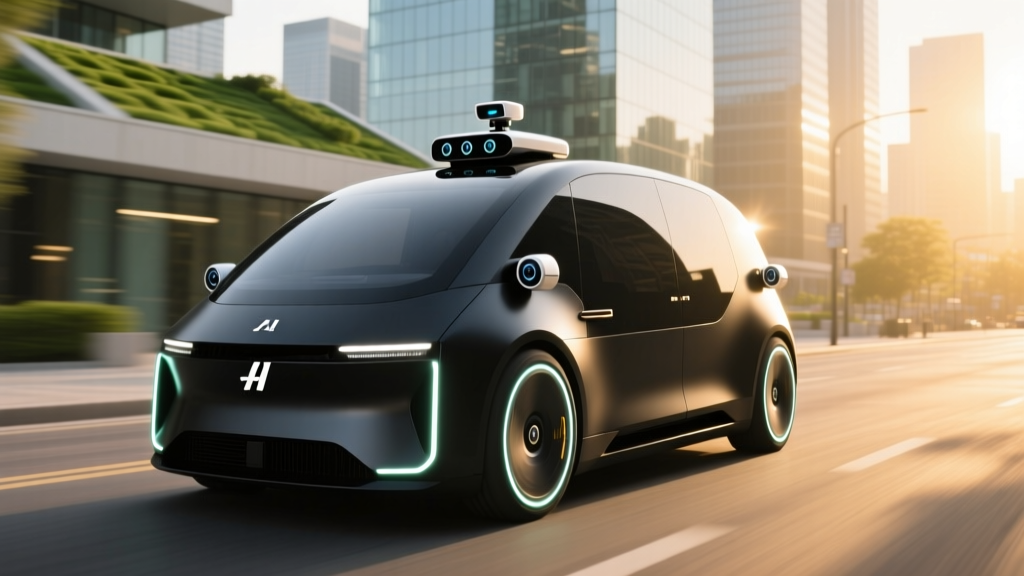
- Verify the vehicle when it arrives — Motional's Ioniq 5 robotaxi is identifiable by its roof-mounted lidar array and sensor pods. The app provides the license plate and vehicle model for confirmation.
- Unlock via app. There's no driver to greet you. Tap "start ride" in the app, and the doors unlock. In-vehicle screens display your route and provide a stop button for emergencies.
- Rate and report. Post-ride feedback directly informs the operator's safety and experience data. Report any concerning behavior through the app.
Frequently Asked Questions
Can I get a self-driving taxi from the Las Vegas airport?
As of early 2026, most robotaxi geofences in Las Vegas do not include Harry Reid International Airport (LAS). You'll need to take a standard rideshare, taxi, or shuttle to a location within the geofenced zone, then request a robotaxi from there. Airport inclusion is on operator roadmaps but requires separate regulatory coordination with airport authorities.
Is the Las Vegas robotaxi really driverless, or is someone watching remotely?
Level 4 robotaxis from Waymo and Motional operate without a human driver in the vehicle. Remote fleet operators monitor vehicles and can provide guidance in edge cases (e.g., rerouting around an unmapped obstruction), but they do not "joystick" the car in real time. The vehicle's onboard AI handles all steering, braking, and navigation decisions independently.
What happens if the robotaxi gets confused or breaks down?
The vehicle is programmed to execute a "minimal risk condition" — it will pull to the side of the road, activate hazard lights, and unlock the doors so you can exit. A remote support team is notified and can communicate with you via in-vehicle speakers. If the vehicle cannot proceed, a support vehicle is dispatched to assist.
Are robotaxis cheaper than Uber at night on the Strip?
Often yes. Robotaxis typically don't implement surge pricing, while Uber and Lyft fares can spike 2–4x during weekend nights, major conventions (CES, SEMA), or after major shows end. A robotaxi ride that costs $9 at 2 PM will likely still cost $9 at 2 AM, whereas a standard UberX could jump to $25+.
How do I know if I'm eligible to ride?
Most robotaxi services require riders to be 18+ with a valid account. Some pilot programs initially restrict rides to invited users or employees. If you're booking through Uber or Lyft and an AV option appears, you're eligible for that ride. Minors are generally not permitted without an adult.
What vehicle will I ride in?
In Las Vegas, the most common robotaxi platform is the Hyundai Ioniq 5 (Motional), equipped with a roof-mounted lidar array, multiple cameras, and radar units. The Ioniq 5's 77.4 kWh battery pack and 300+ mile EPA range give it ample endurance for all-day urban ride-hailing without mid-shift charging interruptions. Waymo, where available, uses the Jaguar I-PACE with its proprietary 5th-generation sensor suite.