Is There Actually a Las Vegas Self-Driving Car You Can Ride Right Now?
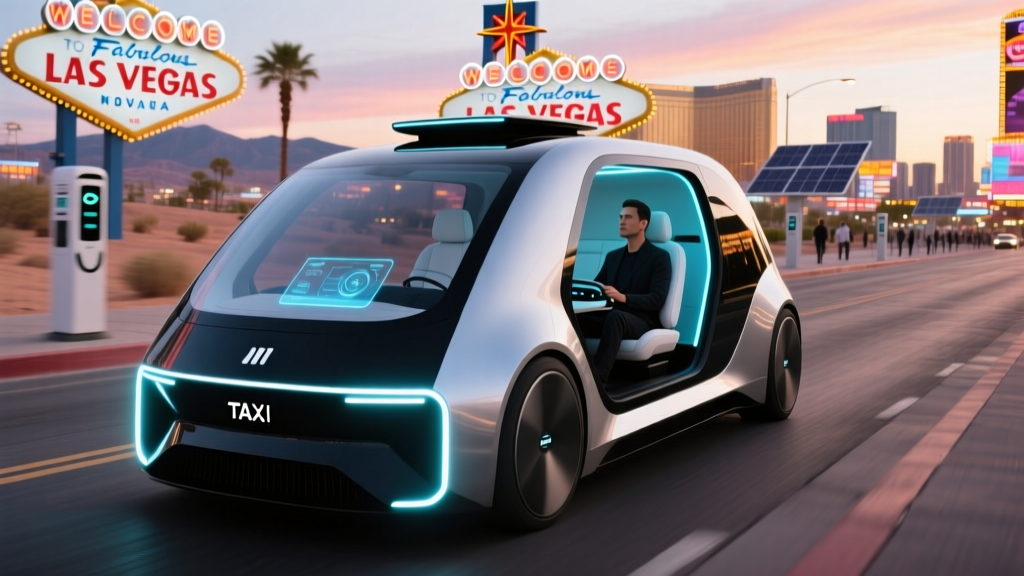
Visitors to Sin City searching for a Las Vegas self-driving car encounter a mix of hype, headlines, and half-truths. The short answer: fully driverless robotaxis (SAE Level 4) do operate in the Las Vegas metro area as of 2026, but the service footprint, vehicle types, and how you hail one differ sharply from Uber or Lyft. This guide cuts through the marketing and tells you exactly where autonomous rides are available, what they cost, how safe they are, and what the technology can — and still cannot — do.
Robotaxis like Waymo's driverless fleet operate at SAE Level 4 — the vehicle handles all driving tasks within a defined operational design domain (geofenced area, certain weather conditions) with no human behind the wheel. This is fundamentally different from SAE Level 2 systems you can buy today (Tesla Autopilot, Ford BlueCruise, GM Super Cruise), which require constant driver supervision. Level 4 robotaxis have no steering wheel accessible to passengers; Level 2 consumer cars do. Never conflate the two.
Where Can I Use a Robotaxi Service in Las Vegas?
As of early 2026, two major robotaxi platforms have an active presence in the Las Vegas valley, though their service areas and availability differ significantly.
| Operator | Vehicles | Service Area | Hours | How to Hail | Status |
|---|---|---|---|---|---|
| Waymo | Jaguar I-PACE EV (5th-gen), Hyundai Ioniq 5 (6th-gen) | ~80 sq mi: Strip corridor, downtown, Convention Center, Harry Reid Airport (designated pickup), parts of Summerlin and Henderson | 24/7 | Waymo One app (invite/waitlist) | Live — open to public |
| Motional (Hyundai/Aptiv JV) | Hyundai Ioniq 5 robotaxi | Limited geofence: Strip and downtown core (~15 sq mi) | Limited hours (typically 10 AM – 1 AM) | Uber app (select autonomous option) or Lyft app | Live — limited public availability via rideshare partners |
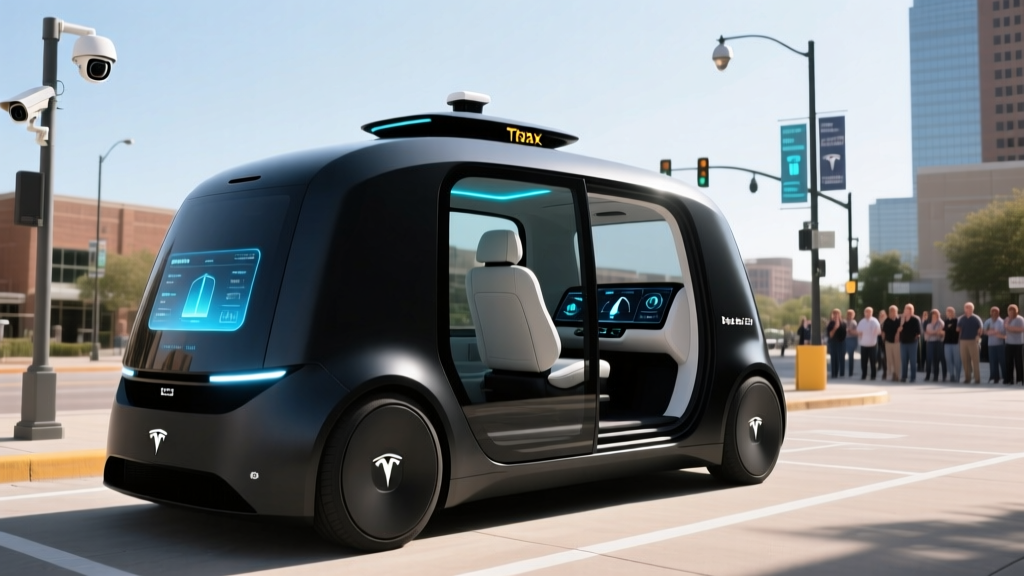
| Zoox | Zoox purpose-built vehicle (bidirectional, no steering wheel) | Announced Las Vegas expansion; primary operations remain in San Francisco and Las Vegas testing zones | TBD for full public service | Zoox app (waitlist) | Limited rides / early access |
Key takeaway: Waymo is the most accessible option for visitors wanting a true driverless ride along the Strip and to the airport. Motional rides are available but spottier — you may need to specifically request the autonomous option within Uber or Lyft and be within their geofence. Zoox's distinctive carriage-style vehicles are still scaling public access.
How Much Does a Robotaxi Cost vs Uber and Lyft?
Pricing is the first question most riders ask. Robotaxi fares in Las Vegas are designed to be competitive with conventional rideshare, though surge dynamics differ.
| Route (~distance) | Waymo (est.) | UberX (est.) | Lyft Standard (est.) |
|---|---|---|---|
| Strip hotel → Harry Reid Airport (~4 mi) | $14 – $22 | $12 – $28 (surge dependent) | $11 – $26 |
| Strip hotel → Downtown/Fremont St (~6 mi) | $18 – $28 | $16 – $35 | $15 – $32 |
| Strip hotel → Convention Center (~2 mi) | $8 – $14 | $8 – $18 | $7 – $16 |
| Strip hotel → Summerlin (~12 mi) | $28 – $42 | $25 – $50 | $24 – $48 |
How pricing works: Waymo uses a per-mile + per-minute model with a base fare, similar to Uber/Lyft. Unlike human-driven rideshare, robotaxis don't experience traditional surge pricing from driver scarcity, though demand-based adjustments may apply during peak events (CES, Super Bowl weekends, New Year's Eve). Waymo frequently offers promotional credits for new riders — check the app for current offers.
Tipping: There is no driver to tip in a Level 4 robotaxi. Waymo's app does not prompt for a tip on driverless rides.
How Safe Are Robotaxis? The Real Data
Safety is the most scrutinized aspect of autonomous vehicles. Rather than relying on manufacturer claims, let's look at reported data.
- Autonomous miles driven: Over 10 million fully driverless miles across all metro areas (Phoenix, San Francisco, Los Angeles, Las Vegas, Austin)
- Injury-causing crash rate: Waymo's published safety data and third-party analyses (including a study by the Insurance Institute for Highway Safety) show Waymo driverless vehicles involved in injury-causing crashes at a rate approximately 70–85% lower than benchmark human drivers in comparable urban environments
- Police-contactable incidents: The vast majority are low-speed contact events (e.g., a vehicle stopping and being rear-ended by a human driver); Waymo vehicles tend to stop conservatively, which occasionally causes minor rear-end collisions
- NHTSA Standing General Order: All Level 4 operators must report crashes to NHTSA within 24 hours — this data is publicly queryable and provides a floor for incident tracking
Context that matters: Robotaxis operate under heavy geofencing and conservative driving parameters. They don't speed, don't drive impaired, and don't text — eliminating the top three causes of human crashes. However, they can behave unpredictably from a human driver's perspective: stopping abruptly for perceived hazards, taking unusual routes, or pausing at complex intersections. Most incidents involving robotaxis are caused by other human-driven vehicles, not the autonomous vehicle itself.
Notable incidents: The robotaxi industry experienced high-profile setbacks in 2023–2024 (Cruise's license suspension in California after a pedestrian-dragging incident in San Francisco). These events led to tighter regulatory scrutiny and slower expansion timelines across the industry. Waymo, by contrast, maintained operations and expanded methodically, which is why it remains the dominant Level 4 operator in Las Vegas.
Under the Hood: Robotaxi Technology Stack
Understanding what makes a Las Vegas self-driving car operate without a human requires a look at the sensor suite and computing stack. Here's how the major platforms differ:
Waymo (Jaguar I-PACE / Hyundai Ioniq 5 — 5th & 6th Gen)
- LiDAR: Multiple roof-mounted and side-mounted LiDAR units providing a 360° 3D point cloud out to ~500 meters
- Cameras: 29+ cameras covering 360° with overlapping fields of view for redundancy
- Radar: 6+ radar units for velocity detection and adverse-weather penetration
- Audio sensors: External microphones to detect emergency vehicle sirens
- Compute: Custom-designed Waymo Driver platform with redundant computing — if one system fails, a backup takes over immediately
Motional (Hyundai Ioniq 5 Robotaxi)
- LiDAR: Roof-mounted LiDAR array (Motional/Aptiv proprietary)
- Cameras: Multi-camera surround system
- Radar: Multiple radar units for object tracking
- Redundancy: Dual-redundant braking, steering, and computing systems built on Hyundai's EV platform
Zoox (Purpose-Built Vehicle)
- LiDAR: 4 corner-mounted LiDAR units with overlapping 360° coverage
- Cameras: 8+ cameras with overlapping views
- Radar: Multiple radar units
- Vehicle: Symmetrical, bidirectional design — no steering wheel, no designated "front" — seats 4 passengers face-to-face
LiDAR vs camera-only: You may know that Tesla's consumer FSD (Supervised) system relies on cameras alone. Every Level 4 robotaxi operator uses LiDAR as a core sensor. Why? LiDAR provides direct, physics-based distance measurement independent of lighting conditions — critical for a vehicle with no human fallback. Camera-only systems must infer depth computationally, which introduces edge-case risk that Level 4 operators, bearing full liability, are unwilling to accept.
Geofencing and HD maps: Robotaxis don't drive anywhere they please. They operate within a pre-mapped geofence using high-definition maps that capture lane geometry, traffic signal positions, curb heights, and construction zones to centimeter-level precision. If the vehicle leaves its geofence or encounters unmapped road changes, it will pull over safely and request remote assistance.
Regulatory Landscape: Who Approves Robotaxis in Nevada?
Nevada was one of the first states to pass autonomous vehicle legislation (AB 511, signed in 2011), and its regulatory framework remains one of the most permissive in the U.S.
- State authority: The Nevada Department of Motor Vehicles (DMV) issues autonomous vehicle testing and deployment permits. Operators must demonstrate safety cases, insurance coverage (minimum $5M), and compliance with state traffic law.
- Federal oversight: NHTSA retains authority over vehicle safety standards (FMVSS). The Zoox vehicle, for instance, required an NHTSA exemption because its steering-wheel-free design didn't meet existing standards — that exemption was granted in 2024.
- Local coordination: Clark County and the City of Las Vegas coordinate on road infrastructure (signal timing, lane markings) that supports autonomous operations. The Las Vegas Convention and Visitors Authority (LVCVA) has also partnered on pilot programs.
- No special rider license required: Passengers do not need any license, training, or waiver beyond agreeing to the operator's terms of service in the app.
Current Limitations: What Robotaxis Still Can't Do
Level 4 autonomy is impressive within its operational design domain — but that domain has real boundaries. Here are the limitations every rider should understand:
Geofence Boundaries
Robotaxis cannot take you to Red Rock Canyon, Lake Mead, or the Hoover Dam. If your destination is outside the mapped service area, the app will not let you book the ride. Service areas expand gradually but are not city-wide.
Weather Constraints
Las Vegas is chosen partly because it rarely rains — but when it does, or during dust storms (haboobs), robotaxi services may reduce availability or pause operations entirely. Heavy rain scatters LiDAR returns and degrades camera visibility. Operators will always err on the side of caution.
Edge Cases and Remote Assistance
When a robotaxi encounters a scenario it can't resolve — an unusual construction zone, a police officer directing traffic with hand signals, a fallen tree across the road — it will stop safely and connect to a remote human operator who can guide it through or dispatch a recovery vehicle. This can add 5–20 minutes to your trip. It's rare but not zero.
Pickup/Dropoff Precision
Robotaxis use designated pickup zones (especially at the airport and large hotels). You may need to walk to a specific curb or ride-share area rather than being picked up at your exact GPS pin. The app provides walking directions to the pickup point.
No Go Scenarios
- Unpaved roads, parking garages (some), and private property
- Highways outside the geofenced freeway segments (e.g., I-15 north toward the California border may not be included)
- Children under a certain age may require an accompanying adult (check operator policies)
- Pets in carriers are generally allowed; loose animals are not
What Riding a Las Vegas Self-Driving Car Actually Feels Like
Based on multiple rides across Waymo and Motional vehicles on the Strip and downtown corridor, here's what to expect:
The vehicle: Waymo's Jaguar I-PACE is a luxury EV with a ~70 kWh battery pack and roughly 234 miles of EPA range — though that's irrelevant to riders since the fleet charges between shifts. The interior is clean, with a screen showing the vehicle's real-time perception (detected cars, pedestrians, traffic lights rendered in 3D). Motional's Ioniq 5 robotaxi offers a similar experience with Hyundai's EV platform.
The drive: Expect conservative, deliberate driving. The car accelerates smoothly (no aggressive merging), maintains speed limits exactly, and stops with noticeable caution at intersections. It will not run a yellow light. Some riders find this reassuring; others find it overly timid, especially when human drivers behind them are impatient.
Arrival: The vehicle pulls to a designated stop, unlocks the doors via the app, and you exit. The screen confirms ride completion and prompts for a rating.
Frequently Asked Questions
Where can I use a robotaxi service right now in Las Vegas?
Waymo offers the broadest coverage — roughly 80 square miles including the Strip, downtown Las Vegas, the Convention Center, Harry Reid International Airport (designated pickup zones), and parts of Summerlin and Henderson. Motional operates a smaller geofence along the Strip and downtown core via Uber and Lyft. Zoox is in limited early-access service.
How much does a robotaxi cost compared to Uber or Lyft?
Roughly comparable. A Strip-to-airport ride runs $14–$22 on Waymo versus $11–$28 on UberX depending on surge. Robotaxis avoid human-driver surge spikes but may apply demand-based pricing during major events. There's no tipping.
How safe are robotaxis — is there real data?
Yes. Waymo reports over 10 million driverless miles with injury-causing crash rates 70–85% lower than human benchmarks in comparable urban driving, per IIHS and internal analyses. Most incidents involving robotaxis are low-speed events caused by other drivers. All crashes are reported to NHTSA under the Standing General Order.
What are the current limitations of Las Vegas robotaxis?
Geofence boundaries (no trips outside the mapped zone), weather pauses during rain or dust storms, occasional remote-assistance delays at complex scenarios, designated pickup/dropoff zones rather than door-to-door, and no service to attractions outside the metro area.
Is this truly self-driving or is someone remotely controlling the car?
The vehicle drives itself — no remote operator is steering in real-time. Remote assistance is used only for edge cases the AI cannot resolve (e.g., interpreting a flagger's hand signals). The remote operator provides high-level guidance, not continuous driving input. This is SAE Level 4 autonomy within the operational design domain.
Do I need a driver's license to ride in a robotaxi?
No. Passengers do not need a license. You simply book through the operator's app, agree to the terms of service, and ride. You cannot intervene in driving because there are no passenger-accessible driving controls.
Can I take a robotaxi from the Las Vegas airport?
Waymo serves Harry Reid International Airport with designated pickup areas. Check the Waymo One app for the exact pickup location — it may not be the standard rideshare curb. Motional's airport service depends on their current geofence configuration.