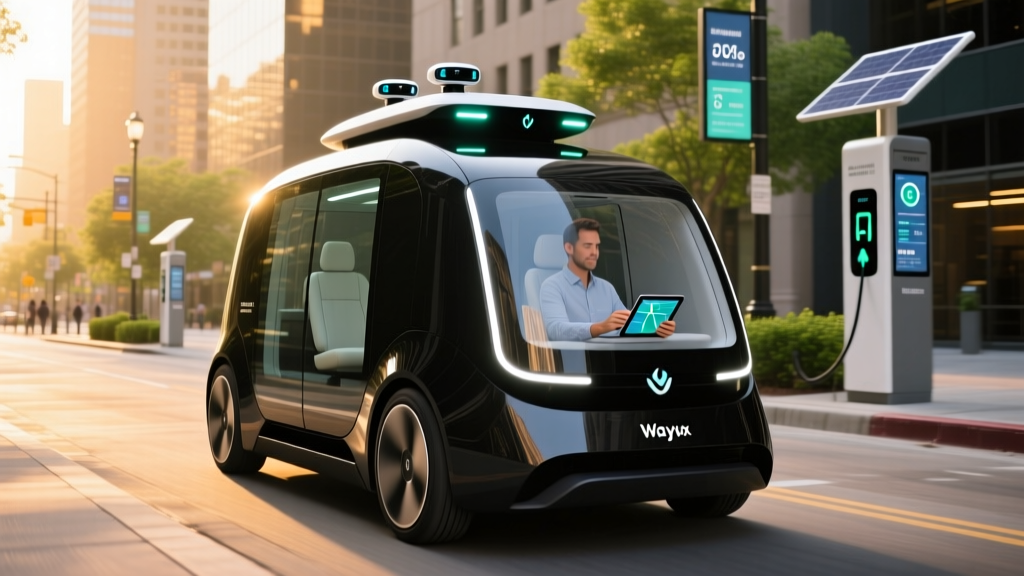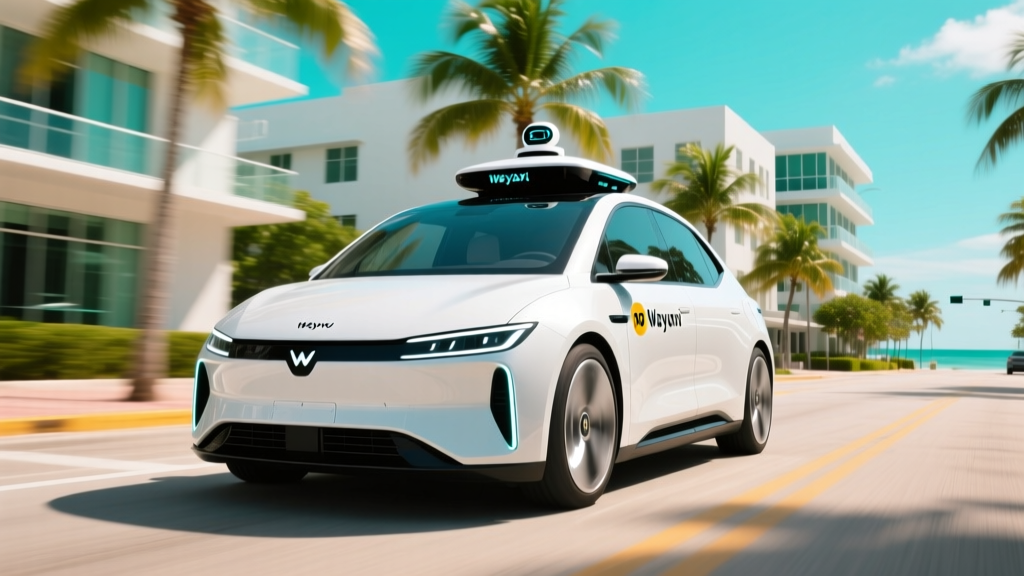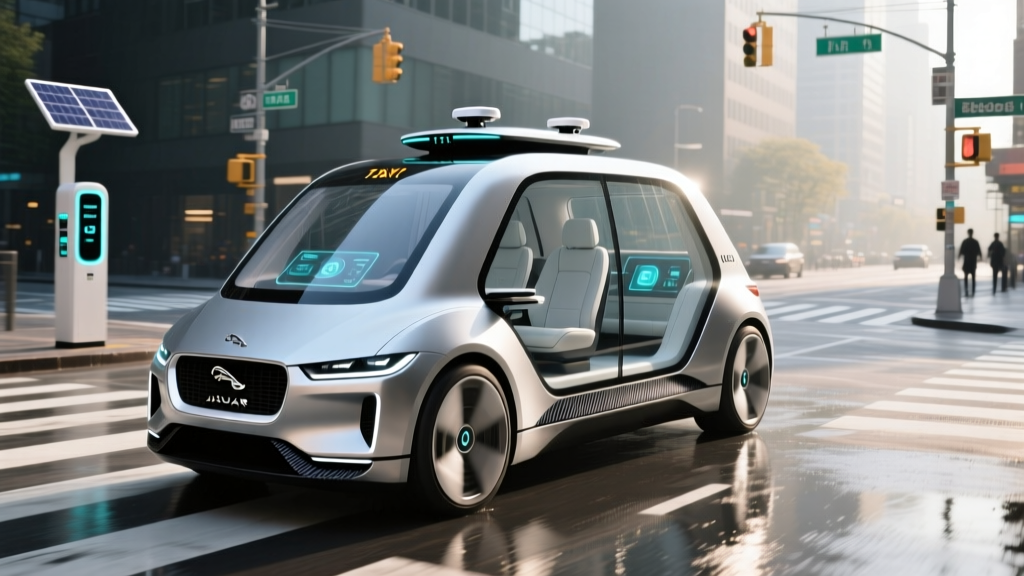
The Jaguar I-PACE has lived two very different lives in the EV world. First launched as Jaguar's premium electric SUV in 2019, it found a second — and arguably more consequential — purpose as the backbone of Waymo's commercial robotaxi fleet. If you've searched for the "Jaguar Waymo model," you've likely seen these white, sensor-laden I-PACEs navigating the streets of Phoenix, San Francisco, and Los Angeles without a human behind the wheel. This guide breaks down exactly what makes this vehicle-platform pairing work, where you can ride in one today, and what the real safety and technology data says.
What Is the Jaguar Waymo Model?
The vehicle in question is the Jaguar I-PACE, a battery-electric luxury crossover originally built on Jaguar Land Rover's D7e aluminum platform with a 90 kWh (usable ~84 kWh) lithium-ion NMC battery pack, dual-motor all-wheel drive producing 394 horsepower, and an EPA-rated range of 234 miles in consumer trim. Waymo partnered with Jaguar Land Rover beginning in 2018 to co-engineer a purpose-built version of the I-PACE for autonomous ride-hailing, integrating Waymo's fifth-generation (and now sixth-generation) Driver sensor suite directly into the vehicle's body panels, roof, and electrical architecture during assembly.
This isn't a retrofit. The Waymo-modified I-PACE rolls off the production line with pre-installed mounting points, dedicated power distribution for the sensor and compute stack, and custom wiring harnesses — making it the first vehicle designed from the factory floor up for Level 4 autonomous commercial service.
The Jaguar I-PACE Waymo robotaxi operates at SAE Level 4 — meaning the system performs all driving tasks within its defined Operational Design Domain (ODD) without any human driver involvement or supervision. There is no steering wheel interaction required, no "hands-on" alert, and no fallback to a human occupant. This is fundamentally different from Level 2 systems like Tesla Autopilot, GM Super Cruise, or Ford BlueCruise, which require continuous driver attention. Within Waymo's geofenced service areas, the vehicle is fully driverless.
Where Can You Ride the Jaguar Waymo Robotaxi Right Now?
As of early 2026, Waymo operates its commercial "Waymo One" ride-hailing service using the Jaguar I-PACE fleet in several major U.S. metros. Service areas are geofenced — the car will only operate within mapped and approved zones, which expand periodically as regulators grant permits and Waymo validates new corridors.
| City | Status | Coverage Area | Notes |
|---|---|---|---|
| Phoenix, AZ | Fully operational | ~315 sq mi (metro-wide including Chandler, Tempe, Mesa, Scottsdale) | Largest and longest-running market; airport service to PHX available |
| San Francisco, CA | Fully operational | Most of SF proper, portions of Daly City | 24/7 service; dense urban environment with frequent cyclist/pedestrian interactions |
| Los Angeles, CA | Operational (expanding) | Santa Monica, Hollywood, Downtown LA, Westside corridors | Freeway-capable routes added; LAX service in testing phase |
| Austin, TX | Operational (limited) | Central Austin, South Austin corridors | Launched commercially in 2025; expansion ongoing |
If you're outside these geofences, the Waymo One app will not allow you to hail a ride. Waymo has announced intentions to expand to additional cities, but those timelines depend on regulatory approval, mapping completion, and fleet deployment — treat any announced city as "coming" rather than "live" until rides are bookable in the app.
Technology Stack: How the Jaguar I-PACE Sees the Road
Waymo's approach to autonomy is sensor-fusion-heavy, contrasting sharply with camera-only strategies (like Tesla's). The Jaguar I-PACE robotaxi carries Waymo's custom "Driver" hardware suite, which in its current sixth-generation form includes:
- LiDAR: Multiple solid-state and spinning LiDAR units providing a 360-degree, 500+ meter point-cloud map of the environment. LiDAR gives precise depth perception independent of lighting conditions — critical for night driving, tunnels, and glare.
- Cameras: A suite of high-resolution cameras covering 360 degrees, optimized for reading traffic signals, detecting brake lights, recognizing signage, and identifying pedestrian gestures.
- Radar: Imaging radar units for velocity detection of moving objects, functioning reliably in rain, fog, and dust where cameras and LiDAR can degrade.
- Audio detection: External microphones trained to detect sirens from emergency vehicles, enabling the car to pull over or yield appropriately.
- Compute: Custom-designed onboard computers running Waymo's perception, prediction, and planning models — processing terabytes of sensor data per hour in real time.
- HD Mapping: Pre-built centimeter-accurate maps of every operational road, providing a baseline that the live sensor data is compared against.
The redundancy here is deliberate. If fog scatters LiDAR returns, radar still tracks moving vehicles. If a camera is blinded by direct sun, LiDAR still detects the stopped truck ahead. This multi-sensor approach is why Level 4 robotaxis can operate without a human fallback — no single sensor failure creates a blind spot the system can't compensate for.
Cost: Waymo Pricing vs. Uber and Lyft
Waymo prices its rides to be competitive with Uber and Lyft in the same markets, though exact fares vary by distance, time of day, and demand. There's no surge pricing in the traditional rideshare sense — Waymo uses a more predictable per-mile and per-minute rate structure, though wait times can increase during peak demand when fleet capacity is strained.
| Route Example | Waymo One | UberX | Lyft Standard |
|---|---|---|---|
| 5-mile urban trip (Phoenix) | $12–$16 | $11–$18 | $10–$17 |
| 10-mile trip (SF, non-peak) | $22–$30 | $20–$35 | $18–$32 |
| Airport run (PHX, 15 miles) | $35–$45 | $30–$55 | $28–$50 |
Key pricing difference: Uber and Lyft fares can spike 2–4x during surge periods. Waymo's pricing is more stable, but availability is not guaranteed — if all cars in your zone are occupied, you simply wait or choose another option. Tipping is not expected (there's no driver), though the app does offer a tip option that goes to Waymo's cleaning and support staff.
Safety Record: What the Data Actually Shows
Robotaxi safety is the most scrutinized — and most misunderstood — topic in autonomous vehicles. Waymo publishes safety data periodically, and third-party analyses from insurance and research institutions provide additional context.
- 30+ million fully driverless miles completed across the fleet.
- Property damage claims: Waymo reported a 76% reduction in property damage claims compared to human baseline drivers in the same cities, per a study co-authored with Swiss Re.
- Injury claims: A 92% reduction in injury-causing crash rates versus the human benchmark, per the same Swiss Re analysis.
- Contact rate: Police-contactable incidents occur at roughly 1 per 100,000+ driverless miles — significantly lower than human drivers in comparable urban environments.
- NHTSA Standing General Order: Waymo reports all incidents involving its ADS-equipped vehicles as required. Most reported incidents involve the Waymo vehicle being rear-ended or side-swiped by human drivers, not the robotaxi initiating contact.
The data suggests Waymo's fleet is materially safer than the average human driver in its operating environments — but context matters. These vehicles operate in mapped, mostly well-structured urban and suburban corridors, often in fair-weather cities (Phoenix, LA). They don't yet handle rural two-lane roads, unmapped construction zones, or extreme weather. Comparing robotaxi safety to human driving on Interstate highways in a blizzard isn't apples-to-apples — the robotaxi simply doesn't operate there.
For the latest official data, Waymo publishes its safety reports at waymo.com/safety, and the NHTSA automated vehicles page tracks incident reports across all manufacturers.
Current Limitations: What the Jaguar Waymo Model Cannot Do
Level 4 autonomy within a geofence is a remarkable engineering achievement, but it comes with hard operational boundaries that riders should understand before booking:
- Geofence boundaries: The car will not drive outside its approved zone. If your destination is across the geofence line, the app won't let you book the trip or will route you to the nearest drop-off inside the boundary.
- Weather restrictions: Heavy rain, fog, snow, and dust storms degrade sensor performance. In Phoenix, monsoon downpours can trigger temporary service pauses. San Francisco fog is managed, but extreme conditions will ground the fleet.
- Construction zones: Major, unmapped roadwork can confuse the system. Waymo's HD maps are updated frequently, but overnight lane closures or emergency utility work may cause the vehicle to reroute conservatively or pull over and request remote assistance.
- No highway driving (most markets): While Waymo has begun testing freeway-capable routes in Los Angeles, most Phoenix and SF rides use surface streets. Long-distance intercity trips are not possible.
- Pickup/drop-off precision: The car pulls to a safe, legal curb — not necessarily the exact front door of your destination. In dense areas, you may walk a short block.
- Wait times: Fleet size is finite. During peak hours (Friday nights, event let-outs), waits of 10–20 minutes are common. Waymo does not currently allow scheduled rides far in advance.
- No special accommodations: Car seats, wheelchair-accessible vehicles, and pet transport are generally not available. The fleet is standard I-PACE crossovers.
- Remote assistance delays: When the vehicle encounters an unresolvable scenario, it contacts a remote human operator. This usually takes seconds, but in rare cases can add minutes to your trip.
Regulatory Landscape: Who Approves Robotaxi Operations?
Robotaxi deployment in the United States is governed by a patchwork of state and local authorities — there is no single federal "robotaxi license." Here's how the approval chain works for Waymo's Jaguar I-PACE fleet:
State level: Each state sets its own rules for autonomous vehicle testing and commercial deployment. In Arizona, the approach has been permissive — Governor Doug Ducey's 2018 executive order opened the door for driverless commercial service with minimal permitting friction. California, by contrast, requires permits from both the California DMV (for testing and deployment) and the California Public Utilities Commission (CPUC, for commercial ride-hailing). Texas has its own framework under the Texas Department of Licensing and Regulation.
Federal level: The NHTSA oversees vehicle safety standards and requires all ADS-equipped vehicles to report incidents under the Standing General Order. However, NHTSA has not yet established comprehensive federal performance standards for Level 4 systems — a gap that industry groups and safety advocates have pushed Congress to address.
Local level: Cities can impose operational restrictions — speed limits for AVs, zone exclusions (school zones, event areas), and first-responder interaction protocols. San Francisco's Board of Supervisors has at times pushed to restrict Waymo operations following specific incidents, illustrating the tension between municipal concerns and state-level permits.
The Jaguar I-PACE Platform: Why This EV Was Chosen
Waymo's selection of the Jaguar I-PACE wasn't arbitrary. The platform offered several engineering advantages for autonomous fleet use:
- Flat battery floor: The I-PACE's 90 kWh pack sits low in the chassis, providing a stable ride and ample roof-load capacity for the sensor array without compromising center of gravity.
- Drive-by-wire readiness: The I-PACE's electric powertrain, steering, and braking systems are all electronically controlled — essential for seamless integration with Waymo's compute system without mechanical linkages requiring human input.
- Premium cabin: As a luxury vehicle, the I-PACE interior provides a comfortable rider experience — important for a premium ride-hailing service competing with Uber Black and Lyft Lux on perception, if not always on price.
- Manufacturing partnership: Jaguar Land Rover committed to building Waymo-spec vehicles on the same production line as consumer I-PACEs, enabling scale that a custom-built prototype vehicle couldn't achieve.
One note for consumer EV shoppers: the consumer Jaguar I-PACE (sold through dealerships) is a separate product from the Waymo fleet vehicle. You cannot purchase a Waymo-equipped I-PACE, and the consumer version does not include any Level 4 autonomy features. The consumer I-PACE was discontinued for the U.S. market after the 2024 model year as Jaguar pivoted toward its upcoming all-electric luxury lineup.
Frequently Asked Questions
Is the Jaguar Waymo model truly self-driving, or is there a safety driver?
In Waymo One commercial service, the Jaguar I-PACE operates fully driverless — no human in the driver's seat, no remote joystick controlling the car in real time. The vehicle handles all driving tasks within its geofenced zone autonomously. Remote assistance operators can advise the vehicle on high-level decisions (e.g., "proceed past the cone" or "wait for the flagger"), but they do not steer or brake the car remotely. This is SAE Level 4.
How much does a Waymo ride cost compared to Uber or Lyft?
Waymo fares are generally comparable to UberX and Lyft Standard — typically $12–$16 for a 5-mile urban trip, with no surge multiplier. During peak demand, Waymo's price stays stable but wait times increase, whereas Uber/Lyft prices spike. For airport runs and longer trips, Waymo can sometimes be cheaper than surge-priced rideshare, though it depends on the specific route and time.
What happens if the Waymo robotaxi encounters an emergency?
The vehicle is programmed to execute a "minimal risk condition" — pulling to the curb, activating hazards, and unlocking doors. Passengers can contact Waymo support via an in-vehicle screen or the app at any time. In medical emergencies, riders should call 911 directly. The vehicle's remote assistance team can also coordinate with first responders if alerted.
Can I hail a Waymo Jaguar I-PACE in any city?
No. As of 2026, Waymo One is commercially available in Phoenix, San Francisco, Los Angeles, and Austin — all within specific geofenced zones. You must be inside the service area to request a ride, and both your pickup and drop-off must fall within the approved zone. Expansion to additional cities is ongoing but depends on regulatory approval and fleet deployment timelines.
What sensors does the Jaguar Waymo robotaxi use?
The current Waymo Driver suite on the I-PACE includes multiple LiDAR units (providing 360-degree 3D mapping up to 500+ meters), a surround camera array, imaging radar, external audio sensors for siren detection, and custom onboard compute hardware. This multi-sensor fusion approach is fundamentally different from camera-only systems and provides redundancy that enables driverless operation.
Is the Waymo robotaxi safe at night?
Yes — Waymo operates 24/7 in cities like San Francisco and Phoenix. The LiDAR and radar sensors are not dependent on visible light, so nighttime driving does not degrade the vehicle's perception the way it degrades human vision. That said, nighttime introduces different edge cases (e.g., jaywalking pedestrians in dark clothing, poorly lit construction zones), and the system is trained on extensive nighttime driving data from its fleet.