The Jaguar I-PACE: Waymo's Electrified Robotaxi Workhorse
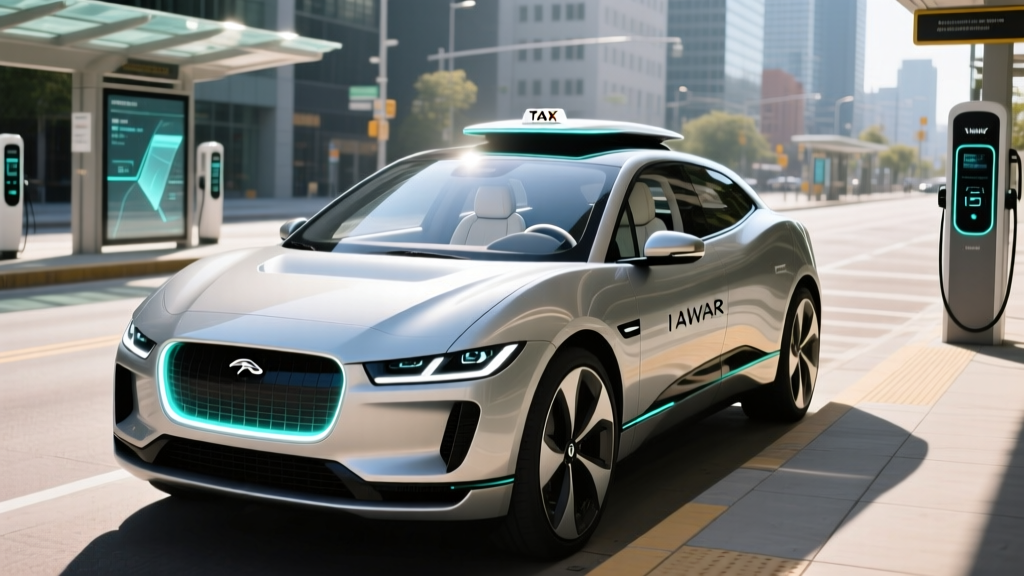
When Waymo selected the Jaguar I-PACE as the primary vehicle for its commercial robotaxi service, it wasn't a random choice. The I-PACE offered a flat skateboard-like floor, a 90 kWh battery pack, and an architecture that could accommodate Waymo's 5th-generation sensor suite without looking like a science experiment. Since 2018, thousands of Jaguar I-PACE units have been integrated into Waymo's fleet, accumulating millions of fully driverless miles across Phoenix, San Francisco, Los Angeles, and Austin.
For EV shoppers and autonomous-vehicle watchers alike, understanding the intersection of the I-PACE platform and Waymo's Level 4 autonomy system reveals what production robotaxis actually require — and where the technology still hits walls.
Waymo's robotaxi service operates at SAE Level 4, meaning the vehicle handles all driving tasks within a defined operational design domain (geofenced area, specific weather conditions) with no human driver required. This is fundamentally different from Level 2 systems like Tesla Autopilot or GM Super Cruise, which require continuous driver supervision. In a Waymo I-PACE, there is no one behind the wheel — and no steering wheel controls for a passenger to grab.
Waymo's Jaguar I-PACE Fleet: Specs and Sensor Stack
The Jaguar I-PACE units in Waymo's fleet differ significantly from the consumer version you'd find at a dealership. While the core electric powertrain remains the same, Waymo integrates its custom 5th-generation Waymo Driver hardware suite — a dense array of sensors that provides 360-degree perception at distances exceeding 500 meters.
| Specification | Consumer I-PACE (2024-2025) | Waymo I-PACE (5th-Gen Driver) |
|---|---|---|
| Battery Capacity | 90 kWh (usable ~84 kWh), NMC | 90 kWh (usable ~84 kWh), NMC |
| EPA Range | 246 miles | ~180-200 miles (sensor/compute parasitic load reduces range ~20%) |
| Motor Output | 394 hp / 512 lb-ft (dual motor AWD) | 394 hp / 512 lb-ft (dual motor AWD) |
| 0-60 mph | 4.5 seconds | ~5.0 seconds (added weight from sensor suite) |
| DC Fast Charge Peak | 100 kW (CCS1) | 100 kW (CCS1) |
| 10-80% Charge Time | ~45 minutes | ~45 minutes |
| Lidar Units | None | 5 (roof-mounted + perimeter) |
| Cameras | Standard ADAS suite | 29 high-resolution cameras (perimeter + cabin) |
| Radar | Standard ADAS | 6 radar units (long-range + short-range) |
| Audio Sensors | None | External microphones (siren/emergency detection) |
Why Lidar-Heavy? The Sensor Philosophy
Waymo's approach diverges sharply from Tesla's camera-only FSD strategy. The I-PACE robotaxi uses a redundant, multi-modal sensor stack: lidar provides precise 3D depth mapping regardless of lighting, cameras handle lane markings, signage, and object classification, and radar penetrates fog and rain where both lidar and cameras degrade. The roof-mounted lidar "puck" is the most visible element, but four additional perimeter lidar units cover close-range blind spots critical for urban pedestrian detection. This redundancy is what enables Level 4 operation — the system must detect and respond to hazards without any human fallback.
Where Can You Ride a Waymo Jaguar I-PACE Right Now?
Waymo's commercial robotaxi service, branded as Waymo One, is not available everywhere. The service operates within strictly geofenced zones in select cities, and expansion happens incrementally as Waymo validates its system against each city's unique road patterns, traffic laws, and infrastructure quirks.
| City | Status (2026) | Service Area Coverage | Hours |
|---|---|---|---|
| Phoenix, AZ (Metro) | Fully operational — largest footprint | ~315 sq mi (Chandler, Tempe, Mesa, Scottsdale, parts of Phoenix proper) | 24/7 |
| San Francisco, CA | Fully operational | ~50 sq mi (most of SF proper, expanded to include more neighborhoods) | 24/7 |
| Los Angeles, CA | Fully operational (phased expansion) | ~80 sq mi (Santa Monica, Hollywood, Downtown, Mid-City, expanding) | 24/7 |
| Austin, TX | Operational (launched 2025) | ~45 sq mi (Downtown, South Austin, parts of East Austin) | Limited hours, expanding |
| Mountain View / Silicon Valley | Employee/limited access | Testing zone, not yet open commercial service | N/A |
Phoenix remains Waymo's proving ground — the flat grid, wide roads, and dry climate make it the most mature operating environment. San Francisco is the hardest test: steep hills, dense pedestrian traffic, construction zones, and fog push the system's limits daily. If you're outside these metro areas, you cannot currently hail a Waymo I-PACE, and Waymo has not announced specific 2026 expansion cities beyond continued growth in existing markets.
Pricing: Waymo vs. Uber and Lyft
Robotaxi economics are the elephant in the room. Waymo must charge enough to cover vehicle cost, sensor depreciation, remote fleet monitoring, and charging infrastructure — while remaining competitive with human-driven rideshare to attract riders.
| Route Example | Waymo One | UberX | Lyft Standard |
|---|---|---|---|
| Airport to Downtown Phoenix (~8 mi) | $18-24 | $16-22 | $15-20 |
| SoMa to Mission District, SF (~3 mi) | $12-16 | $11-15 | $10-14 |
| Santa Monica to Downtown LA (~16 mi) | $28-38 | $25-35 | $24-33 |
| Avg. per-mile rate | $1.80-$2.40 | $1.50-$2.20 | $1.40-$2.00 |
| Surge pricing | Yes (but generally less volatile than Uber/Lyft surge) | Yes (can spike 2-3x) | Yes |
| Tipping | Not expected (no driver) | Expected ($2-5 typical) | Expected ($2-5 typical) |
In practice, Waymo pricing is within a few dollars of comparable Uber and Lyft rides — sometimes slightly higher, sometimes lower depending on demand and route. The no-tipping factor often makes Waymo the cheaper option for shorter trips. Waymo also offers promotional pricing for new riders in newly launched markets.
How to Use Waymo One
Download the Waymo One app (iOS/Android), create an account, enter your pickup and drop-off locations within the service area, and request a ride. The app shows the approaching I-PACE on a map with its license plate. When it arrives, you confirm your identity via the app (or a PIN on the vehicle's window screen), the doors unlock, and you're off. In-app controls let you adjust climate, add stops, or contact remote support. No human driver is present.
Safety Record: What the Data Actually Shows
Safety is the single most scrutinized aspect of robotaxi operations, and Waymo has published more data than any competitor. As of early 2026, Waymo's fully driverless fleet has logged over 30 million autonomous miles across its operational cities.
Waymo Safety Data (Through 2025)
- Total fully driverless miles: 30+ million (cumulative across Phoenix, SF, LA, Austin)
- Police-reported crash rate vs. human benchmark: Waymo's I-PACE fleet showed an 85% reduction in injury-causing crashes per million miles compared to human drivers in the same geographies, according to Waymo's peer-reviewed study published in collaboration with insurance claims data (2024).
- Contact rate (any physical contact): Approximately 57% lower than human drivers per million miles
- Notable incidents: A December 2023 incident in San Francisco involved a Waymo I-PACE striking a pedestrian who stepped into traffic from behind a parked truck — the pedestrian sustained minor injuries. NHTSA investigated. Waymo issued a software update addressing occluded-pedestarian scenarios.
- Recalls: In 2024, Waymo issued a voluntary recall (software update) for its ADS after an incident where two vehicles simultaneously struck a towed truck in Phoenix. No injuries. The over-the-air patch addressed multi-agent prediction logic.
- NHTSA Standing General Order: Waymo reports all crashes involving its ADS-equipped vehicles within required timelines. Full data is available via NHTSA's AV crash database.
Sources: NHTSA AV Safety Reporting, Waymo Safety Reports (2024-2025), IIHS Automated Vehicles Overview
The data paints a nuanced picture: Waymo's system is statistically safer than human drivers in its operating domains, but it is not infallible. Edge cases — occluded pedestrians, unusual road configurations, erratic human behavior — remain the frontier. Each incident results in a software iteration that propagates across the entire fleet within days.
Regulatory Landscape: Who Approves Robotaxi Operations?
Robotaxi deployment in the United States is governed by a patchwork of state and local regulations. There is no single federal "robotaxi license." Instead, operators like Waymo must navigate multiple layers of approval:
- State Public Utilities Commissions (PUCs): In California, the California Public Utilities Commission (CPUC) issues permits for commercial robotaxi service. Waymo holds a full commercial deployment permit (issued 2023), allowing 24/7 fare-charging service.
- State DMVs: The California DMV issues testing and deployment permits for the autonomous driving system itself, separate from the commercial ride-hailing permit.
- Arizona: Arizona takes a notably permissive stance — no specific AV deployment permit is required, though Waymo coordinates with local municipalities and holds standard transportation network company (TNC) licenses.
- Texas: Austin requires AV operators to register with the city and meet insurance and data-sharing requirements.
- Federal (NHTSA): NHTSA regulates vehicle safety standards and investigates crashes but does not currently approve or disapprove AV deployment. The agency's Standing General Order mandates crash reporting for all ADS-equipped vehicles.
This fragmented regulatory environment is one reason robotaxi expansion is city-by-city rather than nationwide. Each new market requires local government engagement, emergency-services coordination, and sometimes new municipal ordinances.
Current Limitations: Where the Jaguar I-PACE Robotaxi Can't Go
Despite millions of successful rides, Waymo's I-PACE fleet operates under significant constraints that define the boundaries of current Level 4 autonomy.
Operational Limitations
- Geofencing: The I-PACE robotaxi will only operate within its pre-mapped service area. Request a ride outside the geofence, and the app simply won't allow it. The vehicle cannot drive to unmapped territory.
- Heavy rain and flooding: While the I-PACE's sensor suite handles light rain and fog, heavy downpours degrade lidar performance and reduce camera clarity. In Phoenix monsoon conditions or San Francisco atmospheric rivers, Waymo may restrict service or reduce operating speeds.
- Snow and ice: Waymo does not currently operate in snow-belt cities. Snow accumulation on sensors, obscured lane markings, and low-traction surfaces fall outside the system's validated operational design domain.
- Construction zones: While the system can handle minor lane shifts and temporary barriers, major multi-stage construction zones with rapidly changing configurations may trigger a remote-assist pause, where a Waymo fleet responder remotely guides the vehicle through or reroutes it.
- Highway driving: Waymo's I-PACE fleet primarily operates on surface streets. Limited highway segments (e.g., specific freeway on/off-ramps and short highway stretches connecting service areas) are included, but long-distance highway trips are not part of the service model.
- Pull-over and parking: The vehicle pulls to the curb to drop off passengers but does not self-park in a garage or valet situation. Between rides, vehicles return to Waymo's own depot facilities for charging and cleaning.
- No intercity travel: You cannot take a Waymo I-PACE from San Francisco to Sacramento. The service is strictly intra-city, within the geofence.
The I-PACE Platform: Why Jaguar, and What About Battery Degradation?
The Jaguar I-PACE's 90 kWh NMC (nickel manganese cobalt) battery pack was among the largest in its class when the vehicle launched, providing the energy buffer Waymo needed to power not just propulsion but also the substantial compute load of the autonomous driving system. The Waymo Driver's onboard computers, lidar, and cooling systems draw an estimated 2-4 kW continuously — equivalent to running several high-end gaming PCs — which reduces real-world range from the EPA-rated 246 miles to approximately 180-200 miles in robotaxi duty.
For fleet operations, this is manageable. Waymo's I-PACE vehicles return to depots for charging between ride sessions, typically utilizing Level 2 (19.2 kW) charging during midday lulls and overnight. The 100 kW DC fast-charge capability (CCS1 connector) enables quicker top-ups when needed, though sustained fleet use at high charge rates accelerates battery degradation.
Industry data on high-utilization EV fleets suggests NMC batteries in robotaxi service may see 15-25% capacity loss over 3-4 years of heavy daily cycling (2-3 full cycles per day). Waymo addresses this by proactively replacing battery packs as State of Health (SoH) drops below operational thresholds, and by using thermal preconditioning to minimize degradation during fast charging. Jaguar's battery warranty — 8 years/100,000 miles to 70% capacity — covers consumer vehicles, but fleet vehicles are maintained under Waymo's own service agreements.
Frequently Asked Questions
Is the Waymo Jaguar I-PACE truly self-driving?
Yes. Waymo's service is SAE Level 4 — fully driverless within its geofenced service area. There is no human driver in the vehicle, no steering controls for passengers, and no expectation that a rider will intervene. This is categorically different from Level 2 driver-assist systems like Tesla FSD (Supervised), GM Super Cruise, or Ford BlueCruise, all of which require an attentive human driver ready to take over at any moment.
How much does a Waymo ride cost compared to Uber or Lyft?
Waymo One pricing is generally within $2-5 of comparable UberX or Lyft Standard rides for the same route. Per-mile rates typically fall between $1.80 and $2.40 depending on city and demand. Since there's no driver to tip, total cost for shorter trips is often lower than rideshare. Surge pricing exists but tends to be less extreme than Uber's peak multipliers.
Where can I hail a Waymo Jaguar I-PACE today?
As of 2026, Waymo One operates commercially in Phoenix (metro-wide, ~315 sq mi), San Francisco (~50 sq mi), Los Angeles (~80 sq mi and expanding), and Austin (~45 sq mi). Service is available 24/7 in Phoenix and San Francisco, with Los Angeles and Austin also offering round-the-clock service. You must be within the geofenced area to request a ride.
How safe are Waymo robotaxis compared to human drivers?
Waymo's published safety data, covering 30+ million fully driverless miles, shows an 85% reduction in injury-causing crashes compared to human drivers in the same operating areas. The system has been involved in incidents — including a 2023 pedestrian contact in San Francisco and a 2024 multi-vehicle incident in Phoenix — but its overall crash rate per million miles is significantly lower than the human benchmark. NHTSA monitors all reported incidents through its Standing General Order.
What happens if the Waymo I-PACE encounters a situation it can't handle?
The vehicle will pull over safely and contact Waymo's remote fleet assistance team. A human agent can remotely assess the situation and, if necessary, guide the vehicle through the scenario (e.g., around an unusual obstruction) or reroute it. The remote agent does not "drive" the vehicle in real-time via joystick — they provide high-level guidance that the autonomous system executes. If the system cannot proceed safely, a roadside assistance team is dispatched.
Can I buy a Jaguar I-PACE with Waymo's self-driving technology?
No. Waymo's 5th-generation Driver hardware and software are proprietary and not available for consumer purchase. The consumer Jaguar I-PACE comes with standard Level 2 ADAS features (adaptive cruise control, lane-keeping assist, emergency braking), which require full driver attention. Waymo's Level 4 system is exclusively deployed in its commercial fleet.
What is the Jaguar I-PACE's real-world range in Waymo service?
While the consumer I-PACE carries an EPA rating of 246 miles, Waymo's robotaxi units achieve approximately 180-200 miles per charge due to the continuous power draw of the sensor suite and onboard compute (2-4 kW parasitic load), added vehicle weight from the hardware, and stop-and-go urban driving patterns. Fleet vehicles return to depots for charging between ride sessions, so this reduced range is operationally manageable.