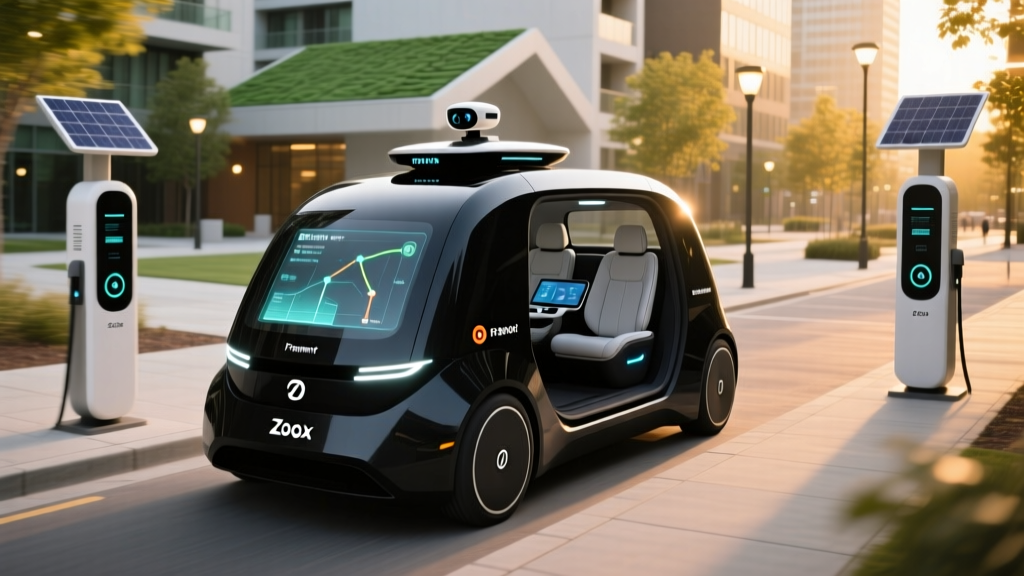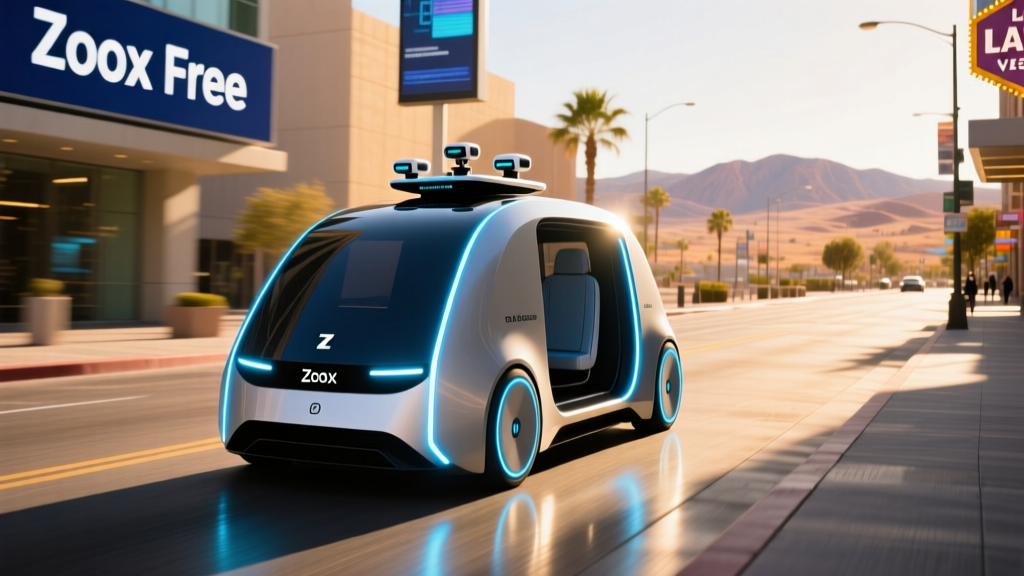
If you've seen Zoox's boxy, steering-wheel-free pods gliding through Las Vegas traffic and wondered whether you can hop in without paying, the short answer is more nuanced than a simple yes or no. Zoox has operated in Las Vegas since 2022, and while the company has periodically offered free promotional rides to build public familiarity, its commercial ride-hailing service launched with per-ride pricing. As of early 2026, Zoox is no longer broadly free in Las Vegas — though promotional windows and invite-only beta periods occasionally waive fares for select riders.
This guide covers exactly what Zoox charges, where you can catch a ride, how the service stacks up against Uber and Lyft, and what the real safety data says about handing your commute over to a Level 4 autonomous vehicle.
Where Can I Ride Zoox Right Now?
Zoox is not a nationwide service. The company operates within tightly defined geofenced zones — mapped areas where its vehicles have been extensively tested and validated. Outside these boundaries, the vehicles will not operate.
| City | Status (2026) | Service Zone | Hours |
|---|---|---|---|
| Las Vegas, NV | Commercial service | Las Vegas Strip corridor, downtown, Convention Center area (~15 sq mi geofence) | Limited hours, expanding |
| San Francisco, CA | Commercial service (limited) | Select neighborhoods, SoMa, Financial District corridors | Limited hours |
| Foster City, CA | Testing / employee rides | Near Zoox HQ | Not public |
| Phoenix, AZ | Testing | Limited zones | Not public |
Las Vegas remains Zoox's most accessible public market. The geofenced zone covers the high-density tourist and convention corridor, which is precisely where short, point-to-point rides are most useful. If your hotel, the convention center, and a restaurant all fall within the geofence, Zoox can connect them. If you need to reach the airport or suburban Henderson, you'll need another option.
To check whether your origin and destination qualify, open the Zoox app and enter your addresses. The app will confirm availability or suggest the nearest valid pickup point within the zone.
Is Zoox Free in Las Vegas — or What Does a Ride Actually Cost?
Zoox has historically used free ride promotions to attract early adopters and generate real-world testing miles. During its initial Las Vegas launch phase in 2022–2023, many riders experienced zero-fare trips. That era is largely over.
As of 2026, Zoox charges per ride in markets where it operates commercially. Pricing is structured to be competitive with traditional rideshare, not to undercut it dramatically. Here's how a typical Zoox ride compares:
| Service | Base Fare | Per-Mile Rate | Per-Minute Rate | Estimated 3-Mile Ride |
|---|---|---|---|---|
| Zoox | ~$2.50 | ~$1.25/mi | ~$0.30/min | $8–$12 |
| UberX (Las Vegas) | ~$2.80 | ~$1.40/mi | ~$0.35/min | $9–$14 |
| Lyft (Las Vegas) | ~$2.70 | ~$1.35/mi | ~$0.33/min | $9–$13 |
| Waymo One (Phoenix/SF) | ~$2.50 | ~$1.30/mi | ~$0.32/min | $8–$13 |
Zoox pricing is designed to be roughly on par with UberX and Lyft — slightly cheaper on some routes, comparable on others. The company does not charge surge pricing in the traditional sense, though availability is constrained by fleet size. During peak convention periods in Las Vegas, you may simply face longer wait times rather than higher fares.
When is Zoox still free? Zoox occasionally runs promotional campaigns — new-user credits, event-based free rides during CES or other conventions, and referral bonuses. These are time-limited and not guaranteed. If you're visiting Las Vegas, check the Zoox app for any active promotions before assuming you'll pay full fare.
How to Request a Zoox Ride
The Zoox experience is app-based, similar to Uber or Lyft:
- Download the Zoox app (iOS or Android) and create an account.
- Enter your destination. The app confirms whether both pickup and drop-off are within the geofence.
- Walk to the designated pickup point. Zoox uses specific curbside locations rather than arbitrary GPS pins.
- Verify your ride. The app shows the vehicle arriving; you confirm identity via the app to unlock the doors.
- Enjoy the ride. The Zoox vehicle has no steering wheel, pedals, or driver. Interior screens show the route and what the vehicle's sensors perceive.
- Rate your trip and pay through the app.
Wait times in Las Vegas vary significantly based on fleet size and demand. During off-peak hours, expect 5–15 minutes. During major conventions, waits can stretch longer because the fleet is still small relative to the tens of thousands of visitors on the Strip.
Safety Record: What the Data Actually Shows
Handing over control to a vehicle with no steering wheel requires trust — and trust should be built on data, not marketing. Zoox publishes periodic safety reports and is subject to California DMV disengagement reporting (for its California testing) and NHTSA oversight for its commercial operations.
Zoox Safety Data Snapshot (through late 2025)
- Total autonomous miles driven: Over 1 million miles across testing and commercial operations (combined fleet, all cities)
- Disengagement rate (California testing): Reported to the CA DMV; Zoox has historically reported disengagement rates in the range of one intervention per several thousand autonomous miles during early testing, improving significantly with each software generation
- At-fault collisions: Zoox has reported a small number of minor incidents during testing, predominantly low-speed contacts. No fatalities attributed to Zoox autonomous operations as of early 2026
- Vehicle design safety: The Zoox Gen 3 vehicle includes a symmetric crash structure, airbags for all four passengers, and bidirectional driving capability (the vehicle is identical front and rear)
For context, NHTSA data shows that human drivers are involved in approximately one police-reported crash every 500,000 miles driven nationally. Robotaxi fleets, including Zoox and Waymo, aim to demonstrate meaningfully better rates, though their total miles are still orders of magnitude lower than the national driving population — making statistical comparisons imprecise.
Zoox's safety approach relies heavily on its sensor suite and extensive simulation testing. The company claims to run billions of simulated miles for every real-world mile, stress-testing edge cases that are rare but dangerous (a child running into the street, a truck dropping cargo, extreme glare conditions).
SAE Automation Level: This Is Not Driver-Assist
It's critical to understand what level of automation Zoox represents — and how fundamentally different it is from the systems in consumer vehicles you can buy today.
| SAE Level | Name | Who Drives? | Example |
|---|---|---|---|
| Level 0 | No Automation | Human | Traditional car |
| Level 1 | Driver Assistance | Human (one system assists) | Adaptive cruise control |
| Level 2 | Partial Automation | Human (must supervise) | Tesla Autopilot, GM Super Cruise, Ford BlueCruise |
| Level 3 | Conditional Automation | System (human on standby) | Mercedes Drive Pilot (limited conditions) |
| Level 4 | High Automation | System (no human needed in zone) | Zoox, Waymo One (geofenced areas) |
| Level 5 | Full Automation | System (everywhere, all conditions) | Does not exist commercially |
Zoox operates at SAE Level 4. This means the vehicle handles all driving tasks within its defined operational design domain (the geofenced zone, under approved conditions) with no human driver present and no expectation that a passenger will intervene. This is categorically different from Tesla's Full Self-Driving (Supervised), GM's Super Cruise, or Ford's BlueCruise — all of which are Level 2 systems that require the human driver to remain attentive and ready to take over at any moment.
There is no steering wheel, no pedals, and no driver's seat in a Zoox vehicle. All four seats face each other. The vehicle is the driver.
Technology Stack: How Zoox Sees the World
Zoox takes a sensor-fusion approach, combining multiple perception technologies rather than relying on cameras alone (as Tesla does with its vision-only FSD system).
Zoox Gen 3 Vehicle Sensor Suite
- LiDAR: Multiple solid-state and spinning LiDAR units providing 360° high-resolution 3D point clouds, effective to 150+ meters. LiDAR works independently of lighting conditions.
- Cameras: A surround array of high-dynamic-range cameras for object classification, traffic-light state detection, sign reading, and lane marking identification.
- Radar: Long-range and short-range radar units for velocity detection of moving objects, performance in rain and fog where LiDAR and cameras degrade.
- Ultrasonic sensors: Near-field detection for low-speed maneuvering, curb detection, and close-proximity obstacles.
- Redundant compute: Dual independent computing platforms — if one fails, the other can execute a safe stop.
- HD maps + real-time perception: Zoox vehicles operate on centimeter-accurate maps of their geofenced zones, overlaid with real-time sensor data to detect changes (construction, temporary barriers, new signage).
This multi-sensor redundancy is a deliberate choice. Where a camera-only system might struggle with direct sun glare or a dark tunnel transition, LiDAR and radar maintain perception. Where LiDAR degrades in heavy rain, radar compensates. The trade-off is cost and complexity — a Zoox vehicle's sensor suite is significantly more expensive than a camera-only approach, which is one reason the fleet remains small.
Zoox also relies on geofencing — the vehicle will only operate in areas it has mapped and validated. This is both a strength (extremely detailed knowledge of every intersection, crosswalk, and traffic pattern in the zone) and a limitation (the vehicle cannot simply drive to a new neighborhood the way a human driver can).
Regulatory Landscape: Who Approves Robotaxi Operations?
Robotaxi operations in the United States exist in a patchwork of state and federal regulation. There is no single national robotaxi license.
- Federal (NHTSA): The National Highway Traffic Safety Administration sets vehicle safety standards (FMVSS). Zoox received a notable exemption from NHTSA to operate its purpose-built vehicle, which lacks traditional controls like a steering wheel and mirrors. NHTSA's Standing General Order also requires all ADS-equipped vehicles to report crashes.
- Nevada: The Nevada DMV and the Nevada Public Utilities Commission (PUCN) regulate autonomous vehicle testing and commercial ride-hailing. Zoox holds permits for both testing and commercial passenger service in Las Vegas.
- California: The California DMV issues testing permits and requires annual disengagement reports. The California Public Utilities Commission (CPUC) issues permits for commercial driverless passenger service. Zoox holds both.
This regulatory framework means that Zoox can't simply expand to a new city on a whim. Each market requires separate permits, engagement with local authorities, and validation that the geofenced zone is safe for commercial operation.
Current Limitations: What Zoox Cannot Do
Level 4 autonomy within a geofence is impressive, but it comes with real constraints that riders should understand before planning their transportation around the service.
- Geofence boundaries: The vehicle will not travel outside its mapped zone. If your destination is 200 feet beyond the boundary, you'll need to walk or take another service for the last leg.
- Weather restrictions: While the sensor suite handles moderate rain, Zoox may suspend service during heavy rain, flooding, or extremely low-visibility conditions. Las Vegas's occasional monsoon downpours can trigger service pauses.
- Construction zones: Major road construction that alters lane configurations can force Zoox to temporarily restrict service in affected corridors until the maps are updated and the new routing is validated.
- Limited fleet size: Zoox operates dozens of vehicles, not thousands. During peak demand (convention nights, New Year's Eve on the Strip), availability drops and wait times grow. This is not yet a replacement for the Uber/Lyft fleet density.
- No airport service: Harry Reid International Airport (LAS) is not within the current Zoox geofence. You cannot take Zoox to or from the airport.
- Fixed pickup/dropoff points: Unlike Uber, which pulls up to your exact GPS location, Zoox uses designated curbside stops. You may need to walk a short distance to the nearest valid pickup point.
- Speed and route limitations: Zoox vehicles operate at moderate speeds appropriate for urban environments. They will not take highway routes and are designed for surface-street travel within the geofence.
- Accessibility: The Zoox vehicle is designed with wheelchair accessibility in mind, but riders should confirm in the app that their specific mobility device is accommodated before requesting a ride.
Zoox vs. Waymo: How the Two Level 4 Services Compare
Zoox and Waymo are the two Level 4 robotaxi services operating commercially in the United States, but their approaches differ substantially.
| Attribute | Zoox | Waymo One |
|---|---|---|
| Vehicle | Purpose-built, no steering wheel, bidirectional | Retrofit Jaguar I-PACE (steering wheel present but unused) |
| Seating | 4 passengers, face-to-face | Up to 3 passengers, forward-facing |
| Primary markets (2026) | Las Vegas, San Francisco | Phoenix, San Francisco, Los Angeles, expanding |
| Service maturity | Earlier stage, smaller fleet | More mature, larger fleet, millions of paid rides |
| Sensor approach | LiDAR + camera + radar fusion | LiDAR + camera + radar fusion |
| Pricing | Comparable to rideshare | Comparable to rideshare |
| Parent company | Amazon (acquired 2020) | Alphabet (Google) |
Waymo has a significant head start in commercial miles and public familiarity. Zoox's advantage lies in its purpose-built vehicle — designed from the ground up as a robotaxi rather than adapted from a human-driven car. That design yields a more spacious, social interior but also means Zoox can't simply buy thousands of existing vehicles and retrofit them.
Frequently Asked Questions
Is Zoox completely free to ride in Las Vegas in 2026?
No. Zoox charges per ride in Las Vegas at rates comparable to UberX and Lyft. Free rides were common during the 2022–2023 launch phase, but standard commercial pricing now applies. Occasional promotions, new-user credits, or event-based free rides may still be available — check the Zoox app for current offers.
How much does a typical Zoox ride cost?
A 3-mile ride in the Las Vegas geofence typically costs between $8 and $12, depending on travel time and exact distance. This is in line with UberX and Lyft pricing for the same route.
Can I take Zoox to the Las Vegas airport?
No. Harry Reid International Airport is outside the current Zoox geofence. You'll need Uber, Lyft, a taxi, or the RTC transit system for airport transfers.
Is Zoox truly self-driving, or is there a hidden driver?
Zoox is genuinely driverless — SAE Level 4. There is no steering wheel, no pedals, no driver's seat, and no human operator in the vehicle. The vehicle navigates entirely autonomously within its geofenced zone. Remote assistance is available (a human operator can provide guidance in unusual situations), but that operator is not in the car.
How safe are Zoox robotaxis compared to human drivers?
Zoox has logged over 1 million autonomous miles with no reported fatalities. Minor low-speed incidents have occurred during testing. Because total robotaxi miles are still far below national driving volumes, definitive statistical comparisons to human crash rates remain difficult. Zoox's multi-sensor approach and geofenced operation are designed to reduce the types of errors (distraction, impairment, fatigue) that cause the majority of human crashes.
What happens if something goes wrong during my ride?
Zoox vehicles are equipped with an in-cabin screen and intercom. If the vehicle encounters an unexpected situation, it will execute a safe stop and connect you with a remote guidance operator. You can also initiate a support call at any time through the in-cabin interface or the app.
Does Zoox operate in other cities besides Las Vegas?
Zoox has limited commercial operations in San Francisco and is testing in Foster City, CA, and Phoenix, AZ. Las Vegas remains its most accessible public market as of 2026. Expansion to additional cities requires new regulatory approvals and geofence mapping.