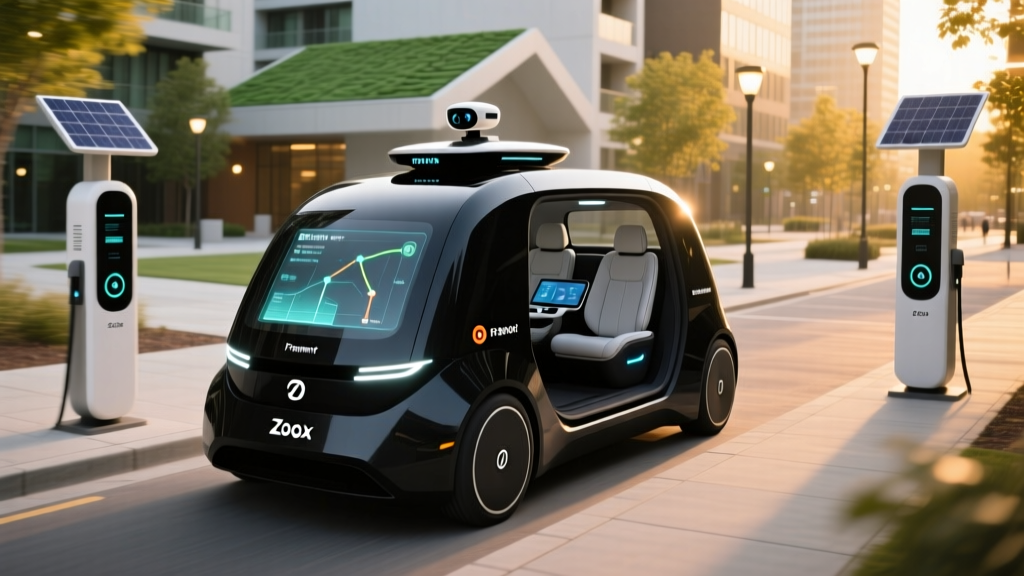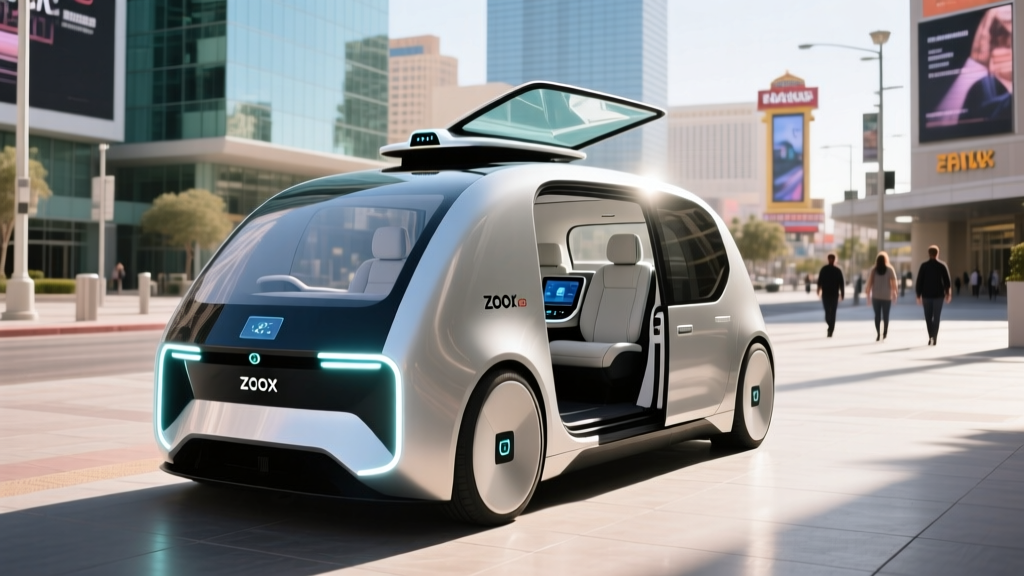
If you've spotted Zoox's compact, steering-wheel-free vehicles navigating the Las Vegas Strip and wondered whether you can hail one — and whether the ride is free — you're not alone. Amazon's autonomous vehicle subsidiary has been testing its purpose-built robotaxi in Sin City since 2022, and public access has expanded steadily through 2025 and into 2026. Here's everything you need to know about riding Zoox in Las Vegas right now, including the real answer on pricing.
Is Zoox Free in Vegas? The Short Answer on Pricing
As of early 2026, Zoox rides in Las Vegas are not free for the general public. However, the service has operated in a promotional and invite-only capacity for much of its public rollout, meaning many early riders did experience free or heavily subsidized trips. Zoox has not yet published a standard per-mile or per-minute fare structure comparable to Uber or Lyft, because the service remains in a limited public launch phase rather than full commercial operations.
Here's what we know about Zoox pricing as it transitions toward a paid model:
| Service | Base Fare (est.) | Per-Mile Rate | Per-Minute Rate | Typical 5-Mile Trip |
|---|---|---|---|---|
| Zoox (promotional/invite) | $0.00 | $0.00 | $0.00 | Free (invite holders) |
| Zoox (projected paid launch) | ~$2.50 | ~$1.10–$1.40 | ~$0.25–$0.35 | ~$9–$12 |
| UberX (Las Vegas avg.) | $2.50 | $1.15 | $0.28 | ~$10–$14 |
| Lyft (Las Vegas avg.) | $2.75 | $1.10 | $0.30 | ~$10–$15 |
| Waymo One (Phoenix/SF reference) | $2.00 | $1.20 | $0.30 | ~$10–$13 |
Zoox's long-term pricing strategy is expected to undercut traditional rideshare by eliminating the driver's share of the fare — which typically accounts for 60–75% of what you pay on Uber or Lyft. Amazon has deep pockets and a logistics-first mindset, so expect aggressive introductory pricing once the service goes fully commercial. For now, if you receive an invite through the Zoox app, your ride will likely be complimentary.
Where Can You Ride Zoox in Las Vegas Right Now?
Zoox operates within a defined geofence in Las Vegas. The service area has grown incrementally, but it does not cover the entire metro area. As of 2026, the operational zone includes:
- The Las Vegas Strip corridor — from roughly Mandalay Bay at the south end to the Strat at the north end
- Downtown Las Vegas — including the Fremont Street area and surrounding blocks
- Select adjacent corridors — including portions of Paradise Road and Convention Center Drive
| City | Status | Service Area | Public Access |
|---|---|---|---|
| Las Vegas, NV | Active — limited public | Strip corridor, Downtown, Convention Center area | Invite-only / waitlist via app |
| San Francisco, CA | Active — limited public | SoMa, Mission, Financial District, select neighborhoods | Invite-only / waitlist via app |
| Foster City, CA | Active — testing | Limited testing zone | Employees and approved testers |
| Seattle, WA | Testing | Limited geofenced area | Not yet public |
| Atlanta, GA | Announced / pre-testing | TBD | Not yet public |
To request a ride, download the Zoox app (iOS and Android), join the waitlist, and set your pickup and dropoff within the geofenced zone. If you're accepted into the program, you'll receive a notification and can begin hailing rides. Wait times vary — some users report being approved within days, while others wait weeks or longer depending on demand and fleet capacity.
What SAE Autonomy Level Is Zoox? (It's Not Driver-Assist)
This is where a critical distinction matters. Zoox operates as a SAE Level 4 autonomous vehicle within its geofenced service areas. That means the vehicle handles all driving tasks — steering, acceleration, braking, navigation, and obstacle response — without any human driver in the vehicle and without any expectation that a passenger will intervene.
| SAE Level | Name | Who Drives? | Examples |
|---|---|---|---|
| Level 0 | No Automation | Human does everything | Conventional vehicles |
| Level 1 | Driver Assistance | Human drives; system assists steering OR speed | Adaptive cruise control, lane-keep assist |
| Level 2 | Partial Automation | Human drives and supervises; system assists steering AND speed | Tesla Autopilot, GM Super Cruise, Ford BlueCruise |
| Level 3 | Conditional Automation | System drives in specific conditions; human must take over on request | Mercedes DRIVE PILOT (limited markets/conditions) |
| Level 4 | High Automation | System drives fully within geofence; no human needed | Zoox, Waymo One |
| Level 5 | Full Automation | System drives everywhere, all conditions | Not yet commercially available |
This is fundamentally different from Level 2 systems like Tesla's FSD (Supervised) or GM's Super Cruise, which require an attentive human driver behind the wheel at all times. In a Zoox vehicle, there is no steering wheel, no pedals, and no driver's seat. You are purely a passenger. According to NHTSA's framework for automated vehicles, Level 4 systems are designed to handle all driving within their operational design domain (ODD) without human fallback.
How Safe Is Zoox? Real Data and Safety Record
Safety is the single most important question for any robotaxi service, and Zoox has published limited but meaningful data. Unlike Waymo, which has released extensive safety reports and accumulated tens of millions of driverless miles, Zoox has been more guarded with its operational statistics.
Zoox Safety Data Summary (as of early 2026)
- Total autonomous miles driven: Estimated several million miles across all test and operational cities (exact figure not publicly disclosed as of this writing)
- Driverless operations: Fully driverless (no safety operator) in Las Vegas and San Francisco geofenced zones
- Reported at-fault collisions: No publicly reported at-fault collisions involving passengers as of early 2026
- NHTSA Standing General Order: Zoox is subject to NHTSA's crash-reporting mandate for ADS-equipped vehicles and has filed required reports
- Vehicle design: Purpose-built with four-wheel steering, bidirectional driving capability, and a symmetric sensor suite providing 360° coverage
Sources: NHTSA, Zoox public disclosures
Zoox's safety approach relies on a fundamentally different vehicle architecture than competitors. Rather than retrofitting a conventional car with sensors, the Zoox vehicle was engineered from the ground up for autonomy. The cabin faces inward with bench seating, and the vehicle can drive equally well in either direction — useful for navigating tight urban spaces and U-turns. The sensor suite includes lidar, cameras, and radar arranged symmetrically, eliminating the blind spots that can exist in retrofitted platforms.
For comparison, Waymo reported in its 2024 safety analysis that its fleet experienced roughly 85% fewer injury-causing crashes per million miles compared to human drivers in the same operating areas. Zoox has not published an equivalent comparative study, which is a notable gap. However, the absence of reported at-fault passenger incidents across millions of miles is a positive — if incomplete — signal.
Zoox Technology Stack: Lidar, Cameras, and Geofencing
Zoox uses a multi-modal sensor fusion approach, combining lidar, cameras, and radar — a stark contrast to Tesla's camera-only ("Tesla Vision") approach for its Level 2 FSD system. Here's a breakdown of the Zoox technology stack:
Sensor and Compute Architecture
- Lidar: Multiple solid-state and spinning lidar units providing high-resolution 3D point-cloud mapping of the vehicle's surroundings at up to 200+ meters range
- Cameras: A surround-camera array covering 360° with overlapping fields of view for redundancy, used for object classification, traffic-light recognition, and lane detection
- Radar: Forward and corner radar units for velocity detection and performance in low-visibility conditions (rain, fog, glare)
- Compute: Custom onboard computing platform capable of processing sensor data in real time with redundant failover systems
- HD Maps: Pre-built, centimeter-accurate high-definition maps of the geofenced service area, updated regularly
- Geofencing: The vehicle operates only within a digitally defined boundary where the system has been validated; it will not drive outside this zone
- Remote assistance: If the vehicle encounters an ambiguous scenario (e.g., an unusual construction zone), it can request remote guidance from a human operator — though the remote operator does not "drive" the car directly but rather provides high-level routing or permission decisions
This sensor redundancy is a defining feature of Level 4 robotaxis. If one sensor modality degrades (e.g., camera visibility drops in heavy rain), lidar and radar can compensate. The reliance on HD maps and geofencing means the vehicle "knows" the road intimately — every curb height, lane width, and signal timing — before it ever drives the route with passengers.
Regulatory Landscape: Who Approves Zoox Operations?
Robotaxi operations in the United States require approval from multiple regulatory bodies, and the landscape varies significantly by state:
- Nevada: The Nevada Department of Motor Vehicles (DMV) and the Public Utilities Commission of Nevada (PUCN) regulate autonomous vehicle testing and commercial deployment. Zoox holds the necessary permits for driverless testing and limited public operations in Las Vegas. Nevada was one of the first states to pass autonomous vehicle legislation, creating a relatively permissive framework.
- California: The California DMV issues testing permits, while the California Public Utilities Commission (CPUC) issues permits for commercial passenger service. Zoox holds a DMV driverless testing permit and has been progressing through CPUC's phased deployment program in San Francisco.
- Federal (NHTSA): The National Highway Traffic Safety Administration does not currently "approve" autonomous vehicles for deployment but regulates vehicle safety standards and mandates crash reporting under its Standing General Order for ADS-equipped vehicles. Zoox received a notable exemption from certain Federal Motor Vehicle Safety Standards (FMVSS) — such as the requirement for a steering wheel and mirrors — specifically for its purpose-built vehicle.
The FMVSS exemption is significant. It means the NHTSA formally recognized Zoox's vehicle design as meeting the intent of safety standards even without traditional driver controls — a milestone that no other robotaxi operator had achieved at the time of approval.
Current Limitations: Where Zoox Falls Short
Despite impressive technology, Zoox — like all current Level 4 robotaxis — has meaningful limitations that riders should understand before booking:
Operational Limitations (2026)
- Geofence boundaries: You cannot request a ride to or from any location outside the mapped service zone. If your destination is two blocks outside the geofence, the vehicle will not go there.
- Weather restrictions: Heavy rain, flooding, or dust storms may trigger service suspensions. While the sensor suite handles moderate rain, severe conditions can degrade lidar and camera performance enough to pull vehicles off the road.
- Construction and road changes: Unexpected construction zones, road closures, or lane reconfigurations that aren't reflected in HD maps can cause the vehicle to stop and request remote assistance — sometimes resulting in extended wait times or trip cancellations.
- No highway driving: Zoox currently operates on surface streets only. It does not merge onto freeways or handle high-speed highway driving.
- Limited fleet size: Fleet availability means you may experience longer wait times (10–20+ minutes) during peak demand periods, especially on the Las Vegas Strip on weekend evenings.
- No multi-stop trips: You can set one pickup and one dropoff. You cannot add intermediate stops or ask the vehicle to wait for you at a location.
- Accessibility constraints: While Zoox's vehicle design includes a low floor and wide doors, wheelchair accessibility and accommodations for passengers with specific mobility needs are still evolving.
- Edge cases: Unusual scenarios — a police officer directing traffic with hand signals, a parade route, an overturned truck spilling cargo — may exceed the system's ability to proceed autonomously, requiring remote intervention or trip termination.
These limitations are not unique to Zoox. Waymo faces similar constraints in its operating cities. The key takeaway: robotaxis are exceptionally capable within their validated domain, but that domain is narrower than what a human driver can handle.
Zoox vs. Waymo: How the Two Level 4 Robotaxis Compare
| Attribute | Zoox | Waymo One |
|---|---|---|
| SAE Level | Level 4 (geofenced) | Level 4 (geofenced) |
| Vehicle | Purpose-built Zoox vehicle (no steering wheel) | Retrofitted Jaguar I-PACE (with steering wheel stowed) |
| Active Cities | Las Vegas, San Francisco (limited public) | Phoenix, San Francisco, Los Angeles (commercial) |
| Public Pricing | Promotional / invite-only (free for accepted riders) | Paid — comparable to Uber/Lyft |
| Sensor Stack | Lidar + cameras + radar (symmetric 360°) | Lidar + cameras + radar (5th-gen custom) |
| Miles Driven (driverless) | Millions (exact undisclosed) | 40+ million driverless miles (as of late 2025) |
| Parent Company | Amazon | Alphabet (Google) |
| Highway Capable | No | Limited (select Phoenix freeway segments) |
| Wait Times | 10–20+ min (limited fleet) | 3–10 min (larger fleet) |
Waymo is the more mature commercial service with broader availability, published pricing, and significantly more accumulated driverless miles. Zoox's advantage lies in its purpose-built vehicle design — optimized entirely for passenger comfort and autonomous operation rather than adapted from a human-driven platform — and Amazon's resources and logistics infrastructure, which could enable rapid scaling once the service goes fully commercial.
Frequently Asked Questions
Is Zoox completely free in Las Vegas?
For riders who receive an invite through the Zoox app, rides are currently complimentary as part of the limited public launch. However, Zoox is expected to introduce paid fares once the service transitions to full commercial operations. There is no permanent "free" tier — the current pricing reflects a pre-commercial promotional phase.
How do I get invited to ride Zoox in Vegas?
Download the Zoox app (available on iOS and Android), create an account, and join the waitlist for Las Vegas. Approval timelines vary — some users are accepted within days, while others wait longer. Having a Las Vegas address or frequently being within the geofenced zone may improve your chances of being selected.
Is Zoox truly self-driving, or is there a hidden driver?
Zoox is a true SAE Level 4 autonomous vehicle. There is no steering wheel, no pedals, and no human driver in the vehicle. The car navigates entirely on its own within its geofenced service area. Remote assistance operators can provide high-level guidance in unusual situations, but they do not steer or control the vehicle in real time.
Can I use Zoox to get to Harry Reid International Airport?
As of 2026, the Las Vegas geofence includes portions of the Strip and Downtown corridor but may not fully extend to the airport. Check the Zoox app for the current service boundary — it has been expanding incrementally, and airport service is a logical future addition.
What happens if the Zoox vehicle encounters an emergency?
The vehicle is equipped with redundant systems (dual compute, backup power, redundant braking and steering). If a system fault is detected, the vehicle will execute a controlled stop in a safe location. Passengers can contact Zoox support via an in-cabin interface at any time. In the event of a collision, emergency services are contacted automatically.
How does Zoox compare to Uber or Lyft on price?
Currently, Zoox rides are free for invited users, making them significantly cheaper than any rideshare option. Once paid pricing launches, Zoox is expected to price competitively with or slightly below Uber/Lyft — the elimination of driver compensation gives robotaxi operators structural cost advantages, though these savings may initially be offset by the high capital cost of the autonomous vehicle fleet.
Is Zoox safe at night in Las Vegas?
Zoox operates during both daytime and nighttime hours within its geofence. The sensor suite — particularly lidar — does not rely on ambient light and performs consistently in the dark. However, nighttime in Las Vegas brings unique challenges (pedestrian density, impaired individuals, neon light reflections) that the system has been trained to handle. As with any transportation option, remain aware of your surroundings when entering and exiting the vehicle.
The Bottom Line for Vegas Visitors
Zoox in Las Vegas offers a genuinely novel experience: a fully driverless, purpose-built robotaxi navigating one of the most complex urban environments in the country. If you can get an invite, the ride is currently free — but that's a promotional reality, not a permanent business model. The service area is limited, fleet availability constrains wait times, and the technology, while impressive, operates within a carefully defined box. For a firsthand look at where Level 4 autonomy stands in 2026, it's worth the waitlist signup. Just don't count on it replacing your Uber to the airport — at least not yet.