If you've searched "is Waymo in Vegas" recently, you're not alone. Las Vegas is one of the most-asked-about cities in the autonomous vehicle space, and the answer in early 2026 requires some nuance. Waymo has expanded aggressively since its Phoenix debut, but Sin City's status sits in a specific phase that riders need to understand before planning a trip.
This guide covers exactly where Waymo operates today, what Las Vegas riders can expect, how the service compares to Uber and Lyft on price, and the hard safety data behind Level 4 robotaxis — no hype, just numbers.
Waymo's Current Service Map: Where Can You Ride Right Now?
As of early 2026, Waymo One — the company's commercial rider service — operates fully driverless rides in a defined set of metro areas. These aren't pilot programs with safety drivers; these are SAE Level 4 operations with no one behind the wheel.
| City | Status | Service Area | Hours |
|---|---|---|---|
| Phoenix, AZ | Fully operational | ~300+ sq mi (metro-wide) | 24/7 |
| San Francisco, CA | Fully operational | City-wide + SFO airport | 24/7 |
| Los Angeles, CA | Fully operational | Greater LA basin, expanding | 24/7 |
| Austin, TX | Fully operational | Central + expanding corridors | Limited hours, expanding |
| Las Vegas, NV | Testing / limited early rider | Select corridors (Strip-adjacent) | Restricted |
Is This Truly Self-Driving? Understanding SAE Levels
A common source of confusion is conflating Waymo's robotaxis with the driver-assistance systems in consumer EVs. They are fundamentally different categories of automation, and the distinction matters for safety and liability.
| Level | Who Drives | Examples | Driver Required? |
|---|---|---|---|
| Level 0 | Human | No automation | Yes, fully |
| Level 1 | Human + assist | Adaptive cruise, lane-keep | Yes |
| Level 2 | Human (system assists steering + speed) | Tesla Autopilot, GM Super Cruise, Ford BlueCruise | Yes — eyes on, hands ready |
| Level 3 | System (human on standby) | Mercedes Drive Pilot (limited conditions) | Conditional — must take over when asked |
| Level 4 | System (no human needed in geofence) | Waymo One, Zoox | No — fully driverless within operational design domain |
| Level 5 | System (everywhere, all conditions) | Does not exist commercially | No |
Waymo's Technology Stack: Lidar, Cameras, and Geofencing
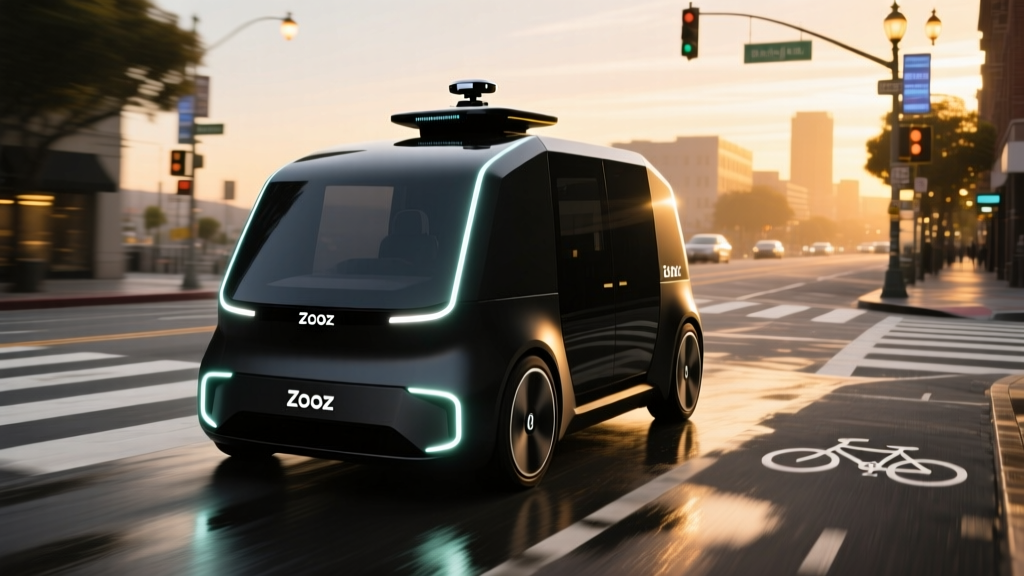
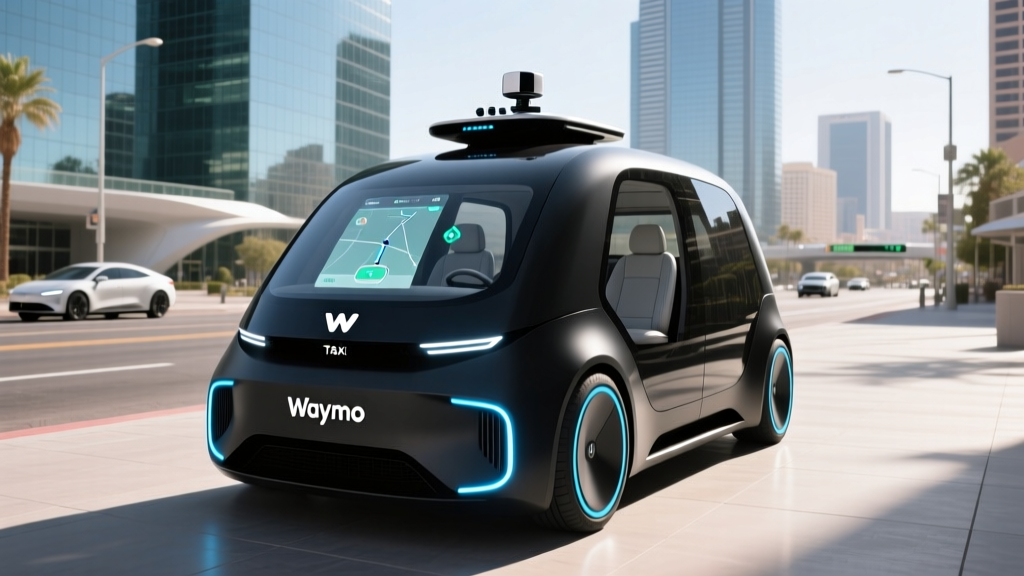
Waymo's sixth-generation "Waymo Driver" hardware suite represents a fundamentally different approach to autonomy than camera-only systems. Here's what's on the roof and body of every Waymo vehicle (currently the Zeekr RT1 robotaxi and the Jaguar I-PACE in legacy fleet):
- Lidar: Multiple solid-state and spinning lidar units providing 360° 3D point-cloud mapping out to 500+ meters, unaffected by lighting conditions
- Cameras: High-resolution camera array covering all directions for object classification, traffic-light state, and sign reading
- Radar: Millimeter-wave radar for velocity detection of moving objects, especially in rain or fog where lidar scatters
- External audio sensors: Microphone arrays to detect sirens from emergency vehicles approaching from any direction
- HD mapping + geofencing: Every operational city is pre-mapped at centimeter-level precision; the vehicle will not operate outside its approved geofence
This multi-sensor redundancy is why Waymo can operate at night, in moderate rain, and in complex urban environments where camera-only systems struggle. The tradeoff is cost — a Waymo vehicle's sensor suite is estimated at $50,000–$100,000+ per unit, which is why the model relies on fleet operations rather than consumer sales.
How Much Does Waymo Cost vs. Uber and Lyft?
In cities where Waymo One is fully operational, pricing is designed to be competitive with standard rideshare — not premium. Here's how it stacks up based on reported rider pricing in Phoenix and San Francisco:
| Route Type | Waymo One | UberX | Lyft Standard |
|---|---|---|---|
| Short (3 mi, city) | $8–$12 | $9–$14 | $9–$13 |
| Medium (8 mi, cross-town) | $15–$22 | $16–$25 | $15–$24 |
| Airport run (15 mi) | $28–$38 | $30–$45 | $28–$42 |
| Surge pricing | No surge (fixed algorithm) | 1.5x–3x during peak | 1.5x–3x during peak |
How to use it: Download the Waymo One app (available in operational cities), enter your destination, confirm pickup, and a driverless vehicle arrives — typically within 3–8 minutes in dense service areas. Payment is handled in-app, identical to Uber/Lyft. There's no tipping (no driver), and the app provides real-time vehicle tracking, in-car climate and music controls, and a "pull over" button.
For Las Vegas: once Waymo One launches publicly, pricing is expected to follow the same model. Until then, early-rider program participants typically ride at heavily subsidized or zero cost.
Waymo Safety Record: What the Data Actually Shows
Safety is the most scrutinized aspect of robotaxi operations, and Waymo publishes more data than any competitor. Here are the concrete figures as reported through 2025 and into 2026:
- Total driverless miles: 10+ million fully autonomous miles (no safety driver)
- At-fault crash rate: 85% lower than human benchmarks in comparable urban environments, per Waymo's published safety studies reviewed by independent researchers
- Injury-causing incidents: Near-zero at-fault injury crashes across the driverless fleet; minor low-speed contact incidents (e.g., sideswipes by other vehicles) are the dominant incident type
- NHTSA Standing General Order data: Waymo reports all incidents per federal mandate; the majority involve other human drivers striking the Waymo vehicle, not the reverse
For context, the National Highway Traffic Safety Administration (NHTSA) estimates that human drivers are involved in a police-reported crash roughly every 500,000 miles on average. Waymo's at-fault rate is dramatically lower, though the comparison isn't perfectly apples-to-apples since Waymo operates in dense urban geofences at moderate speeds rather than highways.
It's also worth noting that Waymo vehicles have been involved in high-profile incidents — including a school-bus contact incident in Phoenix and temporary pauses in San Francisco. These are taken seriously and typically result in software updates and fleet-wide patches before service resumes.
Regulatory Landscape: Who Approves Robotaxi Operations?
Robotaxi deployment in the United States is regulated at the state level, not federally. This creates a patchwork of rules that directly affects where you can use Waymo:
- Arizona: The most permissive regulatory environment. No special permit required beyond standard autonomous-vehicle testing notifications. This is why Phoenix was Waymo's first commercial market.
- California: The California Public Utilities Commission (CPUC) and the DMV both must approve driverless commercial operations. Waymo holds both permits for SF and LA. The CPUC process involves public comment periods and safety-data reviews.
- Texas: Austin has welcomed Waymo with relatively streamlined local approvals, though state-level frameworks are still maturing.
- Nevada: Nevada's DMV oversees autonomous-vehicle testing and deployment. Waymo has held testing permits in Las Vegas, but full commercial rider service requires additional regulatory clearance that, as of early 2026, has not been publicly confirmed as granted for unrestricted public operations.
Federal regulation via NHTSA focuses on vehicle safety standards and incident reporting (Standing General Order), not on approving or blocking specific services. This means a city like Las Vegas could theoretically launch Waymo One once state-level approvals align — but there's no federal "green light" that overrides local regulators.
Current Limitations: Where Robotaxis Can't Go (Yet)
- No highway driving (most markets): Waymo primarily operates on surface streets. Highway merges and high-speed corridors remain outside the operational design domain in most cities.
- Geofence boundaries are hard stops: The vehicle will not cross outside its mapped service area. If your destination is outside the geofence, the app won't let you book the ride.
- Severe weather shutdowns: Heavy rain (Phoenix monsoon), snow, or dense fog can trigger fleet-wide pauses. Waymo does not operate in conditions that degrade lidar or camera performance beyond safe thresholds.
- Construction zones and unmapped changes: Temporary road closures, major construction detours, or recently changed traffic patterns may cause the vehicle to pull over and request remote-assistance routing, adding time to your trip.
- No interstate travel: You cannot take a Waymo from one city to another. Each metro operates as an independent geofenced island.
- Limited vehicle types: No SUV, wheelchair-accessible, or large-group options in most markets. The fleet is predominantly mid-size sedans or compact robotaxis.
For Las Vegas specifically, the Strip corridor presents unique challenges: extreme pedestrian density, constant construction, frequent temporary road closures for events, and neon lighting that can create unusual sensor reflections. These are solvable engineering problems — Waymo has mapped and tested in Vegas — but they explain why the city has taken longer to reach full public launch compared to Phoenix's more predictable grid.
Frequently Asked Questions
Can I hail a Waymo in Las Vegas right now?
Not through the public Waymo One app as of early 2026. Waymo has been testing and running limited early-rider programs on select Vegas corridors, but full commercial service open to anyone has not launched. Monitor the Waymo One app for availability updates, or check Waymo's official site for expansion announcements.
How much would a Waymo ride cost in Vegas once it launches?
Based on pricing in Phoenix and SF, expect short Strip-area rides (3–5 miles) in the $8–$15 range, with airport runs to Harry Reid International (LAS) in the $25–$40 range. Waymo typically does not use surge pricing, which could make it significantly cheaper than Uber/Lyft during peak convention or event nights.
Is Waymo safer than a human driver?
Waymo's published data shows an at-fault crash rate approximately 85% lower than human benchmarks in comparable urban driving. However, Waymo operates in geofenced, pre-mapped areas at moderate speeds — it does not face the full spectrum of driving conditions humans encounter. For the specific routes and conditions it handles, the data strongly favors Waymo's safety record.
What's the difference between Waymo and Tesla FSD?
Waymo One is a Level 4 driverless service — no human driver, no steering wheel for passengers, company-operated fleet. Tesla FSD (Supervised) is a Level 2 driver-assist system — you own the car, you're legally the driver, and you must remain attentive at all times. They solve fundamentally different use cases and carry entirely different liability structures.
Will Waymo come to my city?
Waymo has announced plans to expand to additional US metros through 2026–2027, with international partnerships (e.g., Geely/Zeekr in China) in development. Expansion priority goes to cities with favorable regulatory environments, predictable weather, and strong rideshare demand. Check Waymo's official expansion announcements for the latest roadmap.
What happens if a Waymo vehicle gets confused or stuck?
Waymo vehicles can pull over safely and connect to a remote-assistance team. A human specialist reviews the vehicle's sensor data and can provide high-level routing guidance (not direct driving control). This typically resolves in under a minute, but in complex construction zones it can add several minutes to your trip.