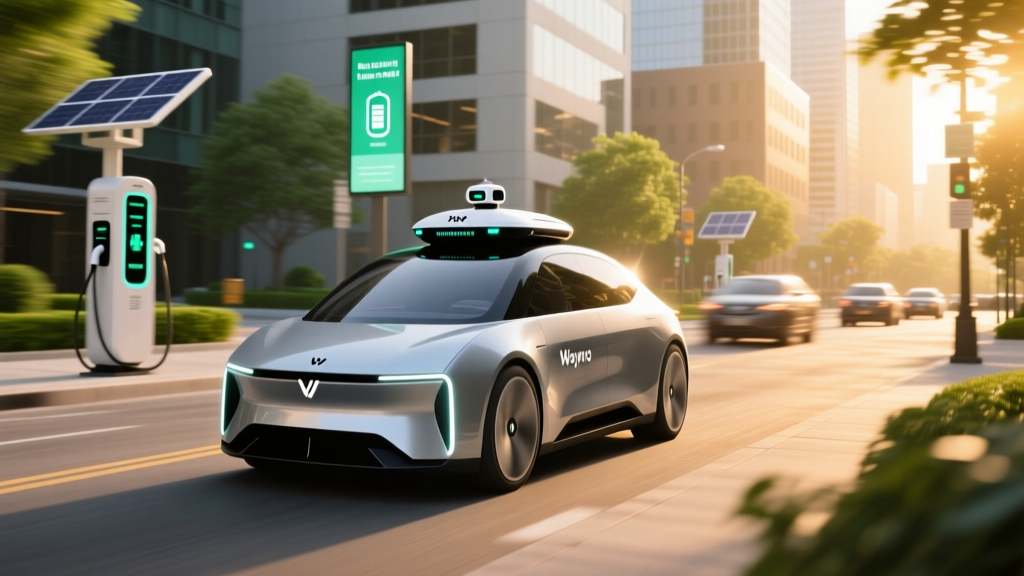
If you have been watching Waymo's autonomous taxis glide through Phoenix traffic or pull up to a curb in San Francisco, you are probably wondering: is Waymo in Boston? The short answer, as of early 2026, is no — Waymo One, the company's commercial driverless ride-hailing service, is not yet available to riders in the Boston metropolitan area. But the longer answer involves a rapidly shifting expansion map, a regulatory landscape that varies sharply by state, and a technology stack that is already logging hundreds of thousands of fully driverless miles each week in other cities.
This guide breaks down exactly where Waymo operates today, what it would take for Boston to join the list, how the service works and what it costs, and what the real safety data says — so you can separate robotaxi reality from hype.
Where Waymo Actually Operates Right Now
Waymo One is a commercial, fully driverless (no human behind the wheel) ride-hailing service. It is not a pilot or a research program — it is a paid, app-based service open to the general public in select geofenced zones. Here is the current operational footprint as of Q1 2026:
| City | Status | Service Area | Hours | Opened to Public |
|---|---|---|---|---|
| Phoenix, AZ (Metro) | Fully operational | ~315 sq mi (Chandler, Tempe, Mesa, Scottsdale, Gilbert, parts of Phoenix proper) | 24/7 | December 2020 |
| San Francisco, CA | Fully operational | ~80 sq mi (most of SF proper, limited freeway segments) | 24/7 | November 2022 |
| Los Angeles, CA | Fully operational | ~80+ sq mi (Santa Monica, Hollywood, Downtown LA, Beverly Hills, expanding) | 24/7 | Early 2024 |
| Austin, TX | Operational (expanding) | Initial geofenced zone, growing coverage | Limited hours, expanding | 2024–2025 |
| Boston, MA | Not available | N/A | N/A | N/A |
Waymo has also announced testing or early operations in additional markets, but announced expansion should not be confused with live service. Until you can open the Waymo One app, set a Boston pickup pin, and get matched with a driverless Jaguar I-PACE, the service is not in Boston.
Why Boston Isn't on the List Yet
Boston presents a unique combination of challenges for any robotaxi operator:
- Weather: Boston averages roughly 48 inches of snowfall annually and experiences frequent freezing rain, nor'easters, and fog. Waymo's current sensor suite and mapping pipeline are optimized for the comparatively mild conditions of Phoenix, LA, and the Bay Area. Heavy snow and slush obscure lane markings, reduce lidar and camera effectiveness, and create unpredictable road-surface dynamics.
- Road geometry: Boston's street network is famously irregular — rotaries, narrow one-way lanes, cobblestone segments in Beacon Hill, and constant construction detours. Geofencing a city this complex requires high-definition mapping of every drivable corridor and extensive validation testing.
- Regulatory framework: Massachusetts does not currently have a comprehensive state-level regulatory framework for commercial driverless ride-hailing. Unlike Arizona (which adopted permissive autonomous-vehicle legislation early) or California (where the California Public Utilities Commission (CPUC) and DMV jointly oversee robotaxi permits), Massachusetts has been more cautious. Without a clear permitting pathway, commercial deployment stalls.
- Testing history: Waymo has tested vehicles in the Boston area — specifically in the Detroit suburb of Novi and, previously, in limited Massachusetts mapping runs — but testing is not the same as commercial service.
Understanding Autonomy Levels: Robotaxi vs. Driver-Assist
This distinction is critical, and it is where most consumers get confused. Here is how the SAE International J3016 standard breaks it down:
| Level | Name | Who Drives? | Examples |
|---|---|---|---|
| Level 0 | No Automation | Human does everything | Traditional car, no ADAS |
| Level 1 | Driver Assistance | Human drives; system assists steering OR speed | Adaptive cruise control, lane-keeping assist |
| Level 2 | Partial Automation | Human drives and supervises; system handles steering AND speed simultaneously | Tesla Autopilot/FSD Supervised, GM Super Cruise, Ford BlueCruise |
| Level 3 | Conditional Automation | System drives in specific conditions; human must take over when requested | Mercedes DRIVE PILOT (limited markets/conditions) |
| Level 4 | High Automation | System drives without human intervention within its operational design domain (ODD) | Waymo One, Zoox — no driver, no steering wheel needed in zone |
| Level 5 | Full Automation | System drives everywhere, all conditions, no human needed | Does not exist commercially |
How Waymo One Works and What It Costs
Using Waymo One is functionally identical to calling an Uber or Lyft, minus the human driver:
- Download the Waymo One app (iOS/Android).
- Create an account and add a payment method.
- Enter your pickup and drop-off locations within the service geofence.
- The app confirms a nearby Waymo vehicle (currently a Jaguar I-PACE EV equipped with Waymo's 5th-generation sensor suite).
- The vehicle arrives, unlocks its doors automatically when you approach, and you enter a ride code on the rear seat screen to start the trip.
- The vehicle navigates to your destination autonomously. You can adjust climate controls and music via the rear screen.
- Payment is processed automatically at the end of the ride.
Pricing: Waymo One vs. Uber and Lyft
Waymo prices its rides competitively with traditional rideshare, and in many corridors the fare is comparable or slightly cheaper. Based on aggregated rider reports and Waymo's published pricing model in early 2026:
| Service | Base Fare Range | Per-Mile Rate | Surge Pricing? | Typical 5-Mi Fare |
|---|---|---|---|---|
| Waymo One | $3.00–$5.00 | $1.10–$1.50/mi | No dynamic surge | $9–$13 |
| UberX | $2.50–$4.00 | $1.00–$1.80/mi | Yes (can 2–3× base) | $8–$18 |
| Lyft Standard | $2.50–$4.00 | $1.00–$1.70/mi | Yes (Prime Time) | $8–$17 |
The biggest pricing advantage for Waymo: no surge pricing. During peak demand, Uber and Lyft fares can spike dramatically, while Waymo maintains consistent per-mile rates. The trade-off is that during high demand, Waymo may simply show longer wait times or unavailability rather than raising prices.
Waymo's Safety Record: What the Data Actually Shows
Safety is the most scrutinized — and most misunderstood — aspect of robotaxi operations. Here is what we know from published data:
- Fully driverless miles driven: Over 10 million miles on public roads without a human driver (cumulative across all markets).
- Total autonomous miles (including testing with safety drivers): Exceeds 35 million miles.
- Injury-causing crash rate: Waymo's published safety data and third-party analyses (including a study by the Insurance Institute for Highway Safety) have shown Waymo vehicles involved in significantly fewer injury-causing crashes per million miles compared to human-driven vehicle benchmarks in the same operating cities.
- Contact rate: Waymo reports a lower rate of police-reported contact incidents per million miles than human drivers in comparable urban environments.
Important context: Waymo vehicles have been involved in minor incidents — typically low-speed contact with stationary objects, other vehicles making unexpected maneuvers, or construction-zone confusion. Several incidents in San Francisco in 2023–2024 (including a collision with a parked fire truck and an incident involving a pedestrian who entered the vehicle's path from behind a visual obstruction) drew scrutiny from the National Highway Traffic Safety Administration (NHTSA) and resulted in software recalls and operational adjustments.
No robotaxi fleet is incident-free. The relevant question is whether the incident rate per million miles is lower than that of human drivers — and on that metric, the available data suggests Waymo is competitive or better in its operating domains.
Under the Hood: Waymo's Technology Stack
Waymo's 5th-generation autonomous driving system, deployed on the Jaguar I-PACE fleet, uses a redundant sensor architecture that is fundamentally different from camera-only approaches (like Tesla's vision-based FSD):
- Lidar: Custom-built, roof-mounted spinning lidar units providing a 360-degree, high-resolution 3D point cloud of the vehicle's surroundings. Lidar works independently of ambient light — critical for night driving and detecting objects cameras might miss.
- Cameras: Multiple high-resolution cameras covering 360 degrees for color/texture information, traffic-light state detection, signage reading, and fine detail.
- Radar: Forward- and side-facing radar units for velocity detection of moving objects and operation in conditions where lidar and camera performance may degrade (light rain, fog).
- HD Maps: Waymo pre-maps every inch of its geofenced service area at centimeter-level precision. The vehicle knows the exact position of every curb, lane marking, traffic signal, and crosswalk before it arrives. This is why geofencing is essential — the vehicle does not operate in unmapped areas.
- Compute: Custom onboard computing hardware running Waymo's perception, prediction, and planning algorithms in real time.
This sensor-fusion approach contrasts with Tesla's camera-only FSD (Supervised), which relies on neural networks interpreting 2D camera feeds without lidar or HD maps. Both approaches have trade-offs, but Waymo's lidar+map strategy provides higher confidence in object detection at the cost of requiring extensive pre-mapping of every service area.
The Regulatory Landscape: Who Approves Robotaxis?
There is no single federal "robotaxi license." Regulation happens at multiple levels:
- Federal (NHTSA): The National Highway Traffic Safety Administration sets vehicle safety standards and investigates incidents. NHTSA does not currently "approve" robotaxi operations, but it can issue recalls and mandate safety changes. The Federal Motor Vehicle Safety Standards (FMVSS) were originally written assuming a human driver — exemptions are needed for vehicles without steering wheels or pedals (like the upcoming Zoox vehicle).
- State level: This is where most operational authority lives. Arizona has minimal permitting requirements, which is why Waymo launched there first. California requires permits from both the DMV (testing) and the CPUC (commercial ride-hailing). Texas has its own framework that enabled Austin expansion. Massachusetts currently lacks a comprehensive commercial robotaxi permitting structure.
- Local/municipal: Cities often have input on operational zones, hours, and coordination with emergency services. San Francisco's Board of Supervisors notably voted to restrict robotaxi operations in 2023 after incidents, though the CPUC ultimately overruled the restrictions.
For Boston to get Waymo service, Massachusetts would need to establish a clear regulatory pathway — likely requiring legislation or regulatory action from the state's Department of Public Utilities or a similar body. Until that framework exists, commercial deployment is effectively blocked regardless of Waymo's technical readiness.
Current Limitations of Waymo's Service
Even in cities where Waymo operates, the service has meaningful constraints:
- Geofencing: You cannot go outside the mapped service area. A trip from downtown Phoenix to Flagstaff? Not possible. The vehicle will not operate outside its ODD (Operational Design Domain).
- Weather: Heavy rain, snow, dense fog, and ice can cause service suspensions or reduced geofence areas. Phoenix's dry climate is ideal; Boston's winter would be a significant challenge with current-generation sensors.
- Highway driving: Waymo's service area includes limited freeway segments in some cities, but most trips are surface-street focused. Long highway stretches at 70+ mph remain limited.
- Construction zones: While Waymo handles many construction scenarios, complex or rapidly changing detour routes can cause the vehicle to pull over safely and request remote assistance.
- Pets and unaccompanied minors: Waymo currently does not allow unaccompanied minors or loose pets in the vehicle.
- No multi-stop trips: Unlike Uber/Lyft, you cannot add intermediate stops to a Waymo ride.
- Accessibility: Waymo has been working on wheelchair-accessible vehicle options, but availability is limited compared to the standard I-PACE fleet.
- Wait times: During peak demand, wait times can exceed 15–20 minutes in busy zones. There is no surge pricing to incentivize additional supply.
Could Boston Get Waymo? What Would Need to Happen
Boston is not off the table permanently. Several conditions would need to align:
- State legislation or regulation: Massachusetts would need to create a permitting framework for commercial autonomous ride-hailing. Bills have been proposed in the state legislature but have not yet resulted in a comprehensive framework.
- Mapping and testing: Waymo would need to complete HD mapping of the target service area and conduct extensive testing with safety drivers before applying for a driverless permit.
- Weather validation: Waymo would need to demonstrate that its sensor suite and driving algorithms can handle New England winter conditions — snow-covered roads, salt corrosion, black ice, and reduced visibility. This is a non-trivial engineering challenge that the company is actively working on for northern expansion markets.
- Local coordination: Agreements with Boston's transportation department, emergency services, and potentially the MBTA would be needed to integrate robotaxi operations into the city's traffic ecosystem.
Realistically, Boston is more likely to see robotaxi service in the late 2020s than in 2026–2027, given the regulatory and environmental hurdles. Cities with milder climates and more permissive regulatory environments — such as Atlanta, Miami, or Dallas — are more plausible near-term expansion targets.
Frequently Asked Questions
Is Waymo in Boston in 2026?
No. As of early 2026, Waymo One is not available in Boston or anywhere in Massachusetts. The service operates in Phoenix, San Francisco, Los Angeles, and Austin, with additional cities planned but not yet confirmed.
How much does a Waymo ride cost compared to Uber?
Waymo One fares are generally comparable to UberX or Lyft Standard for the same route, typically $9–$13 for a 5-mile urban trip. The key difference is that Waymo does not use surge pricing, so fares remain consistent during peak demand — though wait times may increase instead.
Is Waymo truly self-driving or is there a human driver?
Waymo One is a Level 4 autonomous service — there is no human driver in the vehicle. This is fundamentally different from Level 2 driver-assist systems like Tesla FSD (Supervised) or GM Super Cruise, which require an attentive human driver at all times. Waymo vehicles navigate, stop, turn, and handle traffic without any human intervention within their geofenced service area.
How safe are Waymo robotaxis?
Based on published data through 2025, Waymo has driven over 10 million fully driverless miles and reports injury-causing crash rates lower than human-driver benchmarks in the same cities. However, the fleet has been involved in minor incidents, particularly in complex urban scenarios, and has faced NHTSA scrutiny. No autonomous fleet is incident-free, but the available data suggests competitive or better safety performance in Waymo's operating domains.
Why can't Waymo operate in snowy cities like Boston?
Heavy snow and ice obscure lane markings, reduce the effective range of lidar and camera sensors, and create unpredictable road-surface conditions. Waymo's current operational design domain is optimized for the milder climates of its existing cities. The company is working on cold-weather capabilities, but Boston's winter conditions represent a significant technical challenge that requires additional validation before commercial deployment.
What car does Waymo use?
Waymo One currently uses the Jaguar I-PACE, a fully electric SUV equipped with Waymo's 5th-generation sensor suite including custom lidar, multiple cameras, and radar. Waymo has also partnered with Geely (Zeekr) on a purpose-built robotaxi vehicle for future deployment, and the Hyundai Ioniq 5 has been used in testing programs.
Can I use Waymo if I visit Phoenix or San Francisco?
Yes. Waymo One is open to the general public in its operational cities. Download the Waymo One app, create an account, and you can request rides within the service geofence. No special invitation or early-access code is needed in most operational areas.