The Short Answer: Is Waymo Expensive?
For most routine trips within its service zones, Waymo's rider pricing is comparable to UberX or Lyft standard — typically ranging from $0.90 to $1.60 per mile depending on the city, time of day, and trip distance. A 5-mile trip in Phoenix might cost $11–$16; the same trip in San Francisco could run $13–$19. During peak demand, Waymo applies surge pricing similar to rideshare, though its surge multipliers have historically been less aggressive than Uber's.
The real question isn't just the per-ride cost. It's whether the value proposition — a driverless, Level 4 autonomous vehicle with no small talk and no surprise route detours — justifies paying rideshare-equivalent prices. For many riders in Waymo's current service cities, the answer is yes, especially for airport runs, late-night trips, and predictable commutes where pricing stays flat.
What Level of Autonomy Is Waymo?
Waymo operates at SAE Level 4 — meaning the vehicle handles all driving tasks within its defined operational design domain (geofenced urban areas, specific weather conditions) with no human driver present. This is fundamentally different from Tesla Autopilot, Ford BlueCruise, or GM Super Cruise, which are SAE Level 2 driver-assist systems requiring continuous human supervision. When you ride in a Waymo, there is nobody in the driver's seat.
Where Can I Use Waymo Right Now?
As of early 2026, Waymo's commercial robotaxi service — branded Waymo One — is available to the general public (no waitlist) in several major US metros, with additional cities in active testing or early-access phases.
| City | Status | Service Area Coverage | Hours |
|---|---|---|---|
| Phoenix, AZ (Metro) | Fully open | ~225 sq mi — Chandler, Tempe, Mesa, Gilbert, Scottsdale, Sky Harbor Airport | 24/7 |
| San Francisco, CA | Fully open | ~50 sq mi core — expanding southward and westward | 24/7 |
| Los Angeles, CA | Fully open | ~80 sq mi — Downtown, Hollywood, Santa Monica, Mid-City, LAX access | 24/7 |
| Austin, TX | Early access / expanding | Limited geofence — Downtown, South Austin corridors | Limited hours |
| Atlanta, GA | Announced / testing | Not yet open to public riders | N/A |
Phoenix remains Waymo's most mature market, with the broadest coverage area and longest operational history (commercial service launched there in 2020). San Francisco and Los Angeles have scaled significantly since 2024, and Austin represents the newest frontier. Atlanta is in the mapping and testing phase but is not yet bookable by the public.
Geofencing is strict. If your destination falls outside Waymo's mapped operational area, the app will not let you book the ride. The boundaries are precise — sometimes down to specific blocks — and they expand incrementally as Waymo validates new road segments.
Waymo Pricing vs. Uber and Lyft: Real Numbers
Waymo does not publish a fixed rate card. Pricing is dynamic, calculated per trip based on distance, time, demand, and city. However, independent fare-tracking data and rider reports give us a clear picture of how Waymo stacks up against traditional rideshare.
| Trip Scenario | Waymo One | UberX | Lyft Standard |
|---|---|---|---|
| 5 miles, midday, Phoenix | $12–$15 | $10–$14 | $10–$13 |
| 8 miles, evening, San Francisco | $19–$25 | $17–$23 | $16–$22 |
| 3 miles, late night, Los Angeles | $9–$12 | $11–$16 (surge) | $10–$15 (surge) |
| 12 miles, airport run, Phoenix (Sky Harbor) | $22–$28 | $20–$26 | $19–$25 |
| 6 miles, rush hour, LA | $16–$21 | $18–$27 (surge) | $17–$25 (surge) |
Key takeaways:
- Off-peak: Waymo is typically within $1–$3 of UberX/Lyft for equivalent trips. On short trips, Waymo's base fare can make it slightly more expensive.
- Peak/surge: Waymo's pricing tends to be more stable. While Waymo does apply demand-based pricing, it has generally avoided the 2x–3x surge multipliers that Uber and Lyft deploy during concerts, bar-close, or major events.
- No tipping: Waymo does not prompt for a tip (there's no driver), which effectively saves riders 15–20% compared to a rideshare trip where tipping is customary.
- Promotional credits: Waymo frequently offers first-rider discounts ($5–$10 off) and referral credits, which can make initial rides significantly cheaper than rideshare.
For frequent riders, the no-tipping factor alone can make Waymo 10–15% cheaper per trip than an equivalent UberX ride when you factor in the customary gratuity most riders add.
How Safe Are Waymo Robotaxis? The Real Data
Safety is the most scrutinized aspect of robotaxi operations. Waymo publishes periodic safety reports and is subject to incident-reporting requirements by the National Highway Traffic Safety Administration (NHTSA) and state regulators like the California Public Utilities Commission (CPUC).
Waymo Safety Record — Key Figures
- Cumulative autonomous miles driven: Over 50 million fully driverless miles (as of late 2025 reporting)
- Injury-causing crash rate: Waymo's self-reported data shows an approximately 85% lower rate of injury-causing crashes per million miles compared to human-driven vehicle benchmarks in the same urban environments
- Police-reported crash rate: Approximately 57% lower than human benchmarks
- Contact rate with other vehicles/objects: Significantly lower than human drivers in comparable geographies, per Waymo's published safety reports
Note: Direct comparison between robotaxi and human crash data involves methodological caveats. Waymo operates in geofenced, mapped areas and avoids extreme weather — conditions that are inherently lower-risk than the full spectrum of human driving environments.
Notable incidents: Waymo's record is not spotless. In early 2024, a Waymo vehicle in San Francisco struck a pedestrian who had been pushed into the vehicle's path by another human-driven car. The pedestrian sustained minor injuries. NHTSA investigated and the incident highlighted an edge case — a person suddenly entering the roadway from behind a visual obstruction — that remains a challenge for all autonomous systems.
In Phoenix, a small number of minor fender-benders have been reported, typically involving other drivers rear-ending or side-swiping the Waymo vehicle at low speed. Waymo vehicles tend to drive conservatively — they stop fully at stop signs, maintain generous following distances, and never exceed speed limits — which can occasionally frustrate human drivers behind them.
Under the Hood: Waymo's Technology Stack
Waymo's sixth-generation "Waymo Driver" system, deployed on the Zeekr RT (a purpose-built electric robotaxi replacing the earlier Chrysler Pacifica Hybrid fleet), uses a sensor-rich approach that differs sharply from Tesla's camera-only FSD strategy.
Sensor Suite (6th-Gen Waymo Driver)
- LiDAR: Multiple solid-state and spinning LiDAR units providing 360° 3D point-cloud mapping up to ~500 meters. LiDAR is Waymo's primary depth-perception sensor and functions in total darkness.
- Cameras: High-resolution cameras covering 360° for color perception, traffic-light state detection, sign reading, and lane-marking recognition.
- Radar: Imaging radar units for velocity detection of moving objects and performance in rain/fog where LiDAR and cameras degrade.
- External audio sensors: Microphones to detect emergency-vehicle sirens from multiple directions.
Computing & Software
- Custom-designed compute platform (Waymo's proprietary hardware, replacing earlier Intel-based rigs)
- HD pre-mapped routes: Waymo vehicles operate only on roads that have been mapped at centimeter-level precision, with every lane, curb, signal, and crosswalk cataloged
- Real-time perception stack: fuses LiDAR, camera, and radar data to classify and predict behavior of pedestrians, cyclists, vehicles, and obstacles
Why this matters for riders: The LiDAR-first approach gives Waymo a significant advantage in low-light and complex urban scenarios — nighttime rides, densely packed intersections, construction zones with temporary lane shifts. The tradeoff is hardware cost: each Waymo vehicle carries an estimated $100,000–$150,000 in sensor and compute equipment, which is one reason the company has not pursued a consumer vehicle model and instead operates as a fleet service.
The geofenced, pre-mapped approach also means Waymo cannot simply "go anywhere." Every new street must be mapped, validated, and approved before the service can operate there. This limits rapid expansion but contributes to the system's safety margins.
Current Limitations: What Waymo Cannot Do
Waymo is impressive within its domain, but that domain has hard boundaries. Here are the limitations riders should understand before booking:
- Geofence boundaries: You cannot book a ride to or from any address outside Waymo's mapped service area. If you live two blocks outside the zone, you'll need to walk to a pickup point inside it.
- Heavy rain and flooding: In Phoenix during monsoon storms and in San Francisco during atmospheric rivers, Waymo has temporarily suspended service. LiDAR performance degrades in heavy precipitation, and flooded roads present unmapped hazards.
- Dense fog: Similar to heavy rain, fog scatters LiDAR returns and reduces camera visibility. Service may pause in severe fog conditions.
- Snow and ice: Waymo does not currently operate in snow-belt cities. Snow-covered lane markings and icy roads exceed the system's validated operational design domain.
- Highway driving: Waymo's service area is primarily urban and suburban surface streets. Limited highway segments are included in some markets (e.g., Phoenix freeway on-ramps and short highway stretches to reach Sky Harbor Airport), but long-distance highway trips are not supported.
- Construction zones: While Waymo can handle many temporary lane configurations, major unmapped construction detours can cause the vehicle to pull over safely and request remote guidance, adding minutes to your trip.
- No multi-stop trips: Unlike Uber, you cannot add intermediate stops. It's point A to point B only.
- Passenger capacity: Waymo's current vehicles seat up to 3 passengers (rear seat only, no front-seat rider). Large groups need multiple vehicles.
- Accessibility: Waymo has been rolling out wheelchair-accessible vehicle options in select markets, but availability is limited compared to the standard fleet. Riders should check the app for WAV availability in their area.
The Regulatory Landscape: Who Approves Robotaxi Operations?
Robotaxi deployment in the US is governed by a patchwork of state and local authorities — there is no single federal "robotaxi license." Key regulatory bodies include:
- California Public Utilities Commission (CPUC): Regulates commercial passenger service in California. Waymo holds a TCP (Transportation Charter-Party Carrier) permit and a Driverless Pilot permit for San Francisco and Los Angeles operations.
- California DMV: Issues autonomous vehicle testing and deployment permits. Waymo has held a deployment permit (beyond testing) since 2023.
- Arizona: Has maintained a permissive regulatory environment since 2015, with minimal state-level barriers to commercial robotaxi operations. This is why Phoenix was Waymo's launch city.
- Texas: Austin's regulatory framework allows autonomous vehicle testing and limited commercial operations with local authorization.
- NHTSA (federal): Sets vehicle safety standards (FMVSS) and investigates incidents. NHTSA has issued standing general orders requiring crash reporting for all ADS-equipped vehicles. The agency has not yet created a comprehensive federal framework for commercial robotaxi approval, leaving most authority to states.
This state-by-state approach means Waymo must navigate separate approval processes for each new market, contributing to the gradual pace of geographic expansion.
How to Use Waymo One: A Quick-Start Guide
- Download the Waymo One app (iOS/Android) and create an account.
- Enter your pickup and dropoff locations. If both are within the service area, you'll see an estimated fare and wait time (typically 3–8 minutes in well-covered areas).
- Confirm the ride. Payment is processed through the app via credit card, debit card, or linked payment method.
- Find your vehicle. The app shows the car's approach in real time and identifies the specific vehicle (license plate, color). Waymo vehicles are white with distinctive roof-mounted sensor pods.
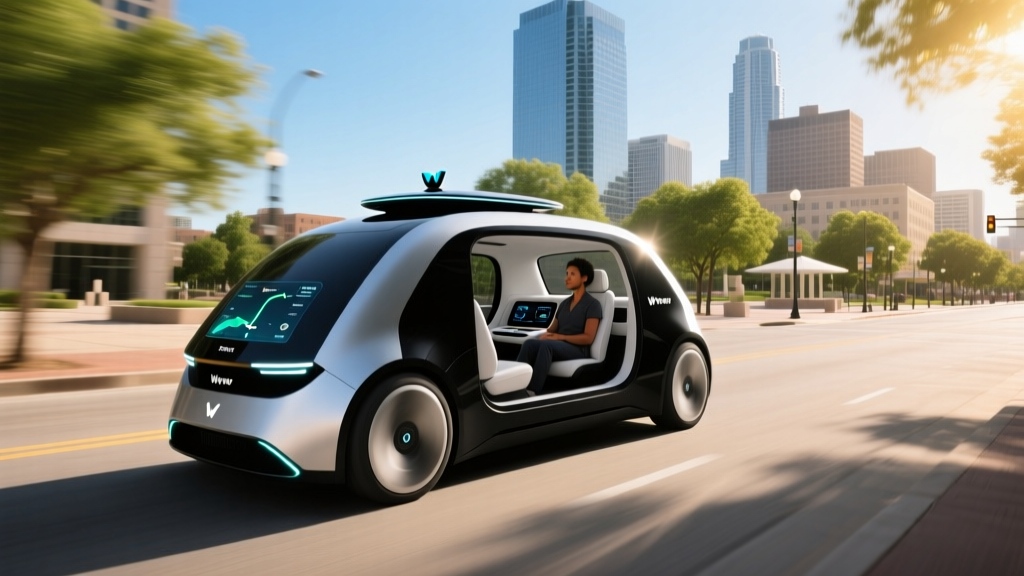
- Unlock and ride. Tap "Start Ride" in the app when you're next to the car. The rear doors unlock. You'll find a screen in the back seat showing your route. You can adjust music and climate from the screen.
- Arrive and exit. The vehicle pulls to a safe stopping point at your destination. The doors unlock automatically when the ride ends.
There is no driver to interact with, no small talk, and no route negotiation. The vehicle follows its planned route, and you can monitor progress on the rear-seat screen or in the app.
Frequently Asked Questions
Is Waymo more expensive than Uber in 2026?
On a per-mile basis, Waymo is usually within $1–$3 of UberX for equivalent trips. The biggest cost difference comes from tipping: since there's no driver, there's no tip, which effectively makes Waymo 10–15% cheaper per trip when compared to an UberX ride with a customary 15–20% gratuity. During high-demand periods, Waymo's pricing also tends to surge less aggressively than Uber or Lyft.
Is Waymo actually self-driving, or is someone remotely controlling it?
Waymo is a true SAE Level 4 autonomous system. There is no human driver in the vehicle, and no remote operator driving it in real time. The vehicle's onboard AI handles all steering, braking, and navigation. Remote support staff can provide high-level guidance in unusual situations (e.g., confirming whether a road is passable after an obstruction), but they do not steer or control the vehicle directly.
Can I use Waymo at the airport?
Yes, in Phoenix. Waymo One serves Phoenix Sky Harbor International Airport (PHX) with designated pickup and dropoff zones. In Los Angeles, LAX service has been rolling out. In San Francisco, SFO access has been in testing phases — check the app for current availability.
What happens if the Waymo vehicle encounters an emergency?
The vehicle is programmed to pull over safely, activate hazard lights, and contact Waymo's roadside-assistance team. Passengers can also press a "Help" button on the rear-seat screen or in the app to speak with a live support agent immediately. Waymo vehicles carry no driver-controlled controls — there is no steering wheel accessible to passengers.
How does Waymo compare to Cruise or other robotaxi services?
GM's Cruise suspended all driverless operations nationwide in late 2023 following a serious incident in San Francisco, and its return has been slow and limited as of 2026. Waymo is currently the only scaled, fully driverless robotaxi service operating commercially in multiple US cities. Other players like Zoox (Amazon) and Tesla's planned robotaxi remain in testing or pre-commercial phases.
Do Waymo rides take longer than driving myself?
Sometimes, slightly. Waymo vehicles obey all speed limits, come to complete stops at every stop sign, and take conservative routes. On a 10-minute drive you might do in 8 minutes by rolling through stops, Waymo will take the full 10–11 minutes. For most urban trips, the time difference is marginal — but if you're in a hurry, factor in an extra 2–5 minutes.