If you've browsed Tesla's configurator lately, you've likely paused at the $8,000 option labeled "Full Self-Driving Capability (Supervised)." The name implies a car that drives itself. The fine print says otherwise. So is Full Self-Driving worth it on a Tesla in 2026 — or are you paying a premium for a feature that still requires your full attention behind the wheel?
This guide cuts through the marketing to answer that question with real numbers, real limitations, and a clear-eyed comparison to actual driverless robotaxis like Waymo and Zoox that operate in select U.S. cities today. Whether you're deciding on an FSD purchase or trying to understand the gap between Tesla's Level 2 system and true Level 4 autonomy, you'll find the data you need here.
What Tesla FSD Actually Is — and What It Isn't
Tesla's Full Self-Driving (Supervised) is an advanced SAE Level 2 driver-assistance system. That means the vehicle can manage steering, acceleration, and braking simultaneously under certain conditions, but the driver must remain fully engaged — eyes on the road, hands available, ready to intervene at any moment.
⚙️ SAE Automation Level: Level 2 — Driver Assistance
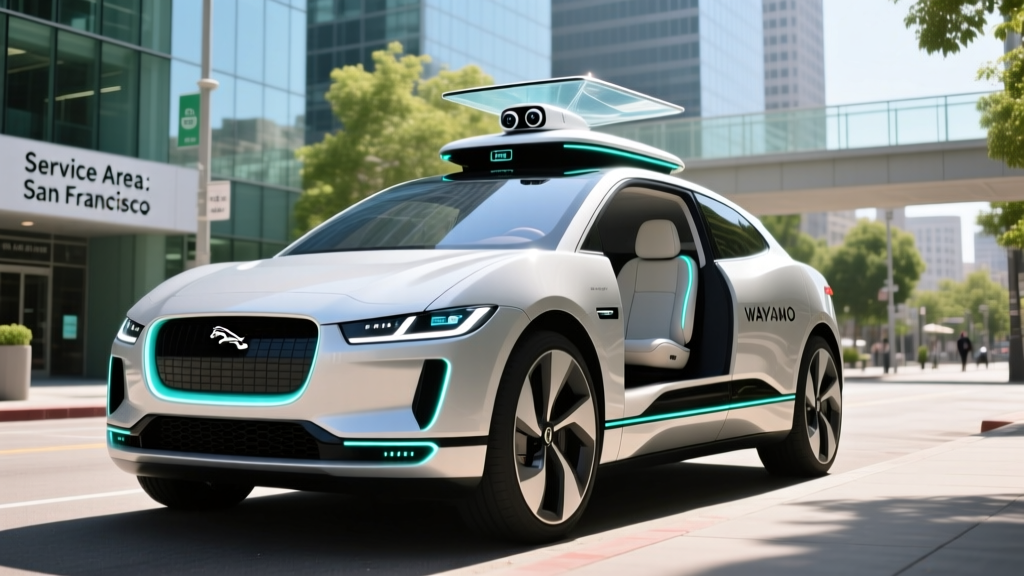
Tesla FSD (Supervised) is not self-driving. It is a Level 2 system per the SAE J3016 standard. The driver is responsible for all vehicle operation at all times. Level 4 (true driverless operation in defined areas) is reserved for purpose-built robotaxis like Waymo's Jaguar I-PACE fleet and Zoox's dedicated vehicle — neither of which require a human driver.
Tesla's FSD package includes the following capabilities on top of standard Autopilot:
- Traffic Light and Stop Sign Control: Detects and responds to signals automatically
- Auto Lane Change: Executes highway lane changes when turn signal is activated
- Navigate on Autopilot: Highway on-ramp to off-ramp guidance with automatic interchanges
- Autosteer on City Streets: Handles turns, intersections, and urban navigation
- Smart Summon: Low-speed parking lot navigation to the driver
- Autopark: Automated parallel and perpendicular parking
The hardware behind these features is Tesla's HW4 (AI4) computer paired with a suite of cameras — Tesla abandoned ultrasonic sensors and radar years ago in favor of its camera-only "Tesla Vision" approach. There is no lidar, no radar redundancy.
The Technology Stack: Tesla Vision vs. Robotaxi Sensor Suites
Understanding why FSD is Level 2 — and why Waymo is Level 4 — starts with the hardware.
| Feature | Tesla FSD (Supervised) | Waymo Driver (Gen 6) | Zoox |
|---|---|---|---|
| SAE Level | Level 2 | Level 4 | Level 4 |
| Cameras | 8 cameras (Tesla Vision) | 29+ cameras | Multi-camera array |
| Lidar | None | Yes (custom Gen 6 units) | Yes |
| Radar | None (removed) | Yes (imaging radar) | Yes |
| Ultrasonic Sensors | None (removed) | Yes | Yes |
| HD Mapping / Geofencing | No geofence (attempts any road) | HD-mapped geofenced zones | HD-mapped geofenced zones |
| Driver Required | Yes — always | No | No |
The key takeaway: Waymo and Zoox use redundant sensor suites — lidar provides precise 3D depth perception regardless of lighting, radar works through rain and fog, and HD maps limit operation to thoroughly pre-mapped areas. Tesla's approach relies entirely on neural-network interpretation of camera data, which is more scalable but also more prone to edge-case failures. That fundamental difference is why Tesla remains Level 2 while sensor-heavy robotaxis achieve Level 4.
Real-World Safety Data: FSD vs. Robotaxi Records
Safety is the most consequential factor in evaluating any driving automation system. Here's what the data shows as of early 2026:
📊 Safety Data Snapshot
- Tesla FSD: NHTSA's Standing General Order has logged hundreds of incidents involving Tesla Autopilot/FSD-equipped vehicles since 2021. Tesla's own Q4 2025 safety report claims one crash per ~5.94 million miles driven with Autopilot engaged, vs. ~1.08 million miles without — but these figures are self-reported and not independently verified. Critics note the data does not account for road type, weather, or time of day.
- Waymo: As of late 2025, Waymo reported over 40 million fully driverless miles completed across its operating cities. A study published by the Insurance Institute for Highway Safety (IIHS) found Waymo vehicles had lower police-reported crash rates per mile than human drivers in comparable areas. Waymo also publishes transparency reports on contact events.
- Cruise: After a serious October 2023 incident in San Francisco where a Cruise vehicle dragged a pedestrian, GM suspended Cruise's driverless operations. As of 2026, Cruise has been gradually returning to supervised testing in limited areas with safety drivers, not operating commercially as a robotaxi.
The disparity in available data is itself a concern. Waymo's operations are geofenced, heavily instrumented, and subject to state reporting requirements (especially in California via the DMV's autonomous vehicle program). Tesla's FSD data is self-reported, spans all road types and conditions nationwide, and is not subject to the same granular public disclosure.
Where Robotaxis Actually Operate Right Now
If you're hoping to hail a car with no driver today, your options are geographically limited. Here's the current state of play:
| Service | Operational Cities | Service Type | Status |
|---|---|---|---|
| Waymo One | Phoenix, San Francisco, Los Angeles, Austin (expanding) | Fully driverless (Level 4) | Live — commercial service |
| Zoox | Las Vegas (limited area), Foster City, CA (testing) | Fully driverless (Level 4) | Limited commercial / invite-only |
| Tesla Robotaxi | Austin, TX (announced pilot) | Announced — details preliminary | Not yet commercially available |
| Cruise | Phoenix, Dallas (supervised testing) | Testing with safety drivers | Not commercially available |
Waymo is the only robotaxi service you can reliably hail as a paying customer in multiple U.S. cities today. Tesla has announced a robotaxi concept and limited pilot ambitions, but no commercially available driverless Tesla service exists as of this writing.
Cost Breakdown: Is Tesla FSD Worth $8,000?
Tesla currently prices Full Self-Driving Capability (Supervised) at $8,000 as a one-time purchase, or approximately $99/month as a subscription (availability of the subscription tier varies by vehicle and time). Here's how that compares to alternatives:
| Option | Cost | What You Get | Autonomy Level |
|---|---|---|---|
| Tesla FSD (purchase) | $8,000 one-time | Level 2 driver-assist; you drive | SAE Level 2 |
| Tesla FSD (subscription) | ~$99/month | Same features; cancel anytime | SAE Level 2 |
| Waymo One (Phoenix) | ~$0.90–$1.30/mile (varies by demand) | True driverless ride; no steering wheel needed | SAE Level 4 |
| Uber/Lyft (national avg.) | ~$1.50–$2.50/mile | Human driver; available nearly everywhere | N/A (human-driven) |
To put the $8,000 purchase price in perspective: if you spend an average of $15 per rideshare trip and take three trips per week, that's roughly $2,340 per year. You'd need over three years of completely replacing rideshare usage with FSD — except FSD doesn't replace rideshare because you still have to be in the driver's seat. The value proposition only works if you place a dollar figure on reduced driving fatigue during commutes.
From a resale standpoint, FSD does not reliably add $8,000 to a Tesla's used-car value. Third-party valuation data consistently shows FSD adds a fraction of its purchase price at trade-in or resale — sometimes as little as $1,500–$3,000 depending on the model and market.
Current Limitations: Where FSD Struggles
⚠️ FSD Limitations You Must Understand Before Purchasing
- Weather sensitivity: Heavy rain, snow, fog, and direct sun glare can degrade camera-only perception. Tesla Vision has no lidar or radar fallback.
- Construction zones: Temporary lane shifts, cones, and changed road geometry frequently confuse the system. Expect frequent disengagements.
- Unmapped or rural roads: Performance degrades significantly on roads without clear lane markings or in areas with limited training data.
- Complex intersections: Multi-lane roundabouts, unprotected left turns with heavy cross-traffic, and non-standard signal configurations remain challenging.
- Night driving: Low-light conditions reduce camera effectiveness; the system can miss pedestrians or dark-colored obstacles.
- Phantom braking: FSD has a documented history of unexpected deceleration events on highways — a concern for following traffic.
- Driver monitoring: Tesla uses a cabin camera to monitor attention, but the system is not as restrictive as GM's Super Cruise (which uses infrared eye-tracking). Complacency risk is real.
- No hands-free operation: You must keep hands available at all times. This is not a "read your phone" system.
By contrast, Waymo's geofenced approach means the system simply won't operate in conditions or areas it hasn't been validated for. If heavy rain exceeds operational thresholds, a Waymo ride may be unavailable — but it won't attempt to drive and fail mid-route. Tesla FSD will attempt almost any road in almost any condition, which shifts the burden of judgment entirely to the driver.
The Regulatory Landscape
Understanding who regulates what helps explain why Tesla's approach differs from robotaxi companies:
- Tesla FSD (Level 2): Regulated as a driver-assistance feature under NHTSA's general vehicle safety authority. No special state-level permit is required to sell or use FSD. NHTSA can investigate and order recalls (as it has done multiple times for Tesla Autopilot/FSD behavior at stop signs, emergency vehicles, and intersection control).
- Waymo / Zoox (Level 4): Must obtain permits from state regulators — most notably the California DMV and the California Public Utilities Commission (CPUC) for commercial passenger service. Arizona (where Waymo launched) has a more permissive regulatory environment. Each expansion city requires new approvals.
- Federal level: The NHTSA oversees vehicle safety standards but does not currently have a comprehensive federal framework for Level 4 deployment. The Standing General Order requires crash reporting for vehicles equipped with Level 2+ and above systems.
This means Tesla can ship FSD updates over-the-air to every compatible vehicle nationwide without seeking state-by-state approval. Robotaxi companies face a slower, more deliberate expansion process — but their vehicles operate without human drivers when they do deploy.
The Decision Framework: Should You Buy FSD?
🎯 Is Tesla FSD Worth It For You?
Consider FSD if:
- You have a long, monotonous highway commute and value reduced steering fatigue (while staying attentive)
- You want the most advanced Level 2 system available on a Tesla and are comfortable with the camera-only approach
- You plan to keep the vehicle 5+ years and want access to future FSD feature updates
- You understand you are paying for driver assistance, not self-driving capability
Skip FSD if:
- You expect to be able to text, watch videos, or nap — you cannot, and doing so is dangerous
- You primarily drive in heavy snow, fog, or on poorly marked rural roads
- You're purchasing primarily for resale value — FSD rarely recoups its cost at trade-in
- You want true self-driving — look at Waymo availability in your city instead
- The $8,000 cost represents a significant portion of your vehicle budget; standard Autopilot covers highway lane-keeping well
Frequently Asked Questions
Is Tesla Full Self-Driving actually self-driving?
No. Tesla FSD (Supervised) is an SAE Level 2 driver-assistance system. The driver must remain fully engaged and responsible for vehicle operation at all times. True self-driving (Level 4) is currently only available through robotaxi services like Waymo in select cities.
How much does Tesla FSD cost in 2026?
Tesla prices FSD at $8,000 as a one-time purchase or approximately $99/month as a subscription. Pricing and subscription availability may vary. Standard Autopilot (basic lane-keeping and traffic-aware cruise control) is included with every Tesla at no additional cost.
Does FSD improve over time with updates?
Tesla regularly ships over-the-air software updates that modify FSD behavior and add capabilities. However, the fundamental hardware limitation — camera-only perception without lidar or radar — remains unchanged on current vehicles. Whether future software improvements can fully compensate for the lack of sensor redundancy is debated among engineers and safety researchers.
Where can I use a true robotaxi right now?
Waymo One operates commercially in Phoenix, San Francisco, Los Angeles, and Austin. Zoox has limited service in Las Vegas. Both are Level 4 — no driver is present. Tesla does not currently offer a commercial robotaxi service.
Is FSD safer than a human driver?
Tesla reports lower crash rates per mile with Autopilot/FSD engaged, but these figures are self-reported and not independently verified by NHTSA or third-party researchers. The data does not control for road type, weather, or time of day. Independent safety validation at the scale of Tesla's fleet has not been published. For comparison, Waymo's driverless fleet has been analyzed by IIHS with favorable results in its operational areas.
Will FSD transfer if I sell my Tesla?
FSD is tied to the vehicle, not the owner. When you sell, FSD transfers with the car. However, Tesla has occasionally run FSD transfer promotions allowing owners to move FSD to a new Tesla purchase — these are limited-time offers, not permanent policy. Check Tesla's current terms before making a purchase decision based on transferability.