Tesla's Full Self-Driving (Supervised) package has long been one of the most debated options in the EV world — not just for what it can do on the road, but for what happens to it when you sell your car or buy a new one. If you've paid thousands for FSD, the question is urgent: is FSD transferable to a new owner, or to your next Tesla? The answer depends on when you bought it, how you paid for it, and whether Tesla is currently running a promotional transfer program.
This guide breaks down the 2026 landscape for FSD transferability, including resale implications, Tesla's periodic transfer promotions, and how FSD stacks up against competing Level 2 driver-assist systems from Ford, GM, and others.
What Tesla FSD (Supervised) Actually Does
Full Self-Driving (Supervised) is Tesla's highest-tier driver-assistance package, sitting above the standard Autopilot that comes with every new Tesla. FSD adds several capabilities on top of Autopilot's basic adaptive cruise control and lane-centering:
| Feature | Autopilot (Standard) | FSD (Supervised) |
|---|---|---|
| Traffic-Aware Cruise Control | ✅ | ✅ |
| Autosteer (lane centering, highways) | ✅ | ✅ |
| Navigate on Autopilot (highway interchanges) | ❌ | ✅ |
| Auto Lane Change | ❌ | ✅ |
| Autopark (parallel/perpendicular) | ❌ | ✅ |
| Smart Summon / Actually Smart Summon | ❌ | ✅ |
| Traffic Light & Stop Sign Control | ❌ | ✅ |
| City Street Autosteer | ❌ | ✅ |
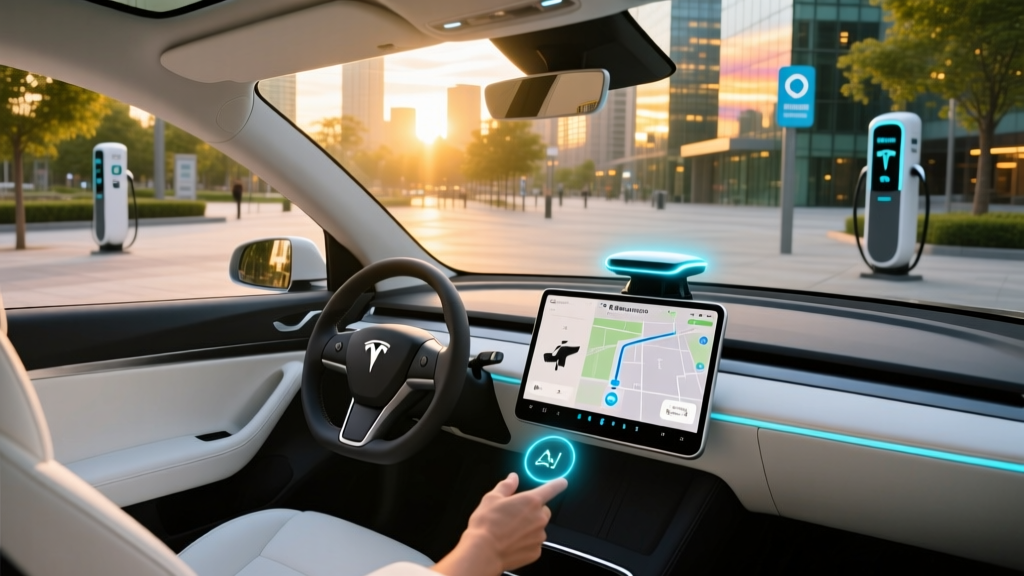
Technically, FSD relies on Tesla's vision-only sensor suite — a network of eight external cameras (front, side repeaters, side pillars, and rear) feeding into Tesla's custom HW4 (or newer) neural-network processor. Unlike Ford's BlueCruise or GM's Super Cruise, Tesla does not use LiDAR or high-definition maps. The system processes real-time visual data to identify lanes, traffic signals, pedestrians, and other vehicles, making driving decisions through machine-learning models trained on billions of miles of fleet data.
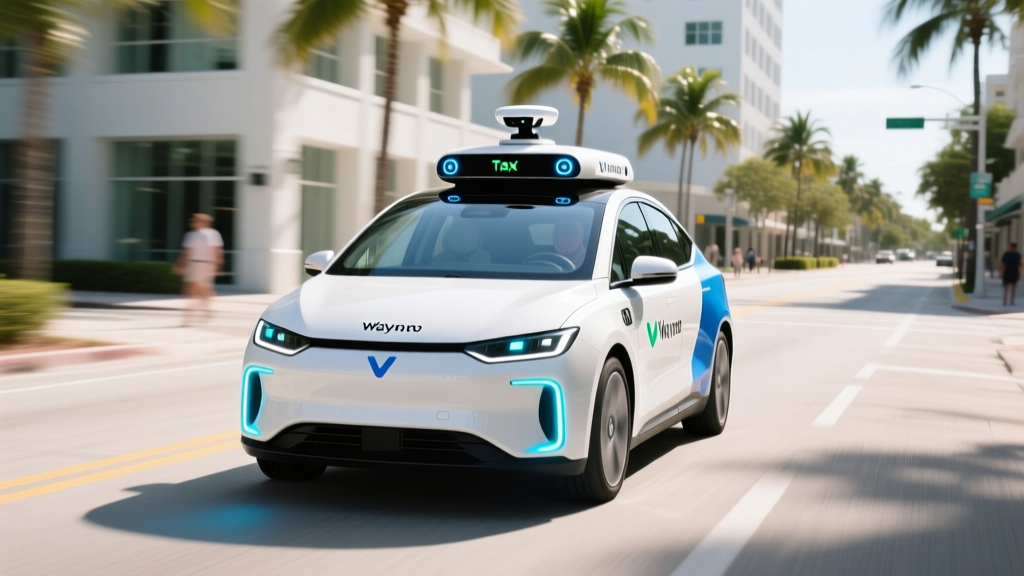
Despite the "Full Self-Driving" name, FSD (Supervised) is classified as an SAE Level 2 driver-assistance system. This means the driver must remain fully attentive, keep hands on the steering wheel (or demonstrate engagement via Tesla's monitoring system), and be prepared to take over instantly. The vehicle does not handle all driving scenarios independently. Only Level 4 systems — such as Waymo's robotaxi service operating in defined urban zones — qualify as truly driverless. Per NHTSA guidance, the human driver remains the responsible operator at all times with FSD.
FSD Transferability: Vehicle-to-Vehicle and Owner-to-Owner
The core question — is FSD transferable? — has a layered answer that depends on the transfer type:
FSD Transfer to a New Owner (Resale)
When FSD is purchased outright (a one-time payment), it is tied to the vehicle's VIN, not to the original buyer's Tesla account. This means FSD transfers with the car when sold. If you sell your 2024 Model Y with FSD purchased, the new owner inherits the FSD capability. This is a meaningful resale differentiator, though the used-EV market has historically assigned only partial value to FSD — buyers may pay $2,000–$4,000 more for an FSD-equipped vehicle, far less than the original $8,000–$15,000 purchase price (depending on the year of purchase).
However, FSD acquired through a monthly subscription does not transfer. The subscription is tied to the driver's Tesla account and ends when canceled. A used car that had a subscribed FSD user will not carry FSD forward to the next owner.
FSD Transfer to Your Next Tesla (Owner Transfer)
Historically, Tesla has not allowed owners to transfer a purchased FSD license from one vehicle to another. If you bought FSD on your Model 3 and later purchased a new Model Y, you'd need to buy FSD again for the new car.
That said, Tesla has periodically offered promotional FSD transfer programs — typically at the end of a quarter or fiscal year when delivery targets are in focus. During these limited-time windows, existing FSD owners can transfer their license to a new Tesla purchase. These promotions are:
- Announced via Tesla's website and in-app notifications
- Restricted to specific delivery date windows (e.g., "order by March 31, take delivery by April 15")
- Usually limited to one transfer per account
- Not retroactive — you must order during the promotion period
As of early 2026, Tesla has run several of these transfer promotions since 2023. If you're considering a new Tesla purchase and already own FSD, check Tesla's current offers page or contact a Tesla advisor to see if a transfer program is active. These promotions are unpredictable and should not be assumed.
FSD Pricing: One-Time Purchase vs. Monthly Subscription
| Option | Cost | Transferable to New Owner? | Transferable to New Vehicle? |
|---|---|---|---|
| One-Time Purchase | $8,000 | Yes (tied to VIN) | No (unless promotional transfer is active) |
| Monthly Subscription | $99/month | No (tied to account) | No |
Tesla has adjusted FSD pricing multiple times. The one-time purchase price peaked at $15,000 in 2022 before being reduced to $12,000 and eventually to $8,000 in 2024, where it has remained through early 2026. The monthly subscription was similarly reduced from $199/month to $99/month.
For buyers weighing the economics: at $99/month, you'd need to keep the subscription active for roughly 81 months (nearly 7 years) to equal the $8,000 outright purchase. If you plan to sell the car within 3–4 years, the subscription is the lower-risk option — you avoid sinking $8,000 into a feature that won't be fully recouped at resale. If you plan to keep the car 5+ years and believe a future transfer promotion may let you carry FSD to your next Tesla, the outright purchase has a strategic advantage.
Real-World Capabilities and Limitations
FSD (Supervised) represents some of the most ambitious consumer driver-assist technology available, but it has well-documented limitations that every buyer should understand before paying for it.
- It does not drive autonomously. You are the responsible driver at all times. NHTSA and the IIHS have both emphasized that Level 2 systems require continuous driver engagement.
- It does not handle all weather conditions. Heavy rain, snow, fog, and direct sun glare can impair camera vision and cause the system to disengage or behave unpredictably.
- It does not reliably handle construction zones. Temporary lane markings, shifted lanes, and flaggers frequently confuse the system.
- It does not replace attentive driving. Tesla's cabin camera monitors driver engagement, and repeated inattention warnings will lock you out of FSD for increasing durations.
- It does not guarantee safe navigation of complex intersections. Unprotected left turns, unusual signal phasing, and non-standard road layouts remain edge cases requiring driver intervention.
In real-world use, FSD excels on well-marked highways and in moderate suburban traffic. City-street performance has improved significantly with Tesla's v12 and v13 neural-network-based software releases, which moved away from hard-coded rules toward end-to-end learning. However, city driving still demands higher vigilance — phantom braking, unexpected lane departures near merging lanes, and hesitation at complex intersections remain reported behaviors.
Cold-weather and nighttime performance also degrade. Camera-based systems are inherently more affected by reduced visibility than LiDAR-equipped competitors, though Tesla's image processing has narrowed this gap.
FSD vs. Competing Level 2 Systems: Transferability and Cost Compared
| System | Brand | SAE Level | Cost | Transferable? | Hands-Free? |
|---|---|---|---|---|---|
| FSD (Supervised) | Tesla | Level 2 | $8,000 or $99/mo | VIN-tied (sale); promo transfers possible | No (hands-on monitoring) |
| BlueCruise | Ford | Level 2 | $2,100 + $75/yr or included on select trims | VIN-tied with vehicle | Yes (on pre-mapped highways, eyes monitored) |
| Super Cruise | GM (Cadillac/Chevy) | Level 2 | $2,500 or included on premium trims | VIN-tied with vehicle | Yes (on pre-mapped highways, eyes monitored) |
| ProPILOT Assist 2.0 | Nissan | Level 2 | Included on select trims | VIN-tied with vehicle | Yes (on highways, eyes monitored) |
| Toyota Safety Sense (TSS 3.0) | Toyota | Level 2 | Standard on all new Toyotas | VIN-tied with vehicle | No (hands-on) |
A few distinctions matter for buyers comparing systems:
Hands-free vs. hands-on: Ford's BlueCruise and GM's Super Cruise allow true hands-free driving on pre-mapped divided highways (over 400,000 and 750,000 miles of compatible roads, respectively), using infrared driver-monitoring cameras to confirm eye attention. Tesla's FSD, despite broader geographic coverage (it works on virtually any road), requires hands-on-wheel engagement or demonstrated attention at all times.
Geographic coverage: FSD's camera-based approach means it doesn't depend on HD maps — it can operate on unmapped rural roads or newly built streets. BlueCruise and Super Cruise are limited to their mapped highway networks, though those networks are extensive for interstate travel.
Resale value: All these systems are VIN-tied, meaning they transfer with the car at sale. None allow owner-to-new-vehicle license transfers outside of manufacturer promotions. FSD's higher upfront cost means the gap between purchase price and resale premium is larger than with Ford or GM's systems.
Does FSD Add Resale Value to Your Tesla?
The used-EV market tells a nuanced story about FSD's residual value. Data from major used-car platforms shows that FSD-equipped Teslas typically command a premium of roughly $2,000–$5,000 over identical models without FSD — well below the $8,000 original purchase price. Several factors compress this value:
- Buyer skepticism: Many used-EV shoppers are aware that FSD is a Level 2 system and don't value it at the original price.
- Subscription alternative: A buyer can subscribe to FSD for $99/month on a used Tesla (if the vehicle has FSD hardware), reducing the incentive to pay a premium upfront.
- Software evolution: FSD's capabilities change with updates, and some buyers prefer to evaluate the latest version via subscription before committing.
- Hardware dependency: Older Teslas with HW3 computers may require a hardware upgrade to run the latest FSD software, adding uncertainty for used buyers.
If maximizing resale value is a priority, purchasing FSD outright is unlikely to yield a full return. The subscription model — or forgoing FSD entirely and using the included Autopilot — may be the more financially rational choice for owners who plan to sell within 3–5 years.
Strategic Considerations: Should You Buy, Subscribe, or Skip FSD?
The decision to invest in FSD comes down to your ownership timeline, driving patterns, and risk tolerance for technology that is still evolving.
- Buy FSD outright ($8,000) if: You plan to keep the vehicle 5+ years, drive frequently on highways and in city traffic where FSD reduces fatigue, and want the optionality of a future promotional transfer to your next Tesla.
- Subscribe to FSD ($99/month) if: You want to evaluate the latest FSD version without a long-term commitment, plan to sell within 3–4 years, or only need FSD for specific road trips or commutes.
- Skip FSD and use Autopilot if: Your driving is primarily on straightforward highways where standard adaptive cruise and lane-centering suffice, you're budget-conscious, or you prefer to wait for Tesla's software to mature further before investing.
One additional note: Tesla has occasionally bundled FSD trials with new vehicle deliveries — typically a 30-day free trial that activates the full FSD feature set. If you're buying a new Tesla, take advantage of any available trial to evaluate FSD on your actual routes before committing to either the purchase or subscription.
Frequently Asked Questions
Can I transfer FSD from my old Tesla to a new Tesla I'm buying?
Not as a standard policy. Tesla does not offer a permanent FSD transfer program between vehicles. However, Tesla periodically runs limited-time promotional transfers — typically at end-of-quarter — allowing existing FSD owners to move their license to a new Tesla purchase. These are announced on Tesla's website and are time-limited. Check with Tesla directly before ordering.
Does FSD transfer when I sell my car to a private party?
Yes. If FSD was purchased outright (not subscribed), it is tied to the vehicle's VIN and transfers to the new owner automatically. The new owner will see FSD as an active feature in the vehicle's software menu.
Can a used Tesla buyer subscribe to FSD if the car didn't have it?
Yes, provided the vehicle has the required FSD hardware (HW3 or HW4). A used Tesla buyer can subscribe to FSD at $99/month through their Tesla account, even if the original owner never purchased FSD. If the vehicle has older HW2.5 hardware, a computer upgrade may be required — check with Tesla service.
Is Tesla FSD truly self-driving?
No. FSD (Supervised) is an SAE Level 2 driver-assist system. The driver must remain fully attentive and is legally responsible for the vehicle's operation at all times. The "Supervised" designation in Tesla's official branding explicitly acknowledges this. Truly autonomous (Level 4) driving is currently limited to geofleet services like Waymo in select cities.
How does FSD's $8,000 cost compare to Ford BlueCruise or GM Super Cruise?
FSD's $8,000 one-time cost is significantly higher than Ford's BlueCruise ($2,100 one-time plus $75/year after the trial period) or GM's Super Cruise ($2,500 or included on premium trims). However, FSD operates on virtually any road, while BlueCruise and Super Cruise are limited to pre-mapped divided highways. The value proposition depends on your driving patterns and how much you value broader geographic coverage versus hands-free highway convenience.
Does FSD work in bad weather?
FSD's camera-based system is affected by heavy rain, snow, fog, and direct sun glare. In these conditions, the system may reduce speed, issue warnings, or disengage entirely. Tesla's owner manual advises drivers to remain prepared to take full control in adverse weather. LiDAR-equipped competing systems (like those from Mercedes on the S-Class in limited markets) have some sensor advantages in low-visibility conditions, though consumer Level 2 systems across all brands remain weather-sensitive.
FSD pricing and transfer policies are subject to change. Always verify current terms on Tesla's official support page before purchasing. This article reflects information available as of early 2026.