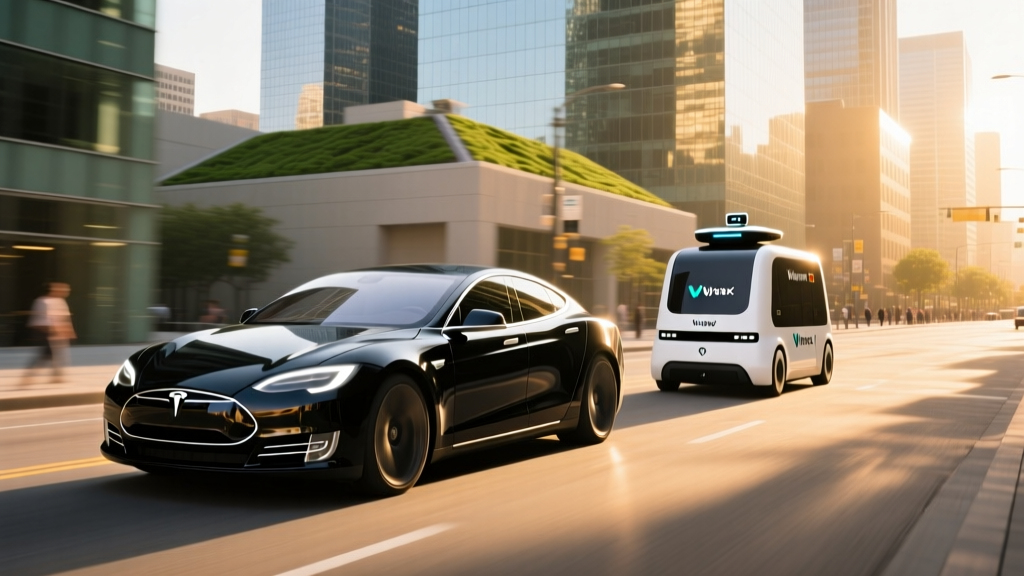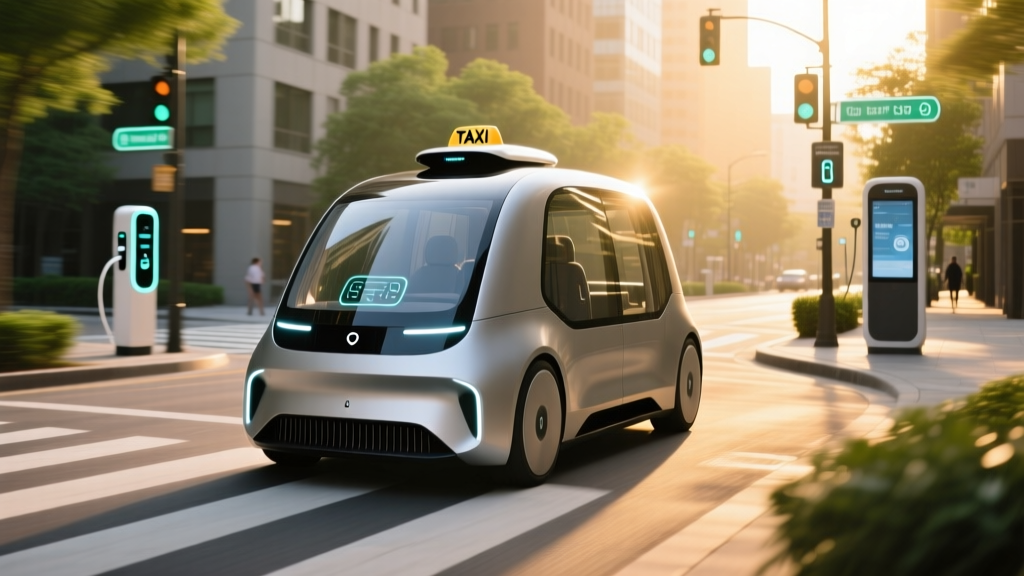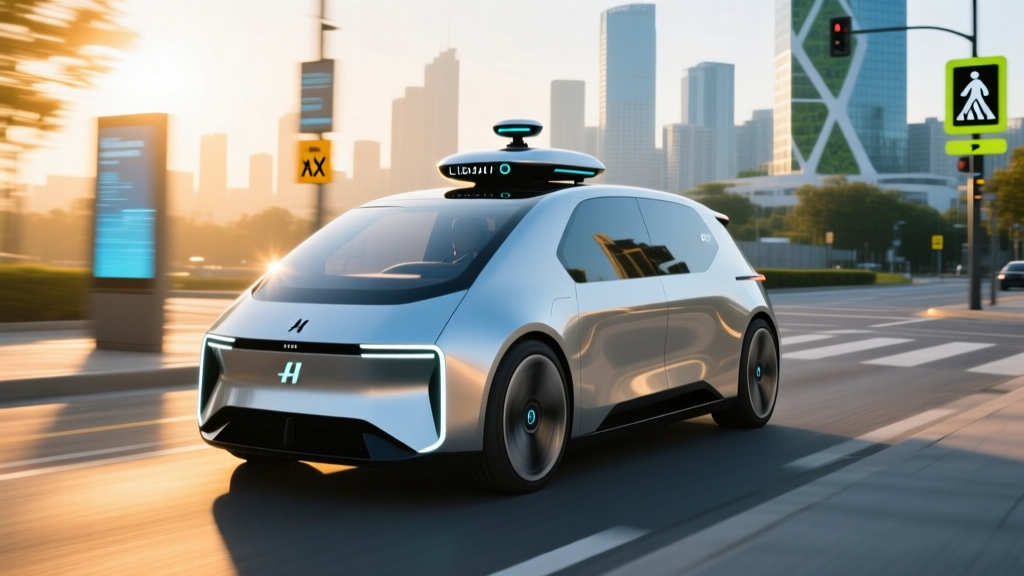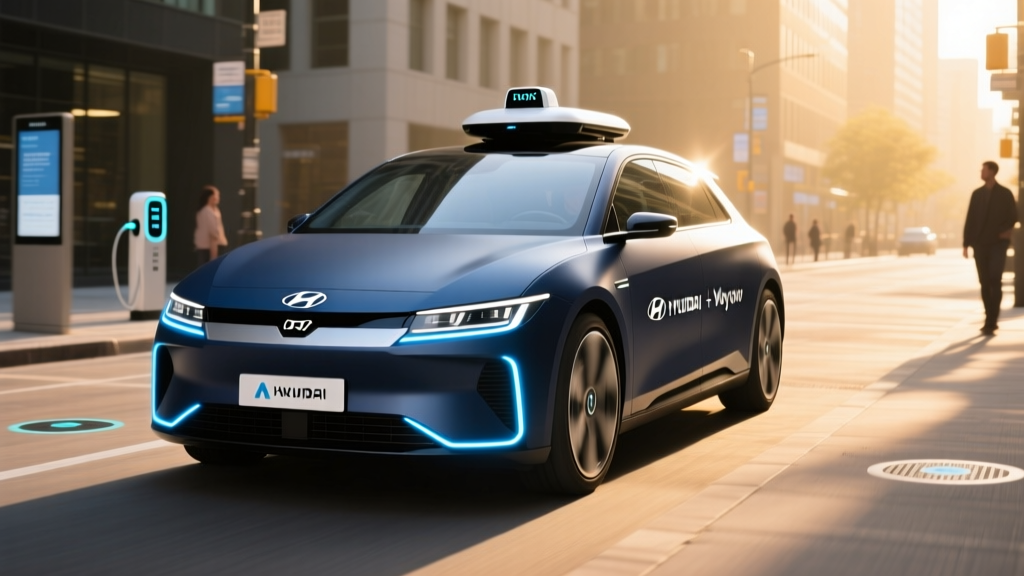
The phrase Hyundai Waymo has generated significant search interest since Waymo and Hyundai Motor Group deepened their collaboration to bring the Ioniq 5 into Waymo's commercial robotaxi fleet. For EV buyers and rideshare-curious consumers, the partnership represents a concrete intersection of electric vehicles and SAE Level 4 autonomy — not a concept, not a demo, but a paid service expanding across U.S. metros. This guide breaks down exactly what the Hyundai-Waymo robotaxi is, where it operates, what it costs, and how its technology and safety record stack up against both human drivers and competing autonomous services.
The Hyundai-Waymo Partnership: What It Actually Is
In 2024, Waymo and Hyundai Motor Group announced that the Hyundai Ioniq 5 would be integrated into Waymo's commercial ride-hailing fleet, the Waymo One service. Hyundai became the third major automotive partner for Waymo, joining Stellantis (Pacifica) and Jaguar (I-PACE). The Ioniq 5 was selected for its 800V electrical architecture, which supports the high electrical loads of Waymo's sensor suite and compute hardware, and for its spacious cabin layout suited to rider-only operation.
Hyundai's role is as a vehicle supplier and integration partner. Waymo outfits each Ioniq 5 with its proprietary 6th-generation Waymo Driver hardware — a roof-mounted lidar array, surround cameras, radar units, and external audio sensors — and handles all autonomous software, fleet operations, and rider experience. Hyundai does not operate the robotaxi service itself; it provides the base EV platform.
The Hyundai Ioniq 5 Waymo robotaxi operates at SAE Level 4 — meaning the vehicle performs all driving tasks within its defined operational design domain (ODD) without any human driver or remote teleoperator actively controlling the vehicle in real time. This is fundamentally different from Level 2 systems like Tesla Autopilot, GM Super Cruise, or Hyundai's own Highway Driving Assist, which require continuous driver supervision. There is no steering wheel interaction, no "eyes on road" requirement, and no driver seat occupant in a Waymo One Ioniq 5.
Where Can You Ride a Hyundai Waymo Robotaxi Right Now?
Waymo One, the commercial paid robotaxi service, operates in specific geofenced zones within approved cities. The Hyundai Ioniq 5 has been deploying alongside Waymo's existing Jaguar I-PACE fleet. As of early 2026, confirmed Waymo One service areas include:
| City | Status | Service Area Notes |
|---|---|---|
| Phoenix, AZ (Metro) | Live — fully driverless | Chandler, Tempe, Mesa, Scottsdale, Phoenix Sky Harbor Airport; ~315 sq mi |
| San Francisco, CA | Live — fully driverless | Most of SF proper; 24/7 service approved |
| Los Angeles, CA | Live — fully driverless | Santa Monica, Hollywood, Downtown LA, Beverly Hills; expanding |
| Austin, TX | Live — fully driverless | Central Austin, South Austin, airport service area |
| Atlanta, GA | Announced / early deployment | Partnership with Uber; limited paid rides expected |
Important: Service areas are geofenced — you can only request rides with pickup and drop-off within Waymo's approved operational zone. If your destination falls outside the geofence, the app will notify you before confirming. Expansion timelines are subject to regulatory approval by state and local authorities, including the California Public Utilities Commission (CPUC) and state DMVs.
The Waymo Driver 6th-Gen Tech Stack on the Ioniq 5
Every Hyundai Ioniq 5 in the Waymo fleet carries the 6th-generation Waymo Driver sensor and compute suite. Unlike Tesla's camera-only approach, Waymo uses a redundant multi-sensor architecture:
Sensor Array
- LiDAR: Roof-mounted proprietary unit providing 360° high-resolution 3D point clouds, effective at 500+ meters. LiDAR operates independently of ambient light, critical for night and glare conditions.
- Cameras: Multiple high-dynamic-range surround cameras for lane detection, traffic signal recognition, pedestrian classification, and signage reading.
- Radar: Imaging radar units for velocity detection of moving objects, functioning in rain and fog where cameras degrade.
- External audio sensors: Microphones to detect emergency vehicle sirens and trigger appropriate yield behavior.
Compute & Software
- Custom Waymo AI perception, prediction, and planning stack running on vehicle-mounted hardware.
- HD mapping: Waymo pre-maps every street in its ODD at centimeter-level precision. The vehicle localizes against this map in real time — it does not drive in unmapped territory.
- Remote guidance (not remote driving): A human fleet specialist can approve a proposed maneuver in an edge case, but never directly steers or throttles the vehicle.
The Ioniq 5's 800V E-GMP platform is significant here. The Waymo Driver hardware draws substantial continuous power, and the Ioniq 5's high-voltage architecture reduces current draw and thermal load on the vehicle's electrical system compared to 400V platforms. The Ioniq 5's 77.4 kWh (usable) NMC battery provides sufficient range for a full shift of robotaxi operations, though Waymo manages fleet charging at dedicated depots using DC fast charging at up to 240 kW peak (the Ioniq 5's maximum DC rate), enabling 10–80% charges in approximately 18 minutes.
How Much Does a Waymo Robotaxi Cost vs. Uber and Lyft?
Waymo One uses a proprietary pricing model, not the surge-pricing algorithms of Uber or Lyft. Fares are calculated based on distance, time, and demand, but Waymo has publicly stated it aims for price parity with conventional rideshare.
| Route (Example) | Waymo One | UberX | Lyft Standard |
|---|---|---|---|
| 3-mile trip (off-peak) | $9–$13 | $8–$14 | $8–$13 |
| 8-mile trip (off-peak) | $18–$25 | $16–$28 | $15–$26 |
| Airport run (15 mi) | $35–$50 | $30–$55 (surge) | $28–$50 (surge) |
| Surge pricing? | No traditional surge | Yes — can 2–3x | Yes — can 2–3x |
How to book: Download the Waymo One app (iOS/Android), create an account, and request a ride within a supported service area. Payment is in-app via credit card. In Atlanta, Waymo rides can be requested through the Uber app as part of a partnership announced in 2025. Wait times typically range from 2–8 minutes in dense service zones.
How Safe Are Waymo Robotaxis? The Real Data
Waymo publishes safety data and is subject to NHTSA reporting requirements for autonomous vehicles. The most meaningful safety metric is the rate of at-fault collisions compared to human driver benchmarks.
Waymo Safety Record (Cumulative through Late 2025)
- Total fully driverless miles driven: Over 10 million miles across Phoenix, San Francisco, Los Angeles, and Austin.
- At-fault crash rate: Waymo's published analysis (peer-reviewed with insurance data) showed a ~76% reduction in at-fault injury-causing crashes compared to human drivers in the same cities, per million miles driven.
- Property-damage-only collisions: Approximately ~68% fewer than human benchmark.
- Contact incidents: The vast majority of minor contacts occurred at very low speeds (<5 mph) in complex urban scenarios (e.g., a pedestrian stepping into the path of a moving truck the Waymo vehicle was following). No fatalities have been reported in Waymo's fully driverless commercial operations.
- NHTSA Standing General Order: Waymo reports all crashes involving ADS-equipped vehicles within required timelines. Data is publicly accessible via NHTSA's ADS crash reporting database.
Source: Waymo Safety Data publications, NHTSA
Context matters: Waymo operates primarily in dense urban environments with lower speed limits, where collision severity is generally lower than highway incidents. The comparison benchmark uses human driver data from the same geographies. Waymo's system does not drive drunk, drowsy, or distracted — the three leading causes of human-caused fatalities.
Current Limitations: What the Hyundai Waymo Robotaxi Cannot Do
Level 4 autonomy is powerful but constrained by design. Understanding these limitations is essential before relying on the service:
Operational Limitations
- Geofence restriction: The vehicle will not operate outside its pre-mapped ODD. Rural roads, highways outside approved corridors, and newly constructed streets are inaccessible until Waymo maps and validates them.
- Weather degradation: Heavy rain, dense fog, and snow reduce sensor effectiveness. In Phoenix, Waymo operates in monsoon conditions with reduced confidence, but in heavy snow scenarios (not currently a factor in its service cities), the system would pull over safely and end the trip.
- Construction zones: While the system handles many temporary lane shifts, complex multi-stage construction with conflicting signage may trigger a remote-guidance pause or a safe pullover.
- No highway driving (in most areas): Waymo's current ODD is primarily surface streets at speeds up to ~45 mph. Highway integration is being tested but is not broadly available in commercial service as of early 2026.
- Emergency vehicle interaction: The system yields to detected sirens but may occasionally pause in ambiguous scenarios where a human driver would make a faster judgment call.
- Pickup/drop-off precision: The vehicle stops at safe, legal curbside locations — not at a specific building entrance or inside a parking garage. Riders walk the last short distance.
Regulatory Framework: Who Approves Robotaxi Operations?
Autonomous vehicle deployment in the U.S. is regulated at both state and federal levels, with no single national framework:
- Federal (NHTSA): Sets vehicle safety standards (FMVSS) and requires crash reporting. NHTSA does not "approve" ADS software but can issue recalls or investigations.
- State DMVs: Issue testing and deployment permits. California's DMV requires annual disengagement reports and manages manufacturer permits. Arizona has a more permissive framework with executive-order-based authorization. Texas requires registration with the state.
- State PUCs: In California, the CPUC must approve commercial paid robotaxi service, separate from DMV testing permits. This is a two-agency approval process unique to California.
- Local municipalities: Cities can negotiate operating agreements, restrict hours, or cap fleet sizes. San Francisco saw significant public debate before full 24/7 approval was granted.
Hyundai, as a vehicle manufacturer, does not need separate autonomous-vehicle permits — Waymo holds all operational permits. Hyundai's Ioniq 5 must comply with standard FMVSS requirements, and Waymo's modifications (sensor mounts, compute installation) are covered under NHTSA's ADS-specific exemptions and interpretations.
Hyundai Waymo vs. Competing Robotaxi Services
| Feature | Waymo (Ioniq 5 / I-PACE) | Zoox (Custom Vehicle) | Cruise / GM |
|---|---|---|---|
| SAE Level | Level 4 | Level 4 | Level 4 (suspended late 2023, limited relaunch) |
| Vehicle Platform | Hyundai Ioniq 5, Jaguar I-PACE | Purpose-built Zoox carriage | Chevrolet Bolt EV |
| Sensor Approach | LiDAR + Camera + Radar | LiDAR + Camera + Radar | LiDAR + Camera + Radar |
| Cities Live (Paid) | 4+ (Phoenix, SF, LA, Austin) | Limited (SF, Las Vegas testing) | Limited relaunch (Phoenix) |
| Steering Wheel | Present (unmanned) | None (bidirectional) | Present (unmanned) |
Frequently Asked Questions
Is the Hyundai Waymo robotaxi truly self-driving, or is there a human driver?
It is truly driverless. There is no human behind the wheel. The Ioniq 5 operates at SAE Level 4, meaning the Waymo Driver system handles all aspects of the driving task within its approved service area. This is categorically different from Level 2 driver-assistance features like Hyundai's Highway Driving Assist or Tesla Autopilot, which require a human driver to remain engaged at all times.
Can I buy a Hyundai Ioniq 5 with Waymo's self-driving technology?
No. The Waymo Driver hardware and software are proprietary to Waymo and are not available as a consumer option on any Hyundai production vehicle. The Ioniq 5 you purchase from a Hyundai dealer includes Hyundai's own Level 2 ADAS suite (Highway Driving Assist 2, Smart Cruise Control, Lane Keeping Assist). Waymo's Level 4 system is exclusive to its fleet vehicles.
How does the Ioniq 5 handle extreme heat in Phoenix?
The Ioniq 5's battery thermal management system, combined with Waymo's climate-controlled sensor enclosures, allows operation in Phoenix summer temperatures exceeding 115°F. Waymo has operated in Phoenix since 2018 (initially with the Chrysler Pacifica) and has validated its hardware across multiple Arizona summers. The Ioniq 5's heat pump and liquid-cooled battery pack are well-suited to these conditions.
What happens if the Waymo Ioniq 5 encounters a situation it can't handle?
The vehicle is programmed to execute a Minimal Risk Condition (MRC) — it will safely pull over to the curb, activate hazard lights, and end the trip. A remote guidance specialist may assist by approving a proposed path, but never directly controls the vehicle. Riders can contact Waymo support via an in-vehicle screen and button at any time.
Does the Hyundai Waymo robotaxi qualify for any EV tax credits?
Tax credits under IRS §30D apply to consumer purchases of new clean vehicles. Waymo's fleet Ioniq 5 vehicles are not consumer purchases — they are commercial fleet assets owned by Waymo/Alphabet. If you purchase your own Ioniq 5 from a Hyundai dealer, standard §30D rules apply: the vehicle must meet MSRP caps ($55,000 for sedans), buyer income limits, and critical-mineral/battery-component sourcing requirements. Consult a tax professional for eligibility.
Will Hyundai Waymo service expand to my city?
Waymo has announced plans to expand to additional U.S. cities, with Atlanta (via Uber) confirmed for phased rollout. Expansion depends on regulatory approval, HD mapping completion, and fleet scaling. Hyundai's manufacturing capacity for the Ioniq 5 (produced at the Metaplant in Ellabell, Georgia) supports fleet growth. No confirmed timeline exists for cities beyond those currently announced.