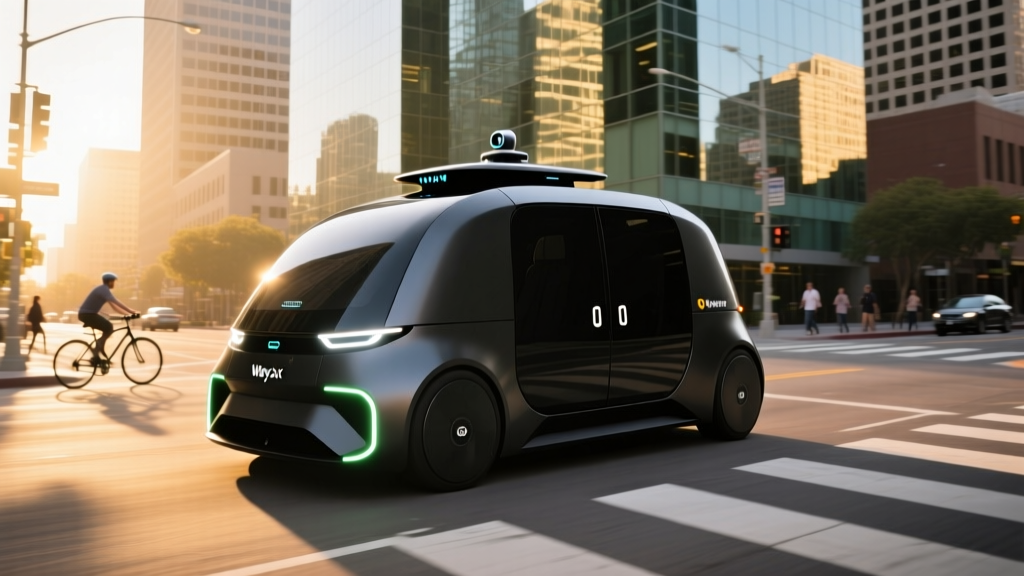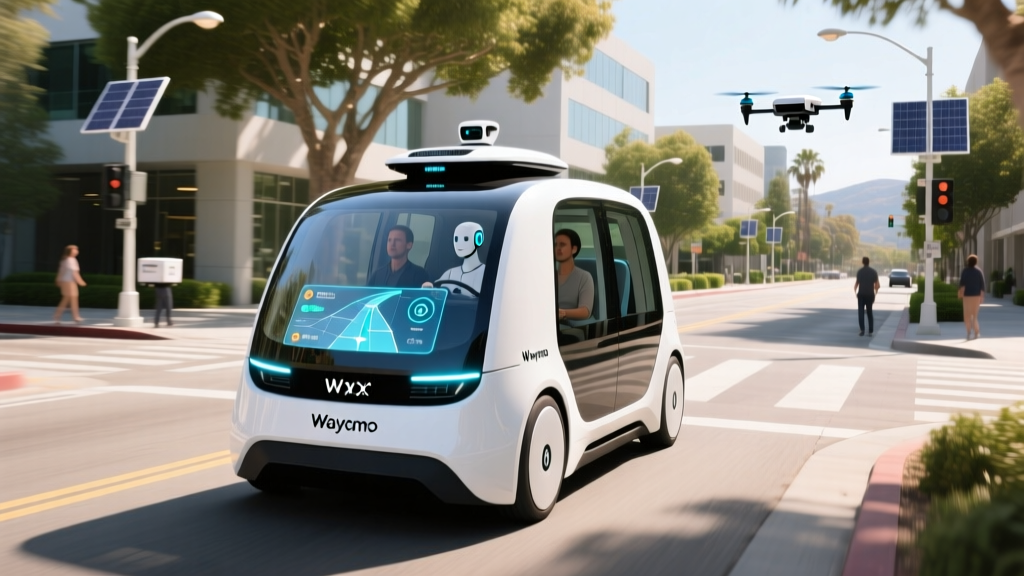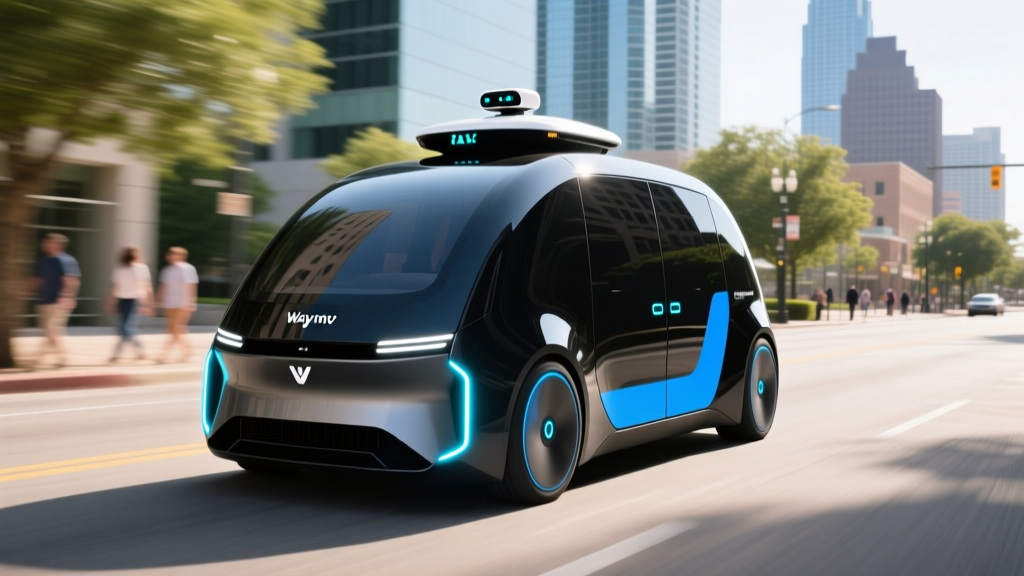
If you've searched "how to get Waymo in Austin" you've likely hit a wall of outdated articles and vague promises. As of early 2026, Waymo's fully driverless robotaxi service is not yet open to the general public in Austin, Texas — but the city is one of Waymo's confirmed next expansion targets, and the company has been mapping, testing, and running a limited trusted-tester program in the metro area since late 2024. Here's exactly where things stand, what you need to do to get early access, and what to expect when the service flips on for paying riders.
Where Can I Use Waymo Right Now in 2026?
Waymo One — the company's commercial, fully driverless ride-hailing service — is currently operational in three U.S. metros. Austin is in the pipeline but not yet live for public rides.
| City | Status | Service Area (approx.) | Access |
|---|---|---|---|
| Phoenix, AZ | Fully operational | ~225 sq mi (Chandler, Tempe, Mesa, Scottsdale, downtown Phoenix, Sky Harbor Airport) | Open to public via Waymo app |
| San Francisco, CA | Fully operational | ~50 sq mi (most of SF proper, SFO airport service launched 2025) | Open to public via Waymo app |
| Los Angeles, CA | Fully operational | ~80 sq mi (Santa Monica, Beverly Hills, Hollywood, downtown LA, LAX corridor) | Open to public via Waymo app |
| Austin, TX | Testing / Trusted Tester | Mapped corridors in downtown, South Congress, East Austin, parts of I-35 frontage | Waitlist only — invite-based |
Waymo has also announced intentions to expand to additional cities including Atlanta (in partnership with Uber) and Tokyo (international pilot), but those remain in testing or partnership-development phases as of this writing.
Is Waymo Truly Self-Driving? SAE Level Explained
Waymo's 6th-generation robotaxi operates at SAE Level 4 within its geofenced service area. This means the system performs all driving tasks — steering, braking, navigation, lane changes — with no human driver present and no expectation of human takeover during normal operations within the defined operational design domain (ODD). This is fundamentally different from Tesla's FSD (Supervised), GM's Super Cruise, or Ford's BlueCruise, which are all SAE Level 2 systems requiring an attentive human driver at all times.
| Level | Name | Who Drives? | Examples |
|---|---|---|---|
| 0 | No Automation | Human does everything | Any conventional car |
| 1 | Driver Assistance | Human + one system (steering OR speed) | Adaptive cruise control, lane-keeping assist |
| 2 | Partial Automation | Human supervises; system handles steering AND speed | Tesla Autopilot/FSD Supervised, BlueCruise, Super Cruise |
| 3 | Conditional Automation | System drives in specific conditions; human must take over when requested | Mercedes DRIVE PILOT (limited markets, <40 mph) |
| 4 | High Automation | System drives fully within geofenced ODD; no human needed | Waymo One, Zoox |
| 5 | Full Automation | System drives everywhere, all conditions | Does not yet exist commercially |
The distinction matters enormously. When you step into a Waymo, there is no one in the driver's seat. There is no steering wheel accessible to passengers. The vehicle handles every scenario within its mapped territory, and if it encounters a situation it cannot resolve, it performs a minimal-risk maneuver (typically pulling over safely) and contacts remote assistance — it does not hand control to the rider.
How to Get Waymo in Austin: Step-by-Step
Since Waymo One isn't yet publicly available in Austin, here's the realistic path to getting a ride:
- Download the Waymo app (iOS or Android) and create an account. You'll need a valid phone number and payment method on file.
- Join the Austin waitlist. Within the app, you can select Austin as your city of interest. Waymo manages access through a rolling invite system.
- Look for Trusted Tester invites. Waymo has historically used a "Trusted Tester" program in new cities — early-access riders who agree to provide feedback. In Phoenix and SF, this program ran for months before public launch. Austin testers began receiving invites in late 2024 and early 2025, with expansion ongoing.
- Check for partnership access. Waymo has partnered with Uber in some markets (Atlanta pilot). If Waymo launches a similar Uber-integration in Austin, you may be able to request a Waymo vehicle through the Uber app even without a standalone Waymo account.
- Monitor Waymo's official channels. Public launch announcements come via Waymo's blog and local Austin press. Service typically opens to the full public several months after Trusted Tester begins.
Realistic timeline: Based on Waymo's expansion pattern in Phoenix, SF, and LA — each of which saw 6-12 months of testing before public launch — a general-public Austin launch in late 2026 or early 2027 is plausible but not confirmed. Waymo has not announced a specific date.
What Will a Waymo Ride Cost in Austin?
Waymo prices its rides to be competitive with Uber and Lyft — not dramatically cheaper, not dramatically more expensive. Based on current pricing in operational cities:
| Ride Type | Waymo One (est.) | UberX | Lyft Standard |
|---|---|---|---|
| Short ride (~3 mi, downtown) | $8–$12 | $7–$11 | $7–$10 |
| Medium ride (~8 mi) | $15–$22 | $14–$20 | $13–$19 |
| Airport run (AUS to downtown, ~7 mi) | $18–$25 | $16–$24 | $15–$22 |
| Surge pricing | No surge pricing (currently) | 1.5x–3x during peak | 1.5x–3x during peak |
Key pricing advantage: Waymo does not currently implement surge pricing. During peak demand periods (SXSW, ACL Festival, rush hour), this can make Waymo significantly cheaper than Uber or Lyft, which routinely surge to 2x or 3x. In Phoenix, Waymo has occasionally offered promotional pricing ($0 or deeply discounted rides) during the Trusted Tester phase to build ridership — Austin testers should expect similar incentives.
Payment is handled entirely in-app. There is no driver to tip (though the app has occasionally surfaced optional "feedback" prompts). Waymo's 6th-generation vehicle seats up to three passengers in the back.
How Safe Are Waymo Robotaxis? The Real Data
- Total fully driverless miles driven: Over 10 million miles across Phoenix, SF, and LA (Waymo safety reports)
- Insurance claims rate: Waymo's own published data (peer-reviewed methodology) shows an 85% reduction in injury-causing crash rates compared to human benchmarks in the same geographies
- NHTSA Standing General Order: Waymo reports all Level 4 incidents to NHTSA as required. Public data shows the vast majority of reported incidents involve other vehicles colliding with the stationary or slow-moving Waymo — not the Waymo initiating contact
- Fatalities: Zero passenger or pedestrian fatalities attributed to Waymo's driverless operations as of Q1 2026
The safety question deserves nuance. Waymo vehicles have been involved in minor collisions — most commonly being rear-ended at stops or sideswiped by human drivers in adjacent lanes. These are reported to NHTSA under the Standing General Order requirement for automated driving systems.
The more meaningful metric is the rate of incidents per million miles compared to human drivers in the same urban environments. Waymo's published safety case, which has been reviewed by external researchers, indicates substantially lower rates of both property-damage and injury-causing crashes. The vehicles don't get drunk, don't text, don't run red lights, and have 360-degree sensor coverage that doesn't blink.
That said, robotaxis have drawn scrutiny for behaviors like stopping unexpectedly in travel lanes when encountering ambiguous scenarios (construction zones, unusual road configurations). The NHTSA and local regulators in San Francisco have pushed Waymo to improve these edge-case responses, and software updates have addressed many of the reported issues.
Under the Hood: Waymo's Sensor and Technology Stack
Waymo's 6th-generation "Waymo Driver" system represents a significant hardware leap from the Chrysler Pacifica-based 5th-gen vehicles. The tech stack is purpose-built for Level 4 urban driving:
- LiDAR: Multiple solid-state and spinning LiDAR units providing 360° high-resolution 3D point clouds out to 500+ meters. Unlike camera-only systems (Tesla), LiDAR provides direct distance measurement independent of lighting conditions.
- Cameras: 29+ cameras covering all angles with high dynamic range, optimized for reading traffic signals, detecting brake lights, and identifying pedestrian gestures at distance.
- Radar: 6 radar units for velocity detection and all-weather object tracking (rain, fog penetration).
- External audio sensors: Microphones to detect sirens from emergency vehicles from multiple directions.
- Compute: Custom-designed onboard AI hardware processing sensor fusion in real time.
- Vehicle platform: Geely-manufactured Zeekr M-Vision (custom robotaxi form factor — low floor, sliding doors, no driver controls) for newer fleet additions; legacy Jaguar I-PACE vehicles still in service.
Why this matters vs. camera-only approaches: Tesla's FSD relies entirely on cameras and neural networks — a cheaper hardware approach that requires solving perception through software alone. Waymo's multi-modal sensor stack (LiDAR + camera + radar) provides hardware-level redundancy. If a camera is blinded by sun glare, LiDAR still sees the pedestrian. If heavy rain degrades LiDAR return, radar still tracks the car ahead. This redundancy is a core reason Waymo can operate without a human driver, while camera-only systems still require one.
The system also relies on HD geofence mapping. Waymo pre-maps every inch of its service area at centimeter-level precision. The vehicle always knows exactly where it is relative to curbs, lanes, and intersections — it's not discovering the road in real time the way a human driver (or Tesla FSD) does in an unfamiliar city. This is both Waymo's greatest strength and its primary scaling constraint.
Current Limitations: Where Waymo Can't Go (Yet)
Level 4 autonomy is powerful but bounded. Waymo operates within strict constraints:
- Geofence boundaries: The vehicle will not drive outside its pre-mapped service area. You cannot take a Waymo from downtown Austin to, say, Fredericksburg — the ride simply won't be offered if the destination is outside the zone.
- Weather restrictions: Heavy rain, fog, or ice can cause service suspension. Waymo's sensors handle moderate rain, but the system is conservative — if conditions exceed validated operational parameters, rides are paused. This is a significant consideration for Austin's occasional severe thunderstorms and flash-flood events.
- Construction zones: While Waymo has improved its handling of temporary lane shifts and cone-defined corridors, complex multi-stage construction zones can still trigger remote-assistance pull-overs, adding time to your trip.
- No highway driving (in most markets): Waymo's current service primarily covers surface streets. Limited highway segments are included in some geofences (e.g., specific on/off-ramp corridors), but you won't be taking a Waymo on a long I-35 interstate trip.
- Pickup/dropoff precision: The vehicle uses designated pull-over points rather than stopping anywhere on demand. In dense urban areas, your actual pickup spot may be a short walk from your exact pin.
- Accessibility: Waymo's 6th-gen Zeekr vehicles are designed with wheelchair-accessible ramps, but fleet availability of WAV (wheelchair-accessible vehicle) units remains limited in most markets.
- No food/item delivery: Unlike some competitors experimenting with autonomous delivery, Waymo One is a passenger-only service.
Who Regulates Robotaxis in Austin?
Autonomous vehicle regulation is a patchwork of state and local authority. In Texas, the regulatory environment is relatively permissive compared to California:
- State level: Texas passed SB 2205 (2017), which explicitly allows autonomous vehicles to operate on public roads without a human driver, provided the vehicle is insured and registered. There is no state-level permit cap or special testing license required beyond standard vehicle registration and insurance requirements.
- Local level: The City of Austin and TxDOT coordinate on road access and infrastructure. Unlike San Francisco — where the SFMTA and CPUC have been actively adversarial with robotaxi operators — Austin's regulatory posture has been more collaborative, though local officials have pushed for data-sharing agreements and community engagement commitments.
- Federal level: NHTSA oversees vehicle safety standards and requires incident reporting under the Standing General Order. There is currently no federal framework specifically licensing robotaxi operations — that authority defaults to states.
This relatively open regulatory environment is one reason Waymo selected Austin as a priority expansion city. The company doesn't need to fight through the permitting battles it faced in San Francisco, where the California Public Utilities Commission (CPUC) required extensive public hearings and phased approvals before granting full deployment permits.
Frequently Asked Questions
Can I just download the Waymo app and get a ride in Austin today?
Not yet. As of early 2026, Austin is in the Trusted Tester phase. You can download the app and join the waitlist, but you'll need an invite from Waymo to take a ride. Public launch is expected within 6–12 months of this writing, but no firm date has been announced.
Is there a human driver in the Waymo vehicle?
No. Waymo One is a Level 4 fully driverless service. There is no one in the driver's seat. The vehicle navigates, steers, brakes, and handles all driving tasks autonomously within its geofenced service area.
How does Waymo compare to Tesla's FSD?
They are fundamentally different systems at different SAE levels. Tesla's FSD (Supervised) is Level 2 — it assists with steering and speed, but you are the driver and must remain attentive at all times. Waymo is Level 4 — fully driverless within its service area, with no human driver needed. Tesla FSD works on any road; Waymo works only within its pre-mapped geofence. Tesla FSD is a car you buy; Waymo is a ride you hail.
What vehicle will I ride in?
Waymo's Austin fleet will likely include a mix of the Jaguar I-PACE (legacy fleet) and the newer Zeekr M-Vision (6th-gen custom robotaxi). The Zeekr features a low flat floor, automatic sliding doors, and a spacious rear cabin with individual screens for each passenger — no driver's seat, no steering wheel.
Will Waymo be available for airport rides to/from Austin-Bergstrom (AUS)?
Airport service is a high-priority use case for Waymo, and the company has already launched airport rides at Phoenix Sky Harbor (PHX) and San Francisco International (SFO). Austin-Bergstrom is a likely early destination once the service area expands, but it has not been confirmed for launch day.
What happens if the Waymo vehicle encounters a problem during my ride?
The vehicle is designed to perform a "minimal-risk maneuver" — typically pulling to the side of the road and stopping safely. A remote assistance team monitors the fleet and can provide guidance to the vehicle's planning system (they do not remotely steer the car). In-app support and a help button in the cabin connect you to a live agent if needed.