What Zoox Is — and What Level of Autonomy It Actually Operates At
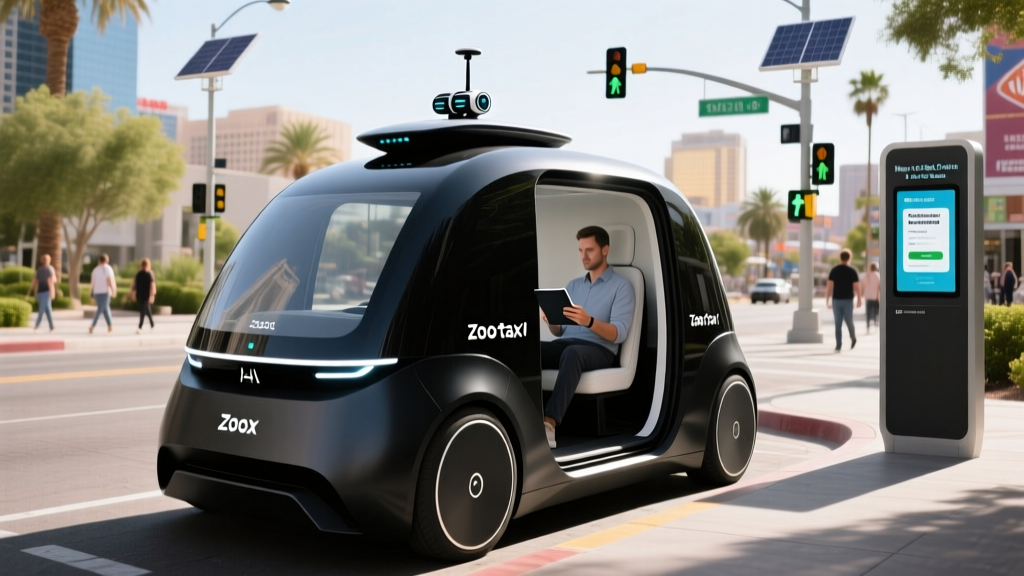
Zoox, the autonomous-vehicle subsidiary of Amazon, runs a purpose-built robotaxi with no steering wheel, no pedals, and no driver seat. This is a fundamentally different machine from a Tesla running FSD Supervised or a GM vehicle using Super Cruise. Those consumer systems are SAE Level 2 — the driver must remain engaged and is legally responsible. Zoox operates at SAE Level 4: fully driverless within a defined operational design domain (ODD), with no human behind the wheel and no expectation of passenger intervention.
- Level 2 (Driver Assist): System controls steering and speed; driver must monitor at all times. Examples: Tesla Autopilot, Ford BlueCruise, GM Super Cruise.
- Level 3 (Conditional Automation): System drives in specific conditions; driver must be ready to take over. Very limited availability (Mercedes DRIVE PILOT in select markets).
- Level 4 (High Automation): Fully driverless within a geofenced area. No human driver needed. Examples: Zoox, Waymo.
- Level 5 (Full Automation): Drives anywhere, any condition. Does not currently exist in production.
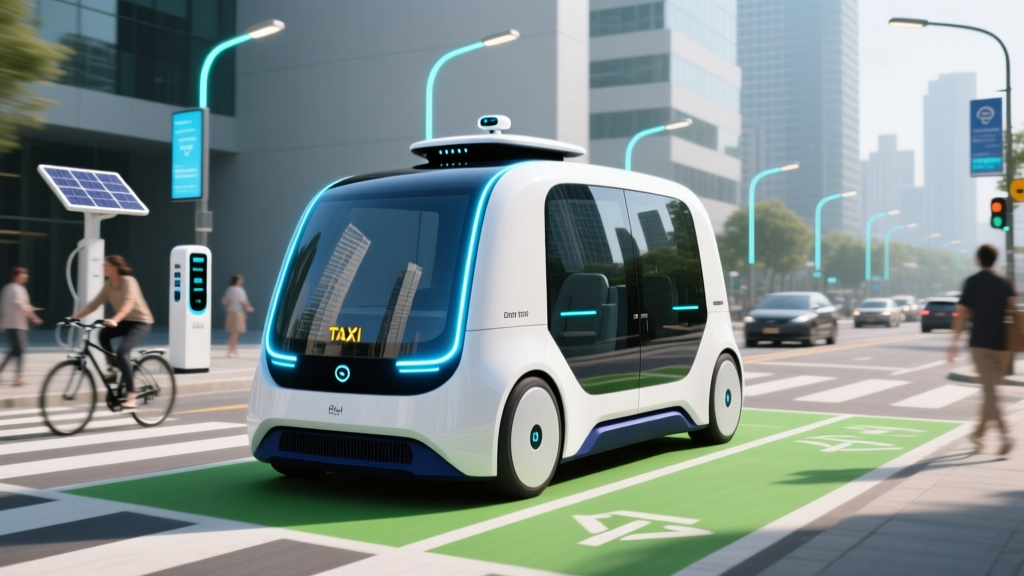
Zoox's vehicle is a bidirectional carriage-style pod seating up to four passengers face-to-face. It uses a sensor suite combining lidar, cameras, and radar — not the camera-only approach Tesla relies on for FSD. This redundancy is a hallmark of Level 4 systems designed to operate without any human fallback.
How to Book Zoox in Las Vegas: Step-by-Step
If you're searching for how to book Zoox in Las Vegas, here's what you need to know about the current process. Zoox does not operate like Uber or Lyft where you can hail a ride on demand from any address. The service is invitation-based and geofenced.
- Download the Zoox app from the Apple App Store or Google Play Store.
- Request early access through the app or via the Zoox rider page. Zoox has been gradually expanding its rider pool in Las Vegas and the San Francisco Bay Area.
- Wait for your invitation. Zoox onboards riders in waves. Priority has historically gone to early sign-ups and employees of partner organizations.
- Once approved, set your pickup and drop-off within the active service zone. The app will show you the geofenced boundary — you cannot request rides outside it.
- Confirm your ride. A Zoox vehicle will arrive autonomously. Unlock the doors through the app when it arrives.
- Enjoy the ride. There is no driver. An in-cabin screen shows you the route, and a support line is available via a button inside the vehicle.
Where Can You Actually Use Zoox Right Now?
Zoox's operational footprint is deliberately narrow. The company geofences its service area to streets it has extensively mapped and validated. Here's the current landscape:
| City | Status | Service Area Notes |
|---|---|---|
| Las Vegas, NV | Active (early access) | Las Vegas Strip corridor and surrounding areas; geofenced zone |
| Foster City / Bay Area, CA | Active (early access) | Foster City headquarters area; limited SF streets |
| Other cities | Testing only | Zoox tests in additional locations but does not offer public rides |
In Las Vegas, the geofence covers portions of the Strip and nearby commercial corridors. You cannot book a Zoox from the airport to a suburban address across town — both your pickup and drop-off must fall within the mapped zone. The app clearly shows the boundary before you confirm.
Zoox Pricing vs. Uber and Lyft in Las Vegas
During its early-access phase, Zoox rides are free. Zoox has not yet published a commercial pricing structure because it has not launched a paid public service. When it does transition to paid rides, the expectation based on Waymo's pricing model is that robotaxi fares will be competitive with — but not dramatically cheaper than — standard UberX or Lyft rides in the same corridor.
| Service | Typical Strip Fare (3 mi) | Surge Pricing? | Current 2026 Status |
|---|---|---|---|
| Zoox | Free (early access) | None yet | Invite-only pilot |
| UberX | $12–$22 | Yes, frequent on Strip | Fully available |
| Lyft | $11–$20 | Yes | Fully available |
| Waymo (where available) | $10–$18 | Limited | Open to public in select cities |
The long-term economic thesis for robotaxis is that removing the driver (who typically earns 60–75% of a rideshare fare) should allow lower per-mile pricing at scale. But Zoox has not announced pricing, and early paid phases may include promotional subsidies rather than reflecting true unit economics.
Safety Record: What the Data Actually Shows
Robotaxi safety is the most scrutinized question in the industry. Zoox has accumulated millions of autonomous miles, but it publishes less granular safety data than Waymo (which has released disengagement and collision reports through the California DMV and its own safety publications).
- Testing since: 2014 (founded), with Las Vegas operations beginning in 2022 and expanding through 2025–2026.
- Autonomous miles driven: Millions across test and early-access fleets (exact figures not publicly broken out by city).
- Collision record: Zoox has reported minor low-speed incidents to NHTSA under the Standing General Order requiring crash reporting for ADS-equipped vehicles. No fatalities involving Zoox vehicles have been reported.
- Remote assistance: Zoox uses remote operators who can provide high-level guidance to the vehicle (not direct teleoperation) when the system encounters an ambiguous scenario.
Source: NHTSA Standing General Order crash data, Zoox public disclosures, and NHTSA AV safety resources.
For comparison, Waymo has published peer-reviewed data showing its robotaxis were involved in approximately 85% fewer injury-causing crashes per million miles than human drivers in the same geographies. Zoox has not yet published an equivalent study, though its safety case relies on similar principles: 360-degree sensor coverage, no distracted driving, and consistent rule-following.
The honest assessment: Level 4 robotaxis have demonstrated strong safety performance in controlled urban environments, but the total miles driven are still a fraction of what human drivers log nationally. The data set is growing but not yet statistically exhaustive across all edge cases.
Technology Stack: Lidar, Cameras, Radar, and Geofencing
Zoox takes a multi-sensor approach that contrasts sharply with Tesla's camera-only FSD architecture. Here's what's on the vehicle:
| Sensor Type | Role | Why It Matters |
|---|---|---|
| Lidar (multiple units) | 3D point-cloud mapping of surroundings | Precise distance measurement in all lighting; critical for pedestrian and obstacle detection at night |
| Cameras (multiple) | Object classification, traffic-light reading, sign recognition | Color and text recognition that lidar alone cannot provide |
| Radar | Velocity detection, all-weather object tracking | Works through rain and fog where cameras and lidar degrade |
| HD Maps + Geofencing | Pre-mapped routes with operational boundaries | Limits the vehicle to validated roads; prevents operation in unmapped areas |
The vehicle's bidirectional design (it can drive equally well in either direction) eliminates the need for three-point turns or complex maneuvers in tight spaces. The symmetric sensor layout provides identical perception coverage in both travel directions.
Zoox runs its own purpose-built vehicle rather than retrofitting a production car. This gives the engineering team full control over sensor placement, compute architecture, and cabin layout — but it also means Zoox cannot scale by simply bolting hardware onto thousands of existing vehicles the way some competitors have explored.
Regulatory Landscape: Who Approves Robotaxi Operations?
Robotaxi operations in the United States require approval from multiple layers of government:
- State level: In Nevada, the Nevada Department of Transportation and the Nevada Legislature's autonomous vehicle framework govern testing and deployment permits. Nevada was one of the first states to pass AV legislation (2011), and Las Vegas has been a testing ground for multiple autonomous platforms.
- Federal level: NHTSA sets vehicle safety standards (FMVSS). Zoox received a notable exemption from certain FMVSS requirements (like having a steering wheel) to deploy its purpose-built vehicle — a significant regulatory milestone. NHTSA also requires crash reporting under its Standing General Order for all ADS-equipped vehicles.
- Local level: City and county authorities may impose additional requirements on where and when robotaxis can operate, including coordination with local emergency services and traffic management.
In California, the DMV and the California Public Utilities Commission (CPUC) jointly oversee robotaxi permits. Zoox holds permits for testing and limited deployment in the Bay Area. The regulatory pathway is deliberate: companies must demonstrate safety performance before expanding geographically or opening access to paying passengers.
Current Limitations: What Zoox Cannot Do
- Geofence restrictions: You can only ride within the mapped service zone. Trips from the Strip to Henderson or Summerlin are not possible.
- Weather constraints: Heavy rain, dust storms (relevant in Las Vegas monsoon season), or extreme heat events may cause the service to pause. Lidar and camera performance degrades in heavy precipitation.
- No highway driving: Zoox operates on surface streets at moderate speeds. It does not merge onto freeways.
- Limited hours: Service availability may not be 24/7. Night operations are supported (lidar doesn't need daylight), but Zoox may restrict hours during the pilot phase.
- Accessibility: The Zoox vehicle is designed with wheelchair accessibility in mind, but real-world curb conditions and pickup-spot infrastructure may present challenges.
- No out-of-zone drop-offs: Both origin and destination must be within the geofence — no exceptions.
- Edge cases: Construction zones, temporary road closures, and unusual traffic-control scenarios (parades, emergency vehicle incidents) may cause the vehicle to pull over safely and await remote guidance.
These limitations are not unique to Zoox — they apply broadly to all current Level 4 robotaxi services. The technology excels in well-mapped, moderate-speed urban environments but is not yet a general-purpose replacement for human-driven rideshare across all scenarios.
Frequently Asked Questions
Is Zoox truly self-driving, or is there a driver somewhere?
Zoox is genuinely driverless — SAE Level 4. There is no steering wheel, no pedals, and no human driver in the vehicle. A remote support team monitors the fleet and can provide high-level guidance to the vehicle if it encounters an unfamiliar scenario, but they do not directly steer or brake the car. This is fundamentally different from Tesla FSD Supervised (Level 2), which requires an attentive driver at all times.
How much does a Zoox ride cost compared to Uber or Lyft?
As of early 2026, Zoox rides during the early-access program are free. Zoox has not announced commercial pricing. When paid service launches, industry analysts expect fares comparable to UberX/Lyft on the same routes ($10–$22 for a typical Strip-area trip), with the potential for lower per-mile pricing as the fleet scales and driver costs are eliminated.
Where can I use Zoox right now?
Zoox is available through its early-access rider program in Las Vegas (Strip corridor and nearby areas) and the San Francisco Bay Area (Foster City and limited surrounding streets). Both your pickup and drop-off must be within the geofenced service zone. Access is currently by invitation — sign up through the Zoox app or website.
How safe are Zoox robotaxis?
Zoox has reported minor low-speed incidents to NHTSA under mandatory crash-reporting rules. No fatalities have been reported. The vehicle uses a redundant sensor suite (lidar, cameras, radar) and operates only in pre-mapped areas. However, total fleet miles are still a fraction of national human-driving data, so the statistical safety picture is still maturing. For comparison, Waymo's published research shows roughly 85% fewer injury-causing crashes per million miles than human drivers in similar urban environments.
Can I book a Zoox from Harry Reid International Airport?
As of early 2026, the Zoox geofence in Las Vegas does not include the airport. Both your pickup and drop-off must fall within the active service zone, which covers the Strip corridor and adjacent commercial areas. Check the Zoox app for the current boundary map.
What happens if the Zoox vehicle encounters a problem during my ride?
The vehicle is designed to pull over safely and stop if it encounters a scenario it cannot resolve autonomously. A remote support team monitors the fleet and can provide guidance. There is also an in-cabin support button to connect you with a human representative. The vehicle will not proceed if it is uncertain about safety.
Will Zoox expand beyond Las Vegas and the Bay Area?
Zoox has indicated plans to expand to additional cities, but no specific timelines or locations have been confirmed for paid public service beyond the current early-access zones. Expansion requires regulatory approval, extensive mapping, and fleet scaling in each new market. Announced plans should not be confused with live service.