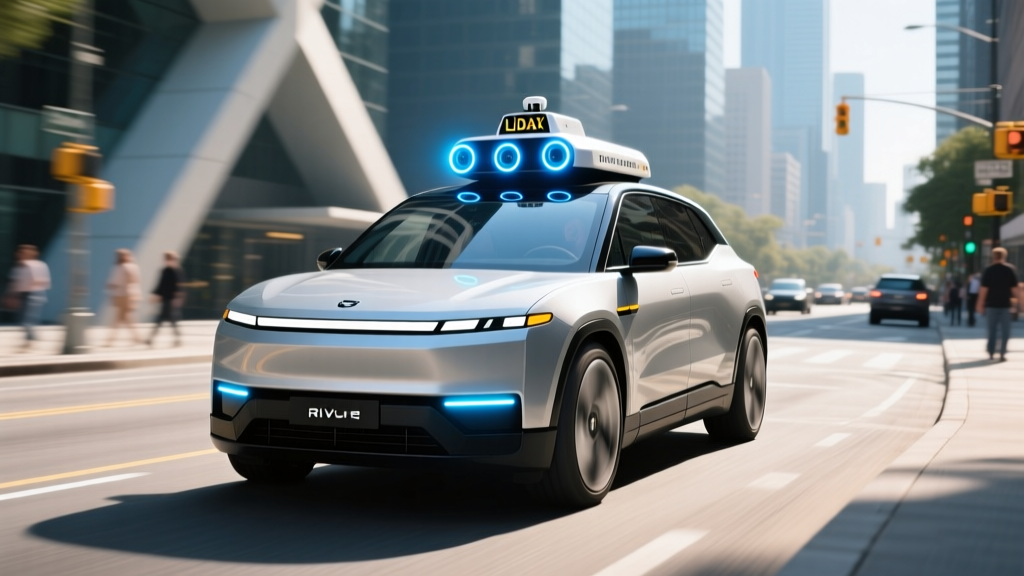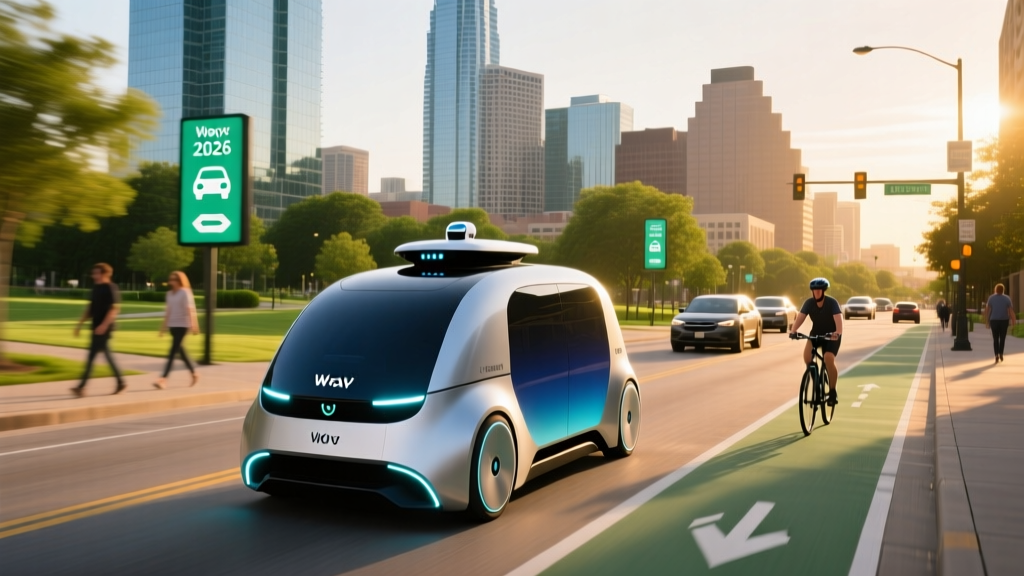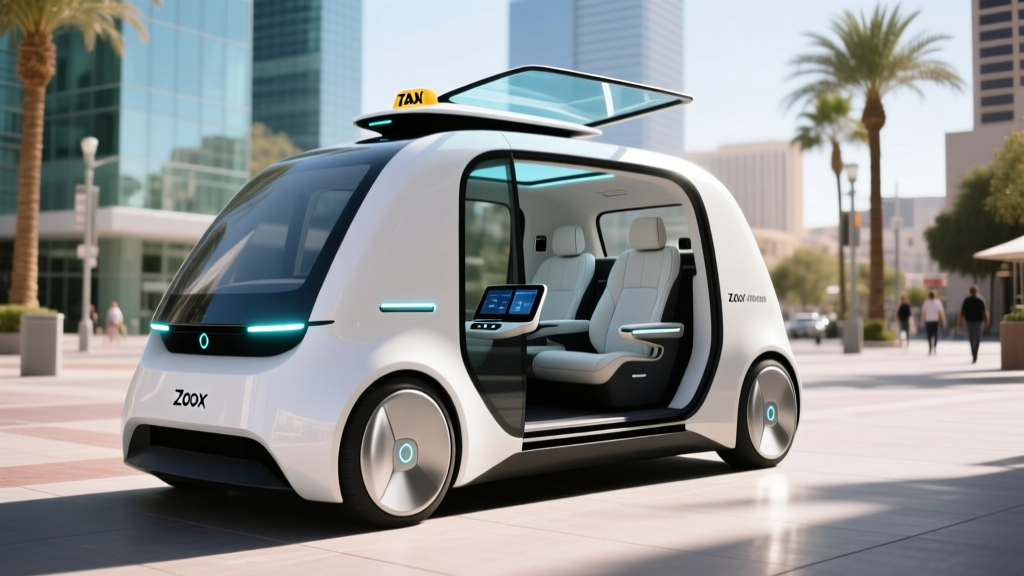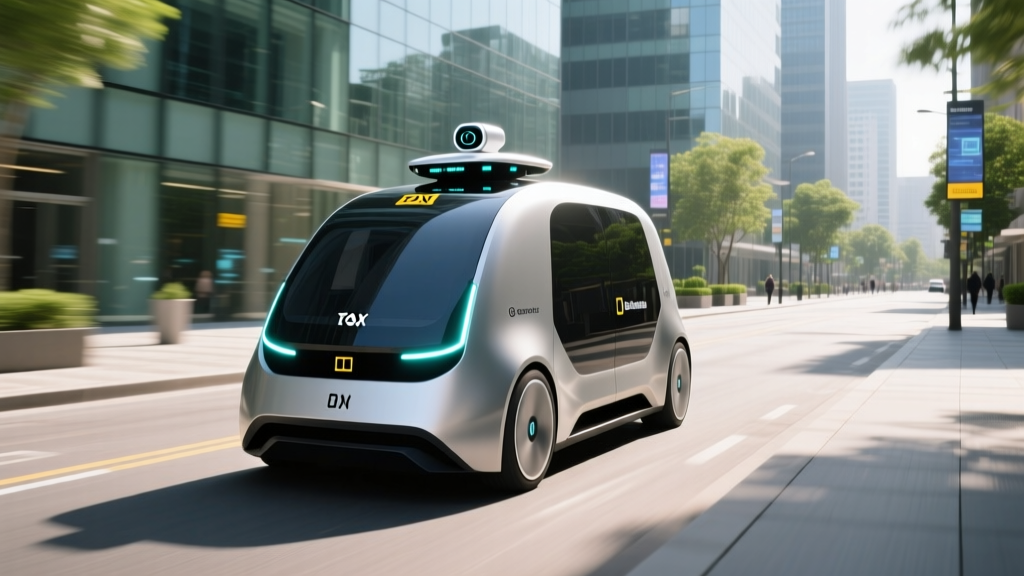
If you've searched "how to book a robotaxi" and found mostly concept videos and press releases, you're not alone. As of early 2026, fully driverless ride-hailing is real but geographically limited. Three major operators — Waymo (Alphabet), Cruise (GM), and Zoox (Amazon) — run commercial robotaxi services in select U.S. cities. This guide tells you exactly where they operate, what it costs, how safe they are, and how to actually get a ride today.
What Is a Robotaxi? Understanding SAE Autonomy Levels
Before you download an app, it's critical to understand what you're getting into. Consumer vehicles with features like Tesla's FSD (Supervised), GM's Super Cruise, or Ford's BlueCruise are SAE Level 2 systems — the driver must remain attentive and ready to take over at all times. Robotaxis operate at SAE Level 4, meaning they handle all driving tasks within a defined operational design domain (ODD) with no human driver present. There is no steering wheel intervention available to you as a passenger.
| Level | Who Drives | Example |
|---|---|---|
| Level 2 | Human (system assists) | Tesla Autopilot, GM Super Cruise, Ford BlueCruise |
| Level 3 | System (human on standby) | Mercedes DRIVE PILOT (limited conditions, ~40 mph) |
| Level 4 | System (no driver needed in ODD) | Waymo, Cruise, Zoox robotaxis |
| Level 5 | System (all conditions, everywhere) | Does not exist commercially |
Source: SAE International J3016
Where Can I Book a Robotaxi Right Now?
Robotaxi service in 2026 is city-specific and geofenced. You cannot hail one in a suburb or on a highway outside the approved zone. Here is where each operator runs fully driverless commercial rides as of Q1 2026:
| Operator | Parent Company | Live Driverless Cities | Vehicle Platform | Hours of Operation |
|---|---|---|---|---|
| Waymo One | Alphabet (Google) | Phoenix, AZ; San Francisco, CA; Los Angeles, CA; Austin, TX | Jaguar I-PACE (5th-gen sensor suite); Hyundai Ioniq 5 (6th-gen, rolling out) | 24/7 in most zones |
| Cruise | General Motors | Phoenix, AZ; Houston, TX; Dallas, TX (relaunching with safety drivers in select zones) | Chevrolet Bolt EV (retiring); Cruise Origin (announced, limited deployment) | Limited hours; varies by city |
| Zoox | Amazon | Las Vegas, NV; Foster City, CA (limited public access) | Zoox purpose-built vehicle (no steering wheel) | Daytime/evening hours |
Key caveat: Cruise significantly scaled back operations after a serious pedestrian incident in San Francisco in late 2023, which led to its California DMV permit suspension. The company has been relaunching gradually with human safety drivers before transitioning back to fully driverless service city by city. Check the Cruise website for the latest status before planning a trip.
How to Book a Robotaxi: Step-by-Step
The booking process is nearly identical to calling an Uber or Lyft, but with a few robotaxi-specific quirks:
Waymo One
- Download the Waymo One app (iOS/Android). Previously, access was waitlist-gated; as of 2025–2026, most users in service cities can sign up directly.
- Set your pickup and dropoff within the geofenced service area. The app will grey out locations outside the operational zone.
- Confirm your ride. You'll see the vehicle type, estimated wait time (typically 3–8 minutes in core zones), and upfront fare.
- Meet the car. The app shows the vehicle's license plate and a photo. The car pulls up, and you unlock it via the app — there's no driver to greet you.
- Start the ride. Tap "Start Ride" on the in-seatback screen or in-app. The vehicle handles everything from there.
Cruise
Cruise uses its own standalone app. In cities where driverless service has resumed, the flow mirrors Waymo's. In safety-driver zones, a human sits behind the wheel but does not interact with passengers.
Zoox
Zoox has been operating a limited ride-hail service in Las Vegas. Access has been primarily through invitation or its app in the Las Vegas corridor. The Zoox vehicle is purpose-built with inward-facing seating and no steering controls — a distinctly different experience from a retrofitted I-PACE or Bolt.
Robotaxi Pricing vs. Uber and Lyft
Robotaxi pricing is designed to be competitive with traditional rideshare, though it varies by city, time of day, and distance. Here's a general comparison based on observed fares in 2025–2026:
| Service | Base Fare Range | Per-Mile Rate | Surge Pricing? | Tipping |
|---|---|---|---|---|
| Waymo One | $2.50–$4.00 | $1.10–$1.50/mi | Occasional (demand-based) | In-app optional (goes to fleet ops) |
| Cruise | $2.00–$3.50 | $1.00–$1.40/mi | Limited currently | Not available |
| UberX | $2.50–$4.50 | $1.20–$1.80/mi | Frequent (surge/boost) | Expected (15–20%) |
| Lyft | $2.50–$4.50 | $1.15–$1.75/mi | Frequent (Prime Time) | Expected (15–20%) |
Bottom line: For a typical 5-mile trip in Phoenix or San Francisco, expect to pay $10–$16 on Waymo versus $12–$20 on Uber/Lyft after tip. Waymo has been running promotional credits for new users (often $5–$15 off first rides), which can make initial rides significantly cheaper. Without tipping, robotaxis frequently come out $3–$6 cheaper per trip than a comparable rideshare.
How Safe Are Robotaxis? The Real Data
Safety is the single biggest question prospective riders have. Here's what we know from publicly reported data and regulatory filings:
- Waymo: Over 30 million fully driverless miles completed as of late 2025. Waymo's published data (submitted to NHTSA) shows a contact-rate (police-reportable incidents per million miles) approximately 57% lower than human benchmarks for the same urban environments. Most incidents involve low-speed contact with other road users, not the robotaxi at fault.
- Cruise: The October 2023 San Francisco incident — in which a pedestrian was struck by a human-driven vehicle, then run over by a Cruise AV that failed to detect the person on the ground — led to California DMV permit revocation. Cruise has since overhauled its safety protocols and is relaunching under heightened regulatory scrutiny. Total driverless miles since relaunch remain limited.
- Zoox: Fewer public miles logged; Zoox has focused on controlled environments (Las Vegas strip corridor, Foster City testing). No major public incidents reported, but the sample size is small.
Sources: Waymo Safety Reports, NHTSA Standing General Order crash data, California DMV disengagement reports
For context, the U.S. human-driver fatality rate is approximately 1.35 deaths per 100 million vehicle miles (NHTSA FARS data). Robotaxi fleets have not recorded a passenger fatality. However, the total miles driven by robotaxis (tens of millions) are still far below the trillions of human-driven miles annually, so statistical comparisons carry wide confidence intervals.
How Robotaxis Actually Drive: The Technology Stack
Unlike Tesla's camera-only approach for its Level 2 FSD system, commercial robotaxis rely on redundant, multi-sensor perception stacks. Here's what's on the roof and around the body:
Waymo (6th-Generation System on Hyundai Ioniq 5)
- LiDAR: Multiple roof-mounted units providing 360° 3D point-cloud mapping out to 500+ meters
- Cameras: 29+ cameras covering all angles, with improved low-light and high-dynamic-range capability over 5th-gen
- Radar: 6 imaging radars for velocity detection and all-weather performance
- Audio detection: External microphones to detect emergency vehicle sirens
- Compute: Custom Waymo Driver platform with redundant compute paths
Zoox (Purpose-Built Vehicle)
- Symmetrical sensor layout with LiDAR, cameras, and radar on all four corners
- No steering wheel — fully drive-by-wire architecture
- Bidirectional driving capability (can travel in either direction)
- Four-wheel steering for tight urban maneuvering
Geofencing is critical: These vehicles operate only within high-definition mapped zones. If a route would take the vehicle outside its geofence, the app won't allow the booking. The HD maps include lane geometry, traffic signal positions, speed limits, and known construction zones — updated frequently.
Current Limitations: What Robotaxis Cannot Do
Riding in a robotaxi is impressive, but the limitations are real and worth understanding before you book:
- Geofenced zones only: You cannot travel outside the mapped service area. Airport routes are available in some cities (e.g., Phoenix Sky Harbor via Waymo) but not all.
- Weather restrictions: Heavy rain, fog, snow, or ice can cause service suspension. LiDAR and camera performance degrades in precipitation. Waymo operates in light rain in Phoenix but has historically paused service during San Francisco atmospheric rivers.
- Construction and road closures: Unexpected detours or unmapped construction zones can cause the vehicle to stop and wait for remote assistance. This can add 5–15 minutes to a trip.
- No highway driving (most services): Current robotaxi routes are surface-street only in most cities. Speed limits are typically capped at 45 mph in the ODD.
- Accessibility: Wheelchair-accessible vehicles remain limited. Waymo has begun deploying WAV options in some markets, but availability is sparse compared to standard vehicles.
- No stops or multi-destination trips: You cannot ask the car to stop at a store along the way. It's point-A to point-B only.
- Passenger conduct monitoring: In-cabin cameras monitor for safety. Vomiting, vandalism, or refusing to wear a seatbelt can result in the vehicle pulling over and ending the ride.
- Edge-case remote assistance: When the AI encounters an ambiguous scenario (e.g., a police officer directing traffic with hand signals), the vehicle may contact a remote operations center for guidance. This is not a human "driving" the car but rather approving a planned maneuver.
Who Regulates Robotaxis? The Approval Landscape
Robotaxi operations in the U.S. are governed by a patchwork of state and local authorities — there is no single federal robotaxi license:
- California: The California DMV issues testing and deployment permits. The California Public Utilities Commission (CPUC) regulates commercial passenger service. After the Cruise incident, the CPUC and DMV have imposed stricter reporting and operational requirements.
- Arizona: The state has taken a permissive approach since 2015, with executive orders enabling autonomous vehicle testing and deployment with minimal restriction. This is why Phoenix was the first Waymo market.
- Texas: Austin and Houston have welcomed robotaxi operations under state autonomous vehicle legislation passed in 2017.
- Nevada: Nevada's DMV oversees AV testing and deployment permits; Zoox operates under this framework in Las Vegas.
- Federal (NHTSA): The National Highway Traffic Safety Administration does not "approve" robotaxi services but mandates crash reporting through its Standing General Order and can issue recalls or investigations for safety defects.
Is This Truly Self-Driving or Just Driver-Assist?
This is the most important distinction in the entire autonomous vehicle space. When you ride in a Waymo, Cruise, or Zoox robotaxi, there is no driver. There is no steering wheel within your reach (or in Zoox's case, no steering wheel at all). The vehicle navigates urban streets, intersections, turns, and traffic entirely on its own within its approved operational domain. This is SAE Level 4.
By contrast, Tesla's Full Self-Driving (Supervised), GM Super Cruise, and Ford BlueCruise are SAE Level 2 systems. Despite the "Full Self-Driving" name, Tesla's FSD requires continuous driver supervision — your hands may be off the wheel briefly, but your eyes and attention must remain on the road. These systems cannot operate without a licensed, attentive driver in the seat.
If a company or article tells you that a consumer car you can buy today is "self-driving," that claim is inaccurate as of 2026. Only purpose-built or retrofitted fleet vehicles operating in geofenced urban zones under regulatory permits achieve driverless operation.
Frequently Asked Questions
Can I book a Waymo robotaxi at the airport?
Waymo offers airport service at Phoenix Sky Harbor (PHX) and has been expanding airport access in other markets. San Francisco International (SFO) and Los Angeles International (LAX) availability depends on current geofence boundaries and regulatory approvals. Check the Waymo One app — it will confirm whether your airport destination is within the service zone.
How much does a robotaxi cost compared to Uber?
For a typical 5-mile urban trip, Waymo fares run $10–$16 all-in (no tip required), while UberX with a 15–20% tip typically totals $14–$22 for the same route. Robotaxis are generally cheaper per trip, especially during rideshare surge periods, though robotaxi demand-based pricing can narrow the gap during peak hours.
Are robotaxis safe at night?
Waymo operates 24/7 in Phoenix and most of San Francisco. The 6th-generation sensor suite includes enhanced low-light cameras and LiDAR (which does not rely on ambient light). Night rides are routine. However, reduced visibility in rain or fog at night can trigger service pauses.
What happens if the robotaxi gets confused or stuck?
The vehicle will pull to a safe stop and contact a remote assistance center. A remote operator reviews the situation via the vehicle's sensor feeds and can approve a specific maneuver (e.g., navigating around a double-parked car). The remote operator does not steer the vehicle in real-time — they authorize the AI's proposed plan. Expect a delay of 2–10 minutes in these scenarios.
Can I bring children or car seats in a robotaxi?
Waymo's policy permits riders 18+ to book rides. Minors must be accompanied by an adult. You cannot install your own car seat in most robotaxis, and the vehicles do not come equipped with child restraints. This is a significant limitation for families compared to personal vehicles or some rideshare options.
Will robotaxis come to my city soon?
Waymo has announced planned expansions to additional cities, and other companies (including Tesla's announced robotaxi ambitions) may enter the market. However, each new city requires regulatory approval, HD mapping, fleet deployment, and extensive testing. Expect expansion to be measured in years, not months. Cities with warm climates, grid-like street layouts, and AV-friendly state regulations are most likely to be next.
Is a robotaxi ride different from a regular rideshare?
The driving itself is notably smooth and cautious — robotaxis obey speed limits precisely, come to complete stops at every stop sign, and never run yellow lights. The cabin experience is quiet (all-electric powertrains), with seatback screens showing the vehicle's perception view (pedestrians, cars, and cyclists highlighted in real-time). There's no small talk with a driver, no music preferences to negotiate, and no tipping pressure.
Editor's note: Robotaxi availability, pricing, and regulations change frequently. This article reflects conditions as of early 2026. Always verify service status in the operator's app before planning travel around robotaxi access. Safety data is drawn from operator-published reports and NHTSA filings; independent third-party validation remains limited.