How Much Is the Self-Driving Tesla? Separating Hype From Reality
The question "how much is the self-driving Tesla?" gets asked thousands of times a month, but the answer depends entirely on what you mean by "self-driving." Tesla sells vehicles with a Level 2 driver-assistance system called Full Self-Driving (Supervised) — which is not a robotaxi and requires the driver to remain fully engaged. Meanwhile, Tesla's dedicated Robotaxi (announced as the "Cybercab") is a Level 4 driverless platform that Tesla has projected entering limited production, but it is not yet available for consumer purchase or ride-hailing.
For drivers looking to actually hail a driverless ride today, the market is led by Waymo and, in limited capacity, Zoox. This guide breaks down the real costs, availability, safety records, and technology behind each — so you can answer the pricing question with data, not marketing.
| Level | Who Drives | Example |
|---|---|---|
| Level 2 | Human (system assists steering/accel) | Tesla Autopilot, FSD (Supervised), BlueCruise, Super Cruise |
| Level 3 | System in specific conditions; human on standby | Mercedes DRIVE PILOT (limited markets) |
| Level 4 | System (no human needed in geofenced area) | Waymo One, Zoox |
| Level 5 | System everywhere, all conditions | Does not exist commercially |
Tesla's FSD (Supervised) is a Level 2 system. The driver is legally and operationally responsible at all times. Source: SAE International J3016
Tesla FSD Pricing: What You Actually Pay Today
If you're asking "how much is the self-driving Tesla" in terms of buying a Tesla with its most advanced driver-assist feature, here are the current numbers:
| Tesla FSD Option | Cost (2025-2026) | What You Get |
|---|---|---|
| FSD (Supervised) — outright purchase | $8,000 (one-time) | Navigate on Autopilot, Auto Lane Change, Autopark, Summon, Smart Summon, Traffic Light & Stop Sign Control, FSD on city streets |
| FSD (Supervised) — monthly subscription | $99/month | Same features, cancellable monthly |
| Basic Autopilot (included) | $0 (standard) | Traffic-Aware Cruise Control, Autosteer (highway lane-keeping) |
Important: FSD (Supervised) is a Level 2 driver-assistance system. Despite the name, it does not make the car self-driving. You must keep your hands on the wheel (or demonstrate attentiveness via cabin camera monitoring) and eyes on the road at all times. Tesla has faced scrutiny from NHTSA regarding Autopilot and FSD crash investigations, and the company has been required to implement additional driver-monitoring safeguards.
The Tesla Robotaxi (Cybercab): Announced, Not Available
Tesla unveiled its purpose-built Robotaxi concept — the "Cybercab" — in October 2024. Key announced specifications include:
- Design: Two-seat, no steering wheel, no pedals
- Target price: Under $30,000 (consumer purchase, if/when available)
- Sensor stack: Camera-only (Tesla's vision-only approach; no lidar or radar)
- Projected production: Tesla CEO Elon Musk stated a target of 2026-2027 for limited production, though Tesla timelines have historically shifted significantly
- Estimated ride cost: Tesla projected ~$0.20/mile, though this is an unsubstantiated corporate target
Robotaxis You Can Actually Use Right Now
If you want a truly driverless ride today, two services are operational in the U.S.:
Waymo One (Alphabet/Waymo)
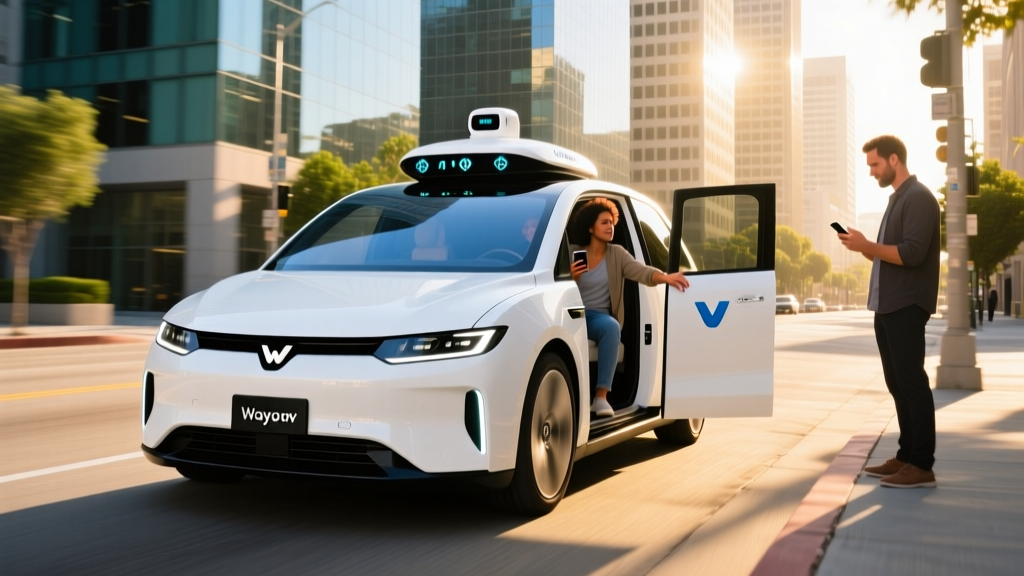
Waymo operates the largest commercial robotaxi fleet in the United States using its 5th-generation and 6th-generation "Waymo Driver" hardware on Jaguar I-PACE and Zeekr vehicles.
| City | Status (2026) | Service Area Notes |
|---|---|---|
| Phoenix, AZ | Fully operational, 24/7 | Largest geofenced area; covers most of metro Phoenix including airport service |
| San Francisco, CA | Fully operational, 24/7 | City-wide coverage; highway driving enabled on select routes |
| Los Angeles, CA | Operational, expanding | Covers central LA, Santa Monica, Hollywood; expansion ongoing |
| Austin, TX | Operational (launched 2025) | Initial geofence covering downtown and south Austin |
Zoox (Amazon)
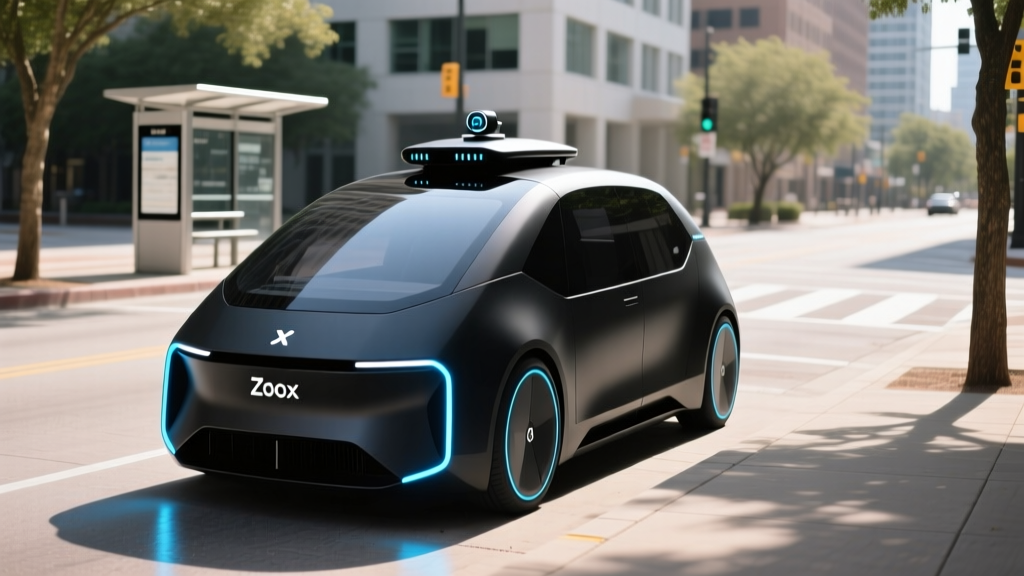
Zoox operates its purpose-built, bidirectional vehicle (no steering wheel) in limited areas:
- Las Vegas, NV: Las Vegas Strip corridor, operational
- Foster City, CA: Limited testing area, employee and early-access riders
- Availability: Not yet open to general public ride-hailing at scale
Robotaxi Pricing: Cost Per Ride vs Uber and Lyft
Here's how robotaxi fares compare to traditional rideshare in markets where both operate:
| Service | Base Fare | Per Mile | Per Minute | 5-Mile Trip Estimate |
|---|---|---|---|---|
| Waymo One (Phoenix) | ~$3.50 | ~$1.25 | ~$0.35 | $12–$16 |
| Waymo One (SF) | ~$4.00 | ~$1.40 | ~$0.40 | $14–$18 |
| UberX (Phoenix avg) | ~$2.50 | ~$1.10 | ~$0.30 | $10–$14 |
| Lyft Standard (SF avg) | ~$3.00 | ~$1.20 | ~$0.35 | $12–$16 |
| Tesla Cybercab (projected) | TBD | ~$0.20/mi (claimed) | TBD | ~$1 (claimed, unverified) |
Key takeaway: Waymo pricing is currently roughly comparable to Uber/Lyft — sometimes slightly higher, sometimes lower depending on time of day and demand. Waymo does not use surge pricing in the same way rideshare does, which can make it cheaper during peak hours. Tesla's claimed $0.20/mile cost for the Cybercab is an aspirational target that assumes massive scale, minimal operational overhead, and no regulatory cost burdens — none of which are guaranteed.
Safety Data: What the Numbers Actually Show
- Waymo cumulative miles (autonomous): Over 30 million fully driverless miles completed as of late 2025 (Waymo Safety Report)
- Waymo injury crash rate: Waymo's published data claims an 85% reduction in injury-causing crashes compared to human benchmarks in its operational areas
- Waymo disengagement rate: Less than 0.01 per 1,000 autonomous miles (per California DMV disengagement reports)
- Notable incidents: Waymo vehicles have been involved in low-speed collisions in San Francisco, including incidents with pedestrians and parked vehicles; NHTSA has opened investigations into several events
- Cruise (GM): Suspended operations in October 2023 after a serious pedestrian incident in San Francisco; resumed limited testing with safety drivers in 2024-2025 but has not returned to commercial driverless service at scale
Sources: NHTSA, California DMV Autonomous Vehicle Reports, Waymo Safety Data
The safety record for robotaxis is mixed but trending positively with accumulated miles. Waymo's data suggests lower crash rates than human drivers in geofenced urban environments, but the total mileage is still a fraction of human driving exposure. Cruise's 2023 suspension demonstrated that a single serious incident can halt an entire fleet — a regulatory and public-trust risk that applies to all operators.
For comparison, Tesla's FSD (Supervised) — a Level 2 system — reports data differently. Tesla's Vehicle Safety Report claims approximately one crash per 4-5 million miles driven with FSD active, versus the U.S. average of roughly one crash per 670,000 miles (NHTSA data). However, independent researchers have noted that Tesla's methodology differs significantly from NHTSA's, making direct comparison unreliable. FSD requires active driver supervision, so crash responsibility ultimately falls on the driver.
Technology Stack: How Robotaxis Actually See the Road
Camera-Only (Tesla) vs Multi-Sensor (Waymo/Zoox)
| Component | Tesla (Vision-Only) | Waymo (5th/6th Gen) | Zoox |
|---|---|---|---|
| Cameras | 8 surround cameras | 29+ cameras | Multiple camera arrays |
| Lidar | None | 5 custom lidar units (360° coverage) | Multiple lidar units |
| Radar | Removed (post-2022) | 6 radar units | Radar included |
| Audio sensors | None | External microphones (sirens) | External audio |
| HD Mapping | No (real-time vision) | Yes (pre-mapped geofences) | Yes |
| Estimated hardware cost | ~$2,000–$3,000 | ~$100,000+ (estimated, decreasing) | Not disclosed |
The sensor debate is central to understanding why Tesla's robotaxi timeline remains uncertain. Waymo and Zoox rely on lidar + radar + cameras + HD maps — a redundant, multi-sensor approach that provides depth perception and object detection in rain, fog, and darkness where cameras alone may struggle. Tesla insists its neural-network-driven, camera-only approach can match or exceed multi-sensor systems at a fraction of the cost.
The trade-off: Tesla's hardware cost advantage is massive (~$3K vs $100K+), which is essential for a sub-$30,000 consumer vehicle. But no camera-only system has yet received regulatory approval for unsupervised Level 4 operation in the U.S. This is the core technical and regulatory gap Tesla must close.
Regulatory Landscape: Who Approves Robotaxi Operations
Robotaxi deployment in the U.S. requires approval at multiple levels:
- State level: Each state sets its own autonomous vehicle testing and deployment rules. California's DMV issues testing permits, while the California Public Utilities Commission (CPUC) approves commercial passenger service. Arizona has minimal regulatory requirements, which is why Waymo launched commercially there first. Texas passed legislation enabling autonomous vehicle operation in 2023.
- Federal level: NHTSA oversees vehicle safety standards and crash investigations. Currently, no federal framework exists for certifying a Level 4 vehicle without traditional controls (steering wheel, mirrors). Manufacturers must petition for exemptions from Federal Motor Vehicle Safety Standards (FMVSS).
- Local level: Cities often negotiate operational agreements covering geofencing, fleet size, hours of operation, and emergency response protocols.
Tesla's Cybercab — with no steering wheel or pedals — would require FMVSS exemptions from NHTSA before it could legally operate on public roads. This process has historically taken years. General Motors' Cruise Origin vehicle faced similar regulatory hurdles before the company pivoted away from that platform.
Current Limitations: Where Robotaxis Cannot Go
- Geofencing: Waymo operates only within pre-mapped zones. You cannot hail a ride to an address outside the service area, even if it's a few blocks beyond the boundary.
- Weather: Heavy rain, fog, snow, and ice degrade sensor performance. Waymo reduces operations or pauses service in severe weather. Camera-only systems (Tesla's approach) are even more weather-sensitive.
- Construction zones: Unmapped lane closures, temporary barriers, and flaggers remain challenging edge cases that can trigger remote assistance or route abandonment.
- Highway driving: Waymo has enabled highway segments on select routes (e.g., SFO airport runs), but most robotaxi service remains limited to surface streets under 45 mph.
- Pick-up/drop-off precision: Vehicles may stop across the street, in a bike lane, or at a corner rather than directly at your door, especially in dense urban areas.
- Emergency vehicles: While systems detect sirens and pull over, edge cases with multiple emergency vehicles or complex intersections can cause extended stops.
- No intercity travel: You cannot take a robotaxi from San Francisco to Los Angeles. Service is point-to-point within a single metro area.
Is Tesla's FSD Actually Self-Driving? The Honest Answer
No. Tesla's Full Self-Driving (Supervised) is a Level 2 advanced driver-assistance system. It can navigate city streets, handle intersections, change lanes, and manage highway driving — but it requires continuous human supervision. The driver is legally liable for all actions of the vehicle. The "Supervised" designation in the product name is not optional branding; it reflects the operational and legal reality.
Tesla has faced regulatory action from NHTSA regarding FSD behavior at traffic controls and the adequacy of driver monitoring. The company has issued recalls (via over-the-air software updates) to address specific behaviors. If you purchase FSD for $8,000 or $99/month, you are buying the most advanced driver-assist system Tesla offers — not a chauffeur.
Frequently Asked Questions
Can I buy a self-driving Tesla today that drives itself without me?
No. Every Tesla sold today requires an attentive, licensed driver behind the wheel. FSD (Supervised) assists with steering, acceleration, and navigation but does not remove the driver from the equation. No Tesla vehicle currently qualifies as Level 3, 4, or 5 under SAE definitions.
Where can I hail a driverless robotaxi right now?
Waymo One is available to the public in Phoenix, San Francisco, Los Angeles, and Austin. Zoox operates in Las Vegas on a limited basis. Tesla's Cybercab is not available anywhere. Availability maps change as operators expand geofences — check the Waymo app for your specific address.
How much does a Waymo ride cost compared to Uber?
In most markets, Waymo fares are within 10-20% of comparable UberX or Lyft rides. During surge pricing periods on rideshare apps, Waymo can be significantly cheaper since it does not implement demand-based surge multipliers. A typical 5-mile urban trip costs $12-$18 on either platform.
Has a Waymo robotaxi ever been in a serious crash?
Waymo vehicles have been involved in minor collisions, including contact with pedestrians and other vehicles at low speeds. No fatalities have been attributed to Waymo's driverless operations. Cruise (a competitor, not Waymo) experienced a serious pedestrian incident in 2023 that led to fleet suspension. NHTSA tracks all reported incidents via its Standing General Order for autonomous vehicle crashes.
When will Tesla's Robotaxi actually be available?
Tesla has projected limited Cybercab production beginning in 2026-2027, but this is an announced target, not a confirmed launch date. Tesla has a history of missing production timelines (e.g., Roadster 2.0, originally announced for 2020). Even if production begins, regulatory approval for driverless operation — particularly for a vehicle without a steering wheel — adds an uncertain timeline on top of manufacturing readiness.
Does buying FSD increase my Tesla's resale value?
Historically, FSD does not transfer proportionally to resale value. Third-party valuation data shows FSD adds far less than its $8,000 purchase price to a used Tesla's market value. The $99/month subscription model avoids this depreciation risk if you want the feature but don't want to invest capital that won't be recovered at sale time.
This article reflects information available as of early 2026. Robotaxi service areas, pricing, and regulatory status change frequently. Always verify current availability through official operator apps and local transportation authorities. Tesla FSD pricing and features are subject to change. Consult NHTSA for the latest safety investigations and IRS.gov for EV tax credit eligibility.