If you've searched "how much is a self-driving Tesla" recently, you've probably hit a wall of conflicting headlines. Some articles treat Tesla's Full Self-Driving (FSD) software as a robotaxi you can nap in; others dismiss it entirely. The truth is more nuanced — and the pricing picture has shifted considerably as we move through 2026.
This guide separates what Tesla actually sells today (a Level 2 driver-assistance system) from true Level 4 robotaxi services like Waymo that operate without a human driver. We'll cover exactly what FSD costs, what it can and cannot do, and how its economics compare to hailing a driverless ride.
What Tesla Actually Sells: FSD (Supervised) Pricing in 2026
Tesla does not sell a self-driving car. It sells Full Self-Driving (Supervised) — an advanced driver-assistance system that requires the human driver to remain alert, hands ready, and prepared to take over at any moment. Despite the "Full Self-Driving" name, this is an SAE Level 2 system, not Level 4 or 5.
Here's what FSD costs as of early 2026:
| Purchase Option | Cost | Notes |
|---|---|---|
| One-time purchase | $8,000 | Transfers with the vehicle; non-refundable |
| Monthly subscription | $99/month | Cancel anytime; tied to your Tesla account |
| Included with vehicle | $0 additional | Some promotional bundles include FSD trial or transfer |
Tesla reduced the one-time FSD purchase price from its previous $15,000 peak down to $8,000, and the monthly subscription from $199 to $99. These price cuts reflect Tesla's push to increase FSD adoption rates across its fleet. However, buying FSD does not transform your Tesla into a driverless vehicle — it adds features like automatic lane changes, traffic light and stop sign recognition, and assisted navigation on city streets, all under continuous driver supervision.
SAE Autonomy Levels: Why Tesla FSD Is Not a Robotaxi
The single most important thing to understand before spending money on FSD is where it sits on the SAE automation scale. Here's a breakdown:
| SAE Level | Name | Who Drives? | Examples |
|---|---|---|---|
| Level 0 | No Automation | Human does everything | Basic cruise control |
| Level 1 | Driver Assistance | Human drives; system assists steering OR speed | Adaptive cruise, lane-keeping |
| Level 2 | Partial Automation | Human drives; system assists steering AND speed | Tesla Autopilot, FSD (Supervised), GM Super Cruise, Ford BlueCruise |
| Level 3 | Conditional Automation | System drives in specific conditions; human must take over when requested | Mercedes DRIVE PILOT (limited markets/conditions) |
| Level 4 | High Automation | System drives; no human needed within operational design domain | Waymo One, Zoox (geofenced areas) |
| Level 5 | Full Automation | System drives everywhere, all conditions | Does not exist commercially |
How Tesla's Robotaxi Ambitions Compare to Reality
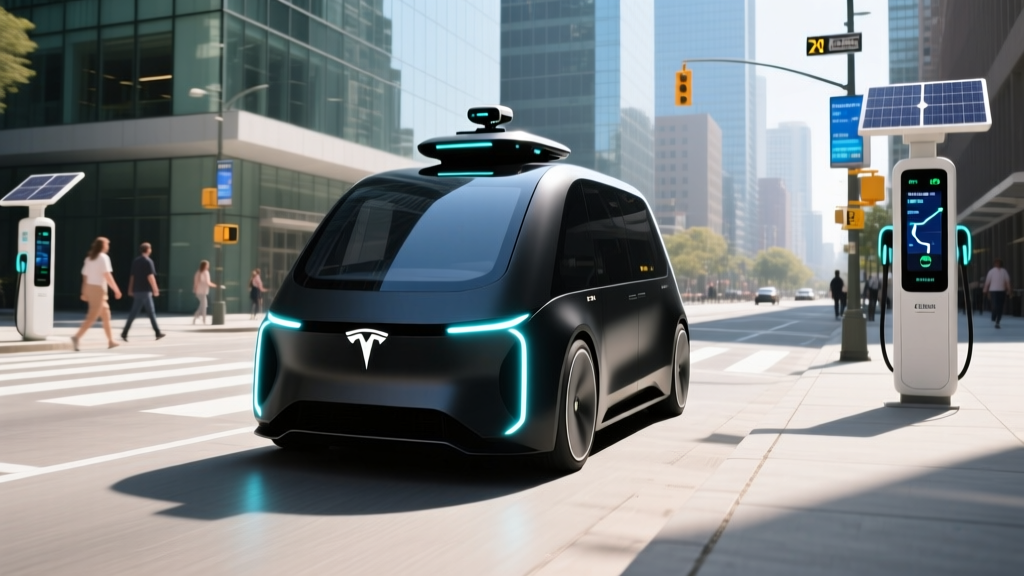
Tesla has publicly discussed a "Robotaxi" concept — sometimes referred to as the Cybercab — a purpose-built, steering-wheel-free vehicle intended for autonomous ride-hailing. As of 2026, this vehicle remains in the announced/preliminary stage. Tesla has shown prototypes and discussed production timelines, but no consumer can currently purchase or hail a driverless Tesla.
Tesla's approach to autonomy differs fundamentally from Waymo and Cruise/Zoox:
- Camera-only (Tesla Vision): 8 cameras providing 360° surround view; no lidar or radar on current production vehicles
- Neural network-based perception: End-to-end AI models process visual data to make driving decisions
- Custom silicon: Tesla HW4 (AI4) computer processes camera feeds at high throughput
- Fleet learning: Data from millions of Tesla vehicles on the road feeds back into model training
- No HD maps or geofencing: Tesla aims for general-purpose driving anywhere, not just pre-mapped corridors
By contrast, Waymo relies on a sensor-rich approach: lidar, radar, and cameras combined with HD maps and strict geofencing. This makes Waymo's Level 4 service highly reliable within its operational zones but limits where it can operate. Tesla's camera-only, no-geofence approach is more scalable in theory but faces steeper validation challenges before regulators would approve driverless operation.
Where Can You Actually Use a Robotaxi Right Now?
If you want a genuinely driverless ride today — no human behind the wheel — your options are limited to specific cities and services:
| Service | Operator | SAE Level | Operational Cities | Availability |
|---|---|---|---|---|
| Waymo One | Waymo (Alphabet) | Level 4 | Phoenix, San Francisco, Los Angeles, Austin (expanding) | 24/7 in core zones; airport service in select cities |
| Zoox | Zoox (Amazon) | Level 4 | Las Vegas, Foster City (CA); limited testing elsewhere | Limited public access; invitation-based in some areas |
| Cruise | Cruise (GM) | Level 4 | Gradual re-entry in select markets post-2024 suspension | Limited; phased restart with safety driver in some zones |
| Tesla Robotaxi | Tesla | Announced (Level 4 target) | None — not yet commercially available | N/A — vehicle in prototype/preliminary stage |
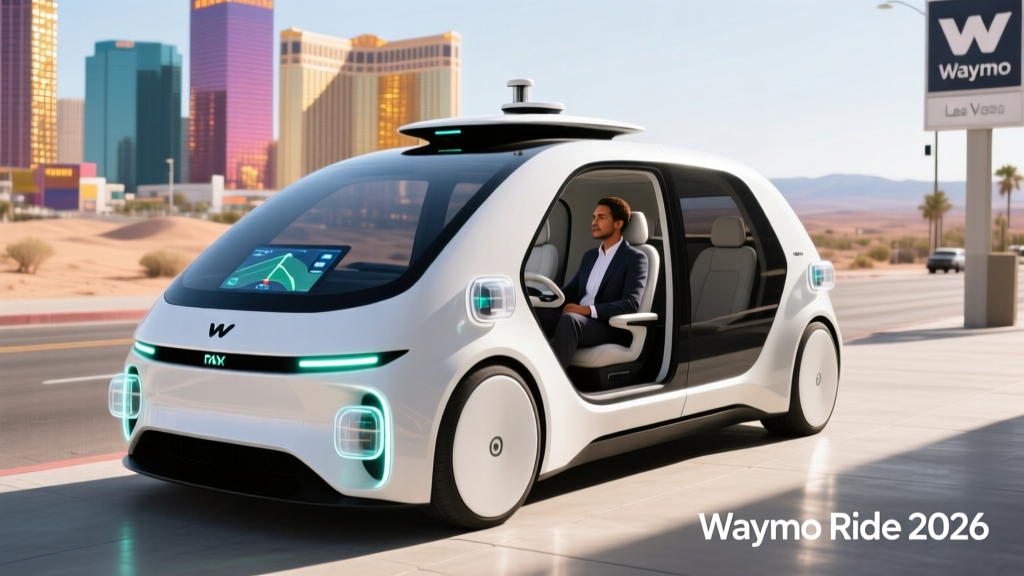
Waymo One remains the most accessible true robotaxi service in the United States. If you're in Phoenix, San Francisco, Los Angeles, or Austin, you can download the Waymo app and hail a fully driverless ride much like you would an Uber. Outside these metro areas, Level 4 robotaxi service simply isn't available yet.
Robotaxi Pricing: Waymo vs Uber vs Tesla FSD Cost
Understanding the economics requires comparing three different models: buying Tesla's FSD software, hailing a Waymo robotaxi, and using traditional rideshare.
| Service | Cost Model | Typical 5-Mile Ride | Typical 15-Mile Ride | Notes |
|---|---|---|---|---|
| Waymo One | Per-ride fare | $8–$14 | $18–$30 | Comparable to UberX; surge pricing applies during peak |
| UberX / Lyft | Per-ride fare | $9–$16 | $20–$35 | Varies by city, time, and demand |
| Tesla FSD (subscription) | $99/month flat | Unlimited use in your own Tesla — but YOU drive | Level 2 assist; driver required at all times | |
| Tesla FSD (purchase) | $8,000 one-time | Unlimited use in your own Tesla — but YOU drive | Amortized over 5 years = ~$133/month | |
Waymo's pricing is generally competitive with UberX — sometimes slightly cheaper, sometimes slightly more depending on demand. The key difference: there's no driver to tip, and the experience is consistent. However, Waymo's geofenced service area means you can't take a robotaxi to every destination you could reach with Uber.
If you already own a Tesla, the $99/month FSD subscription gives you advanced driver-assist features on every drive. But you're still doing the driving. The value proposition is comfort and reduced fatigue, not autonomy.
How Safe Are Robotaxis? The Real Data
Safety is the most contested question in autonomous driving. Here's what the available data shows:
- Over 50 million fully driverless miles completed across Phoenix, San Francisco, and Los Angeles
- Waymo's NHTSA-reported crash rate shows lower involvement in injury-causing collisions compared to human benchmarks in comparable urban environments
- Most reported incidents involve low-speed contact where the robotaxi was rear-ended or sideswiped by human drivers — not at-fault events
- Waymo publishes periodic safety reports reviewed by IIHS and independent researchers
Cruise's 2023 incident in San Francisco — where a pedestrian was struck by a human driver and then run over by a Cruise robotaxi — led to a statewide suspension and a broader industry reckoning. Cruise has since been gradually re-entering markets with modified operations, including safety drivers in some vehicles during initial phases.
For Tesla FSD (Supervised), Tesla's quarterly Vehicle Safety Reports show that vehicles with FSD engaged have lower crash rates per million miles than the U.S. average. However, these reports have been criticized by researchers for not isolating FSD's effect from other variables (Tesla vehicles tend to be newer, driven by demographics with different risk profiles, and equipped with strong passive safety features). NHTSA has opened multiple investigations into Autopilot and FSD-related crashes, particularly involving stationary emergency vehicles.
Current Limitations: What Robotaxis and FSD Cannot Do
Both Tesla's Level 2 system and today's Level 4 robotaxis have significant limitations that buyers and riders must understand:
- Driver supervision required at all times — camera-based driver monitoring will issue alerts and disengage if you look away
- Weather degradation: Heavy rain, fog, snow, and direct sun glare can impair camera-only perception
- Construction zones: Cone detection and lane rerouting remain inconsistent; driver takeover frequently needed
- Unprotected left turns: Complex intersections with multiple turning lanes and oncoming traffic can cause hesitation or errors
- No true point-to-point autonomy: You cannot enter a destination, close your eyes, and arrive — this is not a robotaxi
- Firmware variability: FSD performance can change significantly between software versions; some updates feel like regressions
- Geofenced only: Service operates within pre-mapped zones; you cannot hail a Waymo to a destination outside the operational area
- Weather restrictions: Service may be suspended during heavy fog, torrential rain, or flooding in the mapped area
- Limited highway operation: Most Waymo rides are surface-street; freeway-speed autonomous operation is limited to specific corridors
- Cannot stop wherever you want: Drop-off and pickup points are constrained to safe, legal, pre-approved locations
- No intercity travel: You cannot take a Waymo from San Francisco to Sacramento — it stays in its metro zone
- Awaited remote assistance: In edge cases (road closures, unusual obstacles), the vehicle may stop and wait for remote guidance, adding time to your trip
Regulatory Landscape: Who Approves Robotaxi Operations?
Autonomous vehicle regulation in the United States is a patchwork of state and federal oversight:
- Federal (NHTSA): Sets vehicle safety standards (FMVSS) and investigates crashes. NHTSA does not currently "approve" autonomous driving systems for deployment but can issue recalls and mandates.
- State DMVs and PUCs: States like California (through the CPUC and DMV), Arizona, and Texas have created permitting frameworks for driverless testing and commercial deployment. California requires a driverless deployment permit before a company can charge passengers for fully autonomous rides.
- Local municipalities: Cities can impose additional restrictions on where robotaxis operate, speed limits, and hours of service. San Francisco, for example, has seen significant political pushback against robotaxi expansion.
Tesla's path to a commercial robotaxi service would require navigating this regulatory maze state by state. Simply shipping an FSD software update that allows driverless operation would not satisfy current state permitting requirements for commercial passenger service.
The Bottom Line: What "Self-Driving Tesla" Money Actually Buys
When someone asks "how much is a self-driving Tesla," the honest answer depends entirely on what they mean:
- If you want advanced driver-assist for your own Tesla: FSD (Supervised) costs $8,000 upfront or $99/month. It reduces highway fatigue and handles many city-street scenarios, but you must remain the driver. Budget for a premium feature, not a chauffeur replacement.
- If you want a genuinely driverless ride: Use Waymo One in Phoenix, SF, LA, or Austin. Expect to pay $8–$30 per ride depending on distance and demand — comparable to UberX. You cannot buy a Waymo; it's a service, not a vehicle.
- If you're waiting for a driverless Tesla: The Tesla Cybercab / Robotaxi concept is announced but not commercially available. No confirmed pricing, no confirmed launch market, and no confirmed regulatory approval. Treat any timeline claims with skepticism until vehicles are in paid passenger service.
The gap between Tesla's marketing language and the regulatory/engineering reality of Level 4 autonomy remains significant. FSD is a capable Level 2 system that continues to improve, but "self-driving" it is not — and the $8,000 price tag buys driver assistance, not independence from the driver's seat.
Frequently Asked Questions
Can I sleep or use my phone while Tesla FSD is engaged?
No. Tesla FSD (Supervised) is an SAE Level 2 system that requires continuous driver attention. Tesla's cabin camera monitors your eyes and will issue escalating warnings — then disengage the system — if you look away from the road for more than a few seconds. Using FSD while sleeping or distracted is dangerous, illegal, and can result in a "strike" on your Tesla account that may lead to FSD access being revoked.
Is Waymo really safer than a human driver?
Waymo's published data shows lower crash involvement rates per million miles compared to human benchmarks in the cities where it operates. However, robotaxis operate in geofenced, well-mapped urban areas and avoid the most extreme conditions. Direct comparison to all human driving (which includes rural highways, severe weather, and impaired drivers) is complex. The data suggests Waymo is competitive with or better than attentive human drivers in its operational domain, but it is not infallible.
Will Tesla FSD ever become truly self-driving?
Tesla's stated goal is Level 4/5 autonomy, but as of 2026, FSD remains Level 2 with no confirmed timeline for regulatory approval of driverless operation. Achieving Level 4 requires not just software capability but validation, regulatory permitting state by state, and demonstrated safety data at scale. Many industry experts believe Tesla's camera-only approach faces additional validation hurdles compared to lidar-equipped competitors. Treat any specific timeline prediction with caution.
Does the FSD purchase transfer if I sell my Tesla?
Historically, FSD purchased on a vehicle stays with that vehicle — it does not transfer to a new Tesla you buy. Tesla has occasionally run limited-time promotions allowing FSD transfers to encourage new vehicle purchases. Check Tesla's current policy before buying, as transfer terms have changed multiple times. Subscription-based FSD is tied to your account, not the vehicle, and can be used on any Tesla you own while the subscription is active.
How much does a Waymo ride cost compared to Uber?
Waymo One pricing is generally comparable to UberX for the same route. A 5-mile ride typically costs $8–$14; a 15-mile ride runs $18–$30. Waymo applies surge pricing during peak demand periods, similar to rideshare. The main difference: no driver to tip, and more consistent service quality. However, Waymo's geofenced service area may not cover your exact destination, which could require a short walk or a secondary ride.