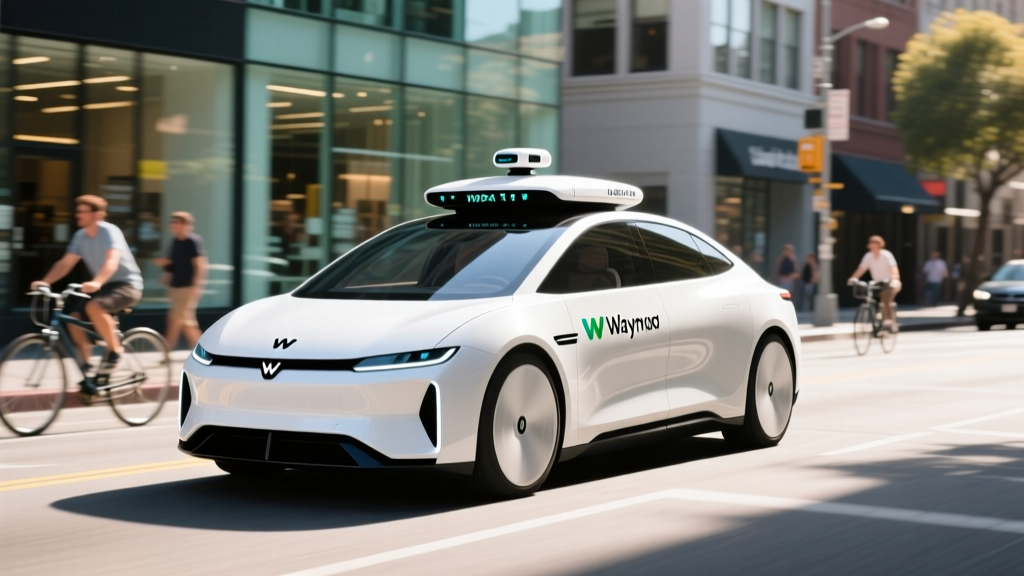
If you've seen a white Jaguar I-PACE with a spinning roof rack gliding through Phoenix or San Francisco traffic with no one behind the wheel, you've seen a Waymo robotaxi. The natural next question isn't just "how does it work" — it's how expensive is Waymo compared to hailing an Uber or Lyft? And is it actually available where you live?
This guide breaks down Waymo One pricing with real fare comparisons, the cities where you can actually book a ride today, the safety data behind millions of driverless miles, and the hard limitations that still keep this service geofenced to specific neighborhoods.
Where Can You Actually Ride a Waymo Robotaxi Right Now?
Waymo One — the company's commercial ride-hailing service — is not available everywhere. It operates within tightly defined geofenced zones in a handful of U.S. metro areas. As of early 2025, here is where you can request a ride:
| City | Status | Service Area Notes |
|---|---|---|
| Phoenix, AZ | Fully operational | Largest service area; covers ~225 sq mi including Chandler, Tempe, Mesa, Scottsdale, and Sky Harbor Airport rides |
| San Francisco, CA | Fully operational | City-wide access including freeway segments; 24/7 service |
| Los Angeles, CA | Fully operational | Covers areas from Santa Monica to downtown LA; expanding footprint |
| Austin, TX | Operational (limited) | Initial launch zone; gradual expansion underway |
Waymo has announced plans to expand to additional cities, but announced service areas are not live service areas. If you're outside these metros, you cannot currently book a Waymo One ride. The company also operates testing programs in select cities, but those are not open to the general public for ride-hailing.
How Expensive Is Waymo? Real Fare Breakdown vs. Uber and Lyft
Waymo One uses a pricing model similar to conventional rideshare: you get an upfront fare before confirming your ride, calculated based on distance, estimated time, and demand. There is no surge pricing in the traditional Uber/Lyft sense, though fares can vary by time of day.
Based on rider reports and fare analyses from 2024-2025, here is how Waymo pricing stacks up:
| Trip Type | Waymo One | UberX | Lyft |
|---|---|---|---|
| Short trip (~3 mi, city center) | $9 – $13 | $10 – $16 | $9 – $15 |
| Medium trip (~8 mi, cross-town) | $18 – $27 | $17 – $28 | $16 – $26 |
| Airport run (~15 mi, Phoenix Sky Harbor) | $30 – $42 | $28 – $45 | $27 – $43 |
| Peak-demand period surcharge | Minimal to none | 1.5x – 3.0x surge | Prime Time pricing |
Key takeaway: Waymo fares are generally comparable to UberX and Lyft in normal conditions. The real pricing advantage emerges during peak demand, when rideshare surge multipliers can push Uber/Lyft fares 50-200% higher while Waymo fares remain relatively stable. For routine trips at off-peak hours, expect to pay roughly the same or slightly more than a standard rideshare.
Waymo also offers promotional credits for new riders, and Waymo One members in Phoenix can access a subscription-style pricing tier for frequent riders. Tipping is optional and handled in-app, just like Uber or Lyft.
Is This Truly Self-Driving? Understanding SAE Automation Levels
This is where precision matters. Waymo's robotaxis operate at SAE Level 4 — meaning they are fully driverless within their defined operational design domain (ODD). There is no human in the driver's seat. There is no steering wheel for a passenger to grab. The vehicle handles all driving tasks within its geofenced area without human intervention.
This is fundamentally different from what Tesla calls "Full Self-Driving (Supervised)," GM's Super Cruise, or Ford's BlueCruise. Those systems are SAE Level 2 — advanced driver-assistance that still requires a licensed, attentive driver behind the wheel at all times.
| Level | Name | Who Drives? | Examples |
|---|---|---|---|
| Level 0 | No Automation | Human does everything | Basic cruise control |
| Level 1 | Driver Assistance | Human drives; system assists one function | Adaptive cruise OR lane-keeping |
| Level 2 | Partial Automation | Human drives and supervises; system handles steering + speed | Tesla Autopilot/FSD Supervised, Super Cruise, BlueCruise |
| Level 3 | Conditional Automation | System drives in specific conditions; human must take over when asked | Mercedes Drive Pilot (limited markets, low speed) |
| Level 4 | High Automation | System drives fully in defined area; no human needed | Waymo One, Zoox |
| Level 5 | Full Automation | System drives everywhere, all conditions | Does not exist commercially |
When you step into a Waymo Jaguar I-PACE, you are a passenger — not a driver. The car will not ask you to take over. If the system encounters a situation it cannot handle, it will pull over safely and contact remote support, not hand you the wheel.
How Safe Are Waymo Robotaxis? The Real Data
Safety is the most scrutinized aspect of robotaxi operations. Waymo has published safety data and submitted to regulatory oversight that provides concrete numbers rather than marketing claims.
- Total autonomous miles driven: Over 40 million fully driverless miles as of late 2024, with the fleet continuing to accumulate miles in 2025.
- Injury-causing crash rate: Waymo's NHTSA-reported data and company-published studies show an approximately 85% reduction in injury-causing crash rates compared to human-driven benchmarks in the same operating areas.
- Police-reported crash rate: Approximately 57% lower than human drivers in comparable urban environments, per Waymo's peer-reviewed safety analysis.
- Contact rate: The vehicle fleet's rate of contact with other road users (including minor incidents) is significantly lower per million miles than the human baseline.
That said, Waymo robotaxis are not incident-free. There have been minor collisions — typically low-speed contact with stationary objects, other vehicles in complex intersections, or interactions with construction zones. NHTSA Standing General Order requires all ADS-equipped vehicles to report crashes, which means Waymo's incident record is more transparent than conventional rideshare crash data.
The critical context: most reported incidents involve minor property damage, not injuries. Waymo vehicles tend to drive conservatively — they obey speed limits, come to complete stops, and yield generously. This conservatism occasionally causes friction with human drivers who expect more aggressive merging or gap-taking behavior.
Under the Roof Rack: Waymo's Technology Stack
The current Waymo fleet primarily uses the Jaguar I-PACE — a fully electric SUV with a 90 kWh battery pack (NMC chemistry) and an EPA range of approximately 234 miles. The vehicle itself is a production EV, but the autonomy hardware is entirely Waymo-designed.
The 6th-generation Waymo Driver sensor suite includes:
- LiDAR: Multiple custom-built LiDAR units providing 360° 3D point-cloud mapping of the environment, effective at distances exceeding 200 meters. LiDAR is Waymo's core differentiator — it works independently of ambient light, giving the system reliable perception at night and in glare conditions.
- Cameras: A network of high-resolution cameras covering all directions, used for lane-line detection, traffic-light state recognition, sign reading, and object classification.
- Radar: Multiple radar units for velocity detection of moving objects and performance in rain and fog where LiDAR and cameras may degrade.
- External audio sensors: Microphones that detect sirens from emergency vehicles, allowing the system to pull over appropriately.
- HD maps and geofencing: Waymo does not navigate unknown roads. Every mile of service area is pre-mapped at centimeter-level resolution. The vehicle operates only within its validated ODD — if you request a ride outside the geofence, the app simply won't let you.
This multi-sensor redundancy is a deliberate contrast to Tesla's camera-only approach for FSD. Waymo's philosophy is that no single sensor modality should be a single point of failure. The trade-off is cost: the sensor suite on each vehicle reportedly adds tens of thousands of dollars to the build cost, which is one reason Waymo's fleet expansion is measured rather than exponential.
Who Regulates Robotaxis? The Federal and State Landscape
Robotaxi operations in the U.S. sit at the intersection of federal vehicle safety regulation and state-level operational permits. Understanding this split explains why Waymo is available in some states and not others.
Federal level: The National Highway Traffic Safety Administration (NHTSA) sets vehicle safety standards and requires crash reporting through Standing General Order for all vehicles with automated driving systems. However, NHTSA does not currently "approve" or "certify" ADS software the way it certifies airbags or seatbelts.
State level: This is where the real regulatory gatekeeping happens. Each state determines whether driverless testing and commercial deployment are legal within its borders:
- Arizona: Among the most permissive. Waymo has operated commercially in Phoenix since 2020 under a relatively open regulatory framework established by executive order.
- California: The California Public Utilities Commission (CPUC) issues commercial robotaxi permits. The California DMV issues testing permits. Waymo holds both. San Francisco operations were approved after extensive review by the CPUC in 2023.
- Texas: Austin operations launched under state autonomous vehicle legislation that permits commercial ADS deployment.
States without explicit ADS legislation or that have restrictive frameworks effectively block robotaxi deployment. This patchwork is why Waymo's service map looks like isolated dots rather than a connected network.
Current Limitations: What Waymo Cannot Do
Level 4 autonomy within a geofenced zone is a remarkable engineering achievement, but it comes with real operational boundaries that every potential rider should understand:
- Geofence boundaries: You cannot request a ride to or from any address outside the mapped service area. Trips that cross the geofence boundary are not available.
- Heavy weather: Waymo vehicles will reduce service or pause operations during heavy rain, fog, or dust storms that degrade sensor performance. Phoenix monsoon season and San Francisco fog can trigger service interruptions.
- Unmapped roads: New construction, recently modified intersections, or roads outside the HD map coverage are no-go zones.
- Highway driving (limited): Waymo has been gradually expanding freeway capabilities — San Francisco operations now include some highway segments — but not all routes involve highway travel, and the system may choose surface-street routing even when a freeway is faster.
- No inter-city trips: You cannot take a Waymo from Phoenix to Tucson or from San Francisco to Sacramento. These are intra-metro services only.
- Limited vehicle types: The fleet is currently the Jaguar I-PACE. There is no Waymo minivan, SUV, or wheelchair-accessible vehicle option at this time, which limits the service for larger groups or riders with mobility equipment.
- Edge-case delays: In complex scenarios — double-parked delivery trucks, emergency scene avoidance, unusual road closures — the vehicle may stop and wait for remote guidance, adding time to your trip.
The Ride Experience: How to Use Waymo One
Booking a Waymo is nearly identical to Uber or Lyft. You download the Waymo One app, set your pickup and drop-off locations, get an upfront fare, and confirm. The app shows the approaching vehicle on a map, provides a license plate and vehicle description, and lets you unlock the doors via the app when the car arrives.
Inside, you'll find a screen showing the vehicle's perception of the world — pedestrians, other cars, cyclists, and traffic signals rendered in real-time. There are start-ride and pull-over buttons, climate controls, and a screen for trip info. You can play music through the vehicle's speakers via Bluetooth.
The driving itself is deliberate and lawful. Expect complete stops at every stop sign, conservative gap-taking at intersections, and strict adherence to speed limits. If you're accustomed to aggressive rideshare drivers who roll through stops and squeeze into tight gaps, a Waymo ride will feel notably more cautious — which is either reassuring or frustrating, depending on your perspective.
Frequently Asked Questions
How expensive is Waymo compared to owning a car?
Waymo is a per-trip ride-hailing service, not a car replacement for most people. A daily commuter doing a 10-mile round trip might spend $40-$60/day on Waymo — far more than the per-mile cost of owning and operating a personal EV (roughly $0.12-$0.18/mile including charging, insurance, and depreciation). Waymo makes economic sense for occasional trips, airport runs, or nights out — not as a daily commute replacement for most budgets.
Can I request a specific route or make stops?
Waymo determines the route based on its HD maps and real-time traffic data. You generally cannot request a specific route. Multi-stop trips are supported in some markets, but the feature set is more limited than Uber or Lyft.
Is Waymo cheaper at night or during surges?
Waymo's pricing is more stable than Uber/Lyft during peak demand periods. When rideshare surge pricing kicks in at 2x or 3x during events, bar closings, or rush hour, Waymo fares often remain flat or increase only modestly — making it the cheaper option precisely when you'd otherwise pay the most.
What happens if the Waymo vehicle gets confused or stuck?
The vehicle will pull over to a safe location and connect with Waymo's remote support team, who can assess the situation and provide guidance. You can also use the in-app support or pull-over button at any time. The vehicle will not hand control to the passenger.
Does Waymo work for airport rides?
Yes, in Phoenix, Waymo One serves Sky Harbor International Airport with designated pickup areas. Airport service availability in other cities depends on local agreements and geofence coverage. Check the app for your specific airport.
Is the Waymo fleet all-electric?
Yes. The current Waymo One fleet consists of the Jaguar I-PACE, a battery-electric SUV with a 90 kWh NMC battery and approximately 234 miles of EPA range. Waymo has also announced a partnership with Geely's Zeekr brand for a custom-built robotaxi vehicle, but that platform is not yet in commercial service.